In high-frequency applications, PTFE tubing serves as a premier dielectric insulator due to its exceptionally low signal loss and electrical stability. It maintains a dielectric constant of approximately 2.1 and a dissipation factor typically below 0.0002, ensuring minimal signal attenuation and phase distortion. These properties remain remarkably consistent across a vast range of temperatures and frequencies, making it a standard for mission-critical electronic environments.
PTFE provides a unique combination of low permittivity and negligible dielectric loss, enabling high-speed signal transmission with minimal energy dissipation. Its molecular symmetry ensures these electrical characteristics remain constant even when subjected to extreme thermal or chemical stress.
Key Dielectric Parameters for High-Frequency Integrity
The Impact of a Low Dielectric Constant
PTFE’s dielectric constant (permittivity) is approximately 2.1, which is among the lowest of all solid polymeric materials. In high-frequency circuits, this low value minimizes the capacitive load, allowing signals to propagate at higher velocities. This is essential for maintaining precise impedance control in coaxial cables and high-speed data lines.
Minimizing Signal Loss with the Dissipation Factor
The dissipation factor, or loss tangent, of PTFE is frequently measured at less than 0.0002. This indicates that the material absorbs almost no electrical energy, preventing it from being converted into heat. For high-frequency applications, this ultra-low loss is critical for preserving the signal integrity of complex waveforms over long distances.
Consistency Across Frequency and Temperature
Unlike many thermoplastic insulators, PTFE's electrical properties show no substantial alterations at temperatures up to 300°C. Its highly symmetric macromolecule structure ensures that the dielectric constant remains "flat" across the MHz and GHz spectrum. This reliability prevents tuning shifts in antennae, radomes, and high-frequency PCBs.
Electrical Insulation and Resistivity Performance
Superior Volume and Surface Resistivity
PTFE exhibits an exceptionally high volume resistivity, generally greater than 10¹⁷ Ω·cm. It also features high surface resistivity, which prevents leakage currents and the buildup of static charges on the tubing. These characteristics make it the ideal choice for isolating high-voltage fluid lines in sensitive electronic or chemical systems.
Dielectric Strength and Breakdown Resistance
The dielectric strength of PTFE typically ranges from 16 kV/mm to 170 kV/mm, depending on the material thickness. While dielectric strength can decrease as frequency increases, it remains robust enough for most demanding high-frequency power applications. Thinner wall sections often provide higher relative dielectric strength, supporting the miniaturization of modern connectors.
Understanding the Trade-offs
Mechanical Sensitivity and Cold Flow
PTFE is susceptible to "cold flow" or creep, meaning it can deform under sustained mechanical pressure. In high-frequency connectors, this deformation can lead to dimensional changes that eventually alter the electrical impedance of the system.
Thermal Expansion and Phase Stability
PTFE has a relatively high coefficient of thermal expansion, which can be a challenge in precision RF engineering. Significant temperature swings may cause physical expansion of the tubing, leading to phase shifts in signal timing that must be accounted for in the system design.
Bonding and Integration Difficulties
The same non-stick properties that provide excellent insulation make PTFE difficult to bond to other substrates. Achieving a reliable hermetic seal or adhering it to a housing often requires chemical etching or plasma treatment, which can slightly modify the surface electrical properties if not controlled.
Making the Right Choice for Your Goal
When integrating PTFE tubing into a high-frequency system, your specific performance requirements should dictate the material grade and geometry.
- If your primary focus is signal speed and integrity: Prioritize high-purity virgin PTFE to ensure the lowest possible dielectric constant and loss tangent.
- If your primary focus is high-voltage isolation: Select tubing with optimized wall thickness to maximize dielectric strength for your specific frequency range.
- If your primary focus is phase stability in varying climates: Consider specialized expanded PTFE (ePTFE) or composite structures to mitigate the effects of thermal expansion.
By leveraging its near-perfect dielectric profile, you can ensure your high-frequency systems operate with maximum efficiency and minimal signal degradation.
Summary Table:
| Property | Typical Value | High-Frequency Benefit |
|---|---|---|
| Dielectric Constant | ~2.1 | Minimizes capacitive load for high-speed signal propagation |
| Dissipation Factor | < 0.0002 | Ensures minimal signal attenuation and energy loss |
| Volume Resistivity | > 10¹⁷ Ω·cm | Exceptional insulation to prevent leakage currents |
| Dielectric Strength | 16 – 170 kV/mm | High breakdown resistance for reliable power handling |
| Thermal Stability | Up to 300°C | Maintains consistent electrical integrity at extreme temperatures |
Maximize Your System Performance with KINTEK Fluoropolymer Solutions
Ensure absolute signal integrity and chemical purity in your most demanding applications with KINTEK. We specialize in high-performance fluoropolymer manufacturing, offering a comprehensive catalog of PTFE and PFA supplies. From essential fluid transfer components like tubing, fittings, and valves to specialized labware including high-purity trace analysis tools, microwave digestion vessels, and custom electrochemical cells, we have the expertise to support your mission-critical projects.
Leveraging our end-to-end custom CNC fabrication, KINTEK provides everything from high-volume standard consumables (O-rings, gaskets, and stirring bars) to bespoke, non-standard machined parts designed for your unique laboratory setup.
Ready to optimize your high-frequency environment? Contact our experts today to request a quote or custom solution!
Related Products
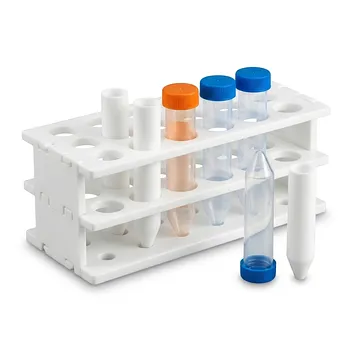
- Custom High Purity PTFE Digestion Tubes and Centrifuge Tubes for Trace Metal Analysis
- High Purity PTFE Digestion Tubes and Custom Centrifuge Tubes 100ml for Trace Analysis and Chemical Digestion
- Corrosion Resistant PTFE Digestion Tubes for Graphite Block Systems with Acid Reflux Caps Custom Dimensions
- Custom PTFE Digestion Tube Double Sided Openable High Temperature Corrosion Resistant Low Background
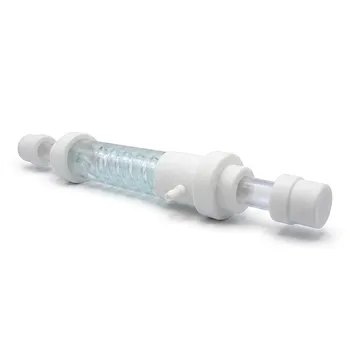
- Custom PTFE Condenser Tube 100ml Serpentine and Straight Fluoropolymer Laboratory Heat Exchanger with Flask Adapters
People Also Ask
- What are the common capacities and physical configurations available for PTFE digestion tubes? Expert Selection Guide
- How do PTFE digestion tubes minimize contamination during ultra-trace elemental analysis? Achieve high-purity results.
- What is the primary function of PTFE digestion tubes in a laboratory setting? Essential for Pure Sample Mineralization
- How do PTFE digestion tubes assist in pharmaceutical and biological sample preparation? Ensure High Recovery & Purity
- How does the synergy of pressure and temperature within a PTFE digestion tube improve digestion efficiency? Accelerate Sample Prep