All Questions
Why Can Specific Fluorinated Solvents Be Used Without Distillation In Cationic Polymerizations, And What Labware Design Features Maintain Reaction Integrity?
Discover why low-water-solubility fluorinated solvents can skip distillation, and learn key PFA/PTFE labware design features to ensure reaction integrity.
What Solvent Selection And Apparatus Considerations Are Required When Performing Living Cationic Polymerization Of Fluorinated Monomers Using Lewis Acid Catalyst Systems? Optimize Control And Safety With Fluorinated Solvents And Ptfe/Pfa Equipment.
Learn key solvent and apparatus considerations for living cationic polymerization of fluorinated monomers, including fluorinated solvents, Lewis bases, and PTFE/PFA equipment.
What Advantages Do Electroactive Fluoropolymers Offer? Boost Microfluidic Efficiency With Active Mixing
Discover how electroactive fluoropolymers enhance microfluidic mixing and analytical accuracy with chemical resistance.
What Fabrication Methods Are Utilized To Manufacture Planar Ptfe Microchannel Chips? Explore Cnc & Thermo-Molding
Learn how CNC machining and thermo-molding create PTFE microchannel chips. Master sealing techniques like FEP bonding for chemical-resistant reactors.
Why Is Ptfe Specifically Selected As The Structural Material For Microchannel Reactors? Ensure Purity And Resistance
Explore why PTFE is the premier material for microchannel reactors, offering unrivaled chemical resistance, low fouling, and high-purity synthesis.
What Are The Recognized Limitations Of Using Ptfe Microchannel Reactors In Industrial Applications? A Technical Guide.
Explore the key limitations of PTFE microchannel reactors, including pressure drops, mechanical creep, and thermal constraints in industrial use.
What Are The Primary Fabrication Methods For Capillary-Based And Monolithic Ptfe Reactors? Expert Production Insights
Explore how capillary and monolithic PTFE reactors are fabricated using coiling and CNC milling to overcome material viscosity constraints.
What Role Does Pressurization Play In The Operation Of Ptfe Microchannel Reactors? Boost Kinetics And Gas Dissolution
Discover how pressurization in PTFE microchannel reactors enables superheated solvents and gas dissolution to accelerate reaction kinetics safely.
How Does The Use Of Ptfe Microchannel Reactors Facilitate The Synthesis Of Perovskite Nanocrystals? Precision Control
Learn how PTFE microchannel reactors enable ultrafast mixing and precise thermal control for high-quality, monodisperse perovskite nanocrystal synthesis.
Why Do Ptfe Microchannel Reactors Provide Superior Heat Transfer Compared To Traditional Batch Vessels? Boost Efficiency
Learn why PTFE microchannel reactors outperform batch vessels with higher surface-area-to-volume ratios and near-isothermal thermal control.
What Mixing Mechanisms Are Utilized In Ptfe Microchannel Reactors? Master Mass Transfer & Overcome Laminar Flow
Explore mixing mechanisms in PTFE microchannel reactors, from Dean vortices to slug flow, to overcome laminar flow and boost reaction efficiency.
How Is The Residence Time Determined And Controlled Within A Ptfe Microchannel Reactor? Master Precision Flow Chemistry
Learn to calculate and control residence time in PTFE microchannel reactors using flow rate and volume for precise, reproducible flow chemistry.
What Specific Material Properties Make Ptfe Suitable For Microchannel Reactor Fabrication? High Inertness & Anti-Fouling
Explore how PTFE’s chemical inertness, low surface energy, and thermal stability optimize microchannel reactors for aggressive chemical research.
How Are Plate-Based Ptfe Microchannel Reactors Assembled Without The Use Of Adhesives Or Solvents? High-Purity Sealing.
Discover how KINTEK uses high-precision CNC milling and mechanical interlocking to create leak-proof PTFE microchannel reactors without adhesives.
What Are The Primary Structural Characteristics And Dimensions Of A Ptfe Microchannel Reactor? Precision Flow Design
Learn about the dimensions and structural benefits of PTFE microchannel reactors for high-precision, corrosive-resistant continuous flow chemistry.
What Are The Environmental And Sustainability Advantages Of Using Ptfe Microchannel Reactors In Chemical Manufacturing? Facts
Learn how PTFE microchannel reactors drive green chemistry by reducing waste, energy use, and solvent consumption through process intensification.
How Can Processes Developed In Ptfe Microchannel Reactors Be Scaled Up? Industrial Scaling With Numbering-Up
Scale PTFE microchannel reactors for industrial production via numbering-up. Maintain precision, heat transfer, and kinetics at any volume.
What Advantages Do Ptfe Helical Capillary Microreactors Offer For Nanoparticle Synthesis? Enhance Precision And Purity
Discover how PTFE helical microreactors ensure ultrafast mixing, uniform residence-time, and chemical inertness for superior nanoparticle synthesis.
What Role Do Ptfe Microchannel Reactors Play In Photochemical And Gas-Liquid Reactions? Optimize Yield & Safety
Learn how PTFE microchannel reactors optimize photochemical yields and safe gas-liquid reactions through superior chemical inertness and design.
How Are Ptfe Microchannel Reactors Used For Hf? Safe & Corrosion-Resistant Handling For Hazardous Chemical Processes
Learn how PTFE microchannel reactors enable safe hydrofluoric acid handling through chemical inertness, thermal control, and reduced risk.
What Design Features Of Ptfe Microchannel Reactors Facilitate Easy Maintenance And Prevent Clogging? Maximize Flow Uptime
Discover how modular compression designs and the non-stick properties of PTFE prevent clogging and simplify maintenance in microchannel reactors.
How Do Ptfe Microchannel Reactors Manage Highly Exothermic Reactions? Ensure Safety With High Heat-Transfer Efficiency
Learn how PTFE microchannel reactors use high heat-transfer rates and chemical resistance to safely manage exothermic reactions like nitrations.
What Are The Benefits Of Using Ptfe Microchannel Reactors For Api Synthesis? Boost Purity & Yield.
Discover how PTFE microchannel reactors improve API synthesis with superior chemical resistance, rapid heat transfer, and contamination-free results.
How Do Ptfe Microchannel Reactors Compare To Glass, Stainless Steel, Or Pdms? Superior Inertness For Aggressive Chemistry
Compare PTFE microchannel reactors with glass, steel, and PDMS. Discover why PTFE's chemical resistance is superior for aggressive synthetic chemistry.
What Are The Primary Structural And Material Characteristics Of Ptfe Microchannel Reactors? Key To Corrosive Synthesis
Explore the structural features and material benefits of PTFE microchannel reactors, including chemical inertness and high-efficiency flow control.
How Does The Fabrication Process Of Ptfe Microchannel Reactors Support Rapid Prototyping? Cnc Milling For Fast Iteration
Discover how CNC machining and modular PTFE fabrication enable fast prototyping, lower costs, and seamless scale-up for chemical microchannel reactors.
What Are The Pressure Limitations Of Ptfe Microchannel Reactors And How Are They Technically Managed? Expert Solutions.
Learn to manage PTFE reactor pressure limits. Discover how reinforcement and thermal derating optimize performance for flow chemistry applications.
What Methods Are Used To Scale Up Production When Using Ptfe Microchannel Reactor Technology? Learn Scaling Strategies
Explore scaling PTFE microchannel reactors through numbering-up and modular stacking to preserve reaction integrity at industrial scales.
What Is The Function Of Ptfe Membrane Or Tubular Reactors In Aerobic Oxidation Processes? Optimize Safety And Control
Discover how PTFE membrane and tubular reactors enable safe, controlled oxygen diffusion for aerobic oxidation while preventing explosive mixtures.
How Is Biodiesel Production Intensified Using Ptfe Microchannel Reactors? Accelerate Synthesis With Precision Engineering
Learn how PTFE microchannel reactors use slug-flow dynamics and corrosion-resistant materials to intensify biodiesel production and scale efficiently.
What Advantages Do Ptfe Microchannel Reactors Offer For The Synthesis Of Perovskite Nanocrystals? Enhanced Purity & Control
Discover how PTFE microchannel reactors enhance perovskite nanocrystal synthesis with uniform residence-time, fast heat transfer, and anti-fouling.
How Do Ptfe Microchannel Reactors Enhance Process Safety When Handling Hazardous Chemical Reactions? Safety By Design
Learn how PTFE microchannel reactors prevent thermal runaway and minimize reactive inventory to ensure safe handling of hazardous chemical reactions.
Why Is Ptfe An Ideal Material For Microreactors Used In Pharmaceutical And Api Manufacturing? Ensure Absolute Purity.
Discover why PTFE is the industry standard for API microreactors, offering unmatched chemical inertness and non-stick properties for high purity.
What Are The Specific Benefits Of Using Ptfe Microchannel Reactors For Organic Chemical Synthesis? Enhance Yield & Purity
Learn how PTFE microchannel reactors optimize organic synthesis through chemical inertness, precise control, and anti-fouling properties.
How Do Ptfe Microchannel Reactors Improve Heat And Mass Transfer? Boost Your Chemical Process Efficiency
Discover how PTFE microchannel reactors outperform batch vessels by maximizing surface area for superior heat transfer and chemical selectivity.
Which Material Properties Of Ptfe Contribute To Its Performance In Microchannel Reactor Applications? Key Advantages.
Discover why PTFE is ideal for microchannel reactors. Explore key properties like chemical inertness, thermal stability, and anti-fouling performance.
What Are The Defining Physical Characteristics And Dimensions Of Ptfe Microchannel Reactors? Design & Material Guide
Explore PTFE microchannel reactor dimensions (10-1000 µm), chemical inertness, and anti-fouling traits for high-performance chemical synthesis.
Related Products

PTFE Deep Evaporating Dishes Customizable Laboratory and Industrial Solutions

PTFE Chemical Solvent Sampling Spoon
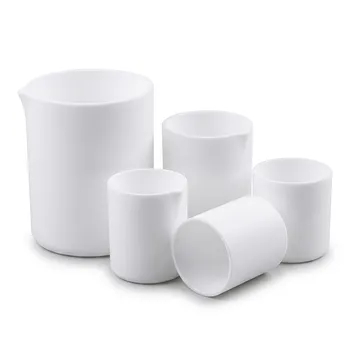
Large Scale PTFE Beakers and Flasks for High Temperature Corrosion Resistant Laboratory Applications with Custom CNC Fabrication
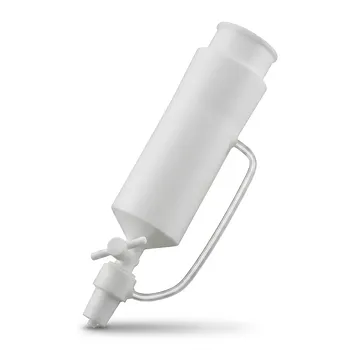
Custom PTFE Constant Pressure Separatory Dropping Funnel Corrosion Resistant Low Background Labware Trace Analysis Dropping Funnel
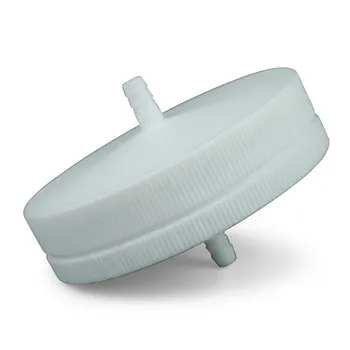
PTFE Membrane Filter Holder for Aerosol Environmental Monitoring and Low Concentration Particulate Matter Sampling Chemical Resistant Air Quality Analysis Component