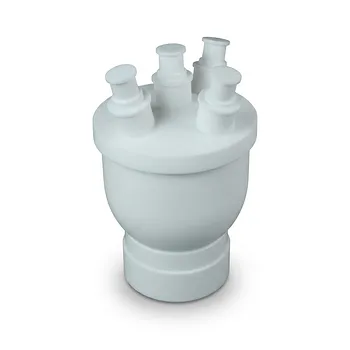
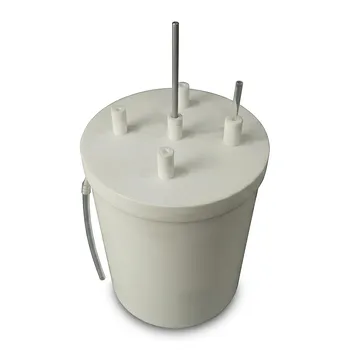
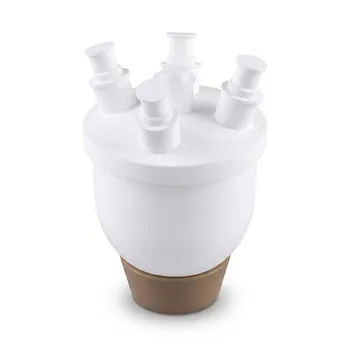
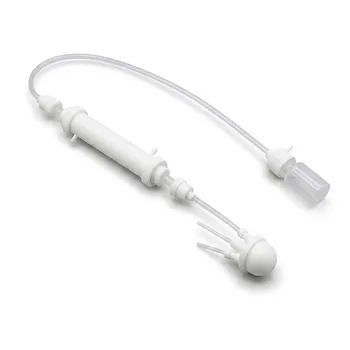
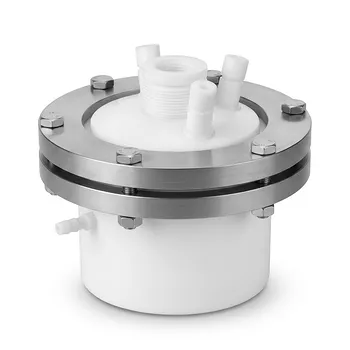
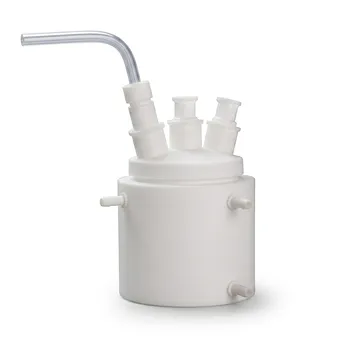
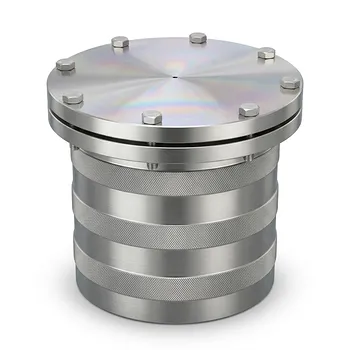
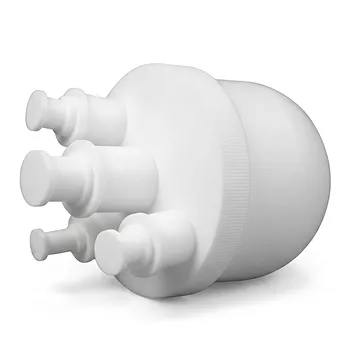
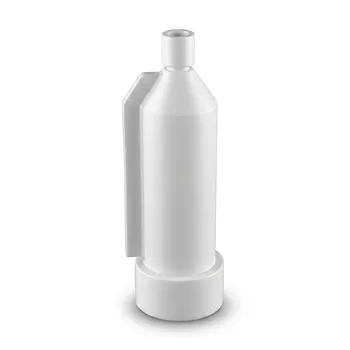
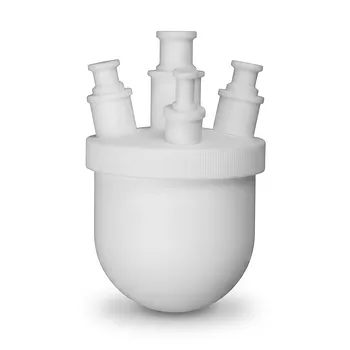
PTFE microchannel reactors represent a paradigm shift in synthetic chemistry by providing a virtually inert environment for highly aggressive reactions. These reactors enable the safe handling of corrosive reagents and air-sensitive intermediates while eliminating the need for bulky inert-atmosphere gloveboxes. By leveraging precise residence-time control and superior mass transfer, they significantly minimize side reactions and byproduct formation, resulting in higher product purity and yield.
PTFE microchannel reactors solve the dual challenge of chemical compatibility and process precision. They provide a "universal" vessel for organic synthesis that protects the integrity of both the equipment and the chemical product through extreme chemical resistance and low-fouling surface properties.
Exceptional Chemical and Thermal Resilience
Universal Resistance to Aggressive Media
PTFE (polytetrafluoroethylene) is chemically inert to almost all known acids, bases, and organic solvents, including highly corrosive substances like hydrofluoric acid. This allows chemists to perform complex multi-step syntheses involving oxidizers and strong reductants that would otherwise degrade conventional reactor materials.
Stability in High-Temperature Environments
These reactors maintain structural and chemical integrity at continuous service temperatures up to approximately 260°C. This thermal stability is crucial for hydrothermal synthesis and high-energy organic reactions that require consistent heat application over long durations.
Protection Against Metal Contamination
In applications like catalyst development or pharmaceutical synthesis, metal ion leaching from stainless steel reactors can poison the reaction. PTFE-lined or solid PTFE reactors act as a definitive barrier, ensuring that the reagents interact only with the intended catalysts rather than the vessel walls.
Precision Control and Enhanced Synthesis Quality
Optimization of Residence Time and Mass Transfer
Microchannel architecture provides a high surface-to-volume ratio, which facilitates rapid heat exchange and efficient mass transfer. This allows for the precise management of residence time, ensuring that reagents stay in the "hot zone" only as long as necessary to complete the desired reaction.
Improvement in Selectivity and Yield
By tightening control over reaction parameters, PTFE reactors suppress the formation of side products. In the synthesis of active pharmaceutical ingredients (APIs), this precision leads to significantly higher yields and simplifies the downstream purification process.
Superior Control for Nanomaterial Synthesis
For specialized applications like perovskite nanocrystal synthesis, these reactors ensure uniform residence-time distribution. This results in narrow particle-size distributions and superior optical properties, such as high fluorescence quantum yields.
Surface Dynamics and Operational Efficiency
Low Surface Energy and Anti-Stick Properties
PTFE possesses extremely low surface energy, making it both hydrophobic and oleophobic. This "non-stick" characteristic prevents the adsorption of organic molecules, precipitates, or biomolecules on the channel walls, which is a common cause of clogging in microfluidic systems.
Simplified Cleaning and Maintenance
The anti-stick nature of the fluoropolymer simplifies the cleaning process between batches. This reduces the residual loss of valuable raw materials and prevents cross-contamination, which is vital for rapid screening of various reaction conditions.
Advancing Green Chemistry Goals
Process intensification in microchannels significantly reduces the volume of solvent required and minimizes overall waste generation. The extremely low hold-up volume enhances safety when handling hazardous or toxic materials by ensuring that only a tiny amount of the substance is "in-process" at any given moment.
Understanding the Trade-offs
Thermal Conductivity Limitations
PTFE is an excellent thermal insulator, which means heat transfer through the material itself is slower than through metal. While the high surface-area-to-volume ratio of the microchannels compensates for this, designers must often use PTFE-lined metal reactors to combine chemical inertness with the thermal efficiency and structural strength of steel.
Pressure Constraints and Structural Rigidity
Pure PTFE is relatively soft and can deform under high pressure or extreme mechanical stress. In high-pressure applications, PTFE components must be reinforced or housed within a secondary containment shell to prevent "creep" or structural failure.
Applying PTFE Technology to Your Synthesis Goals
Strategic Implementation
Selecting the right reactor setup depends on the specific chemical and physical requirements of your synthesis.
- If your primary focus is handling highly corrosive acids or bases: Utilize solid PTFE microreactors to ensure total immunity from chemical erosion and prevent equipment failure.
- If your primary focus is high-pressure hydrothermal synthesis: Opt for PTFE-lined stainless steel reactors to gain the chemical protection of the polymer with the mechanical strength of the metal.
- If your primary focus is maximizing product purity and selectivity: Leverage the low-fouling surface and precise residence-time control of PTFE microchannels to minimize adsorption and side reactions.
By integrating PTFE microchannel reactors into your workflow, you create a safer, more efficient, and highly controlled environment for even the most challenging organic transformations.
Summary Table:
| Benefit | Impact on Synthesis | Primary Application |
|---|---|---|
| Chemical Inertness | Resists aggressive acids (e.g., HF) and bases | Corrosive Reagent Handling |
| Metal-Free Surface | Prevents ion leaching and catalyst poisoning | Pharmaceutical & API Synthesis |
| Low Surface Energy | Prevents clogging and ensures easy cleaning | Nanomaterial & Crystal Growth |
| Precise Mass Transfer | High surface-to-volume ratio for thermal control | Complex Organic Reactions |
| Process Intensification | Reduces solvent waste and improves safety | Green Chemistry Initiatives |
Optimize Your Synthesis with KINTEK’s Fluoropolymer Expertise
Elevate your laboratory’s performance with KINTEK, your premier partner for high-performance PTFE and PFA solutions. Whether you need everyday essentials like beakers, measuring cylinders, and reagent bottles, or specialized fluid transfer components such as tubing, fittings, and valves, we deliver unmatched chemical purity.
Our capabilities extend beyond consumables to advanced reaction apparatus, including PTFE microchannel reactors, custom electrochemical cells, hydrothermal synthesis liners, and microwave digestion vessels. Backed by end-to-end custom CNC fabrication, we specialize in producing complex, non-standard machined parts tailored to your specific research needs.
Don't settle for standard when you can have bespoke precision. Contact us today to discuss how our absolute focus on high-performance fluoropolymers can transform your synthesis workflow.
Related Products
- Customizable Polytetrafluoroethylene PTFE Reactor and Corrosion Resistant Teflon Flask
- Custom PTFE Multilayer Reaction Apparatus High Temperature Corrosion Resistant Threaded Modular Sieve System
- PTFE 10L Reaction Vessel with Stirring Paddle Customizable Corrosion Resistant High Temperature Reactor for Biopharmaceutical and Chemical Processing
- High Performance Customizable PTFE Reaction Vessel and Corrosion Resistant Polytetrafluoroethylene Flask for Chemical Laboratory Use
- Custom PTFE Reaction System with Hose Barb Fittings Corrosion Resistant High Sealing 2L 4L Lab Reactor with Separatory Funnel
People Also Ask
- What functional advantages do PTFE reactors provide over glass? Achieve Superior Purity and Safety in Synthesis
- What are the primary fabrication methods for capillary-based and monolithic PTFE reactors? Expert Production Insights
- Why are PTFE or PFA reaction vessels required for the selective etching process of MXene using hydrofluoric acid (HF)?
- Why is a Teflon-lined (PTFE) reactor vessel required for the hydrothermal synthesis of V2O5 and SnO2 nanomaterials?
- What is the role of high chemical inertness reaction vessels in the organic synthesis of acylhydrazone ligands? | Guide