The performance gap between microchannel reactors and batch vessels is fundamentally a matter of geometric efficiency.
PTFE microchannel reactors achieve superior heat transfer because their high surface-area-to-volume ratio allows for heat transfer coefficients between 1 and 500 MW m⁻³ K⁻¹. In contrast, a traditional 1-liter batch flask manages only about 10 kW m⁻³ K⁻¹, making microscale channels orders of magnitude more effective at managing thermal energy.
Microchannel technology solves the "scale-up" problem by ensuring that heat can be removed or supplied through thin walls as fast as the reaction generates it. This geometric advantage enables near-isothermal operation, effectively eliminating the thermal gradients and runaway risks common in batch processing.
The Physics of Scale: Surface-Area-to-Volume Ratio
Overcoming the Limitations of Batch Vessels
In traditional batch vessels, the volume of the reactants grows much faster than the surface area available for cooling as the vessel size increases. This creates a bottleneck where heat generated in the center of the liquid cannot reach the cooling jacket quickly enough.
The Microchannel Advantage
Microchannel reactors shrink the reaction environment to the millimeter or micrometer scale. This maximizes the surface-area-to-volume ratio, ensuring that every molecule of the reactant is in close proximity to a temperature-controlled wall.
Impact on Heat Transfer Coefficients
Because the distance heat must travel is drastically reduced, the heat transfer coefficients in these systems are staggering. While batch systems are often limited by the slow process of convection and conduction through large volumes, microchannels provide instantaneous thermal equilibrium.
Precision Thermal Control and Reaction Safety
Achieving Near-Isothermal Operation
The ability to move heat rapidly allows researchers to maintain a near-isothermal environment. This means the temperature remains constant throughout the entire reaction path, preventing the formation of "hot spots" that can lead to byproduct formation.
Mitigating Thermal Runaway
For highly exothermic reactions, batch vessels present a significant explosion risk if heat removal fails to keep pace with the reaction rate. PTFE microchannel reactors mitigate this risk by providing a high heat-removal capacity that prevents temperature spikes from ever occurring.
Enhancing Selectivity and Yield
Precise temperature control directly correlates to chemical selectivity. By keeping the reaction within a narrow temperature window, microchannels ensure that only the desired chemical pathway is followed, significantly increasing the final yield.
Material Advantages and Process Synergy
Chemical Inertness of PTFE
PTFE (Polytetrafluoroethylene) provides near-universal chemical resistance, allowing these reactors to handle strong acids, bases, and aggressive organic solvents. This ensures that the high-performance geometry is not compromised by corrosion or material degradation over time.
Enhanced Mass Transfer
Beyond heat, the microscale geometry also improves mass transfer. Specialized flow regimes, such as slug or annular flow, create rapid mixing that ensures reactants are perfectly distributed, complementing the superior thermal performance.
Anti-Stick Properties and Maintenance
The anti-stick nature of PTFE simplifies the cleaning process and reduces the residual loss of valuable raw materials. This makes PTFE microchannel components ideal for complex synthesis where purity and material recovery are critical.
Understanding the Trade-offs
Pressure Drop and Clogging
The primary trade-off for high heat transfer is a significant increase in pressure drop across the reactor. Additionally, microchannels are susceptible to clogging if the reaction involves solids or precipitates, requiring careful filtration and process design.
Complexity of "Numbering-Up"
Unlike batch vessels, which are scaled by making them larger, microchannel systems are scaled by "numbering-up" (adding more channels). While this maintains the heat transfer benefits, it increases the complexity of the fluid distribution system and requires precise manufacturing to ensure uniform flow.
Choosing the Right Reactor for Your Process
If you are looking to move from traditional glassware to flow chemistry, consider the following recommendations:
- If your primary focus is rapid exothermic reactions: Utilize PTFE microchannels to prevent thermal runaway and maintain the safety of your laboratory environment.
- If your primary focus is working with aggressive reagents: Leverage PTFE’s near-universal chemical resistance to ensure your reactor can withstand acids and solvents that would degrade metal systems.
- If your primary focus is maximizing product purity: Use the isothermal environment of a microchannel to eliminate thermal gradients that cause unwanted side reactions.
Transitioning from batch to microchannel flow represents a fundamental shift from managing thermal limitations to mastering reaction kinetics.
Summary Table:
| Feature | PTFE Microchannel Reactor | Traditional Batch Vessel |
|---|---|---|
| Heat Transfer Coeff. | 1 - 500 MW m⁻³ K⁻¹ | ~10 kW m⁻³ K⁻¹ |
| Surface/Volume Ratio | Extremely High | Low (Decreases with scale) |
| Thermal Control | Near-Isothermal (No hot spots) | High Gradient (Hot spot risk) |
| Reaction Safety | Excellent (Prevents runaway) | Moderate (Runaway risk) |
| Chemical Resistance | Universal (PTFE/PFA) | Varies (Glass/Steel) |
Optimize Your Flow Chemistry with KINTEK Precision
Elevate your laboratory’s performance with KINTEK, your specialist in high-performance fluoropolymer solutions. We provide an exhaustive range of laboratory supplies crafted from premium PTFE and PFA, ensuring absolute chemical inertness and superior thermal management for your most critical processes.
From everyday essentials—like beakers, measuring cylinders, crucibles, and reagent bottles—to advanced components including microchannel reactors, electrochemical cells, and microwave digestion vessels, KINTEK is your end-to-end partner. Our capabilities extend to high-purity trace analysis instruments, complex fluid transfer components (tubing, valves, fittings), and bespoke laboratory setups.
Why choose KINTEK?
- Custom Fabrication: Expert CNC machining for complex, non-standard parts.
- Full Scale: Support for everything from single custom prototypes to high-volume orders.
- Material Focus: Exclusive expertise in high-performance fluoropolymers.
Ready to upgrade from traditional batch vessels to high-efficiency flow systems? Contact our technical team today to discuss your custom requirements!
Related Products
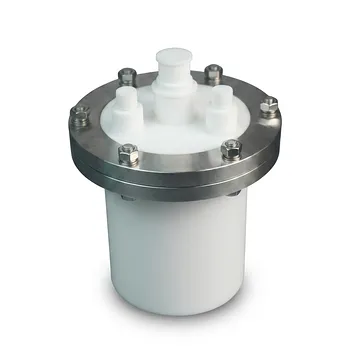
- Customizable Polytetrafluoroethylene PTFE Reactor and Corrosion Resistant Teflon Flask
- PTFE 10L Reaction Vessel with Stirring Paddle Customizable Corrosion Resistant High Temperature Reactor for Biopharmaceutical and Chemical Processing
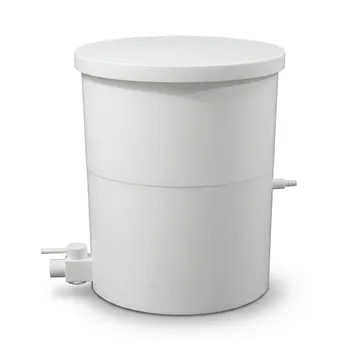
- Custom PTFE Multilayer Reaction Apparatus High Temperature Corrosion Resistant Threaded Modular Sieve System
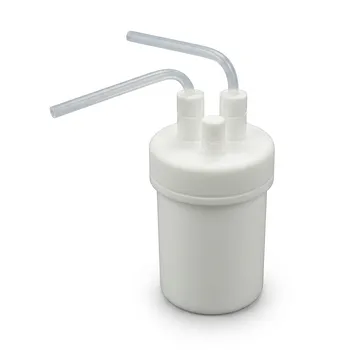
- Custom PTFE Volatile Matter Condensation Reflux Reaction Device Corrosion Resistant Pressure Resistant
- High Performance Customizable PTFE Reaction Vessel and Corrosion Resistant Polytetrafluoroethylene Flask for Chemical Laboratory Use
People Also Ask
- What functional advantages do PTFE reactors provide over glass? Achieve Superior Purity and Safety in Synthesis
- What are the primary fabrication methods for capillary-based and monolithic PTFE reactors? Expert Production Insights
- Why are PTFE or PFA reaction vessels required for the selective etching process of MXene using hydrofluoric acid (HF)?
- Why is a Teflon-lined (PTFE) reactor vessel required for the hydrothermal synthesis of V2O5 and SnO2 nanomaterials?
- What is the role of high chemical inertness reaction vessels in the organic synthesis of acylhydrazone ligands? | Guide