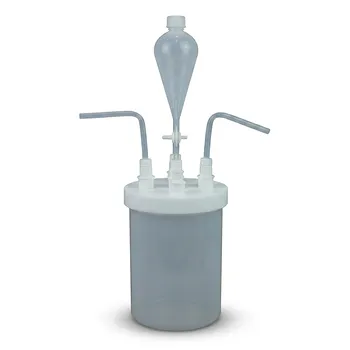
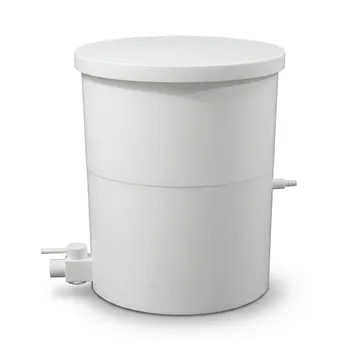
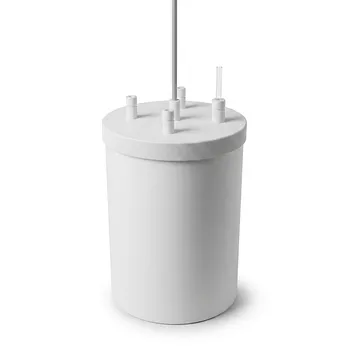
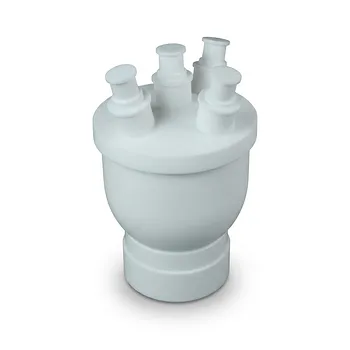
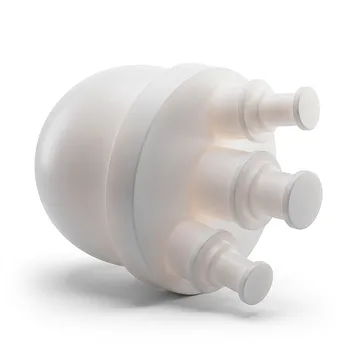
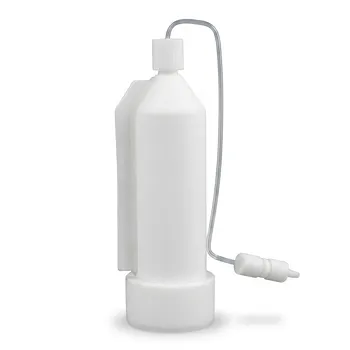
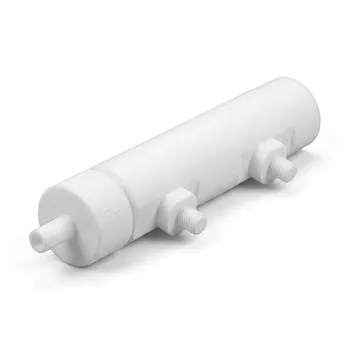
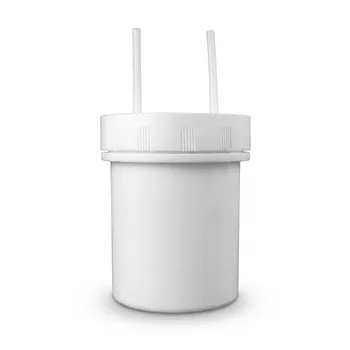
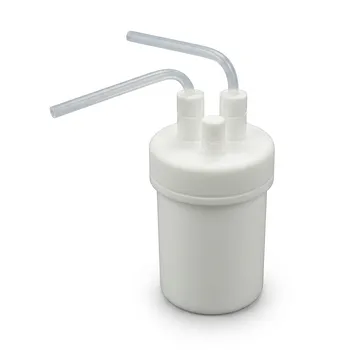
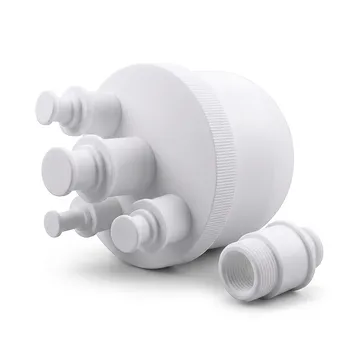
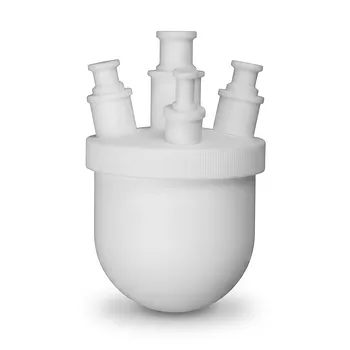
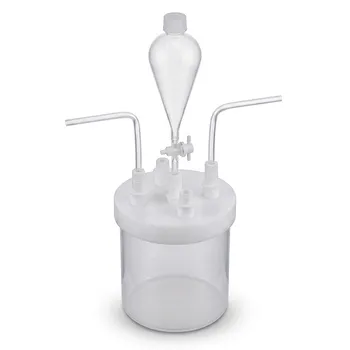
PTFE and PFA vessels are indispensable for MXene etching because standard laboratory materials cannot withstand the extreme corrosivity of hydrofluoric acid (HF). These high-purity fluoroplastics provide the necessary chemical inertness to resist structural degradation while preventing the introduction of contaminants that would compromise the purity and structural integrity of the resulting MXene nanosheets.
Core Takeaway: The use of PTFE or PFA is a non-negotiable safety and quality requirement in MXene synthesis, acting as a critical barrier against both vessel failure and the leaching of impurities during the aggressive chemical removal of atomic layers.
The Corrosive Nature of the Etching Environment
Why Glass and Metal Fail
Hydrofluoric acid (HF) and fluorinated hydrochloric acid solutions are unique in their ability to rapidly dissolve silica-based materials like glass and ceramics. Most metallic containers also succumb to aggressive acid attack, which leads to vessel failure and potentially hazardous leaks in the laboratory.
The Chemical Resilience of Fluoroplastics
Polytetrafluoroethylene (PTFE) and Perfluoroalkoxy (PFA) are engineered fluoroplastics with exceptionally strong carbon-fluorine bonds. This molecular structure allows them to remain stable even when exposed to high concentrations of HF for extended periods, such as the 96-hour reactions often required for complex MAX phases.
Protecting Material Purity and Structural Integrity
Eliminating Ion Leaching
During the selective etching of the aluminum layer from the MAX phase, the introduction of even trace metal ions from a container wall can ruin the batch. PTFE and PFA ensure that no foreign ions leach into the reaction slurry, maintaining the exact chemical composition required for high-quality $Ti_3C_2T_x$ or other MXene variants.
Maintaining Reaction Stability
The synthesis of MXene requires a highly controlled chemical environment to ensure the delamination process occurs correctly. By providing a stable, non-reactive surface, these vessels allow the etchant to focus solely on the precursor material without secondary reactions interfering with the nanosheet morphology.
Understanding the Trade-offs
Thermal and Mechanical Limitations
While PTFE and PFA are chemically superior, they have lower thermal conductivity than metal and lower structural rigidity than glass. Users must account for slower heat transfer during temperature-controlled etching and avoid using these vessels for high-pressure reactions unless they are properly reinforced with a secondary metal jacket.
Cost and Surface Maintenance
High-purity fluoroplastics are significantly more expensive than standard borosilicate glass. Additionally, because these materials are relatively soft, they are susceptible to surface scratching, which can trap residual particles and necessitate rigorous cleaning protocols between different synthesis batches.
How to Apply This to Your Project
When selecting a reaction vessel for your MXene synthesis, consider the specific requirements of your etching protocol:
- If your primary focus is high-purity electronic applications: Always utilize virgin PFA vessels, as they typically offer the lowest level of trace metal extractables and the smoothest surface finish.
- If your primary focus is routine laboratory synthesis: Standard PTFE-lined autoclaves or beakers provide a cost-effective and durable solution for the majority of HF or LiF/HCl etching procedures.
- If your primary focus is long-duration etching (over 48 hours): Ensure the vessel is inspected for mechanical wear or "cold flow" deformation to prevent seal failure during the extended contact time with corrosive reagents.
Choosing the correct fluoroplastic vessel is the fundamental first step in ensuring both the safety of the researcher and the quality of the synthesized MXene material.
Summary Table:
| Material | Chemical Resistance (HF) | Contamination Risk | Best Use Case |
|---|---|---|---|
| PTFE | Excellent | Low | Routine lab synthesis & beakers |
| PFA | Excellent | Ultra-Low | High-purity electronic applications |
| Glass/Metal | Poor (Dissolves) | High | Not suitable for HF etching |
Maximize Your Research Precision with KINTEK Fluoropolymer Solutions
Ensure the integrity of your MXene synthesis with KINTEK’s premium fluoropolymer products. We specialize in providing the chemical inertness your lab needs to handle aggressive etchants like HF. From everyday basics like PTFE beakers, crucibles, and digestion tubes to high-purity PFA sample prep tools and fluid transfer components, our supplies prevent contamination and vessel failure.
Looking for something specialized? Our end-to-end custom CNC fabrication allows us to deliver bespoke laboratory setups, advanced reaction apparatus, and hydrothermal synthesis liners tailored to your exact specifications. Whether you need high-volume consumables or a complex, non-standard machined part, KINTEK maintains an absolute focus on high-performance materials to support your discovery.
Upgrade your lab safety and purity—Contact KINTEK today!
References
- Umme Kalsoom, Malik Maaza. MXene-based hybrid composites for lithium-ion batteries: advances in synthesis strategies and electrochemical performance. DOI: 10.1007/s11581-025-06628-z
This article is also based on technical information from Kintek Knowledge Base .
Related Products
- High Purity Corrosion Resistant PFA Reaction Vessel with PTFE Holder and Integrated Sampling Tube for Trace Analysis
- High Performance Customizable PTFE Reaction Vessel and Corrosion Resistant Polytetrafluoroethylene Flask for Chemical Laboratory Use
- Custom PFA Reaction Bottles High Purity PTFE Reaction Vessels Corrosion Resistant Petrochemical Containers
- PFA Reaction Jar Corrosion Resistant Wide Mouth PTFE Lab Bottle High Purity Chemical Vessel
- Corrosion Resistant PFA Translucent Reaction Bottle with PTFE Screw Cap and Standard 19 24 Ground Joint Neck for High Temperature Lab Applications
People Also Ask
- Why is the choice of reaction vessel material critical during B-NiBDC synthesis? Optimize MOF Purity & Performance
- How do the material choice and sealing integrity of the reaction vessel affect the growth of NiFe-LDH? Optimize Synthesis
- Why are well-sealed reaction vessels necessary for superacid-promoted Friedel-Crafts polycondensation? Optimize Synthesis
- What is the role of high chemical inertness reaction vessels in the organic synthesis of acylhydrazone ligands? | Guide
- Why is a stable reaction vessel essential for CuO nanoflower growth? Ensure Purity and Structural Integrity.