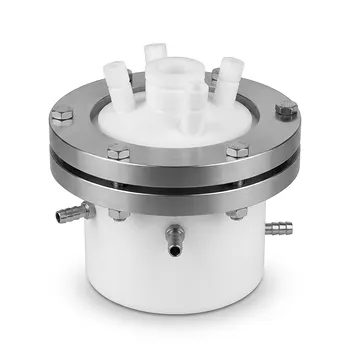
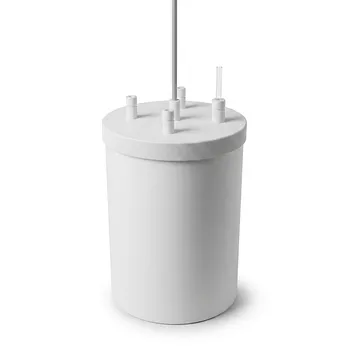
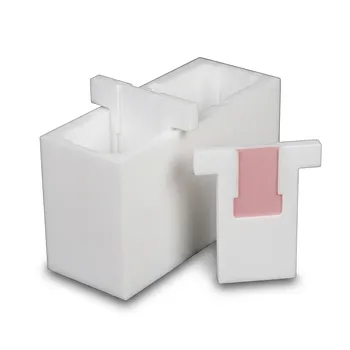
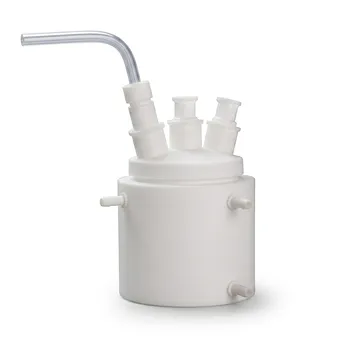
The transition from laboratory discovery to industrial production in PTFE microchannel reactors is achieved through "numbering-up." This methodology involves operating multiple identical microchannels or reactor modules in parallel to increase total throughput. By replicating the exact environment of a single optimized channel, engineers can scale production without the need to re-calculate complex fluid dynamics or re-engineer the system for larger volumes.
The "numbering-up" strategy bypasses the traditional challenges of scaling by replicating laboratory-optimized conditions across parallel units, ensuring that industrial-scale output maintains the same precision, heat transfer, and reaction kinetics as the initial prototype.
The Mechanics of Numbering-Up
Parallelization vs. Traditional Enlargement
In traditional chemical engineering, scaling up involves increasing the size of a reaction vessel, which often alters heat and mass transfer characteristics. In microfluidics, "scaling up" is replaced by "numbering-up," where the dimensions of the individual channel remain constant while the number of channels increases.
Modular Stacking and System Architecture
Industrial scale is often reached by modular stacking of reactor units. This allows for a direct translation of lab-optimized conditions to pilot or full production scales. Each module acts as an independent production unit, making the system highly reconfigurable and scalable.
Preservation of Fluid Dynamics
Because the channel geometry does not change, the fluid dynamics and reaction performance remain consistent. This predictability eliminates the need for the extensive pilot-plant trials typically required to fix "scale-up effects" seen in large batch reactors.
Strategic Advantages of PTFE in Industrial Scaling
Material-Specific Process Intensification
PTFE's corrosion resistance allows it to handle aggressive catalysts, such as the alkaline catalysts used in biodiesel production. These reactors can generate slug-flow regimes, which create internal recirculation and improve mixing, allowing reactions that usually take hours to finish in seconds.
Sustainability and Green Chemistry
Scaling with PTFE microchannels supports green chemistry goals by drastically reducing solvent usage and waste. The high efficiency of these systems leads to higher purity products and safer handling of hazardous materials due to extremely low internal volumes.
Fabrication Flexibility
Many PTFE reactors are produced via CNC milling of technical-grade blocks, creating hermetic chips. This fabrication method allows for systems that are easily disassembled, cleaned, and reconfigured, which is a significant operational advantage in industrial environments where maintenance is a priority.
Understanding the Trade-offs and Constraints
Pressure Drop and Viscosity
A significant limitation in scaling these systems is the increase in pressure drop as channel length or fluid viscosity increases. Engineers must carefully balance the number of parallel channels to ensure the system does not exceed the mechanical limits of the pumps or the PTFE material itself.
Managing Solids and Clogging
While PTFE’s non-stick properties mitigate the risk, clogging remains a concern if the reaction produces large solids. In a numbered-up system, a single clogged channel can disrupt the flow distribution across the entire parallel network, requiring robust filtration or monitoring systems.
Throughput-to-Volume Ratio
The throughput of a single microchannel is relatively low, often measured in milliliters to liters per hour. Reaching industrial volumes requires the parallelization of hundreds or thousands of channels, which increases the complexity of the fluid distribution manifolds.
How to Apply This to Your Project
To successfully scale a PTFE microchannel process, your strategy should align with your specific production requirements and material constraints.
- If your primary focus is rapid market entry: Use modular, CNC-milled PTFE blocks that can be quickly replicated and numbered-up to meet initial demand without extensive re-validation.
- If your primary focus is handling hazardous or corrosive reagents: Leverage PTFE’s inherent chemical resistance and low hold-up volume to maintain a high safety profile during scale-up.
- If your primary focus is maximizing product purity: Optimize the flow regime (such as slug-flow) at the micro-scale first, then use parallelization to ensure those exact mixing conditions are maintained at volume.
- If your primary focus is minimizing operational downtime: Design your numbered-up system with easily disassemblable modules to take advantage of PTFE’s non-stick and easy-to-clean nature.
By focusing on the replication of optimized micro-environments rather than the enlargement of vessels, you can achieve a seamless and predictable transition to industrial production.
Summary Table:
| Feature | Laboratory Scale (Single Channel) | Industrial Scale (Numbering-Up) |
|---|---|---|
| Scaling Strategy | Process Optimization | Parallelization of identical units |
| Fluid Dynamics | Optimized micro-environments | Replicated & predictable kinetics |
| Heat & Mass Transfer | High surface-area-to-volume | Maintained across all modules |
| Material Advantage | PTFE corrosion resistance | Safe handling of hazardous reagents |
| System Architecture | Single CNC-milled chip | Modular stacking & manifolds |
Scale Your Innovation with KINTEK’s Precision PTFE Solutions
Transitioning from lab-scale discovery to industrial-scale production requires equipment that maintains absolute performance. KINTEK specializes in high-performance fluoropolymer materials, offering everything from everyday basic labware (beakers, crucibles, and reagent bottles) to advanced custom-machined PTFE microchannel reactors.
Whether you need comprehensive fluid transfer components (tubing, fittings, valves), high-purity trace analysis instruments, or bespoke reaction apparatus like microwave digestion vessels and electrochemical cells, our end-to-end custom CNC fabrication ensures your setup is perfectly tailored to your process. From complex non-standard parts to high-volume industrial orders, we provide the durability and chemical resistance your project demands.
Ready to scale with confidence? Contact us today to discuss your custom laboratory setup and industrial production needs!
Related Products
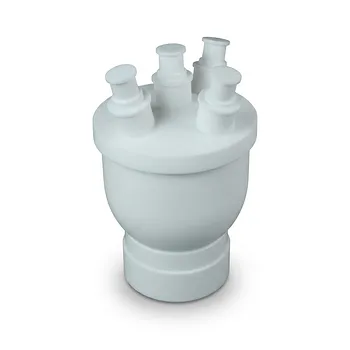
- Customizable Polytetrafluoroethylene PTFE Reactor and Corrosion Resistant Teflon Flask
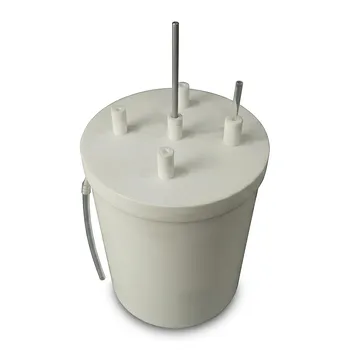
- PTFE 10L Reaction Vessel with Stirring Paddle Customizable Corrosion Resistant High Temperature Reactor for Biopharmaceutical and Chemical Processing
- Custom PTFE Multilayer Reaction Apparatus High Temperature Corrosion Resistant Threaded Modular Sieve System
- Custom PTFE Volatile Matter Condensation Reflux Reaction Device Corrosion Resistant Pressure Resistant
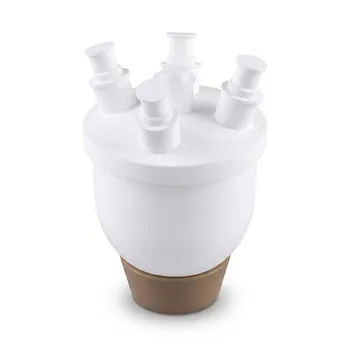
- High Performance Customizable PTFE Reaction Vessel and Corrosion Resistant Polytetrafluoroethylene Flask for Chemical Laboratory Use
People Also Ask
- What functional advantages do PTFE reactors provide over glass? Achieve Superior Purity and Safety in Synthesis
- What are the primary fabrication methods for capillary-based and monolithic PTFE reactors? Expert Production Insights
- Why are PTFE or PFA reaction vessels required for the selective etching process of MXene using hydrofluoric acid (HF)?
- Why is a Teflon-lined (PTFE) reactor vessel required for the hydrothermal synthesis of V2O5 and SnO2 nanomaterials?
- What is the role of high chemical inertness reaction vessels in the organic synthesis of acylhydrazone ligands? | Guide