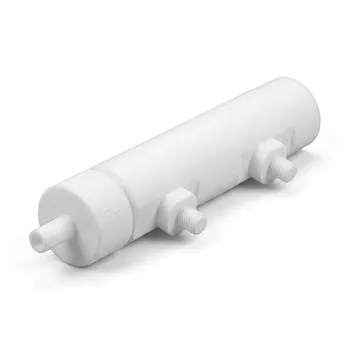
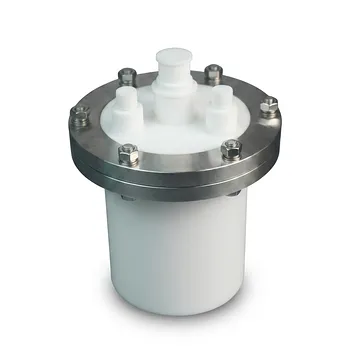
PTFE microchannel reactors facilitate perovskite nanocrystal synthesis by providing a highly controlled environment that enables ultrafast mixing and immediate nucleation. These reactors allow researchers to precisely tune the optical and structural properties of nanocrystals—such as size, shape, and emission wavelength—through meticulous control over residence time and reaction temperature.
The integration of PTFE's chemical inertness with the high surface-to-volume ratio of microchannels creates a stable platform for producing high-quality, monodisperse perovskite nanocrystals. This method overcomes the limitations of traditional batch synthesis by ensuring uniform reaction conditions and preventing reactor fouling.
Engineering Precision Through Flow Dynamics
Ultrafast Mixing and Nucleation
In a PTFE microchannel, precursors are brought together in a confined space, allowing them to mix and nucleate within seconds. The helical design of some capillaries can facilitate mixing in as little as 1.4 seconds, which is critical for capturing the early stages of nanocrystal growth.
Uniform Residence-Time Distribution (RTD)
Precise control over the time reagents spend inside the reactor leads to a uniform residence-time distribution. This consistency ensures that every particle experiences the same growth conditions, resulting in narrow particle-size distributions and high fluorescence quantum yields.
Superior Heat Transfer
The high surface-to-volume ratio of microchannels allows for rapid and uniform heat transfer. This thermal stability is essential for maintaining the specific temperatures required to stabilize various nanocrystal morphologies, such as spheres, cubes, or rods.
Leveraging PTFE Material Properties
Chemical Inertness and Purity
PTFE is exceptionally resistant to aggressive reagents, including the halide precursors used in perovskite synthesis. This inertness prevents the reactor walls from leaching contaminants into the reaction or being etched by acidic or alkaline solutions.
Low Surface Energy and Anti-Fouling
The low surface energy of PTFE results in a non-stick interior that prevents nanocrystals from depositing on the channel walls. This "self-cleaning" property minimizes fouling and ensures that the reactor can operate continuously without clogging or performance degradation.
Compatibility with Sensitive Chemistry
PTFE microchannels allow for the safe handling of air-sensitive intermediates and aggressive solvents. Because the system is closed and chemically resistant, it often eliminates the need for inert-atmosphere gloveboxes while maintaining high product selectivity.
Understanding the Trade-offs
Thermal and Pressure Limitations
While PTFE is thermally stable, its continuous service temperature is typically capped at 260°C. For syntheses requiring higher temperatures, alternative materials or specialized high-pressure PTFE housings may be necessary to prevent material deformation.
Structural Rigidity
Compared to stainless steel or glass microreactors, PTFE is relatively soft and may exhibit mechanical creep under high-pressure conditions. This requires careful engineering of the reactor housing to maintain the integrity of the microchannel dimensions during high-throughput operations.
Scale-up Complexity
While microchannels provide excellent control at the laboratory scale, scaling up production often requires "numbering up" (adding more channels) rather than simply increasing the reactor size. This can increase the complexity of flow distribution and monitoring across multiple parallel channels.
Optimizing Your Synthesis Strategy
How to Apply This to Your Project
To maximize the benefits of PTFE microchannel reactors, align your operational parameters with your specific material goals:
- If your primary focus is Precise Color Tuning: Adjust the halide ratios and reaction temperature within the microchannel to shift the emission wavelength with high reproducibility.
- If your primary focus is Shape Control: Manipulate the residence time by adjusting flow rates to stabilize specific morphologies like nanocubes or nanowires.
- If your primary focus is Maximum Monodispersity: Optimize the reactor geometry to ensure ultrafast mixing and a narrow residence-time distribution to prevent overgrowth.
By mastering the flow dynamics and material advantages of PTFE reactors, you can achieve a level of structural and optical consistency that is unattainable in conventional batch processing.
Summary Table:
| Key Feature | Impact on Perovskite Synthesis |
|---|---|
| Ultrafast Mixing | Enables immediate nucleation and captures early growth stages |
| Uniform RTD | Ensures consistent growth for narrow particle-size distribution |
| Chemical Inertness | High resistance to aggressive halide precursors without contamination |
| Anti-Fouling | Low surface energy prevents nanocrystal deposition and clogging |
Elevate Your Synthesis with KINTEK’s Precision PTFE Engineering
Unlock the full potential of flow chemistry with high-performance fluoropolymer solutions from KINTEK. Whether you require everyday basic labware (beakers, reagent bottles, and digestion tubes) or complex PTFE microchannel reactors and reaction apparatus, we manufacture virtually all laboratory supplies crafted from premium PTFE and PFA.
From fluid transfer components (tubing, fittings, valves) and sample prep tools to advanced custom CNC-machined parts and electrochemical cells, our end-to-end fabrication ensures your sensitive chemistry remains pure and controlled. Contact us today to discuss your bespoke laboratory setup and discover how our absolute focus on high-performance materials can drive your research forward!
Related Products
- Customizable Polytetrafluoroethylene PTFE Reactor and Corrosion Resistant Teflon Flask
- PTFE 10L Reaction Vessel with Stirring Paddle Customizable Corrosion Resistant High Temperature Reactor for Biopharmaceutical and Chemical Processing
- Custom PTFE Multilayer Reaction Apparatus High Temperature Corrosion Resistant Threaded Modular Sieve System
- Custom PTFE Volatile Matter Condensation Reflux Reaction Device Corrosion Resistant Pressure Resistant
- High Performance Customizable PTFE Reaction Vessel and Corrosion Resistant Polytetrafluoroethylene Flask for Chemical Laboratory Use
People Also Ask
- What functional advantages do PTFE reactors provide over glass? Achieve Superior Purity and Safety in Synthesis
- What are the primary fabrication methods for capillary-based and monolithic PTFE reactors? Expert Production Insights
- Why are PTFE or PFA reaction vessels required for the selective etching process of MXene using hydrofluoric acid (HF)?
- Why is a Teflon-lined (PTFE) reactor vessel required for the hydrothermal synthesis of V2O5 and SnO2 nanomaterials?
- What is the role of high chemical inertness reaction vessels in the organic synthesis of acylhydrazone ligands? | Guide