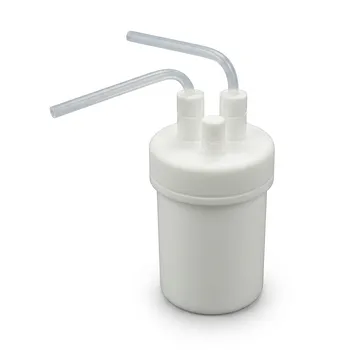
Pressurization in PTFE microchannel reactors acts as a critical lever for manipulating reaction environments beyond atmospheric limits. By utilizing back-pressure regulators, these systems enable the superheating of solvents to accelerate reaction kinetics and significantly enhance gas dissolution into liquid phases. This dual capability allows for faster, more efficient chemical transformations that would be impossible or unsafe in traditional batch setups.
Pressurization transforms PTFE microreactors into high-performance environments by enabling thermal acceleration and high-concentration gas-liquid interactions. It leverages the unique mechanical properties of small-scale fluoropolymer channels to maintain safety at elevated energy levels.
Enhancing Reaction Kinetics via Thermal Control
The Power of Superheated Solvents
Pressurization allows operators to heat solvents far beyond their normal boiling points without them transitioning into the vapor phase. This state of superheating provides the thermal energy necessary to drastically accelerate chemical reactions, often reducing residence times from hours to minutes.
Overcoming Traditional Thermal Barriers
In a pressurized microchannel, the risk of "bumping" or uncontrolled boiling is eliminated. This stability ensures that the reaction kinetics remain predictable and consistent, allowing for precise control over the energy input into the system.
Optimizing Gas-Liquid Interactions
Driving Gas Dissolution for Aerobic Oxidations
Elevated pressure directly increases the solubility of gases into liquid phases, which is essential for reactions like aerobic oxidations. By forcing more gas—such as oxygen—into the liquid, the reactor achieves higher effective concentrations of reactants, leading to near-quantitative yields.
Controlled Diffusion and Safety
PTFE membranes or tubing allow for the controlled diffusion of gases along the entire length of the reaction path. Pressurization facilitates this diffusion while the microscale geometry prevents the formation of explosive gas-liquid mixtures, ensuring safe operation even when using pure oxygen.
The Mechanics of System Stability
Structural Integrity of Small Diameters
The small internal diameters of PTFE microchannels allow them to withstand significant internal pressures that would rupture larger vessels. This inherent mechanical advantage is a result of the high surface-area-to-volume ratio, which distributes stress more effectively across the fluoropolymer walls.
The Role of Back-Pressure Regulators
System pressure is meticulously managed using back-pressure regulators (BPRs) located at the reactor outlet. These devices maintain a constant internal environment, ensuring that the physical state of the reactants remains stable throughout the duration of the flow process.
Understanding the Trade-offs and Limitations
Pressure Ratings and Temperature Sensitivities
While PTFE is chemically inert, it has moderate mechanical strength that decreases as operating temperatures rise. Standard PTFE tubing is often limited to a few bar of pressure, meaning that extreme high-pressure applications require careful monitoring of wall thickness and thermal loads.
The Necessity of Hybrid Reinforcement
For applications requiring extreme pressures, native PTFE may fail due to deformation or "cold flow." In these scenarios, PTFE is often relegated to a liner or coating inside metallic or silicon substrates, combining fluoropolymer chemical resistance with the structural rigidity of metal.
Strategic Implementation for Your Goals
Maximizing Reactor Performance
To achieve the best results with pressurized PTFE microchannel reactors, you must align your pressure settings with your specific chemical objectives.
- If your primary focus is accelerating slow reactions: Increase pressure to allow for superheating solvents, which provides the thermal energy needed to decrease residence time.
- If your primary focus is gas-liquid synthesis: Utilize high pressure to maximize gas dissolution and ensure uniform reactant distribution across the microchannel length.
- If your primary focus is safety with hazardous gases: Use pressurized PTFE membranes to facilitate controlled, incremental diffusion of gases into the liquid stream.
By mastering the balance of pressure, temperature, and material limits, you can unlock the full potential of flow chemistry in fluoropolymer systems.
Summary Table:
| Feature | Role of Pressurization | Key Advantage |
|---|---|---|
| Reaction Kinetics | Enables superheating solvents beyond boiling points | Drastically reduces residence times |
| Gas-Liquid Mixing | Increases gas solubility into liquid phases | Achieves near-quantitative yields in oxidations |
| Safety | Controls gas diffusion at a micro-scale | Prevents formation of explosive mixtures |
| Stability | Managed via Back-Pressure Regulators (BPR) | Ensures consistent physical states during flow |
| Structural | Leverages high surface-area-to-volume ratio | Maintains integrity under elevated energy levels |
Optimize Your Flow Chemistry with KINTEK Precision
Unlock the full potential of pressurized chemical synthesis with KINTEK’s industry-leading fluoropolymer solutions. Whether you are navigating the complexities of microchannel reactors or require high-purity fluid transfer, our absolute focus on high-performance PTFE and PFA materials ensures your lab operates at peak efficiency and safety.
Our Comprehensive Range Includes:
- Advanced Reaction Apparatus: Standard and custom microchannel reactors, hydrothermal synthesis liners, and microwave digestion vessels.
- Fluid Transfer & Prep: High-durability tubing, fittings, valves, separatory funnels, and filtration tools.
- Essential Labware: Everything from high-purity beakers, crucibles, and reagent bottles to precision tweezers and stirring bars.
- Bespoke Engineering: End-to-end custom CNC fabrication for complex non-standard parts and integrated laboratory setups.
From high-volume consumable orders to bespoke machined components, KINTEK delivers the structural rigidity and chemical inertness your research demands.
Contact KINTEK Today to Design Your Custom Setup
Related Products
- Customizable Polytetrafluoroethylene PTFE Reactor and Corrosion Resistant Teflon Flask
- PTFE 10L Reaction Vessel with Stirring Paddle Customizable Corrosion Resistant High Temperature Reactor for Biopharmaceutical and Chemical Processing
- Custom PTFE Multilayer Reaction Apparatus High Temperature Corrosion Resistant Threaded Modular Sieve System
- Custom PTFE Volatile Matter Condensation Reflux Reaction Device Corrosion Resistant Pressure Resistant
- High Performance Customizable PTFE Reaction Vessel and Corrosion Resistant Polytetrafluoroethylene Flask for Chemical Laboratory Use
People Also Ask
- What functional advantages do PTFE reactors provide over glass? Achieve Superior Purity and Safety in Synthesis
- What are the primary fabrication methods for capillary-based and monolithic PTFE reactors? Expert Production Insights
- Why are PTFE or PFA reaction vessels required for the selective etching process of MXene using hydrofluoric acid (HF)?
- Why is a Teflon-lined (PTFE) reactor vessel required for the hydrothermal synthesis of V2O5 and SnO2 nanomaterials?
- What is the role of high chemical inertness reaction vessels in the organic synthesis of acylhydrazone ligands? | Guide