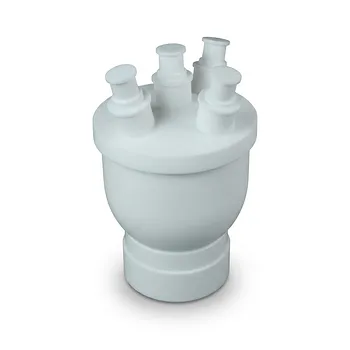
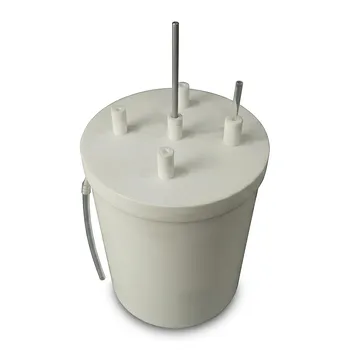
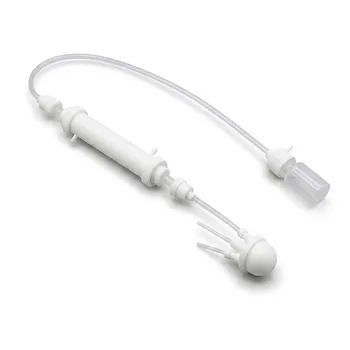
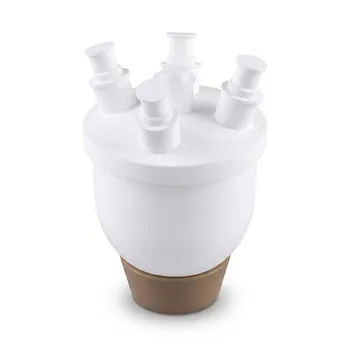
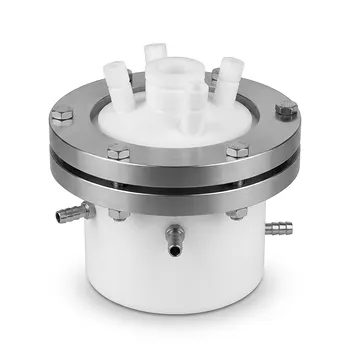
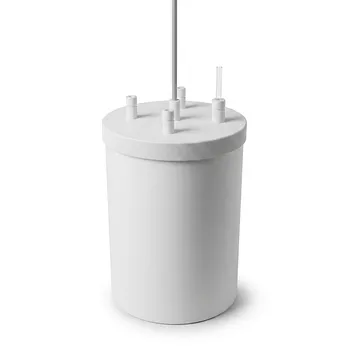
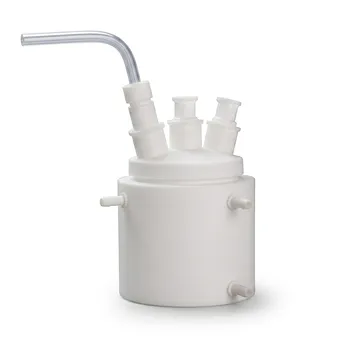
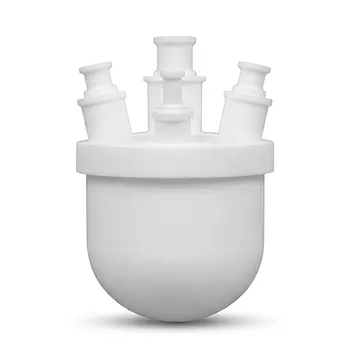
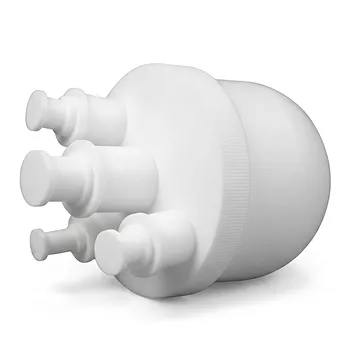
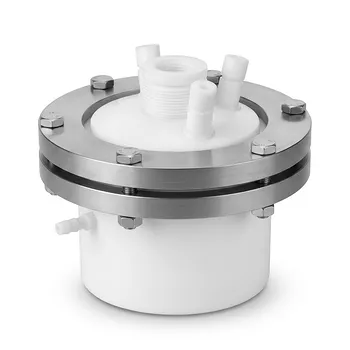
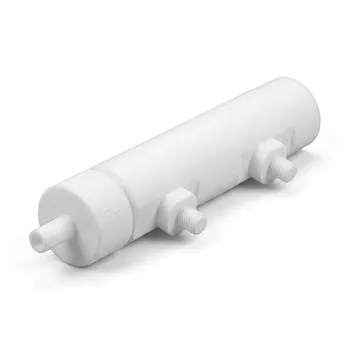
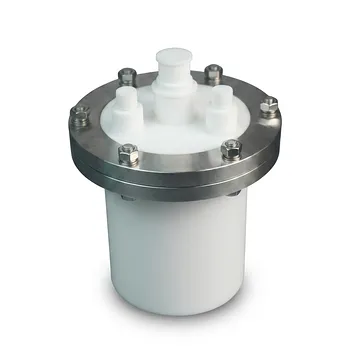
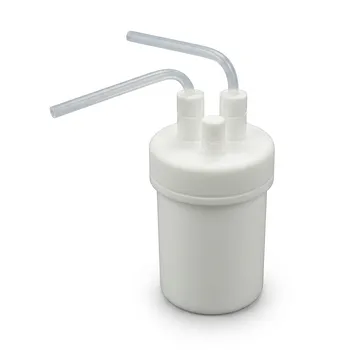
PTFE microchannel reactors facilitate the safe handling of hydrofluoric acid (HF) by providing a reaction environment that is entirely resistant to corrosive degradation. These systems utilize the inherent chemical inertness of Polytetrafluoroethylene to maintain structural integrity where traditional metals would fail. By confining hazardous substances to extremely small volumes, these reactors minimize the risk of large-scale chemical release while enabling precise control over high-pressure and high-temperature reactions.
PTFE microchannel reactors combine extreme material durability with intrinsic safety by limiting reactive inventory and maximizing heat transfer. This synergy allows for the safe, continuous processing of highly corrosive reagents like hydrofluoric acid under conditions that would typically require prohibitively expensive specialized alloys.
Superior Resistance to Corrosive Degradation
Total Inertness to Hydrofluoric Acid
PTFE is uniquely suited for processes involving HF because the material does not react with or degrade when exposed to concentrated mineral acids or strong bases. This chemical inertness prevents the erosion of internal channel geometry, ensuring that the hydrodynamic properties of the reactor remain constant over long-term use.
Eliminating the Need for Expensive Alloys
Traditional batch reactors often require exotic and expensive metal alloys to withstand the aggressive nature of hydrofluoric acid. PTFE microreactors offer a cost-effective alternative, maintaining their shape and function even during prolonged exposure to harsh chemicals at elevated pressures.
Prevention of Chemical Leaching
Using high-purity PTFE ensures that no chemical leaching occurs within the reactor environment, which is vital for maintaining the purity of scientific data or sensitive chemical products. The material’s low surface energy also prevents surface contamination from adhering to the microchannel walls.
Enhancing Process Safety Through Scale
Minimizing Hazardous Inventory
The small internal volume of microchannels—ranging from microliters to milliliters—strictly limits the total amount of hazardous material present at any given time. This "inventory control" significantly reduces the potential impact of a leak or component failure compared to large-scale batch vessels.
Superior Thermal Management
The high surface-area-to-volume ratio of microchannels allows for rapid heat dissipation, which is critical for highly exothermic reactions involving HF. This capability significantly reduces the risk of thermal runaway and allows for immediate quenching or dilution if a process excursion occurs.
Controlled Gas-Liquid Interactions
For reactions requiring the diffusion of gases, such as aerobic oxidations, PTFE membranes or tubing allow for controlled gas diffusion along the reaction length. This configuration enables the safe use of pure oxygen at high pressures without the risk of forming explosive mixtures.
Understanding the Technical Trade-offs
Pressure Drop and Viscosity Constraints
As the length of the microchannel increases or the fluid becomes more viscous, there is a significant increase in pressure drop. Engineers must carefully balance channel dimensions with pump capabilities to maintain consistent flow rates.
The Complexity of "Numbering-Up"
Because the throughput of a single microchannel is relatively low (milliliters to liters per hour), industrial-scale production requires "numbering-up." This involves the parallelization of many identical channels, which increases the complexity of the manifold and fluid distribution systems.
Risks of Physical Clogging
While PTFE’s non-stick properties mitigate some risks, reactions that produce large solids can still lead to clogging within the narrow channels. Precise filtration of precursors is often a prerequisite for ensuring the reliability of continuous microchannel processes.
Strategic Implementation of PTFE Reactors
Selecting the right reactor configuration depends on the specific chemical hazards and production goals of your project.
- If your primary focus is handling hydrofluoric or concentrated mineral acids: Utilize PTFE microchannels to ensure total material resistance and avoid the high costs associated with specialized corrosion-resistant alloys.
- If your primary focus is preventing thermal runaway in highly exothermic reactions: Leverage the high surface-area-to-volume ratio of the microchannels to achieve superior heat dissipation and precise temperature control.
- If your primary focus is maintaining ultra-high reagent purity: Employ high-purity PTFE components to eliminate the risk of leaching or cross-contamination during sensitive chemical transformations.
- If your primary focus is industrial-scale production: Implement a "numbering-up" strategy by running multiple identical PTFE reactor units in parallel to increase volume without sacrificing the safety benefits of small-scale chemistry.
By integrating the chemical inertness of PTFE with the inherent safety of microfluidic design, you can achieve unprecedented control over the world's most challenging and corrosive chemical reactions.
Summary Table:
| Feature | Benefit for HF Processing | Technical Highlight |
|---|---|---|
| Chemical Inertness | Prevents degradation and erosion | Resistant to concentrated mineral acids and bases |
| Small Volume | Limits hazardous inventory | Microliter to milliliter reactive volumes |
| Thermal Control | Prevents thermal runaway | High surface-area-to-volume ratio for heat dissipation |
| Material Purity | Eliminates chemical leaching | High-purity PTFE maintains reaction integrity |
| Scalability | Safe throughput increase | "Numbering-up" strategy via parallel reactor units |
Elevate Your Hazardous Chemistry with KINTEK’s Fluoropolymer Expertise
When handling aggressive reagents like hydrofluoric acid, compromise is not an option. KINTEK specializes in high-performance fluoropolymer solutions, manufacturing virtually every laboratory supply you need from PTFE and PFA.
From everyday essentials like beakers, crucibles, and reagent bottles to complex fluid transfer components (tubing, valves, fittings) and advanced reaction apparatus—including microchannel reactors, electrochemical cells, and microwave digestion vessels—we ensure total chemical resistance.
Whether you need standard labware, precision-machined non-standard parts, or bespoke laboratory setups, our end-to-end custom CNC fabrication is ready to deliver. Maintain absolute focus on performance and safety—contact KINTEK today to discuss your custom requirements!
Related Products
- Customizable Polytetrafluoroethylene PTFE Reactor and Corrosion Resistant Teflon Flask
- PTFE 10L Reaction Vessel with Stirring Paddle Customizable Corrosion Resistant High Temperature Reactor for Biopharmaceutical and Chemical Processing
- Custom PTFE Multilayer Reaction Apparatus High Temperature Corrosion Resistant Threaded Modular Sieve System
- Custom PTFE Volatile Matter Condensation Reflux Reaction Device Corrosion Resistant Pressure Resistant
- High Performance Customizable PTFE Reaction Vessel and Corrosion Resistant Polytetrafluoroethylene Flask for Chemical Laboratory Use
People Also Ask
- What functional advantages do PTFE reactors provide over glass? Achieve Superior Purity and Safety in Synthesis
- What are the primary fabrication methods for capillary-based and monolithic PTFE reactors? Expert Production Insights
- Why are PTFE or PFA reaction vessels required for the selective etching process of MXene using hydrofluoric acid (HF)?
- Why is a Teflon-lined (PTFE) reactor vessel required for the hydrothermal synthesis of V2O5 and SnO2 nanomaterials?
- What is the role of high chemical inertness reaction vessels in the organic synthesis of acylhydrazone ligands? | Guide