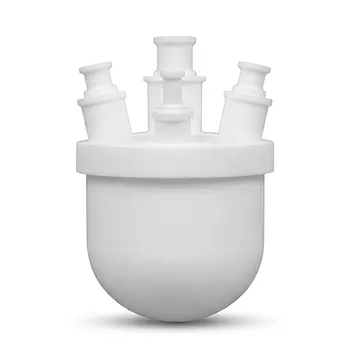
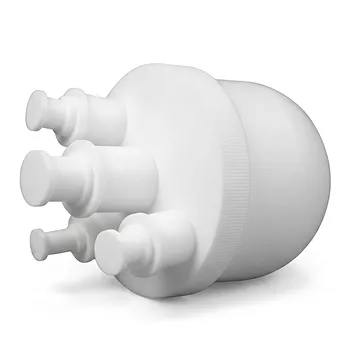
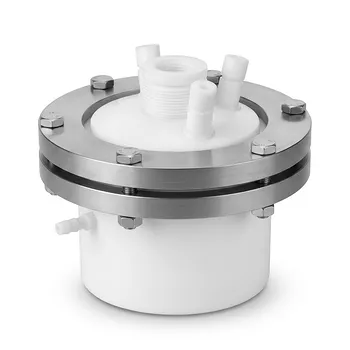
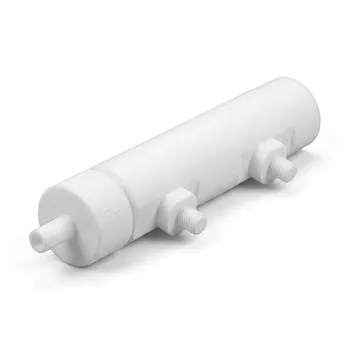
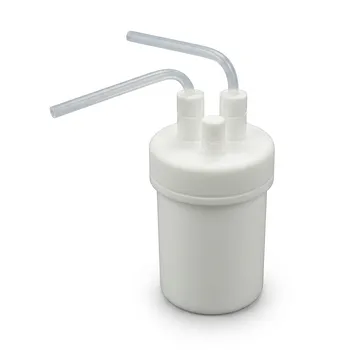
PTFE is selected for microchannel reactors because it provides a unique combination of near-universal chemical resistance, high thermal stability, and ultra-low surface energy. This material allows researchers to perform highly corrosive or sensitive reactions in precise environments without the risk of reactor degradation, metal-ion leaching, or channel clogging due to material adhesion.
PTFE acts as a "universal container" for microfluidic synthesis, ensuring that the reactor remains a passive environment even when exposed to aggressive reagents like hydrofluoric acid or strong oxidants. Its non-stick properties and thermal resilience are critical for maintaining the precise flow dynamics required for efficient, high-purity chemical production.
The Engineering Logic Behind PTFE Selection
Unrivaled Chemical Inertness
PTFE (Polytetrafluoroethylene) is virtually unaffected by the vast majority of chemicals used in organic synthesis. It resists strong acids (including hydrofluoric acid), bases, solvents, and powerful oxidants that would rapidly corrode stainless steel or glass.
This inertness ensures that the reactor walls do not participate in the reaction or degrade over time. It allows for the safe handling of aggressive reagents and air-sensitive intermediates without the need for specialized environments like gloveboxes.
Superior Resistance to Fouling and Adhesion
The extremely low surface energy of PTFE results in both hydrophobicity and oleophobicity. This "non-stick" quality is essential in microchannels, where even minor buildup can lead to significant pressure drops or total blockages.
By minimizing the adsorption and sticking of precipitates, biomolecules, or crystals, PTFE ensures stable, long-term operation. This is particularly valuable when working with viscous substances or reactions prone to forming solids.
Thermal Resilience and Insulation
PTFE maintains structural integrity for continuous service up to approximately 260°C. While its melting point exceeds 350°C, the lower service limit provides a wide enough window for most liquid-phase chemical syntheses.
Additionally, PTFE possesses low thermal conductivity. This property helps maintain internal temperatures during external heating processes, acting as an inherent insulator that protects the precision of the reaction environment.
Critical Advantages in Specialized Synthesis
Eliminating Metal Contamination
In pharmaceutical manufacturing, even trace amounts of metal ions can contaminate Active Pharmaceutical Ingredients (APIs). PTFE eliminates this risk because it does not leach metallic impurities into the process stream.
This high level of purity ensures that the final products meet stringent regulatory standards. It also prevents unwanted catalytic side reactions that can be triggered by contact with metal surfaces.
Precision Machinability for Micro-Scales
Despite its toughness, PTFE is easily machinable, allowing for the creation of complex and precise channel geometries. Microchannel reactors typically feature lateral dimensions between 10 and 1000 micrometers.
The ability to fabricate these intricate paths into PTFE plates or tubing allows for superior mass transfer and residence-time control. These factors are the primary drivers of high efficiency and reduced byproduct formation in flow chemistry.
Support for Green Chemistry Goals
PTFE microchannel reactors contribute to sustainability by enabling process intensification. Their high efficiency reduces solvent usage, waste generation, and overall energy demand.
The extremely low hold-up volumes inherent in these reactors also improve safety. By minimizing the amount of hazardous material present at any given moment, the risk of catastrophic failure is significantly mitigated.
Understanding the Trade-offs
Mechanical Strength and Pressure Limits
While PTFE is chemically superior, it has lower mechanical strength compared to metals like stainless steel. Under high-pressure conditions, PTFE channels may deform or "creep" over time.
To solve this, many high-pressure designs utilize a "caged" approach, where the PTFE reactor is supported by an external metal frame. This combines the chemical resistance of the polymer with the structural rigour of steel.
Thermal Transfer Limitations
The same low thermal conductivity that provides insulation can be a disadvantage when rapid heat exchange is required. In highly exothermic reactions, removing heat through a PTFE wall is slower than through metal or silicon.
Engineers must often compensate for this by using thinner wall sections or increasing the surface-area-to-volume ratio. Careful design is necessary to ensure that thermal gradients do not negatively impact the reaction kinetics.
How to Apply This to Your Project
Making the Right Choice for Your Goal
- If your primary focus is Pharmaceutical API Synthesis: Choose PTFE to ensure zero metal-ion leaching and to maintain the high purity levels required by regulatory bodies.
- If your primary focus is Corrosive Inorganic Chemistry: Utilize PTFE specifically for its resistance to hydrofluoric acid and strong bases, which would degrade standard glass or steel reactors.
- If your primary focus is High-Pressure Flow Chemistry: Consider a hybrid design where a PTFE liner provides chemical protection while a secondary metal housing provides the necessary mechanical support.
- If your primary focus is Handling Solids or Precipitates: Leverage PTFE’s ultra-low surface energy to prevent channel clogging and minimize maintenance downtime.
The strategic use of PTFE in microchannel reactors transforms the reactor from a potential source of contamination into a reliable, invisible facilitator of high-precision chemistry.
Summary Table:
| Feature | Benefit | Application Impact |
|---|---|---|
| Chemical Inertness | Resists HF, strong bases, and oxidants | Allows for highly corrosive chemical synthesis without degradation. |
| Low Surface Energy | Non-stick surface; hydrophobic/oleophobic | Prevents channel clogging from precipitates and maintains stable flow. |
| High Purity | Zero metal-ion leaching | Essential for API manufacturing and contamination-free pharmaceuticals. |
| Thermal Stability | Continuous service up to 260°C | Maintains integrity during high-temperature liquid-phase reactions. |
| Machinability | Precision fabrication of 10-1000μm paths | Enables superior mass transfer and residence-time control. |
Optimize Your Chemical Synthesis with KINTEK
Elevate your laboratory's precision with KINTEK’s high-performance fluoropolymer solutions. Whether you require everyday basic labware (beakers, tubes, and crucibles) or advanced microchannel reactors and custom reaction apparatus, our end-to-end custom CNC fabrication ensures perfect results for your most demanding applications.
From high-purity trace analysis tools and fluid transfer components (tubing, fittings, valves) to bespoke electrochemical cells and hydrothermal synthesis liners, KINTEK maintains an absolute focus on high-performance PTFE and PFA materials.
Ready to scale your production or design a custom reactor? Contact us today to discuss your bespoke laboratory setups and high-volume orders!
Related Products
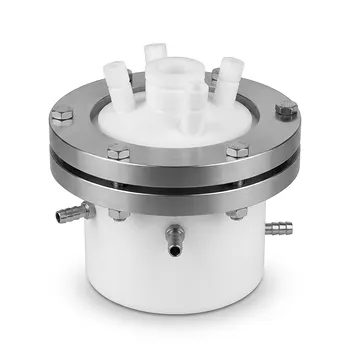
- Customizable Polytetrafluoroethylene PTFE Reactor and Corrosion Resistant Teflon Flask
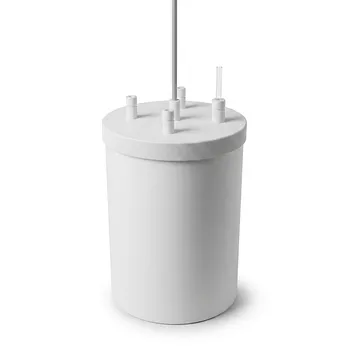
- PTFE 10L Reaction Vessel with Stirring Paddle Customizable Corrosion Resistant High Temperature Reactor for Biopharmaceutical and Chemical Processing
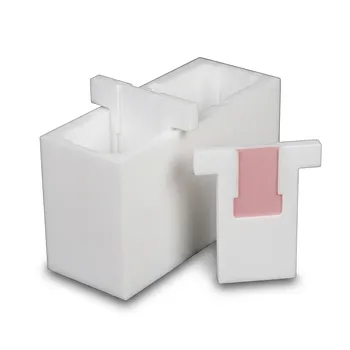
- Custom PTFE Multilayer Reaction Apparatus High Temperature Corrosion Resistant Threaded Modular Sieve System
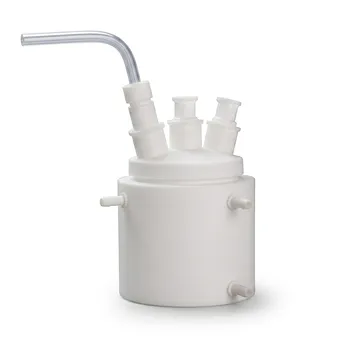
- Custom PTFE Volatile Matter Condensation Reflux Reaction Device Corrosion Resistant Pressure Resistant
- High Performance Customizable PTFE Reaction Vessel and Corrosion Resistant Polytetrafluoroethylene Flask for Chemical Laboratory Use
People Also Ask
- Why are PP or PTFE reactors preferred over glass in tribocatalysis? Maximize Charge Separation & Catalytic Efficiency
- What functional advantages do PTFE reactors provide over glass? Achieve Superior Purity and Safety in Synthesis
- What are the primary fabrication methods for capillary-based and monolithic PTFE reactors? Expert Production Insights
- Why are PTFE or PFA reaction vessels required for the selective etching process of MXene using hydrofluoric acid (HF)?
- Why is a Teflon-lined (PTFE) reactor vessel required for the hydrothermal synthesis of V2O5 and SnO2 nanomaterials?