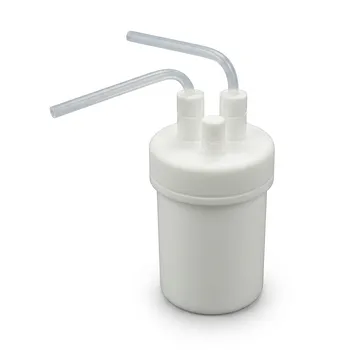
PTFE (Polytetrafluoroethylene) is the material of choice for microchannel reactors due to its unique combination of extreme chemical inertness, high thermal stability, and exceptionally low surface energy. These properties allow for the safe handling of aggressive reagents like strong acids, bases, and organic solvents while preventing material buildup on channel walls. The material's ability to maintain structural integrity at temperatures up to 260°C ensures reliability in a wide range of intensive continuous-flow chemical processes.
Core Takeaway: PTFE’s performance in microfluidic environments stems from its carbon-fluorine backbone, which provides a "near-universal" resistance to chemical attack and a non-stick surface that prevents fouling in channels as small as 10 micrometers.
Chemical and Molecular Stability
Universal Chemical Resistance
The carbon-fluorine bonds in PTFE are among the strongest in organic chemistry, making the material virtually inert. It resists degradation from hydrofluoric acid, strong oxidants, and reactive organometallics that would destroy glass or stainless steel reactors.
Prevention of Reagent Adhesion
Because PTFE is both hydrophobic and oleophobic, it minimizes the adsorption of biomolecules or precipitates. This is critical in microchannels (10–1000 μm), where even minor material buildup can cause significant pressure drops or total channel blockage.
Thermal and Surface Dynamics
High Thermal Integrity
While PTFE has a melting point exceeding 350°C, its practical continuous-service limit is approximately 260°C. This range allows researchers to perform high-temperature synthesis without the risk of the reactor leaching contaminants or losing its geometric shape.
Low Coefficient of Friction
With a friction coefficient as low as 0.05, PTFE facilitates the smooth flow of viscous fluids and slurries through narrow geometries. This property reduces the energy required for pumping and minimizes the mechanical shear experienced by sensitive reagents.
Physical and Engineering Advantages
Low Thermal Conductivity
PTFE acts as an excellent thermal insulator. In microchannel applications, this helps maintain stable internal temperatures during external heating processes, protecting the surrounding environment and ensuring localized reaction control.
Precision Machinability
Despite its toughness, PTFE is easily machinable, allowing for the fabrication of complex helical capillaries and precise channel geometries. This flexibility enables engineers to design specific flow patterns that optimize mixing and residence time.
Understanding the Trade-offs
Mechanical Limitations and Creep
PTFE is a relatively soft thermoplastic, which makes it susceptible to "creep" or cold flow under sustained pressure. In high-pressure microfluidic applications, PTFE components may deform over time, potentially altering channel dimensions or causing seal failures.
Thermal Transfer Constraints
While its insulative properties are beneficial for maintaining heat, they are a disadvantage when rapid heat dissipation is required. PTFE reactors may struggle with highly exothermic reactions compared to silicon carbide or metal reactors, as the material does not conduct heat away from the reaction zone quickly.
Making the Right Choice for Your Goal
How to Apply This to Your Project
- If your primary focus is handling aggressive corrosives: PTFE is the definitive standard, as it resists almost all known acids, bases, and solvents.
- If your primary focus is preventing channel clogging: Leverage PTFE’s low surface energy to handle reactions involving precipitates or sticky intermediates that would foul other materials.
- If your primary focus is high-pressure operations: Consider using PTFE-lined stainless steel or PFA, as pure PTFE may deform under high mechanical loads.
- If your primary focus is rapid heat exchange: Look toward alternative materials like Borosilicate glass or Silicon Carbide, which offer much higher thermal conductivity than PTFE.
By aligning PTFE’s unmatched chemical resistance with an understanding of its mechanical limits, engineers can build highly durable and efficient flow chemistry systems.
Summary Table:
| Property | Impact on Microfluidics | Core Benefit |
|---|---|---|
| Chemical Inertness | Resists strong acids, bases, and organic solvents. | Prevents reactor degradation and contamination. |
| Low Surface Energy | Hydrophobic and oleophobic surface behavior. | Prevents channel clogging and reagent adhesion. |
| Thermal Stability | Maintains integrity up to 260°C. | Reliable for high-temperature continuous-flow synthesis. |
| Low Friction | Minimal resistance to fluid movement. | Facilitates smooth flow and reduces pumping energy. |
| Machinability | Allows for complex helical and narrow geometries. | Enables precision engineering of microchannel patterns. |
Elevate Your Flow Chemistry with KINTEK’s Fluoropolymer Expertise
When your research demands absolute chemical purity and reliability, KINTEK delivers. We specialize in high-performance PTFE and PFA laboratory solutions, combining material science with end-to-end custom CNC fabrication. Whether you are scaling up complex reactions or refining microfluidic patterns, our components ensure your system remains inert, non-stick, and durable.
Our extensive range includes:
- Essential Labware: Beakers, crucibles, reagent bottles, and digestion tubes.
- Fluid Handling: Precision tubing, fittings, valves, and high-purity transfer components.
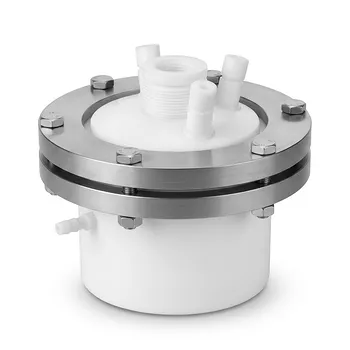
- Advanced Apparatus: Standard and custom microchannel reactors, electrochemical cells, battery testing fixtures, and microwave digestion vessels.
- Consumables: High-performance O-rings, gaskets, seal tapes, and stirring bars.
From one-off bespoke machined parts to high-volume industrial orders, KINTEK provides the high-performance fluoropolymer tools you need to succeed.
Contact our engineering team today to discuss your custom reactor needs!
Related Products
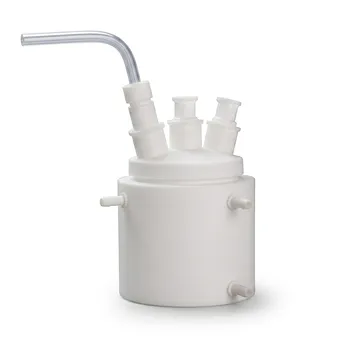
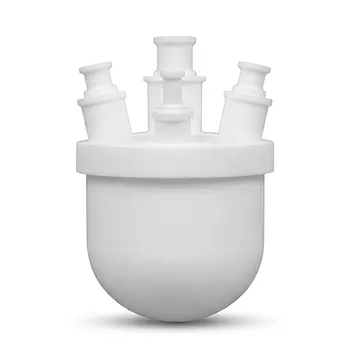
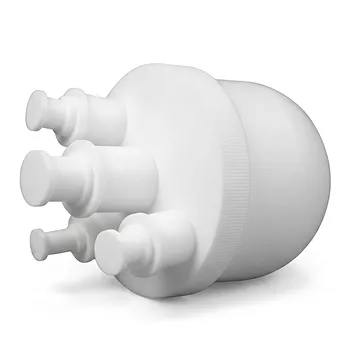
- Customizable Polytetrafluoroethylene PTFE Reactor and Corrosion Resistant Teflon Flask
- PTFE 10L Reaction Vessel with Stirring Paddle Customizable Corrosion Resistant High Temperature Reactor for Biopharmaceutical and Chemical Processing
- Custom PTFE Multilayer Reaction Apparatus High Temperature Corrosion Resistant Threaded Modular Sieve System
- Custom PTFE Volatile Matter Condensation Reflux Reaction Device Corrosion Resistant Pressure Resistant
- High Performance Customizable PTFE Reaction Vessel and Corrosion Resistant Polytetrafluoroethylene Flask for Chemical Laboratory Use
People Also Ask
- What functional advantages do PTFE reactors provide over glass? Achieve Superior Purity and Safety in Synthesis
- What are the primary fabrication methods for capillary-based and monolithic PTFE reactors? Expert Production Insights
- Why are PTFE or PFA reaction vessels required for the selective etching process of MXene using hydrofluoric acid (HF)?
- Why is a Teflon-lined (PTFE) reactor vessel required for the hydrothermal synthesis of V2O5 and SnO2 nanomaterials?
- What is the role of high chemical inertness reaction vessels in the organic synthesis of acylhydrazone ligands? | Guide