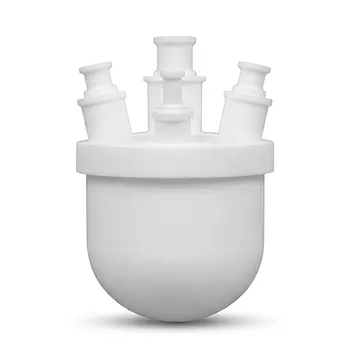
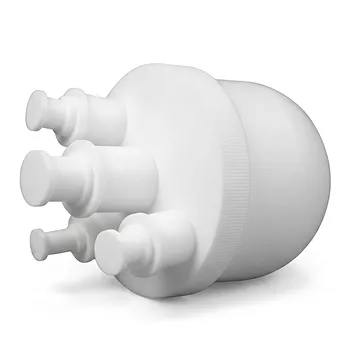
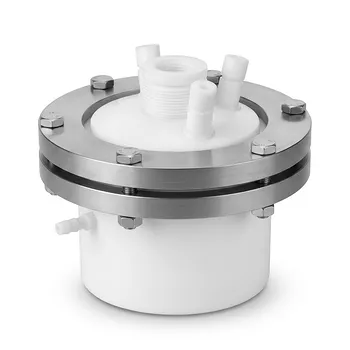
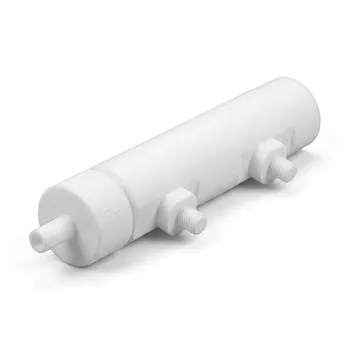
PTFE microchannel reactors offer a level of universal chemical inertness that far exceeds traditional materials like glass, stainless steel, and PDMS. While these other materials often succumb to corrosion, leaching, or structural swelling, PTFE remains stable when exposed to nearly all strong acids, bases, oxidants, and organic solvents. This makes it the definitive choice for aggressive synthetic chemistry where material integrity and sample purity are non-negotiable.
PTFE provides near-total chemical resistance across the entire pH scale and most organic solvents, preventing the fouling and leaching common in metallic or PDMS-based systems. Its unique molecular stability ensures that even the most aggressive reagents do not compromise the reactor's structural integrity or contaminate the reaction.
The Superiority of PTFE Over Traditional Materials
Limitations of Stainless Steel and Glass
Stainless steel is highly susceptible to corrosion when exposed to strong acids or halogenated compounds, leading to metal ion leaching. Glass, while generally inert, can be etched by strong bases and certain fluorinating agents, which eventually compromises the microchannel geometry.
The Vulnerability of PDMS-Based Systems
PDMS (Polydimethylsiloxane) is notorious for its poor compatibility with organic solvents, which cause the material to swell and deform. This swelling can alter the microchannel dimensions or cause the device to fail entirely during complex organic syntheses.
PTFE as the Universal Solution
Unlike its counterparts, PTFE can withstand aggressive fluorinating agents and concentrated alkalis without degrading. It serves as a "universal" material that allows researchers to run diverse chemistries in a single reactor platform without worrying about material compatibility.
The Science of Chemical Inertness in PTFE
The Strength of the Carbon-Fluorine Bond
The exceptional resistance of PTFE stems from its unique molecular structure, characterized by extremely strong carbon-fluorine bonds. This bond is one of the strongest in organic chemistry, creating a stable shield that is virtually impervious to chemical attack.
Non-Porous Surfaces and Purity
PTFE features a non-porous surface that minimizes the absorption of reagents and prevents residues from being retained between runs. This characteristic is critical for maintaining high purity and preventing cross-contamination in pharmaceutical and fine chemical applications.
Resistance to Leaching and Fouling
Because PTFE is chemically inert, it does not leach plasticizers or metallic impurities into the reaction stream. This ensures that the results of a microfluidic experiment are a product of the chemistry itself, rather than interactions with the reactor walls.
Understanding the Trade-offs and Limitations
Thermal and Pressure Constraints
While PTFE is chemically superior, it has lower mechanical strength and lower thermal conductivity than stainless steel or glass. At extremely high pressures or temperatures, PTFE may undergo "cold flow" or deformation, requiring external support or reinforcement.
Rare Chemical Exceptions
PTFE is not invincible; it can be attacked by liquid or dissolved alkali metals (such as sodium) and extremely strong oxidizers. It also faces limitations when exposed to gaseous fluorine or certain organic halogenated compounds at high temperatures and pressures.
Fabrication Complexity
Manufacturing precise microchannels in PTFE can be more challenging than etching glass or casting PDMS. This often results in a higher initial cost for PTFE reactors, though this is usually offset by their significantly longer operational lifespan in harsh environments.
Making the Right Choice for Your Goal
To determine if a PTFE microchannel reactor is the right fit for your application, consider your primary operational requirements:
- If your primary focus is aggressive acid/base synthesis: PTFE is the essential choice to prevent the corrosion and leaching seen in stainless steel or glass.
- If your primary focus is organic solvent compatibility: PTFE is significantly better than PDMS, as it will not swell or degrade when exposed to alcohols, ketones, or hydrocarbons.
- If your primary focus is high-pressure gaseous fluorine reactions: You should exercise caution, as PTFE can fail under these specific extreme conditions and may require specialized metallic alloys instead.
- If your primary focus is pharmaceutical purity: PTFE is the gold standard because its non-porous, inert surface eliminates the risk of leaching and cross-contamination.
By selecting PTFE for your microfluidic system, you ensure a robust, contamination-free environment capable of handling the most demanding chemical challenges.
Summary Table:
| Material | Chemical Resistance | Main Weakness | Best Application |
|---|---|---|---|
| PTFE | Universal (pH 0-14, most solvents) | Lower mechanical strength/thermal conductivity | Aggressive synthesis & high-purity pharma |
| Stainless Steel | Good for non-corrosive fluids | Susceptible to acids and metal leaching | High-pressure & high-temperature reactions |
| Glass | High (except for bases/HF) | Etched by strong bases; fragile | Optical monitoring & general chemistry |
| PDMS | Limited | Swells/deforms with organic solvents | Rapid prototyping & biological studies |
Precision Fluoropolymer Solutions for Your Toughest Chemical Challenges
Elevate your research with KINTEK, your premier partner for high-performance PTFE and PFA laboratory solutions. From everyday basic labware—including beakers, crucibles, and digestion tubes—to comprehensive fluid transfer components like tubing, valves, and fittings, we ensure your experiments remain contamination-free.
Our expertise extends to advanced reaction apparatus such as custom PTFE microchannel reactors, electrochemical cells, and microwave digestion vessels. Backed by end-to-end custom CNC fabrication, KINTEK is uniquely equipped to deliver everything from complex non-standard machined parts to high-volume orders with absolute focus on material integrity.
Ready to upgrade your lab setup with superior chemical resistance? Contact us today to discuss your custom project!
Related Products
- Customizable Polytetrafluoroethylene PTFE Reactor and Corrosion Resistant Teflon Flask
- PTFE 10L Reaction Vessel with Stirring Paddle Customizable Corrosion Resistant High Temperature Reactor for Biopharmaceutical and Chemical Processing
- Custom PTFE Multilayer Reaction Apparatus High Temperature Corrosion Resistant Threaded Modular Sieve System
- Custom PTFE Volatile Matter Condensation Reflux Reaction Device Corrosion Resistant Pressure Resistant
- High Performance Customizable PTFE Reaction Vessel and Corrosion Resistant Polytetrafluoroethylene Flask for Chemical Laboratory Use
People Also Ask
- What functional advantages do PTFE reactors provide over glass? Achieve Superior Purity and Safety in Synthesis
- What are the primary fabrication methods for capillary-based and monolithic PTFE reactors? Expert Production Insights
- Why are PTFE or PFA reaction vessels required for the selective etching process of MXene using hydrofluoric acid (HF)?
- Why is a Teflon-lined (PTFE) reactor vessel required for the hydrothermal synthesis of V2O5 and SnO2 nanomaterials?
- What is the role of high chemical inertness reaction vessels in the organic synthesis of acylhydrazone ligands? | Guide