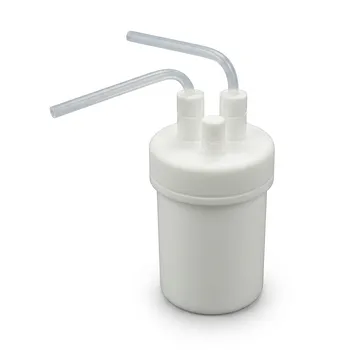
Scaling up PTFE microchannel reactor production is primarily achieved through a strategy known as "numbering-up," which involves the parallelization of multiple microchannels to increase throughput. Unlike traditional batch reactors that require geometric resizing, microchannel systems scale by adding identical units, ensuring that the optimized heat and mass transfer conditions found in the lab remain consistent at an industrial scale.
The core advantage of PTFE microchannel technology is that it bypasses the complex fluid dynamic shifts of traditional scaling by using parallelization and modular stacking to maintain reaction integrity while increasing volume.
The Strategy of Parallelization (Numbering-Up)
Replicating Lab-Optimized Conditions
Scaling through numbering-up involves using multiple parallel channels or tubes that are identical to the laboratory prototype. This approach preserves the fluid dynamics and reaction performance established during small-scale testing.
Because the physical dimensions of each channel remain constant, the surface-area-to-volume ratio does not change as production increases. This allows for a direct translation of lab results to pilot or production scales without the need to re-engineer the entire system.
Modular Stacking for Industrial Throughput
Industrial-scale volumes are achieved by the modular stacking of reactor units. By combining several planar chips or tubular modules, operators can scale production from milliliters per hour to significantly higher industrial flows.
This modularity provides high flexibility, as individual units can be added or removed based on demand. It also simplifies maintenance, as specific modules can be serviced without shutting down the entire production line.
Technical Fabrication and Assembly
Precision Manufacturing Methods
PTFE microchannel chips are often produced via CNC milling of technical-grade blocks or high-temperature thermo-molding at temperatures up to 350°C. CNC machining is particularly valued for rapid prototyping and screening because it allows for custom geometries and easy disassembly.
Thermo-molding against reusable masters is a more scalable approach for producing high volumes of identical chips. Both methods leverage PTFE’s exceptional corrosion resistance, which is critical when working with alkaline catalysts or aggressive chemicals.
Sealing and Interlocking Mechanisms
To ensure leak-proof operation under pressure, these reactors use sophisticated sealing methods like mechanical "click" systems. These involve tenon-and-mortise interlocking under compression to create a hermetic seal.
Alternatively, thermal bonding can be used to fuse PTFE layers together. In many cases, FEP interlayers are utilized as a bonding agent to facilitate a secure, permanent connection between the microfluidic components.
Understanding the Trade-offs
Pressure Drop and Viscosity Challenges
A primary limitation of microchannel scaling is the significant increase in pressure drop as channel length or fluid viscosity increases. High-pressure pumps are often required to maintain the necessary flow rates through dense parallel arrays.
If the reaction involves high-viscosity fluids, the energy requirements for pumping can become a major operational cost. This must be calculated early in the design phase to ensure the system remains economically viable at scale.
Risk of Clogging and Solid Formation
While PTFE’s non-stick properties help mitigate the risk, clogging remains a concern if the chemical reaction produces large solids. Unlike large batch tanks, a single blockage in a microchannel can disrupt the flow of an entire parallelized module.
Filter systems and precise temperature control are necessary to prevent precipitation. If a clog does occur, the ability to disassemble and clean CNC-machined PTFE blocks becomes a significant operational advantage.
How to Apply This to Your Project
Implementation Recommendations
- If your primary focus is rapid prototyping and screening: Utilize CNC-milled PTFE blocks that can be easily disassembled and reconfigured to test different reaction geometries.
- If your primary focus is high-volume industrial production: Invest in a modular stacking system using thermo-molded chips and FEP thermal bonding to maximize throughput and ensure long-term structural integrity.
By leveraging the modular nature of PTFE microchannels, you can move from laboratory proof-of-concept to full-scale production with unprecedented speed and predictability.
Summary Table:
| Scaling Aspect | Method / Strategy | Key Benefit |
|---|---|---|
| Core Strategy | Numbering-Up (Parallelization) | Maintains lab-optimized heat/mass transfer at scale. |
| Expansion | Modular Stacking | Provides flexibility and high industrial throughput. |
| Fabrication | CNC Milling & Thermo-molding | Allows for rapid prototyping and precision geometry. |
| Sealing | Mechanical Interlock & FEP Bonding | Ensures leak-proof operation under high pressure. |
| Challenges | Pressure Drop & Clogging Risk | PTFE's non-stick surface and modular cleaning help mitigate. |
Optimize Your Scale-Up with KINTEK’s Fluoropolymer Expertise
Ready to transition from lab-scale research to industrial production? KINTEK specializes in high-performance fluoropolymer solutions tailored for the most demanding chemical environments.
From everyday basic labware—including beakers, measuring cylinders, crucibles, and reagent bottles—to advanced PTFE microchannel reactors, hydrothermal synthesis liners, and microwave digestion vessels, we provide the tools you need for success. Our capabilities extend to comprehensive fluid transfer components (tubing, fittings, valves) and precision sample prep tools (filters, pipettes, tweezers).
Why partner with KINTEK?
- Custom Engineering: Our end-to-end custom CNC fabrication delivers everything from complex non-standard machined parts to bespoke laboratory setups.
- Material Excellence: We maintain an absolute focus on high-purity PTFE and PFA for maximum corrosion resistance.
- Scalable Solutions: We support both high-volume orders and unique, one-off prototypes.
Contact us today to discuss your custom project!
Related Products
- Customizable Polytetrafluoroethylene PTFE Reactor and Corrosion Resistant Teflon Flask
- PTFE 10L Reaction Vessel with Stirring Paddle Customizable Corrosion Resistant High Temperature Reactor for Biopharmaceutical and Chemical Processing
- Custom PTFE Multilayer Reaction Apparatus High Temperature Corrosion Resistant Threaded Modular Sieve System
- Custom PTFE Volatile Matter Condensation Reflux Reaction Device Corrosion Resistant Pressure Resistant
- High Performance Customizable PTFE Reaction Vessel and Corrosion Resistant Polytetrafluoroethylene Flask for Chemical Laboratory Use
People Also Ask
- What functional advantages do PTFE reactors provide over glass? Achieve Superior Purity and Safety in Synthesis
- What are the primary fabrication methods for capillary-based and monolithic PTFE reactors? Expert Production Insights
- Why are PTFE or PFA reaction vessels required for the selective etching process of MXene using hydrofluoric acid (HF)?
- Why is a Teflon-lined (PTFE) reactor vessel required for the hydrothermal synthesis of V2O5 and SnO2 nanomaterials?
- What is the role of high chemical inertness reaction vessels in the organic synthesis of acylhydrazone ligands? | Guide