Fluorinated RAFT (F-RAFT) agents control polymerization by mediating reversible chain transfer between growing polymer radicals and a fluorinated thiocarbonylthio compound. Fluorinated xanthates and omega-perfluorinated dithioesters are designed with electron-withdrawing fluorinated groups and radical-stabilizing spacer groups that provide high chain-transfer constants. This enables controlled growth across both highly activated and less activated monomers, supporting well-defined semi-fluorinated block copolymers. The essential equipment consideration is to use chemically resistant fluoropolymer labware, particularly PTFE or PFA, when fluorinated solvents and reagents may attack, swell, contaminate, or leach from conventional materials.
F-RAFT agents regulate chain growth through efficient reversible radical transfer, while PTFE/PFA equipment protects reagent purity and equipment integrity in aggressive fluorinated chemical environments.
How F-RAFT Agents Control Polymerization
Reversible Chain Transfer Limits Uncontrolled Growth
In RAFT polymerization, a growing polymer radical adds to the RAFT agent and forms an intermediate radical. That intermediate then fragments, transferring the active radical to another polymer chain.
This repeated addition and fragmentation distributes growth among chains instead of allowing a small number of chains to grow rapidly while others remain short. The result is better control over molecular weight and typically a narrower molecular-weight distribution.
Fluorinated Groups Tune Chain-Transfer Behavior
F-RAFT agents incorporate fluorinated moieties that strongly influence the electronic character of the thiocarbonylthio group. Electron-withdrawing fluorinated substituents can improve the agent's reactivity toward selected radical and monomer combinations.
The agent must balance two requirements: it must react readily enough to transfer chains efficiently, but its intermediate must also fragment in a way that regenerates a propagating radical. The fluorinated structure and the attached R group are therefore selected together.
Radical-Stabilizing Spacers Improve Compatibility
The spacer or R group helps stabilize the radical formed during the reversible transfer process. This structural feature contributes to a high chain-transfer constant and improves the likelihood that polymer chains repeatedly exchange their active ends.
Effective transfer is especially important when the monomer family varies significantly in reactivity. A suitably designed F-RAFT agent can support controlled polymerization of both highly activated and less activated monomers.
Controlled Transfer Enables Block Structures
A polymer chain formed under F-RAFT control can retain a reactive chain end after the first monomer has been consumed. That chain end can initiate polymerization of a second monomer, allowing the preparation of semi-fluorinated block copolymers.
This capability is valuable for materials requiring distinct fluorinated and non-fluorinated segments, including specialized polymers for microelectronic photoresists.
Why Equipment Compatibility Matters
Fluorinated Solvents Can Challenge Standard Materials
F-RAFT synthesis and polymerization may involve aggressive fluorinated solvents, including solvents selected for their ability to dissolve fluorinated monomers, ionic species, or catalyst complexes. Some conventional plastics can swell, soften, absorb solvent, or release organic contaminants under these conditions.
Material compatibility must therefore be evaluated for the specific solvent, temperature, pressure, exposure time, and reagent combination. “Plastic” is not a sufficient material specification.
PTFE and PFA Protect Reagent Purity
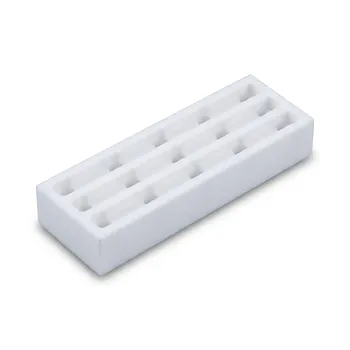
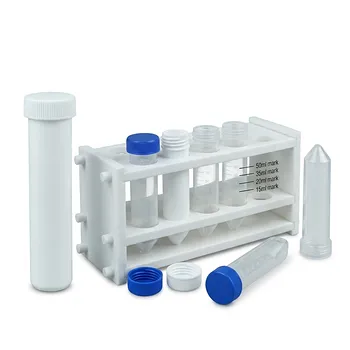
High-purity PTFE and PFA are commonly selected for reagent bottles, digestion tubes, reaction vessels, tubing, seals, valves, and custom-machined transfer fittings. Their chemical resistance and low surface energy reduce the risk of solvent absorption, polymer fouling, and contamination from extractable materials.
These properties are particularly useful when low levels of contamination could affect chain-transfer efficiency, emulsion behavior, catalyst performance, or dispersity.
Transfer Hardware Is Part of the Reaction System
Compatibility is required throughout the fluid path, not only in the main reaction vessel. Tubing, fittings, valve seats, gaskets, and transfer bottles can all introduce contamination or fail when exposed to fluorinated reagents.
A chemically resistant transfer system helps maintain accurate reagent composition and prevents material degradation during charging, sampling, and product recovery.
Pressure and Temperature May Add Separate Hazards
The F-RAFT agent itself does not automatically require a high-pressure reactor. However, some fluorinated monomers, such as vinylidene fluoride, are flammable gases processed under elevated pressure.
When such monomers are involved, the equipment must also be rated for the operating pressure and designed for the relevant fire and explosion hazards. This may require pressure-rated autoclaves and piping, intrinsically safe controls, ventilation, and appropriate containment.
Understanding the Trade-offs
Fluoropolymer Equipment Is Not a Universal Substitute
PTFE and PFA provide strong chemical resistance, but equipment selection still depends on mechanical strength, temperature, pressure, permeability, and sealing requirements. A fluoropolymer component that is chemically compatible may not be suitable for a demanding pressure or vacuum duty.
The full operating envelope must be checked against the manufacturer's data and the actual process conditions.
Glass and Metals Require Careful Evaluation
Glass and metal equipment can be appropriate in many polymerization systems, but reactive fluorinated solvents, catalyst combinations, moisture, and surface interactions may create compatibility concerns. Metallic components can corrode or introduce trace metals, while reactive catalysts may be affected by moisture on surfaces.
The correct choice is determined by the complete chemical system rather than by a blanket rule that one material is always suitable.
High Purity Does Not Replace Process Control
Low-contamination labware cannot compensate for poor exclusion of oxygen or moisture, inaccurate monomer feeds, inadequate temperature control, or unsuitable initiator and RAFT-agent ratios. These variables also influence conversion, molecular weight, and dispersity.
For sensitive systems, material compatibility should be treated as one part of a broader control strategy.
Fluorinated Reagents Increase Handling Complexity
Fluorinated solvents and monomers can create additional requirements for ventilation, waste handling, pressure control, and personal protection. The specific hazards depend on the identity and quantity of each reagent.
Equipment should be selected through a documented compatibility and hazard assessment rather than solely from the expected polymerization mechanism.
How to Apply This to Your Project
The most effective approach is to match the F-RAFT structure and equipment design to the monomer set and process conditions.
- If your primary focus is molecular-weight control: Select an F-RAFT agent whose fluorinated substituents and R group provide efficient, reversible chain transfer for the chosen monomer family, then verify conversion and dispersity experimentally.
- If your primary focus is semi-fluorinated block copolymers: Confirm that the retained chain end remains active and compatible with the second monomer before scaling the block sequence.
- If your primary focus is reagent purity: Use high-purity PTFE/PFA bottles, vessels, tubing, seals, and fittings wherever fluorinated solvents or transfer-sensitive reagents contact the equipment.
- If your primary focus is process safety: Check chemical compatibility separately from pressure, temperature, flammability, ventilation, and containment requirements, especially for gaseous fluoromonomers.
Reliable F-RAFT polymerization depends on coordinating molecular design, process control, and chemically appropriate equipment.
Summary Table:
| Aspect | Key Points |
|---|---|
| Mechanism | Reversible chain transfer; fluorinated groups tune reactivity; R group stabilizes radical; enables block copolymers. |
| Equipment | Use PTFE/PFA labware to avoid contamination and swelling; ensure pressure and temperature ratings for gaseous monomers. |
| Considerations | Compatibility across entire fluid path; balance chemical resistance with mechanical strength; high purity doesn't replace process control. |
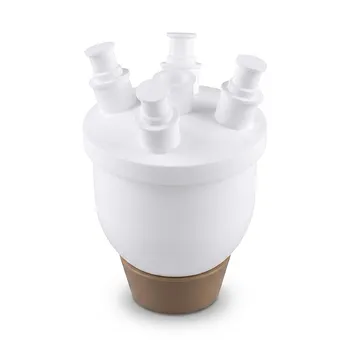
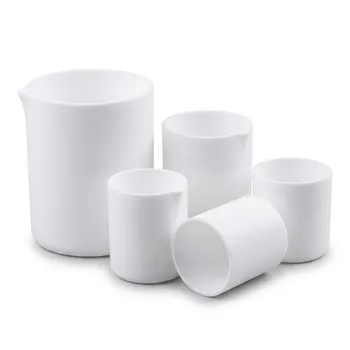
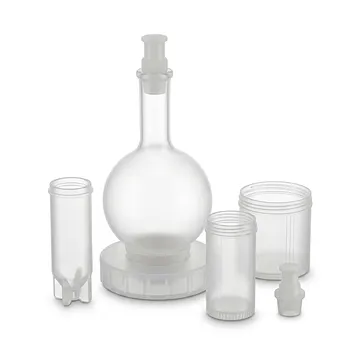
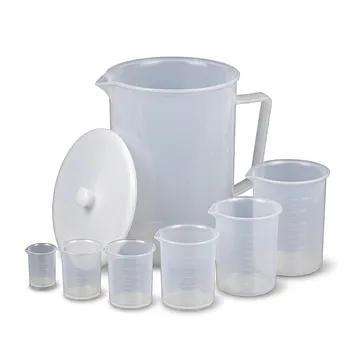
Ensure the highest purity and compatibility in your F-RAFT polymerizations. At KINTEK, we specialize in PTFE and PFA labware, from beakers and reaction vessels to custom-machined transfer components, all designed for aggressive fluorinated environments. Contact us today to discuss your specific needs and enhance your research efficiency!
Related Products
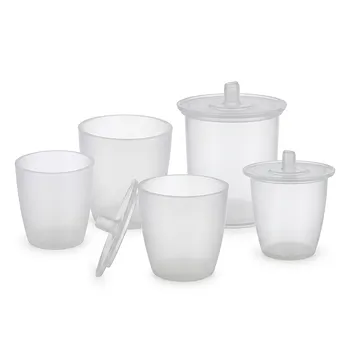
- High Purity PFA Crucible and Corrosion Resistant PTFE Beaker for Trace Analysis and Custom Laboratory Applications
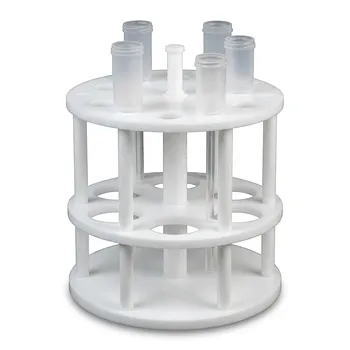
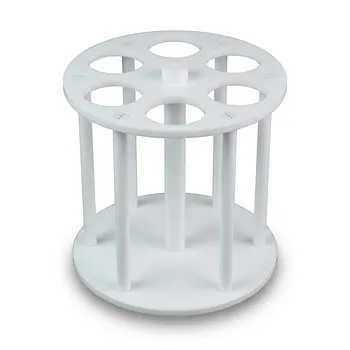
- Custom PFA Microcolumn Racks and PTFE Machined Low Background Corrosion Resistant Laboratory Fixtures
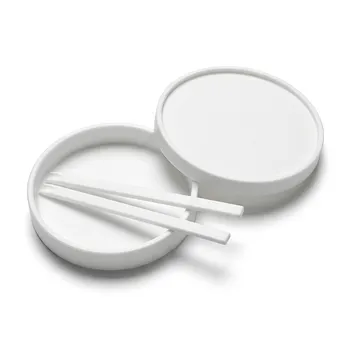
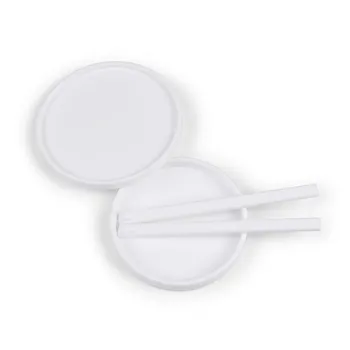
- Custom Polytetrafluoroethylene PTFE Petri Dishes 60mm Corrosion Resistant Low Background Labware
- Custom PTFE Petri Dishes Corrosion Resistant High Purity Low Background Labware
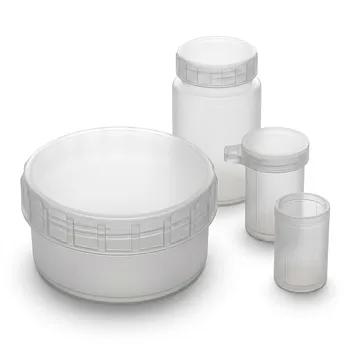
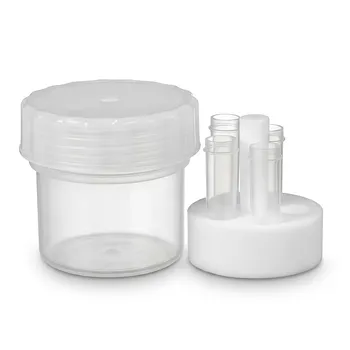
- PFA Reaction Jar Corrosion Resistant Wide Mouth PTFE Lab Bottle High Purity Chemical Vessel
People Also Ask
- Why are high-purity vessels critical for BiFeO3 synthesis? Ensuring Phase Purity
- Why is the use of high-purity PFA or PTFE labware critical during TiO2 nanoparticle purification? Protect Sample Purity
- Why is high-purity PFA labware necessary for Znx@LS-2 zeolite ICP-OES analysis? Ensure Trace-Level Precision
- Why is high-purity PFA trace analysis labware used for MXene? Ensure Superior Material Integrity in Research
- Why is high-purity PFA trace analysis labware recommended for trace element detection? Achieve Gold Standard PPT Accuracy