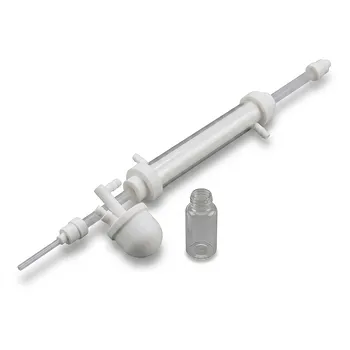
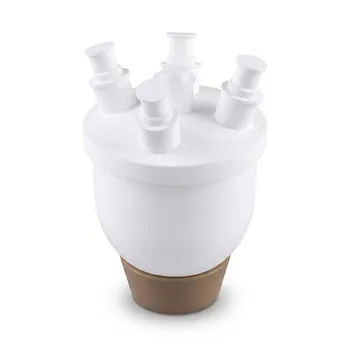
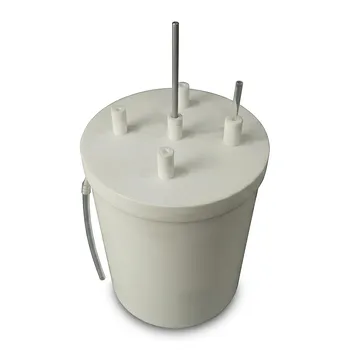
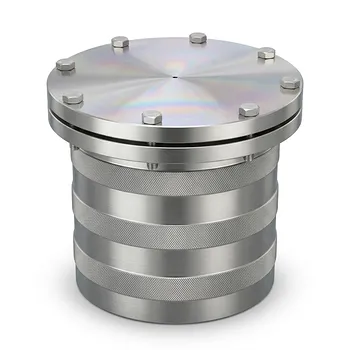
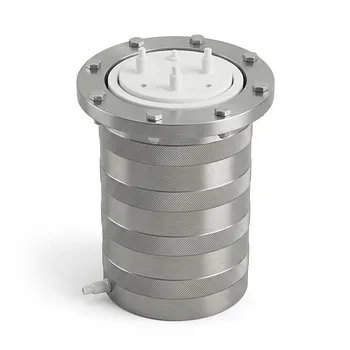
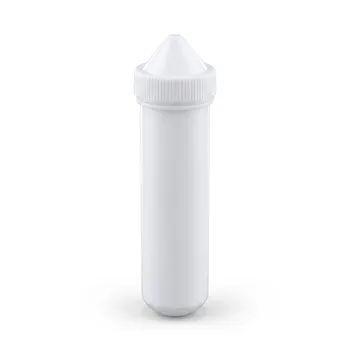
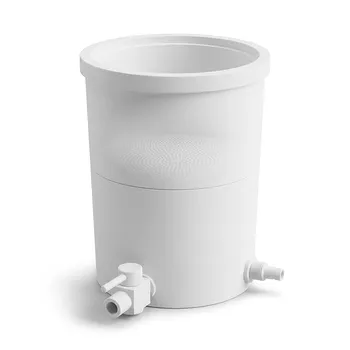
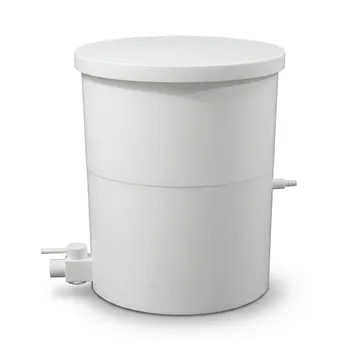
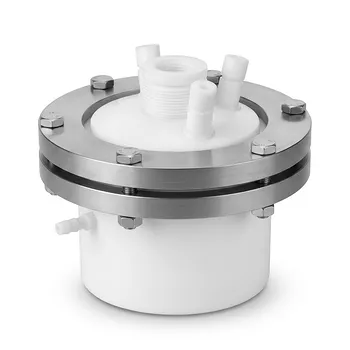
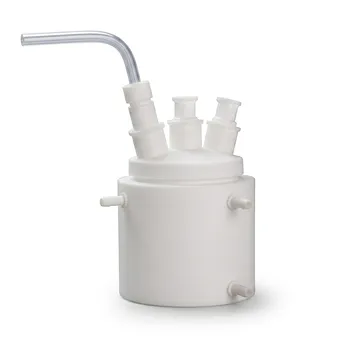
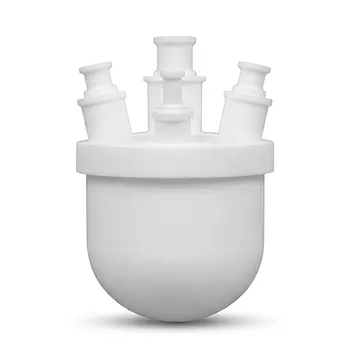
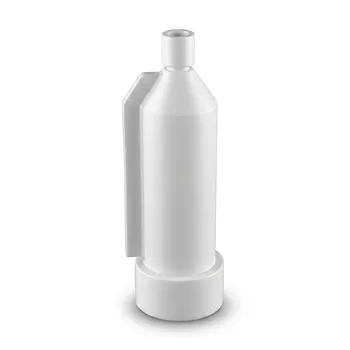
PTFE membrane and tubular reactors act as a semi-permeable interface that facilitates safe and controlled gas-liquid contact. In aerobic oxidation, these reactors allow oxygen to diffuse directly through the reactor walls into the liquid phase at a molecular level. This enables high conversion rates while eliminating the need for high-pressure vessels or the use of diluted oxygen.
PTFE reactors transform aerobic oxidation by replacing high-risk gas bubbling with controlled molecular diffusion. This approach maximizes chemical safety by preventing explosive mixtures while ensuring high process precision and material durability.
Enhancing Process Precision through Molecular Diffusion
Controlled Oxygen Dosing
The primary function of the PTFE wall is to allow for precise oxygen dosing by managing the rate at which gas enters the liquid phase. This controlled diffusion ensures that the reaction receives exactly the amount of oxygen required for optimal conversion without wasting reagents.
Elimination of High-Pressure Requirements
Traditional aerobic oxidation often requires high-pressure vessels to force oxygen into solution. PTFE reactors bypass this necessity because the gas permeability of the material allows oxygen to move across the barrier effectively at lower operational pressures.
Optimization of Conversion Rates
By maintaining a consistent and direct supply of oxygen to the liquid phase, these reactors achieve high conversion rates. The steady molecular flow prevents the "starvation" of the reaction that can occur in poorly mixed traditional systems.
Mitigating Risk and Ensuring Purity
Prevention of Explosive Mixtures
A critical safety feature of PTFE reactors is their ability to prevent the formation of explosive vapor-oxygen mixtures. By delivering oxygen through the reactor wall rather than bubbling it through the headspace, the system keeps flammable vapors and concentrated oxygen separated.
Hydrophobic Barrier Protection
Utilizing ePTFE (expanded PTFE) provides a hydrophobic and non-stick barrier that is naturally water-resistant. This structure effectively blocks microbes and particulate matter from entering the reaction zone, ensuring the integrity of the process.
Chemical and Thermal Resilience
PTFE is prized for its ability to resist harsh chemicals, such as strong acids, without degrading or reacting with the reagents. This inert nature is vital for maintaining experimental accuracy and equipment longevity when handling hazardous materials.
Understanding the Trade-offs
Flux and Throughput Limits
While diffusion through a PTFE membrane is highly controlled, it is inherently limited by the surface area and thickness of the material. In massive-scale industrial applications, the rate of gas transfer may be slower than direct gas injection, potentially requiring larger reactor footprints to match high-volume outputs.
Initial Capital Investment
PTFE and ePTFE components carry a higher material cost compared to standard glass or stainless steel. Organizations must weigh the long-term benefits of safety and chemical resistance against the higher upfront expenditure required for specialized fluoropolymer hardware.
Mechanical Sensitivity
Although chemically robust, PTFE tubing can be susceptible to kinking or mechanical deformation if not supported correctly within a system. High-temperature operations near the material's thermal limits can also lead to changes in permeability, requiring careful monitoring of process parameters.
Selecting the Right PTFE Configuration for Your Goal
How to Apply This to Your Project
Integrating PTFE reactor technology requires aligning the material's properties with your specific safety and throughput requirements.
- If your primary focus is Safety and Explosion Mitigation: Use PTFE tubular reactors to isolate oxygen delivery from volatile organic headspaces, effectively removing the combustion triangle.
- If your primary focus is Chemical Purity and Accuracy: Implement ePTFE membranes to serve as a non-reactive, microbial barrier that prevents contamination even when using aggressive acidic reagents.
- If your primary focus is Process Intensification: Utilize thin-walled PTFE tubing to maximize gas flux and increase reaction rates without the need for heavy-duty high-pressure infrastructure.
By leveraging the unique permeability and resistance of PTFE, engineers can achieve highly efficient aerobic oxidation in a safer and more controlled environment.
Summary Table:
| Feature | Function in Aerobic Oxidation | Key Benefit |
|---|---|---|
| Molecular Diffusion | Precise oxygen dosing through reactor walls | High conversion rates without high pressure |
| Gas-Liquid Interface | Separates oxygen from volatile headspaces | Prevention of explosive vapor mixtures |
| Chemical Inertness | Resists aggressive reagents and strong acids | Long-term durability and process purity |
| Hydrophobic Barrier | Blocks microbes and particulate matter | Sterile and contamination-free reactions |
| Thermal Stability | Maintains integrity under varied temperatures | Reliable performance in demanding conditions |
Elevate Your Chemical Processes with KINTEK’s Precision Fluoropolymers
Maximize the safety and efficiency of your aerobic oxidation workflows with high-performance PTFE and PFA solutions from KINTEK. Whether you need everyday basic labware (beakers, measuring cylinders, crucibles, reagent/wash bottles, centrifuge and digestion tubes) or specialized fluid transfer components (tubing, fittings, valves), we provide the material integrity your research demands.
From sample prep tools (separatory funnels, filters, pipettes, tweezers) and general consumables (stirring bars, O-rings, gaskets) to advanced derivative apparatus like custom electrochemical cells, battery testing fixtures, and microwave digestion vessels, our end-to-end custom CNC fabrication ensures a perfect fit for any non-standard machined part or bespoke laboratory setup.
Ready to optimize your lab with absolute focus on high-performance fluoropolymers?
Related Products
- Custom PTFE Condenser Tube Reflux Reaction Condensation Purification Device Semiconductor Chemical Lab Equipment
- High Performance Customizable PTFE Reaction Vessel and Corrosion Resistant Polytetrafluoroethylene Flask for Chemical Laboratory Use
- PTFE 10L Reaction Vessel with Stirring Paddle Customizable Corrosion Resistant High Temperature Reactor for Biopharmaceutical and Chemical Processing
- Custom TFM Reaction Vessel with Stainless Steel Jacket and PTFE Inner Cup for High Corrosion Resistance
- High Purity Custom PTFE Laboratory Reaction Tank with Baffles for Low Background Trace Analysis
People Also Ask
- What are the specific benefits of using PTFE condenser tubes in the chemical processing industry? Maximize Lab Purity
- What technical advantages do PTFE condenser tubes offer regarding fouling resistance and maintenance? Boost Efficiency.
- How do PTFE condenser tubes address the challenge of low thermal conductivity? Geometric Optimization & Thin-Wall Design
- What are the specific chemical resistance properties of PTFE used in condenser tubes? Unrivaled Corrosive Protection
- How do PTFE condenser tubes contribute to the purity of process fluids? Ensure Zero Leaching for High-Stakes Labwork