Electroactive fluoropolymers offer a rare combination of active fluid control and chemical durability. Materials such as PVDF copolymers provide strong piezoelectric and pyroelectric behavior while retaining fluoropolymer chemical inertness. In microfluidic reaction chambers and analytical apparatus, their piezoelectric actuation can create localized acoustic streaming, accelerating mixing and mass transport without mechanical moving parts. According to the reference, this can shorten assay reaction times by approximately 24% to 32% compared with passive diffusion.
The central advantage is integration: an electroactive fluoropolymer can help drive fluid motion while remaining resistant to solvents, corrosive reagents, contamination, and unwanted chemical interaction with the sample.
Why Electroactive Fluoropolymers Improve Microfluidic Devices
They actively accelerate mixing
Passive microfluidic systems often depend on diffusion, which can be slow when streams remain layered or reaction volumes are small. Piezoelectric actuation in a PVDF-based chamber or substrate generates acoustic streaming directly within the microchannels.
This localized movement improves contact between reagents and increases mass transport across fluid interfaces. The result is faster and more consistent reaction progress.
They reduce assay reaction time
The primary reference indicates reaction-time reductions of approximately 24% to 32% relative to passive diffusion. This advantage can improve throughput in assays, synthesis steps, and analytical workflows where processing time affects the number of samples that can be handled.
Shorter reaction times may also reduce the time that sensitive analytes spend in demanding chemical or thermal conditions.
They eliminate conventional moving parts
Because the fluid motion is generated through electromechanical actuation, the device does not need internal pumps, stirrers, valves, or other moving mechanisms to create local mixing. Fewer mechanical components can simplify device architecture and reduce sources of wear within the reaction chamber.
The actuation is also localized, allowing mixing to be placed near a reaction zone rather than applied uniformly across the entire apparatus.
Why Fluoropolymer Chemistry Matters
They resist aggressive chemicals
PVDF copolymers retain the chemical inertness associated with fluoropolymers. Related materials such as PTFE and PFA provide exceptional resistance to solvents, corrosive electrolytes, strong acids, and other high-activity chemical environments.
This makes fluoropolymer components suitable for microchannel reactors, electrochemical cells, precision synthesis equipment, and sample-handling paths.
They minimize unwanted side reactions
A reaction chamber should provide containment and control without becoming a reactant. Fluoropolymer surfaces are resistant to chemical participation, helping prevent chamber walls from contributing to side reactions.
That stability can support improved product purity and reaction yield, especially when reagents are highly reactive or corrosive.
They reduce fouling and contamination
The non-stick, anti-fouling character of fluoropolymer surfaces helps limit sample adhesion, scaling, and residue buildup. This is important in trace analysis, biological assays, repeated synthesis, and electrochemical testing, where small amounts of carryover can affect results.
High-purity PTFE and PFA tubing, fittings, valves, and machined cells can also reduce the risk of ion leaching into sensitive samples.
Advantages for Analytical Apparatus
They provide a low-interference measurement environment
Analytical instruments often measure small electrical, dielectric, thermal, or electromechanical changes. Contamination from fluid conduits or degradation of chamber materials can distort sensitivity and signal-to-noise performance.
Fluoropolymer components provide chemical isolation, dielectric insulation, and resistance to corrosive media. This helps preserve the intended relationship between the analyte, liquid interface, and sensor.
They support electrochemical measurements
PTFE and PFA offer wide chemical tolerance and high dielectric properties, making them useful in custom electrochemical cells and reaction apparatus. Their resistance to corrosive electrolytes supports stable electrode environments.
Unlike glass, these fluoropolymers are not susceptible to corrosion from certain chemicals, including fluoride-containing media.
They enable complex custom geometries
PTFE and PFA can be precision-machined into non-standard parts, including microchannel reactors, hydrothermal synthesis liners, electrode accessories, and custom electrochemical cells. This allows the fluid paths and electrode layouts to be adapted to the measurement or reaction rather than forcing the design around standard components.
For electroactive systems, that flexibility can help place active polymer regions, electrodes, channels, and sensing interfaces in the required configuration.
They maintain smooth fluid transport
The low friction coefficient of fluoropolymer surfaces facilitates fluid passage through microchannels and transfer components. It can also reduce pressure fluctuations within the system.
Stable flow is valuable when measurements depend on controlled residence time, repeatable dosing, or consistent liquid contact with a sensor.
Understanding the Trade-offs
Electroactivity is material-specific
Not every fluoropolymer is strongly piezoelectric or pyroelectric. PVDF and its copolymers are the relevant electroactive materials in the reference, while PTFE and PFA are primarily valuable for chemical resistance, low friction, dielectric insulation, and anti-fouling performance.
A design should therefore distinguish between the polymer that supplies actuation and the fluoropolymer components used for containment or fluid transport.
Actuation requires electrical integration
Piezoelectric acoustic streaming depends on suitable electrodes, electrical drive circuitry, and control of the applied actuation. The device must be designed so that the electrical interface does not compromise chemical isolation, measurement accuracy, or fluid containment.
This adds integration requirements compared with a purely passive microfluidic channel.
Chemical compatibility remains application-dependent
Fluoropolymers are broadly chemically resistant, but material selection should still account for the actual solvent, temperature, pressure, electrolyte, and operating conditions. The polymer, seals, electrodes, tubing, and machining residues must be evaluated as a complete fluid-contact system.
Mixing does not replace process control
Acoustic streaming can accelerate mass transport, but it does not automatically optimize every reaction. Excessive or poorly controlled actuation may alter residence-time distributions or affect sensitive biological or analytical interfaces.
The actuation level should be matched to the reaction kinetics and the measurement objective.
Making the Right Choice for Your Goal
The most effective design usually combines an electroactive fluoropolymer for controlled actuation with chemically resistant fluoropolymer components for fluid containment and measurement stability.
- If your primary focus is faster assays: Use PVDF or a PVDF copolymer to generate localized piezoelectric acoustic streaming and improve mixing beyond passive diffusion.
- If your primary focus is chemical compatibility: Use PTFE, PFA, or compatible fluoropolymer components for reaction chambers, tubing, fittings, and electrochemical cells exposed to corrosive media.
- If your primary focus is analytical accuracy: Favor high-purity, low-leaching fluoropolymer fluid paths and fixtures to reduce contamination, dielectric interference, and signal distortion.
- If your primary focus is custom apparatus design: Use precision-machined PTFE or PFA structures to accommodate specialized microchannels, electrode layouts, liners, and sensor interfaces.
- If your primary focus is reliable repeated operation: Combine electroactive actuation with fluoropolymer anti-fouling and low-friction surfaces to support consistent flow and reduce residue buildup.
Electroactive fluoropolymers allow microfluidic and analytical devices to combine active transport, chemical inertness, low contamination, and precision measurement in a single engineered platform.
Summary Table:
| Advantage | Description |
|---|---|
| Active Mixing | Piezoelectric actuation generates acoustic streaming, reducing reaction times by 24-32%. |
| Chemical Inertness | Resists solvents and corrosive reagents, minimizing unwanted reactions and contamination. |
| No Moving Parts | Eliminates mechanical mixers, simplifying design and reducing wear. |
| Low Fouling | Non-stick surfaces prevent residue buildup, ensuring consistent performance. |
| Customizable | Precision-machinable into complex geometries for tailored microfluidic and analytical devices. |
Enhance your microfluidic and analytical systems with advanced fluoropolymer solutions from KINTEK. Our PTFE and PFA components, including custom-machined parts and high-purity labware, offer unmatched chemical resistance and precision. Contact us today to discuss your requirements and benefit from our expertise in high-performance fluoropolymers. Get in touch now.
Related Products
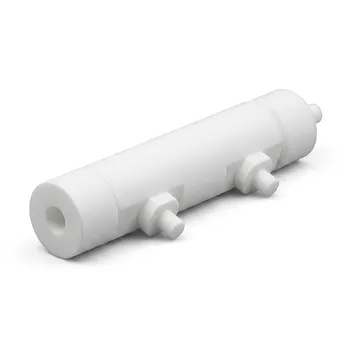
- Custom PTFE Electrolytic Cell Corrosion Resistant Low Background Reaction Vessel with Inlet Outlet Ports
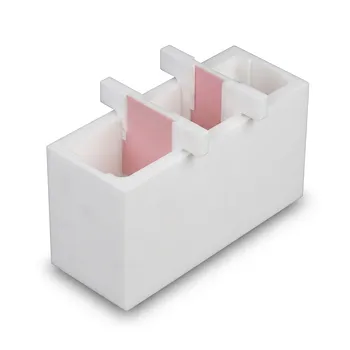
- Corrosion Resistant PTFE Electrochemical Cell for New Energy Research Inert Insulating Customizable Lab Reaction Vessel
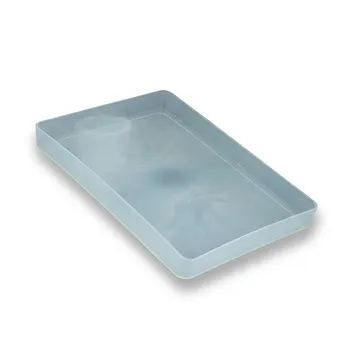
- Customizable PFA Square Tray Corrosion Resistant High Temperature Large Petri Dish Electrolytic Cell
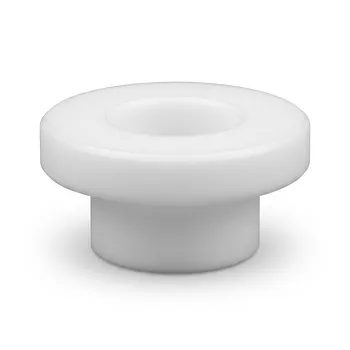
- Custom PTFE Insulating Gaskets and Corrosion Resistant Fluoropolymer Seals for Industrial Electrical Applications
- High Purity 4L PFA Reaction Tank for Proton Exchange Membrane Electrolysis Water Oxygen Separation Systems
People Also Ask
- Why are high-purity PTFE or PFA reaction vessels recommended for the synthesis of PANI-TiC hybrid materials? - Guide
- Why is a high-quality PTFE reaction vessel required for the etching preparation of Ti3C2Tx MXene? Ensure Pure Synthesis.
- How do perfluorinated solvent environments influence the selection of reaction vessels and fluid handling components in nonaqueous emulsion polymerizations? Choose fluoropolymer materials.
- Why is a PTFE reaction vessel required for Ti3C2Tx MXene synthesis? Ensure Safe HF Etching & High Purity
- Ion Activation Reaction Vessel Requirements: Why PTFE is Critical for Membrane Performance