The assembly of plate-based PTFE microchannel reactors relies on high-precision mechanical interlocking rather than chemical bonding. By CNC-milling complementary features like tenons and grooves directly into the PTFE plates, engineers can create a hermetic seal through compression alone. This "click" system eliminates the need for potentially contaminating adhesives, solvents, or heat, preserving the unique chemical properties of the fluoropolymer.
The "click" assembly method uses precise mechanical geometry to achieve a leak-proof seal between PTFE plates. This approach prioritizes chemical purity and material stability by avoiding all external bonding agents or thermal processing.
The Mechanics of the "Click" System
Precision CNC Milling
The foundation of the assembly is high-precision CNC milling. This process carves intricate microchannels and interlocking features into the PTFE surface with sub-millimeter accuracy.
Because PTFE is a soft, flowable plastic, the milling must be exact to ensure the interlocking parts align perfectly. This precision is what allows the plates to function as a single unit once joined.
The Tenon and Groove Interface
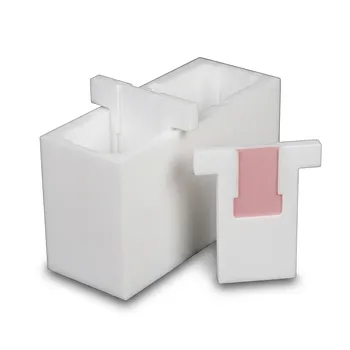
The assembly utilizes a complementary geometry where one plate features a raised tenon and the other a matching groove. These features act as a physical key and lock.
When the two plates are pressed together, the tenon seats into the groove. This mechanical interference creates a tortuous path that prevents fluid from escaping the microchannels.
Hermetic Sealing Through Compression
The final seal is achieved by applying uniform compression force across the plates. This force drives the interlocking features together to form a leak-proof, hermetic barrier.
Unlike permanent bonding, this seal is maintained by physical pressure. This allows the reactor to handle internal fluid pressures without the risk of the plates separating or leaking.
Advantages of Dry Assembly
Maintaining Chemical Inertness
PTFE is chosen for its extreme chemical resistance and non-reactive nature. Using adhesives or solvents would introduce foreign chemicals that could leach into the reaction stream.
The "click" system ensures that the only material contacting the reagents is the PTFE itself. This is critical for sensitive pharmaceutical or fine chemical syntheses.
Preserving Surface Properties
Methods like thermal bonding or solvent welding can alter the crystallinity and texture of the PTFE surface. This can change how fluids flow or how reagents interact with the channel walls.
Mechanical assembly leaves the surface properties completely unchanged. The microchannels retain the exact specifications defined during the milling process.
Understanding the Trade-offs
Tolerance Sensitivity
The primary challenge of this method is its intolerance to manufacturing errors. If the tenon or groove is even slightly off-spec, the "click" system will fail to provide a seal.
Even microscopic debris or dust trapped between the plates during assembly can create a leak path. This requires assembly to be performed in a highly controlled, clean environment.
External Support Requirements
Because the seal is purely mechanical, it often requires external housing or clamping frames. These components provide the constant pressure needed to keep the "click" system engaged.
This adds bulk to the overall reactor setup compared to a permanently bonded chip. Designers must account for the space and weight of these compression manifolds.
Implementing Mechanical Assembly in Your Workflow
Mechanical interlocking represents the pinnacle of purity for microfluidic applications. Selecting this method requires a balance between manufacturing precision and the specific needs of your chemical process.
- If your primary focus is high chemical purity: Utilize the mechanical "click" system to eliminate any risk of contamination from adhesives or binders.
- If your primary focus is reactor modularity: Choose this interlocking method to allow for easier disassembly, cleaning, and reconfiguration between different reaction runs.
- If your primary focus is high-pressure operation: Ensure your external clamping mechanism is engineered to provide perfectly uniform pressure across the entire plate surface to prevent bypass.
Mechanical interlocking represents the gold standard for maintaining the integrity and purity of PTFE microfluidic environments.
Summary Table:
| Assembly Component | Description | Key Benefit |
|---|---|---|
| CNC Milling | Sub-millimeter precision carving of plates | Ensures perfect alignment of microchannels |
| Tenon & Groove | Complementary mechanical "click" geometry | Creates a tortuous path to prevent leaks |
| Compression Force | External clamping and uniform pressure | Achieves a hermetic seal without chemicals |
| Dry Assembly | Zero adhesives, solvents, or thermal bonding | Maintains 100% chemical inertness and purity |
Precision-Engineered PTFE Solutions for Your Lab
Maintaining the absolute purity of your chemical processes requires labware that refuses to compromise. At KINTEK, we specialize in high-performance fluoropolymer manufacturing, ensuring your microfluidic and reaction setups are free from contaminants.
Whether you need everyday basic labware (beakers, crucibles, reagent bottles) or advanced reaction apparatus like custom PTFE microchannel reactors, we deliver end-to-end CNC fabrication tailored to your exact specifications. Our expertise spans from high-purity trace analysis instruments and fluid transfer components (tubing, valves, fittings) to specialized battery testing fixtures and microwave digestion vessels.
Why choose KINTEK?
- Absolute Purity: Focused exclusively on high-performance PTFE and PFA.
- Custom Fabrication: Bespoke CNC machining for non-standard parts and complex setups.
- Comprehensive Range: Everything from stir bars and O-rings to sophisticated electrochemical cells.
Ready to enhance your lab's efficiency with leak-proof, high-purity solutions? Contact us today to discuss your custom project!
Related Products
- Customizable Polytetrafluoroethylene PTFE Reactor and Corrosion Resistant Teflon Flask
- PTFE 10L Reaction Vessel with Stirring Paddle Customizable Corrosion Resistant High Temperature Reactor for Biopharmaceutical and Chemical Processing
- Custom PTFE Multilayer Reaction Apparatus High Temperature Corrosion Resistant Threaded Modular Sieve System
- Custom PTFE Volatile Matter Condensation Reflux Reaction Device Corrosion Resistant Pressure Resistant
- High Performance Customizable PTFE Reaction Vessel and Corrosion Resistant Polytetrafluoroethylene Flask for Chemical Laboratory Use
People Also Ask
- What functional advantages do PTFE reactors provide over glass? Achieve Superior Purity and Safety in Synthesis
- What are the primary fabrication methods for capillary-based and monolithic PTFE reactors? Expert Production Insights
- Why are PTFE or PFA reaction vessels required for the selective etching process of MXene using hydrofluoric acid (HF)?
- Why is a Teflon-lined (PTFE) reactor vessel required for the hydrothermal synthesis of V2O5 and SnO2 nanomaterials?
- What is the role of high chemical inertness reaction vessels in the organic synthesis of acylhydrazone ligands? | Guide