Choose the solvent and apparatus as part of the catalytic system, not as separate variables. For living cationic polymerization of fluorinated monomers, the reaction medium should dissolve the growing fluorinated chains, remain compatible with the Lewis acid catalyst, and support precise temperature and moisture control. In practice, fluorinated solvents such as HFCs, HCFCs, and HFEs, often combined with a controlled amount of 1,4-dioxane, are suitable starting points, while PTFE or PFA vessels and fluid-contact components provide the required chemical inertness.
The central requirement is an environment that preserves chain solubility and Lewis acid activity simultaneously. A fluorinated solvent, carefully controlled Lewis base concentration, low temperature, rigorous exclusion of moisture, and fluoropolymer apparatus work together to maintain living or well-controlled polymerization.
Why Solvent Selection Determines Polymerization Control
Keep the Growing Polymer Dissolved
Fluorinated polymers are frequently poorly soluble in conventional organic solvents. Precipitation during propagation can alter local monomer concentration, restrict chain-end mobility, and produce heterogeneous or poorly controlled molecular-weight distributions.
Fluorinated solvents such as hydrofluorocarbons, hydrochlorofluorocarbons, and hydrofluoroethers are therefore useful because they can provide better compatibility with fluorinated monomers and growing fluorinated chains.
The solvent should be evaluated across the entire reaction, not only against the starting monomer. It must remain compatible with the polymer at the expected conversion, temperature, and concentration.
Preserve Lewis Acid Activity
Lewis acid catalysts, including alkylaluminum chlorides and related aluminum halides, are highly sensitive to coordinating impurities and moisture. The solvent must not deactivate the catalyst or introduce uncontrolled changes in the concentration of active ionic species.
Solvent purity, water content, and the presence of trace donor molecules can therefore affect initiation efficiency, propagation rate, and molecular-weight control.
Use Lewis Bases to Moderate Propagation
A Lewis base such as 1,4-dioxane can moderate propagation kinetics and stabilize carbocationic intermediates. This can help prevent excessively rapid polymerization and reduce side reactions associated with poorly controlled active centers.
The Lewis base is a kinetic-control component, not merely a solvent additive. Its concentration must be treated as a reaction parameter because excessive coordination can suppress or disrupt the desired Lewis acid-mediated activation.
Avoid Incompatible Aromatic Media
The primary reference identifies catalyst decomposition in aromatic solvents as a potential problem for these systems. Aromatic solvents should therefore not be treated as default media without compatibility testing with the specific Lewis acid, initiator, monomer, and temperature.
A solvent that is acceptable for a conventional cationic polymerization may still be unsuitable when paired with a highly reactive aluminum catalyst and a fluorinated monomer.
Apparatus Requirements for a Stable Reaction Environment
Use PTFE or PFA for Wetted Surfaces
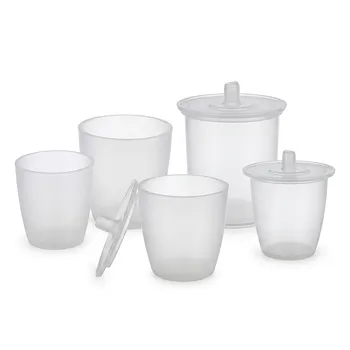
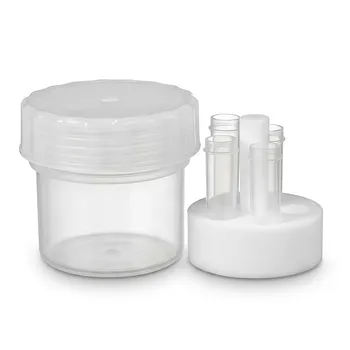
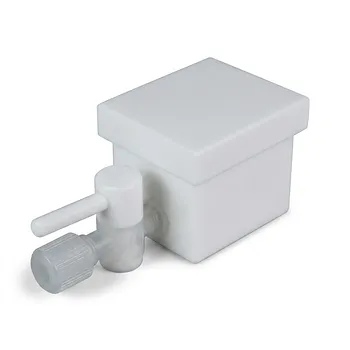
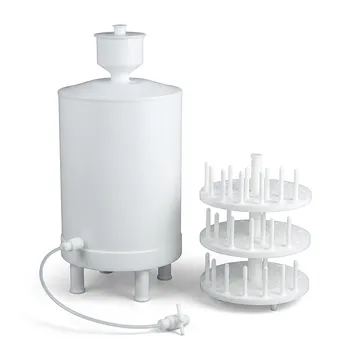
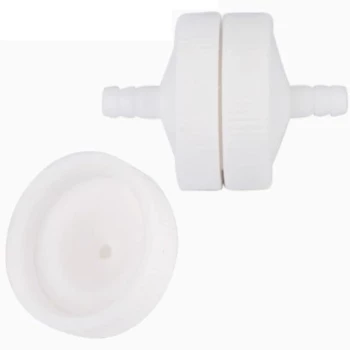
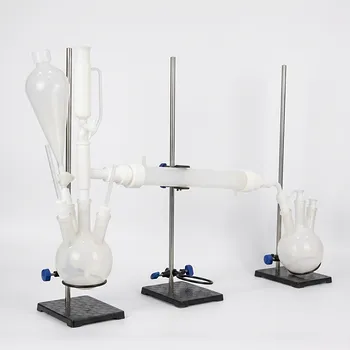
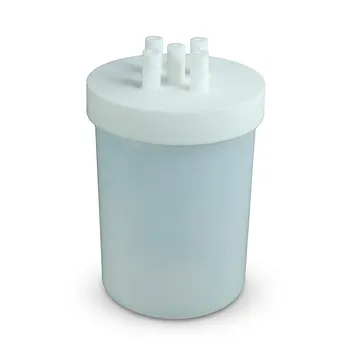
PTFE and PFA are appropriate materials for reaction vessels, tubing, seals, transfer fittings, reagent bottles, and digestion or preparation vessels exposed to the reaction mixture.
These fluoropolymers offer broad chemical resistance and reduce the risk of solvent-induced degradation, catalyst corrosion, or leaching from the apparatus.
PFA is often useful where transparency, fabrication, or thermal forming is important. PTFE is valuable for chemically resistant machined parts, seals, liners, and fittings. The specific grade and temperature rating still need to be confirmed for the intended solvent and operating conditions.
Control Moisture and Surface Reactivity
Lewis acid systems can be rapidly affected by trace water. Apparatus should be dried, assembled under an inert atmosphere, and protected from ambient moisture during charging, sampling, and transfer.
Glass and metal components can introduce practical problems, including reactive surface sites, corrosion, contamination, or moisture-related catalyst deactivation. They may still be usable in isolated, validated locations, but their compatibility should be demonstrated rather than assumed.
Maintain Low and Stable Temperatures
Living cationic polymerization of fluorinated monomers commonly requires operation at 0 °C or below. The apparatus must therefore support stable cooling, accurate temperature measurement, and uniform heat transfer.
The vessel design should avoid poorly mixed cold zones or warm regions near reagent feeds. Temperature excursions can change propagation kinetics and may compromise the balance between initiation, propagation, and chain-end stabilization.
Design for Controlled Reagent Transfer
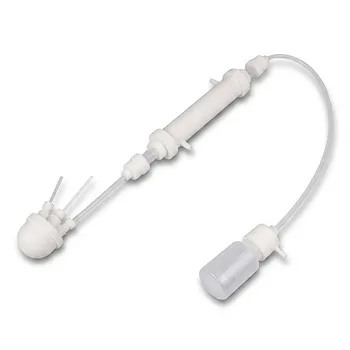
Monomer and catalyst feeds should use chemically compatible tubing, valves, seals, and fittings. Transfer lines should be short where practical, carefully dried, and configured to avoid dead volumes that can retain reactive catalyst or alter feed ratios.
For sensitive Lewis acid systems, the ability to meter reagents reproducibly is as important as the nominal chemical resistance of the vessel. Poor feed control can produce broad molecular-weight distributions even when the chemistry is otherwise appropriate.
When Pressure and Flammability Become Design Constraints
Treat VDF and Similar Monomers as High-Hazard Materials
Some fluoromonomers, including vinylidene fluoride, present significant flammability hazards and may be handled under substantial pressure. The exact pressure depends on the process, with emulsion and suspension processes operating in different pressure ranges.
Pressure and flammability data must be taken from the specific monomer and process design. The cited pressure ranges should be treated as examples of the potential hazard, not as universal operating conditions for every living cationic polymerization.
Use Rated Pressure Equipment
If the monomer is charged as a pressurized gas or the reaction conditions require elevated pressure, a fluoropolymer-lined or otherwise chemically compatible pressure-rated autoclave may be required. Piping, valves, fittings, rupture protection, and instrumentation must be rated for the maximum credible pressure and temperature.
A PTFE or PFA component is not automatically suitable for pressure service. Chemical compatibility and mechanical pressure rating are separate requirements.
Provide Engineered Containment
Operations involving flammable pressurized fluoromonomers should use appropriate ventilation, intrinsically safe controls, remote operation where necessary, and blast-resistant containment suited to the hazard assessment.
The reaction vessel, solvent system, and surrounding facility must be evaluated together. A chemically resistant vessel does not by itself control the consequences of ignition, rapid decompression, or loss of containment.
Understanding the Trade-offs
Fluorinated Solvents Improve Compatibility but Add Handling Complexity
Fluorinated solvents can maintain polymer solubility and support fluorinated reaction systems, but they may require specialized storage, recovery, ventilation, and waste-handling procedures.
Their environmental, occupational, and regulatory profiles also vary substantially. Solvent selection should therefore include containment and disposal requirements, not only polymer solubility.
Lewis Base Addition Improves Control but Can Suppress Activity
A donor such as 1,4-dioxane may reduce uncontrolled propagation and stabilize reactive intermediates. However, excessive Lewis base coordination can reduce the effective Lewis acidity or alter the active catalyst structure.
The correct concentration is system-specific and should be established experimentally through conversion, molecular-weight, and dispersity measurements.
Fluoropolymer Equipment Reduces Contamination Risk but Has Mechanical Limits
PTFE and PFA minimize chemical attack and leaching, but they are not interchangeable with metal pressure vessels in terms of strength, stiffness, or permeation behavior. Fluoropolymer components may also require specialized machining, compression control, and support when used in low-temperature or pressurized systems.
For high-pressure operation, the chemically inert wetted liner and the mechanically rated pressure boundary may need to be separate, validated components.
“Living” Behavior Requires More Than an Inert Vessel
An inert apparatus prevents avoidable contamination, but it cannot compensate for unsuitable solvent coordination, poor temperature control, inaccurate feed ratios, or an incompatible catalyst combination.
Control must be demonstrated through kinetic and molecular characterization, such as predictable molecular-weight growth with conversion and narrow molecular-weight distributions.
Making the Right Choice for Your Goal
The practical decision should combine polymer solubility, catalyst compatibility, thermal control, pressure rating, and hazard containment.
- If your primary focus is polymer chain control: Select a fluorinated solvent that keeps the polymer dissolved, use a carefully optimized Lewis base such as 1,4-dioxane when appropriate, and operate at a stable temperature at or below 0 °C.
- If your primary focus is catalyst stability: Use rigorously dried reagents and apparatus, exclude moisture with an inert atmosphere, and avoid solvent systems that promote Lewis acid decomposition or uncontrolled coordination.
- If your primary focus is apparatus compatibility: Use PTFE or PFA for wetted vessels, seals, tubing, bottles, and transfer fittings, while separately verifying temperature, pressure, and mechanical ratings.
- If your primary focus is process safety: Treat pressurized fluoromonomers as flammable high-hazard materials and provide rated autoclaves, compatible piping, intrinsically safe controls, ventilation, and engineered containment.
A successful living cationic fluoropolymerization uses solvent chemistry, catalyst coordination, inert materials, thermal control, and pressure safety as one integrated design problem.
Summary Table:
| Consideration | Key Points |
|---|---|
| Solvent Selection | Use fluorinated solvents (HFCs, HCFCs, HFEs) to dissolve fluorinated polymers and preserve Lewis acid activity. Avoid aromatic solvents unless tested. |
| Lewis Base Additive | Add controlled amounts of 1,4-dioxane to moderate propagation and stabilize carbocations. Optimize concentration experimentally. |
| Temperature Control | Maintain stable temperatures at or below 0 °C to ensure living characteristics. |
| Moisture Exclusion | Rigorously dry apparatus and reagents; use inert atmosphere to prevent catalyst deactivation. |
| Apparatus Material | Use PTFE/PFA for wetted surfaces (vessels, tubing, fittings) to avoid chemical attack and leaching. |
| Pressure Handling | For pressurized fluoromonomers (e.g., VDF), use pressure-rated autoclaves with fluoropolymer liners and engineered containment. |
For high-quality PTFE and PFA labware and custom equipment designed for demanding fluoropolymer reactions, contact KINTEK today.
Our products, from vessels and tubing to custom machined parts, ensure chemical inertness and reliability for your living cationic polymerization. Get in touch with our experts to discuss your specific requirements and benefit from our high-performance fluoropolymer solutions.
Related Products
- PTFE PFA Vacuum Filtration System Corrosion Resistant Customizable Shatterproof Laboratory Device
- High Purity PFA Crucible and Corrosion Resistant PTFE Beaker for Trace Analysis and Custom Laboratory Applications
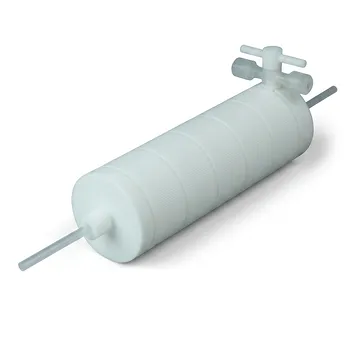
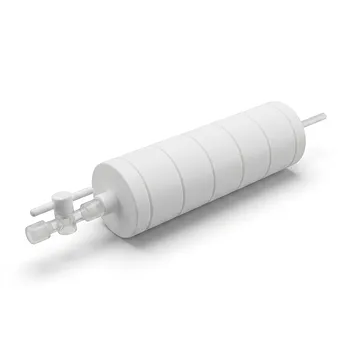
- High Purity PTFE Filter with PFA Valve Connections and Integrated Sieve Plate for Corrosive Fluid Processing
- PTFE Corrosion Resistant Filter with PFA Valve Connections and Integrated Sieve Plate
- Custom PTFE Constant Pressure Separatory Funnel Corrosion Resistant Low Background Labware for PFA Flasks
People Also Ask
- What makes PTFE filtration systems advantageous for industrial and scientific use? Unmatched Chemical & Thermal Stability
- How does the hydrophobicity of PTFE filters benefit their use? Ensure Uninterrupted Gas Flow and Solvent Filtration
- What temperature resistance do PTFE filters offer? Unmatched Thermal Stability from -200°C to +260°C
- Which chemicals are fully compatible with PTFE filters? Discover Unmatched Chemical Resistance
- What steps are involved in selecting the proper PTFE filter? A 4-Step Guide to Optimal Filtration