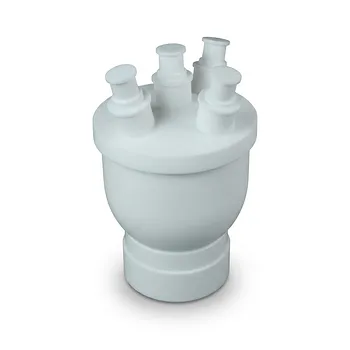
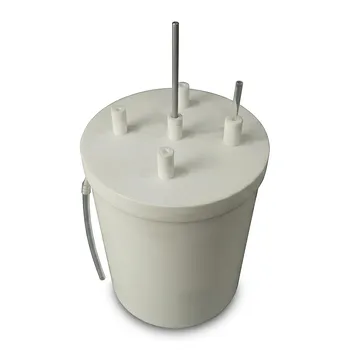
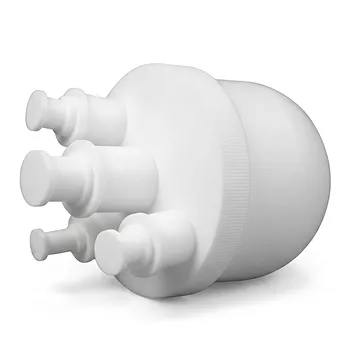
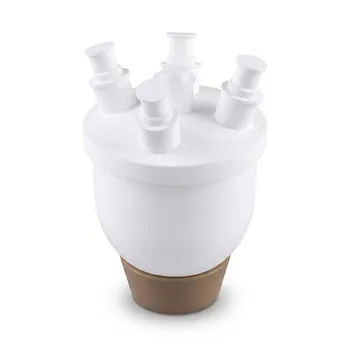
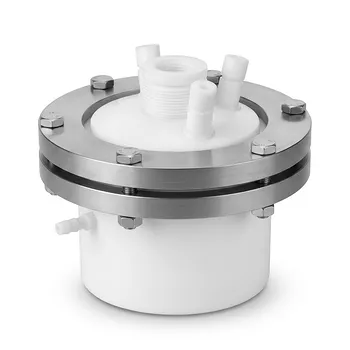
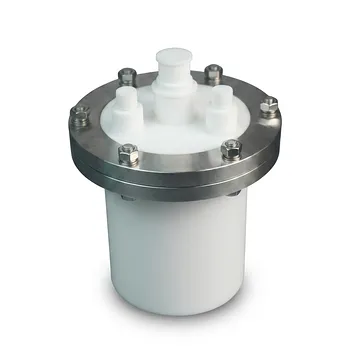
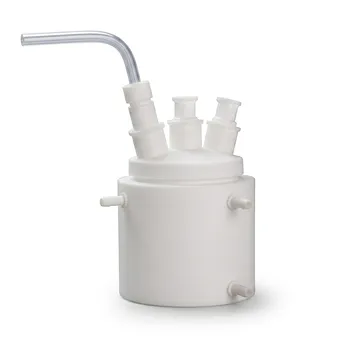
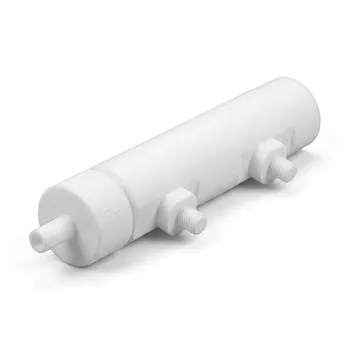
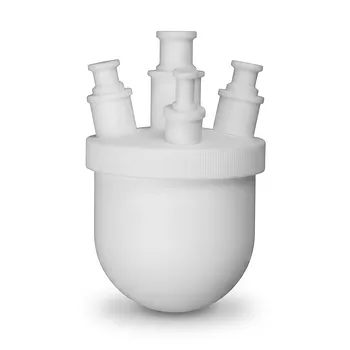
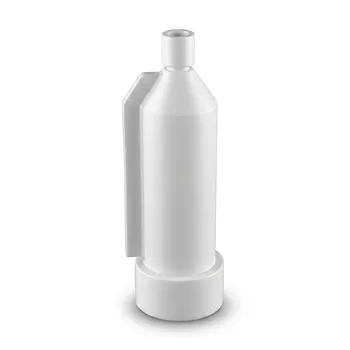
Polytetrafluoroethylene (PTFE) is the industry standard for microreactors because it provides an unmatched combination of absolute chemical inertness and a non-stick surface. These properties ensure that Active Pharmaceutical Ingredients (APIs) remain free from metal-ion contamination while preventing the clogging of microscopic channels during complex chemical syntheses.
PTFE serves as a critical safeguard in pharmaceutical manufacturing by eliminating chemical interference and physical fouling. Its unique molecular structure allows for the safe handling of aggressive reagents while maintaining the ultra-high purity levels required for regulatory compliance.
Safeguarding API Purity Through Chemical Inertness
Eliminating Metal-Ion Contamination
In pharmaceutical synthesis, even trace amounts of heavy metals can compromise the safety and efficacy of the final product. PTFE is chemically inert, meaning it does not react with reagents or solvents, effectively eliminating the risk of metal-ion leaching into the API. This makes it a superior alternative to stainless steel or other metallic alloys in high-purity environments.
Resistance to Aggressive Reagents
Modern API manufacturing often involves "harsh" chemistry, including the use of hydrofluoric acid (HF), fluorine gas, and strong bases. PTFE exhibits exceptional resistance to almost all acids, solvents, and oxidants. This allows for the safe execution of multi-step organic syntheses and Grignard additions that would otherwise degrade reactor components.
Maintaining Structural Integrity
Unlike many polymers that swell or degrade when exposed to organic solvents, PTFE maintains its physical properties across a wide temperature range. It is capable of continuous service up to 260°C. This thermal stability ensures that the reactor geometry remains precise, which is vital for maintaining consistent flow rates.
Maximizing Operational Efficiency in Microfluidics
Preventing Clogging and Fouling
Microreactors utilize narrow channels that are highly susceptible to blockage from precipitates or crystallization. PTFE possesses extremely low surface energy, making it naturally hydrophobic and oleophobic. This "non-stick" quality prevents particulate buildup and ensures stable, long-term operation even when handling viscous substances.
Precision in Small-Scale Synthesis
PTFE microchannel reactors allow for precise control over residence time and temperature due to their stable internal environment. This precision improves selectivity and yield by suppressing the formation of unwanted side-products. The material's reliability allows researchers to perform rapid screening of reaction conditions using minimal reagent volumes.
Ease of Sterilization and Cleaning
The non-reactive surface of PTFE simplifies the cleaning protocols required between different production batches. It can withstand rigorous sterilization processes without degrading. This reduces the risk of cross-contamination, which is a primary concern in multi-product pharmaceutical facilities.
Understanding the Trade-offs
Thermal Conductivity Limitations
One of the primary trade-offs of PTFE is its low thermal conductivity compared to metals like silicon carbide or stainless steel. In highly exothermic reactions, heat removal may be slower, requiring careful design of the reactor's cooling interface. Engineers must often balance the need for chemical inertness with the need for efficient heat exchange.
Mechanical Pressure Constraints
PTFE is a relatively soft fluoropolymer and is prone to "creep" or cold flow under high pressure and temperature. While it is excellent for many microfluidic applications, it may not be suitable for extreme high-pressure syntheses without external reinforcement. Designers must ensure the reactor housing compensates for this material softness to maintain a leak-proof seal.
Making the Right Choice for Your Goal
How to Apply This to Your Project
When integrating PTFE microreactors into your manufacturing workflow, consider the specific requirements of your synthesis:
- If your primary focus is API purity: Prioritize PTFE to eliminate metal-ion leaching and ensure compliance with strict pharmaceutical contamination standards.
- If your primary focus is handling corrosive intermediates: Use PTFE specifically for reactions involving fluorine, strong acids, or aggressive oxidants that would corrode standard metal reactors.
- If your primary focus is preventing channel blockage: Leverage PTFE’s low surface energy for reactions prone to precipitation or when working with highly viscous fluids.
- If your primary focus is high-pressure synthesis: Consider a PTFE-lined stainless steel reactor to combine the chemical resistance of the polymer with the mechanical strength of metal.
PTFE remains the definitive material for pharmaceutical microreactors by providing a pristine, non-reactive environment that protects the integrity of the chemical process.
Summary Table:
| Feature | Benefit to API Manufacturing | Operational Impact |
|---|---|---|
| Chemical Inertness | Eliminates metal-ion leaching | Ensures ultra-high API purity and regulatory compliance |
| Low Surface Energy | Prevents clogging and fouling | Maintains stable flow and long-term reactor operation |
| Corrosion Resistance | Handles HF and aggressive reagents | Enables multi-step organic synthesis without degradation |
| Thermal Stability | Serviceable up to 260°C | Maintains precise reactor geometry under heat |
| Non-Stick Surface | Simplified sterilization/cleaning | Reduces cross-contamination risk in multi-product facilities |
Elevate Your API Synthesis with KINTEK’s Fluoropolymer Expertise
Maximize your laboratory's efficiency and ensure absolute chemical purity with KINTEK. We specialize in high-performance fluoropolymer manufacturing, offering everything from everyday basic labware (beakers, crucibles, and centrifuge tubes) to comprehensive fluid transfer components (tubing, fittings, and valves).
Our expertise extends to advanced reaction apparatus, including custom PTFE microchannel reactors, electrochemical cells, and microwave digestion vessels. Backed by end-to-end custom CNC fabrication, KINTEK delivers both bespoke non-standard machined parts and high-volume orders tailored to your specific pharmaceutical needs.
Don't compromise on purity—leverage our exclusive focus on PTFE and PFA to safeguard your processes. Contact KINTEK today to discuss your custom laboratory setup!
Related Products
- Customizable Polytetrafluoroethylene PTFE Reactor and Corrosion Resistant Teflon Flask
- PTFE 10L Reaction Vessel with Stirring Paddle Customizable Corrosion Resistant High Temperature Reactor for Biopharmaceutical and Chemical Processing
- High Purity PTFE Single Neck Reaction Flask Acid Resistant Customizable Fluoropolymer Laboratory Reactor
- High Performance Customizable PTFE Reaction Vessel and Corrosion Resistant Polytetrafluoroethylene Flask for Chemical Laboratory Use
- Custom PTFE Multilayer Reaction Apparatus High Temperature Corrosion Resistant Threaded Modular Sieve System
People Also Ask
- What functional advantages do PTFE reactors provide over glass? Achieve Superior Purity and Safety in Synthesis
- What are the primary fabrication methods for capillary-based and monolithic PTFE reactors? Expert Production Insights
- Why are PTFE or PFA reaction vessels required for the selective etching process of MXene using hydrofluoric acid (HF)?
- Why is a Teflon-lined (PTFE) reactor vessel required for the hydrothermal synthesis of V2O5 and SnO2 nanomaterials?
- What is the role of high chemical inertness reaction vessels in the organic synthesis of acylhydrazone ligands? | Guide