Electrochemical Machining (ECM) leverages controlled anodic dissolution to remove material with surgical precision, regardless of the workpiece's hardness. This process uses an electrolytic cell to dissolve metal atoms, making it ideal for creating complex geometries in difficult-to-cut alloys like turbine blades. Unlike traditional methods, it operates without direct physical contact, ensuring the final component remains entirely free from thermal and mechanical stress.
ECM provides a stress-free, high-precision machining solution that overcomes the physical limitations of conventional mechanical cutting. By utilizing electrolytic processes, it enables the fabrication of complex shapes in ultra-hard materials while offering unique self-cleaning capabilities and superior chemical resistance.
The Mechanics of Stress-Free Precision
Anodic Dissolution and Atomic Removal
The fundamental advantage of ECM lies in anodic dissolution, where the workpiece acts as the anode in an electrolytic cell. Instead of shearing material away, the process dissolves metal atoms into the electrolyte solution.
Eliminating Thermal and Mechanical Load
Because there is no physical contact between the tool and the workpiece, the process induces zero mechanical stress. This lack of friction prevents the creation of "heat-affected zones," ensuring the structural integrity of the metal remains intact.
Achieving High Dimensional Accuracy
The controlled nature of the electrolytic process allows for extreme dimensional precision. This makes it the preferred method for components where even microscopic deviations could lead to catastrophic failure.
Overcoming Material Hardness and Complexity
Machining Advanced Alloys
ECM is uniquely suited for hard metals and difficult-to-cut alloys that would quickly dull or break conventional mechanical tools. It is a standard industry solution for fabricating high-performance components like turbine blades.
High-Precision Complex Geometries
The process can create intricate, three-dimensional shapes that are often impossible to reach with a drill or mill. The tool shape is essentially "mirrored" into the workpiece through the electrolyte gap.
Stability Through Advanced Materials
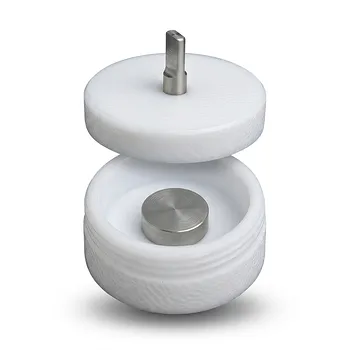
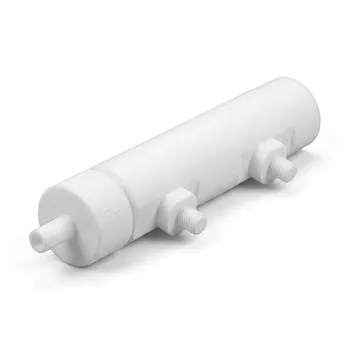
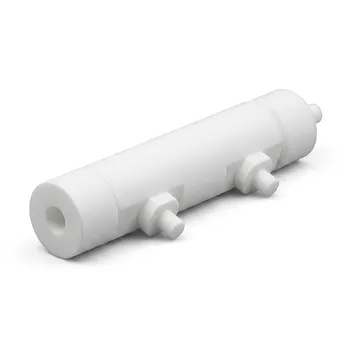
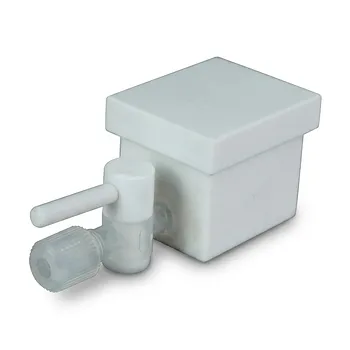
Utilizing CNC-machined PTFE for cell compartments ensures the system remains chemically inert. This resistance to corrosion from strong electrolytes and oxidizing agents provides a stable environment for long-term, steady-state operations.
Operational Efficiency and System Longevity
Innovative Scaling Management
By using a divided electrochemical flow reactor, operators can isolate the anolyte and catholyte chambers using a membrane. This configuration allows for the management of mineral scaling, such as calcium carbonate or magnesium hydroxide, which typically plagues electrolytic processes.
In-Situ Rinsing and Maintenance
The acidic environment naturally generated at the anode can be redirected for periodic in-situ rinsing. This dissolves precipitates on the cathode surface without requiring equipment disassembly, drastically reducing operational downtime.
Leakage Prevention and Flow Control
High-precision machining of the electrolytic cell ensures accurate flow paths and prevents electrolyte leakage. This level of control is essential for maintaining the consistency required for high-volume industrial production.
Understanding the Trade-offs
Material Conductivity Requirements
The most significant limitation of ECM is that it only works on conductive materials. Non-conductive ceramics or plastics cannot be machined using this process, as the anodic dissolution requires a flow of electrons.
Electrolyte Handling and Environment
While ECM avoids mechanical wear, it requires the management of chemical electrolytes. These fluids must be carefully filtered and disposed of, and the system must be designed to resist the corrosive nature of the chemicals used.
Precision Setup Costs
Achieving high accuracy requires a sophisticated setup, including precision-machined cell components and stable power supplies. The initial investment in ECM equipment is often higher than that of standard mechanical alternatives.
How to Apply This to Your Project
If your primary focus is material integrity: Use ECM to eliminate the risk of micro-cracks, residual stress, or heat-affected zones in critical aerospace or medical components.
If your primary focus is complex geometries in hard alloys: Implement ECM for shapes like turbine blades or cooling channels where conventional tool wear would be prohibitively expensive.
If your primary focus is operational uptime: Invest in divided flow reactors and PTFE-based cell designs to enable self-cleaning cycles and resist chemical corrosion.
ECM stands as an indispensable technology for high-performance engineering, bridging the gap between extreme material hardness and the requirement for microscopic precision.
Summary Table:
| Key Advantage | Technical Benefit | Primary Application |
|---|---|---|
| Zero Mechanical Stress | No physical contact; eliminates heat-affected zones and micro-cracks | Critical Aerospace & Medical parts |
| Extreme Hardness Capability | Processes ultra-hard alloys (e.g., Inconel) without tool wear | Turbine blades & engine components |
| Complex Shape Creation | Mirrors intricate tool geometries into the workpiece | 3D cooling channels & internal cavities |
| Enhanced Longevity | PTFE/PFA cell construction resists corrosive electrolytes | Long-term industrial manufacturing |
Precision Lab Solutions for Your Electrochemical Innovation
Elevate your research and production with KINTEK’s premium fluoropolymer labware. Whether you are managing complex ECM processes or high-purity trace analysis, we provide the chemical-resistant tools necessary for success. Our range extends from everyday PTFE beakers, reagent bottles, and centrifuge tubes to specialized fluid transfer components like tubing, fittings, and valves.
For advanced applications, KINTEK specializes in custom electrochemical cells, battery testing fixtures, and hydrothermal synthesis liners designed to withstand the most aggressive electrolytes. Utilizing end-to-end custom CNC fabrication, we deliver everything from high-volume consumables to bespoke, non-standard machined parts tailored to your exact specifications.
Experience the KINTEK difference in high-performance materials—contact our technical team today for a consultation!
Related Products
- Acid Resistant PTFE Button Cell Battery Test Fixture Customizable Machining High Purity Electrochemical Testing Clamp
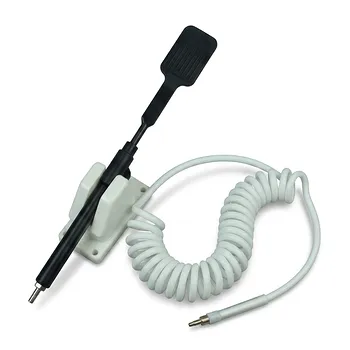
- Customizable PTFE Scrapers and Shovels for Demanding Applications
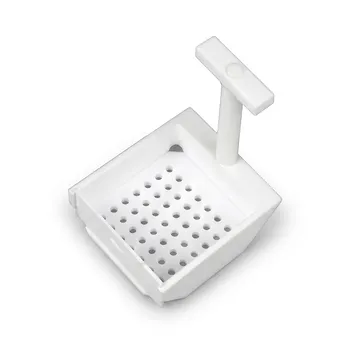
- Square PTFE Wafer Cleaning Basket Fluoropolymer Semiconductor Etching Rack Custom Silicon Wafer Carrier
- High Purity Custom PTFE Reaction Cell Electrolytic Tank for Semiconductor and Polysilicon Industrial Applications
- Custom PTFE Electrolytic Cell Corrosion Resistant Low Background Reaction Vessel with Inlet Outlet Ports
People Also Ask
- In what ways do PTFE battery testing fixtures enhance laboratory throughput and reliability? Maximize Research Efficiency
- How does the chemical inertness of PTFE benefit laboratory-scale battery testing? Ensure high-purity research results.
- In what industrial manufacturing contexts are PTFE battery clamps or fixtures utilized? Optimize Battery Production.
- What is the thermal operating range for PTFE battery clamps in electrochemical research? Stability from -200°C to +260°C
- What are the primary functions and material compositions of PTFE battery clamps? Ensure Precision & Chemical Resistance