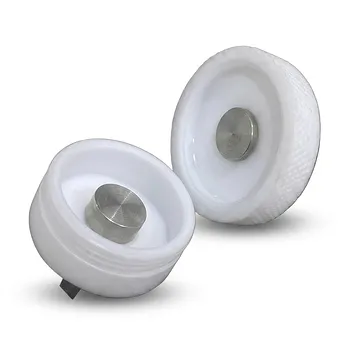
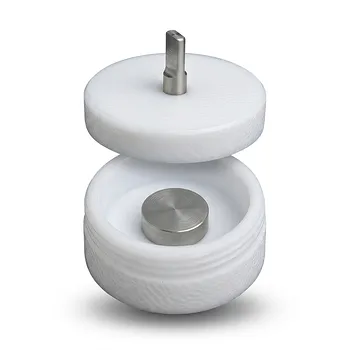
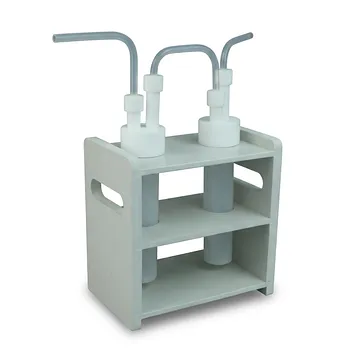
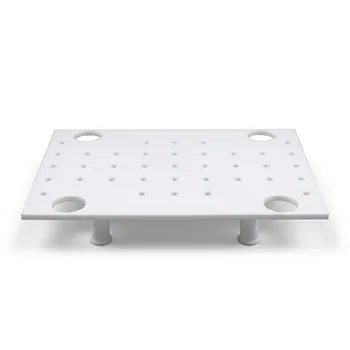
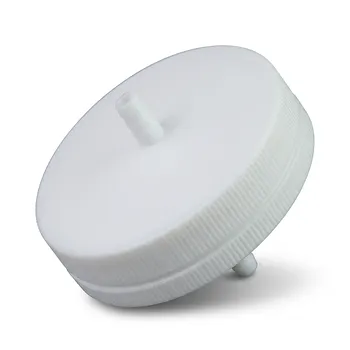
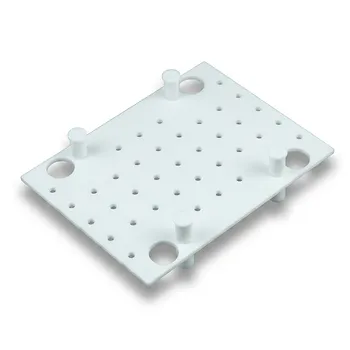
PTFE battery clamps perform as high-integrity interfaces that provide a unique combination of mechanical strength and chemical passivity. In fuel cells and redox-flow batteries, these components protect internal metal conductors from oxidative attack while ensuring that sensitive electrical signals remain undisturbed by the surrounding environment.
Core Takeaway: PTFE battery clamps are essential for maintaining measurement accuracy and hardware longevity in corrosive electrochemical systems, acting as a chemically inert barrier that prevents parasitic currents and physical degradation.
Maintaining Integrity in Harsh Electrochemical Environments
Protection Against Corrosive Attack
In specialized systems like redox-flow batteries, electrolytes can be highly aggressive, often involving acidic or oxidative solutions. PTFE clamps provide a robust shield for internal metal conductors, preventing the corrosion that typically plagues copper or lead terminals.
Resistance to Oxidative and Reductive Conditions
Electrochemical reactors often cycle between extreme chemical states. Because PTFE is chemically inert, it can withstand both oxidative and reductive environments without degrading or contaminating the system.
Prevention of Electrolyte Leakage
The use of PTFE jackets and stoppers helps create hermetic seals within fuel cell test fixtures. This containment prevents electrolyte mist or off-gassing from reaching sensitive external components, maintaining a stable testing environment.
Ensuring High-Precision Measurement and Safety
Preserving Signal Accuracy
PTFE’s superior dielectric properties ensure that the clamp does not interfere with sensitive impedance measurements or reference signals. This is critical for the performance validation of fuel cells, where even minor interference can skew data.
Eliminating Parasitic Currents
In electrochemical reactors, unintended electrical paths can lead to "parasitic currents" that drain efficiency and ruin experiments. PTFE's high electrical insulation isolates the active electrode area, ensuring that current flows only where intended.
Enhancing Operational Safety
By providing full insulation, these clamps significantly reduce the risk of accidental short circuits. This is a vital safety feature when performing maintenance in confined battery rooms or high-density offshore energy installations.
Optimizing Workflow and Assembly
Facilitating Rapid Prototyping
The low-friction nature of PTFE prevents components from "seizing," which makes the assembly and disassembly of cell components much faster. This allows researchers to swap out gas-diffusion layers or membranes without damaging delicate parts.
Minimizing Cross-Contamination
PTFE has a low surface energy and is hydrophobic, meaning active material powders and electrolytes do not stick to it. This non-stick quality allows for residue-free cleaning and prevents cross-contamination between different test batches.
Accommodating Diverse Electrode Geometries
Specialized gripping mechanisms, such as PTFE-threaded compression caps, allow these clamps to hold electrodes ranging from 0.1 mm to 5 mm. This versatility is essential for testing various foils, rods, and wires in a single prototype setup.
Understanding the Trade-offs
Material Softness and Deformation
While PTFE is chemically resilient, it is a relatively soft material with a Shore D hardness of approximately 50–65. If a technician applies excessive torque to a threaded clamp, the material can undergo "creep" or thread deformation.
Mechanical Stability Limits
To combat the inherent softness of plastic, some high-performance clamps must be integrated with PEEK or metal cores. Without these reinforcements, a pure PTFE clamp may lack the structural rigidity required for high-pressure industrial applications.
How to Apply This to Your Project
Recommendations for Implementation
- If your primary focus is high-precision lab testing: Use PTFE clamps with gold-plated copper inserts to ensure maximum conductivity combined with total chemical isolation.
- If your primary focus is long-term redox-flow battery durability: Prioritize PTFE-coated terminals to prevent sulfuric acid mist from corroding your primary electrical connections.
- If your primary focus is rapid material screening: Opt for spring-loaded PTFE jaws to allow for the quick, tool-free exchange of thin electrode sheets and foils.
Choosing the right PTFE interface is a strategic decision that balances chemical immunity with the mechanical requirements of your specific electrochemical system.
Summary Table:
| Feature | Performance Benefit | Key Application |
|---|---|---|
| Chemical Passivity | Prevents corrosion from acidic/oxidative electrolytes | Redox-flow battery systems |
| Dielectric Strength | Eliminates parasitic currents and signal interference | High-precision impedance testing |
| Low Surface Energy | Resists sticking and prevents cross-contamination | Rapid electrode material screening |
| Versatile Gripping | Securely holds electrodes from 0.1 mm to 5 mm | Prototyping various foils and wires |
| Thermal Stability | Maintains integrity during electrochemical cycling | Fuel cell testing fixtures |
Elevate Your Electrochemical Research with KINTEK
Ensure the integrity of your specialized systems with high-performance fluoropolymer solutions from KINTEK. We specialize in an exhaustive range of laboratory supplies crafted from PTFE and PFA, designed specifically to withstand the harshest chemical and electrical environments.
From everyday basic labware (beakers, crucibles, reagent bottles) and high-purity trace analysis instruments to advanced components like standard or custom electrochemical cells, battery testing fixtures, and electrode accessories, we provide the tools you need for precision. Our expertise extends to fluid transfer components, sample prep tools, and advanced reaction apparatus such as hydrothermal synthesis liners and microwave digestion vessels.
Backed by end-to-end custom CNC fabrication, KINTEK is equipped to deliver everything from complex non-standard machined parts to high-volume orders with an absolute focus on material performance.
Ready to optimize your lab's efficiency and accuracy? Contact our experts today to discuss your custom requirements!
Related Products
- Corrosion Resistant PTFE Coin Cell Battery Testing Clamps and Acid Proof Custom Fluoropolymer Battery Fixtures
- Acid Resistant PTFE Button Cell Battery Test Fixture Customizable Machining High Purity Electrochemical Testing Clamp
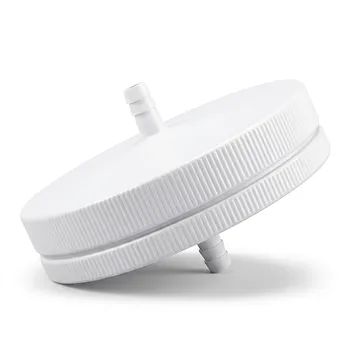
- PTFE Filter Membrane Holder for Hydrogen Chloride and Water Filtration 90mm Environmental Sampling Clamp Customizable
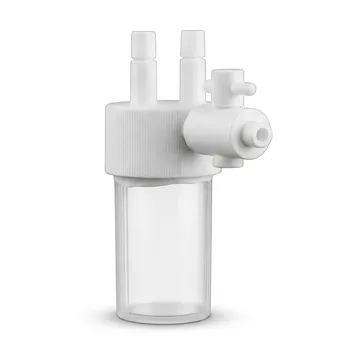
- Custom PTFE Reaction Lid with Integrated Valve and Fitting Corrosion Resistant No Leaching PFA FEP Bottle Cap System
- White PTFE Electrolytic Cell with Movable Slider and Insulated Lid for Fluorine Corrosion Resistance
People Also Ask
- What is the thermal operating range for PTFE battery clamps in electrochemical research? Stability from -200°C to +260°C
- What are the primary functions and material compositions of PTFE battery clamps? Ensure Precision & Chemical Resistance
- How do coin cell testing fixtures evaluate ZIF-derived LCO cycling stability? Ensure Battery Research Precision
- What are the electrical insulation and signal integrity advantages of using PTFE battery clamps? Ensure Data Accuracy
- How does the chemical inertness of PTFE benefit laboratory-scale battery testing? Ensure high-purity research results.