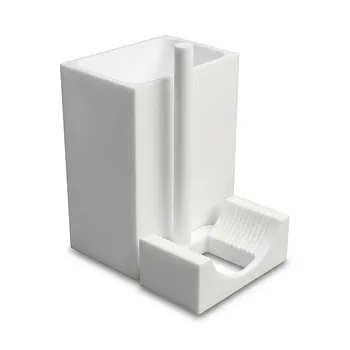
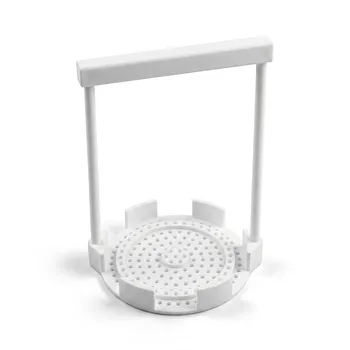
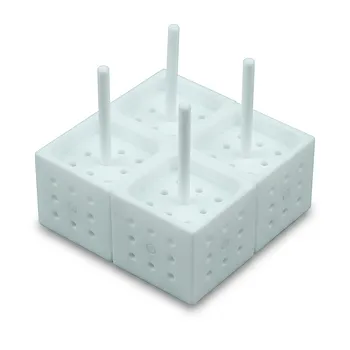
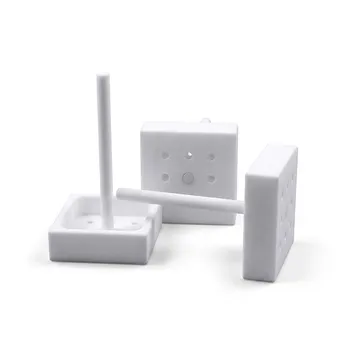
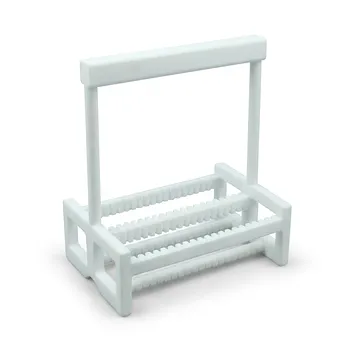
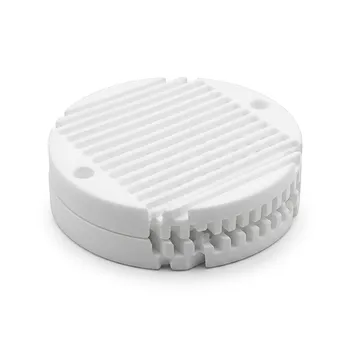
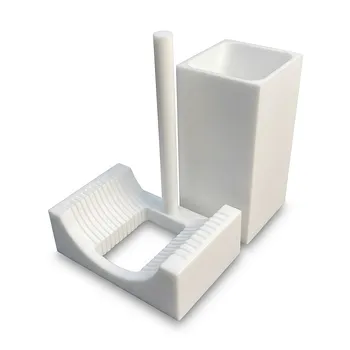
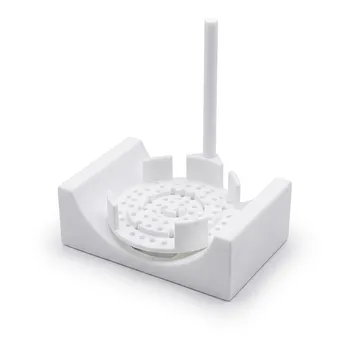
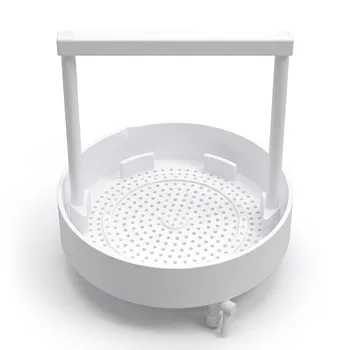
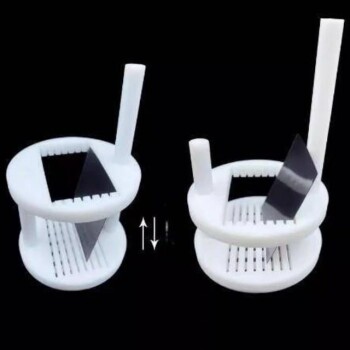
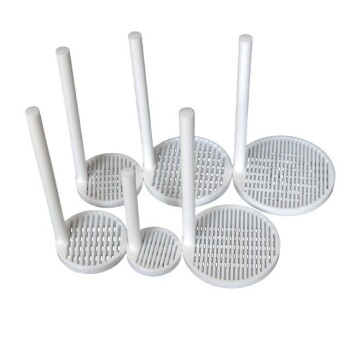
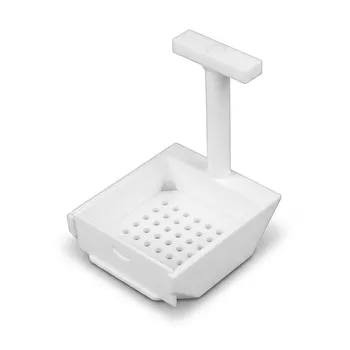
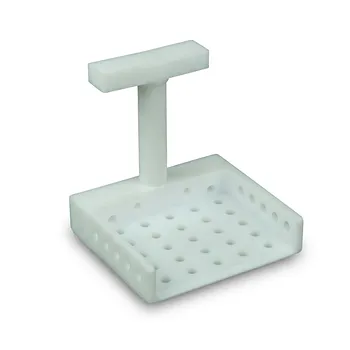
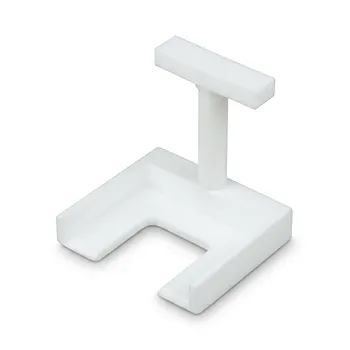
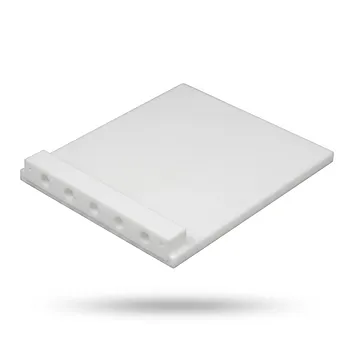
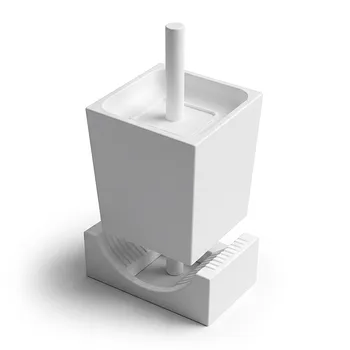
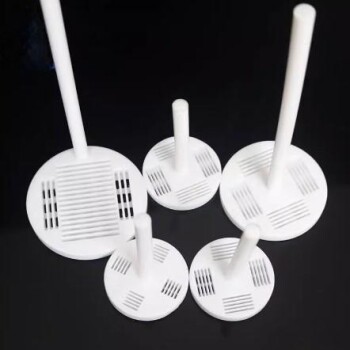
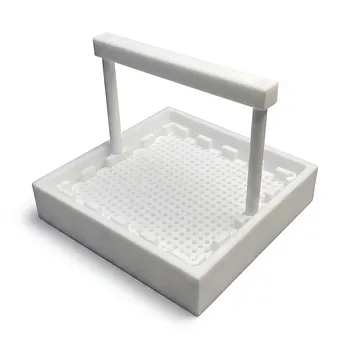
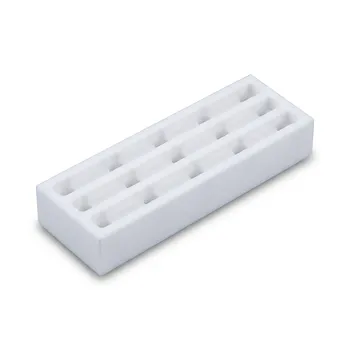
PTFE flower baskets are defined by their near-total chemical inertness, allowing them to remain stable when exposed to the aggressive acids, bases, and organic solvents common in semiconductor wet processing. This resistance specifically covers high-concentration hydrofluoric acid (HF), nitric acid (HNO3), and sulfuric acid (H2SO4), ensuring the basket does not degrade or react during critical cleaning and etching cycles.
Core Takeaway: The chemical resistance of PTFE is rooted in its exceptionally strong carbon-fluorine bonds, which create a protective shield around the molecular backbone. This inertness is vital in semiconductor manufacturing because it prevents material degradation and eliminates the risk of ion leaching, which could otherwise contaminate sensitive silicon wafers.
The Foundation of Chemical Inertness
The Strength of Carbon-Fluorine Bonds
The primary reason PTFE resists chemical attack is the high bond energy of the carbon-fluorine (C-F) bond. These bonds are among the strongest in organic chemistry, effectively wrapping the carbon backbone in a protective "sheath" that prevents reactive chemicals from breaking the polymer chain.
Resistance to Universal Semiconductor Etchants
In wet processing, flower baskets are frequently submerged in "Piranha" solutions (H2SO4 and H2O2) or HF-based etchants. PTFE is virtually unaffected by these substances, maintaining its structural integrity and mechanical properties even during prolonged exposure to these highly corrosive environments.
Stability Across Temperature Ranges
Unlike many polymers that become more susceptible to chemical attack as heat increases, PTFE maintains its chemical resistance across its entire operating temperature range. This allows semiconductor engineers to perform hot acid stripping or cleaning without fear of the basket softening or reacting with the chemistry.
Maintaining Ultra-High Purity Standards
Prevention of Ion Leaching
One of the most critical requirements in semiconductor fabrication is the prevention of metallic and ionic contamination. PTFE’s inert nature ensures that no catalytic side reactions occur and no trace elements leach from the basket into the process bath, which is essential for maintaining high device yields.
Non-Porous Surface and Absorption
PTFE features a non-porous surface that minimizes the absorption of chemical residues. This characteristic is vital for flower baskets used in multiple stages of production, as it ensures that chemicals from one bath are not carried over to the next, significantly reducing the risk of cross-contamination.
Resistance to Organic Solvents
Beyond acids and bases, PTFE is highly insoluble in almost all known organic solvents. This makes it a versatile material for various wet-bench processes, including those involving photoresist strippers and specialized cleaning agents that would dissolve or swell other plastics.
Understanding the Trade-offs and Limitations
Vulnerability to Specific Reactive Agents
While PTFE is "virtually inert," it is not invincible and can be damaged by a small subset of highly reactive chemicals. It can be attacked by molten alkali metals (such as liquid sodium) and highly reactive fluorinating agents like chlorine trifluoride (ClF3) or oxygen difluoride.
Pressure and Temperature Sensitivities
The material's resistance to certain gaseous elements, like elementary fluorine, decreases under conditions of high pressure and temperature. In standard semiconductor wet processing, these conditions are rarely met, but they remain a critical consideration for specialized gas-phase applications.
Mechanical Limitations in High-Stress Environments
While chemically superior, PTFE is a relatively soft fluoropolymer compared to materials like PEEK. In applications requiring extreme mechanical rigidity or resistance to heavy abrasive wear, the "creep" or cold flow characteristics of PTFE may require specific design adjustments in the flower basket geometry.
Selecting the Right Material for Your Process
How to Apply This to Your Project
- If your primary focus is Hydrofluoric Acid (HF) processing: PTFE is the industry standard due to its total immunity to HF attack and its ability to prevent silicon contamination.
- If your primary focus is minimizing cross-contamination: Leverage PTFE's non-porous surface and low absorption rates to ensure clean transitions between different chemical baths.
- If your primary focus is extreme high-pressure fluorine gas: Consult with a technical specialist, as standard PTFE may require reinforcement or a different fluoropolymer variant to handle these specific reactive conditions.
By leveraging the unique molecular stability of PTFE, semiconductor facilities can ensure process consistency and the highest levels of wafer purity.
Summary Table:
| Property | Advantage | Semiconductor Benefit |
|---|---|---|
| Chemical Inertness | Resists HF, HNO3, and H2SO4 | Prevents basket degradation during etching |
| C-F Bond Strength | Exceptionally high bond energy | Ensures structural stability in harsh baths |
| Non-Porous Surface | Minimal chemical absorption | Eliminates cross-contamination between cycles |
| Thermal Stability | Maintains properties across temperatures | Suitable for hot acid stripping and cleaning |
| Ultra-High Purity | Zero ionic or metallic leaching | Protects sensitive silicon wafer yields |
Secure Process Integrity with KINTEK’s High-Performance Fluoropolymers
Maintain the highest standards of wafer purity with KINTEK, your expert partner in high-performance fluoropolymer manufacturing. From everyday basic labware like beakers, crucibles, and reagent bottles to specialized PTFE flower baskets, we provide the chemical resistance your semiconductor wet processing demands.
Our expertise extends from fluid transfer components (tubing, valves, fittings) and sample prep tools to advanced derivative apparatus, including custom electrochemical cells and microwave digestion vessels. Backed by end-to-end custom CNC fabrication, KINTEK delivers everything from complex non-standard machined parts to high-volume orders with an exclusive focus on PTFE and PFA materials.
Eliminate contamination risks and optimize your lab's workflow—contact us today to discuss your bespoke laboratory setups or high-volume supply needs.
Related Products
- Customizable Square PTFE Silicon Wafer Cleaning Flower Basket for Semiconductor Wet Process Etching and Substrate Handling
- Custom PTFE Corrosion Resistant 6 Inch Dual Handle Photomask Cleaning Flower Basket Rack
- Custom PTFE Wafer Cleaning Flower Basket Chemical Resistant Fluoropolymer Carrier for Semiconductor Etching and New Energy Processing
- High Purity PTFE Wafer Carrier Semiconductor Flower Basket for Corrosion Resistant Silicon Processing Custom Sized Labware
- PTFE Polytetrafluoroethylene Flower Basket Small Silicon Wafer Cleaning Rack Carrier for Laboratory Acid Pickling
People Also Ask
- What are the specific applications of PTFE flower baskets in the semiconductor industry? Expert Wafer Processing Guide
- What is the continuous service temperature range for PTFE laboratory cleaning baskets? Durable Lab Solutions Explained
- What structural components are typically found in a high-purity PTFE wafer cleaning rack? Optimize Your Cleaning Process
- How is PTFE utilized in the semiconductor industry? Essential for High-Purity and Yield
- Why is PTFE preferred over materials like stainless steel or polypropylene for wafer cleaning? Achieve Ultra-Pure Yields