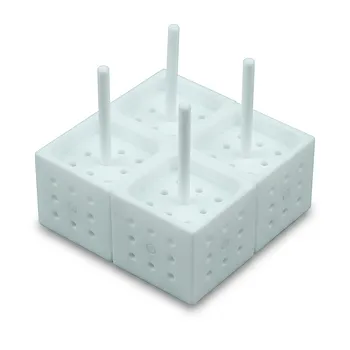
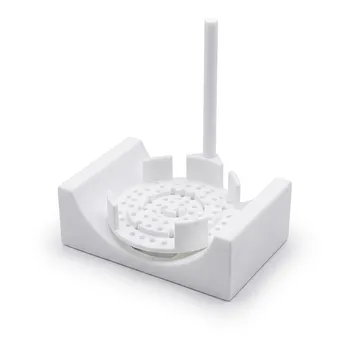
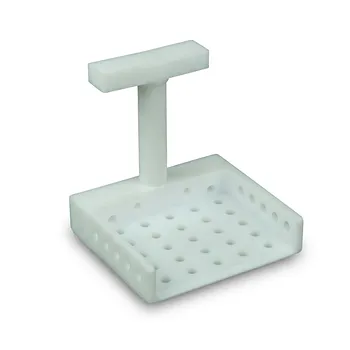
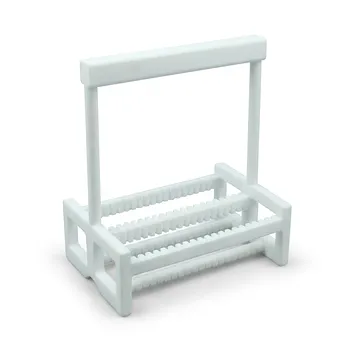
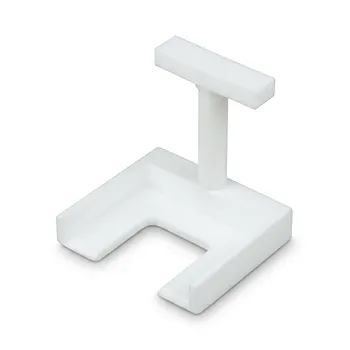
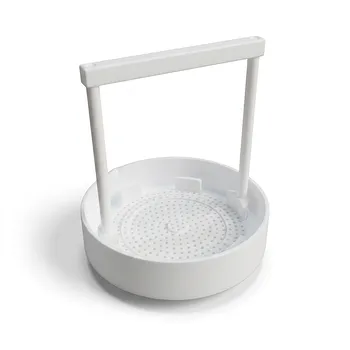
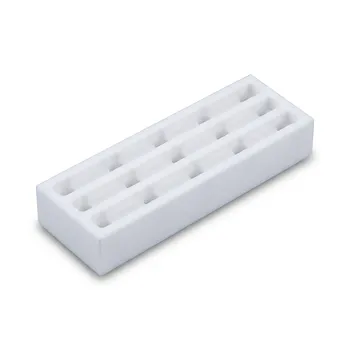
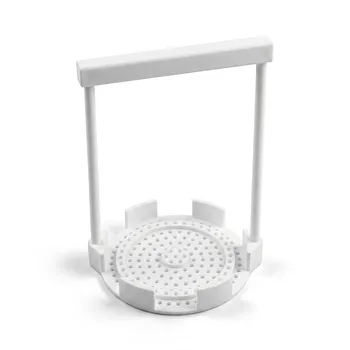
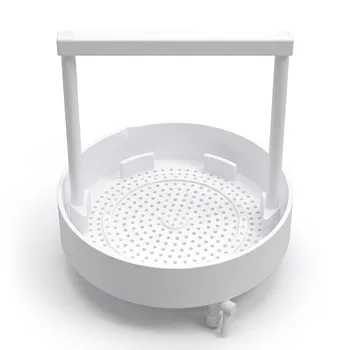
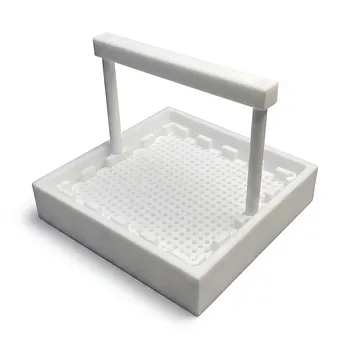
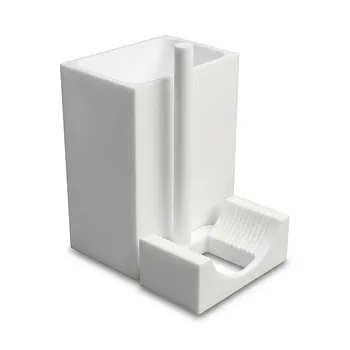
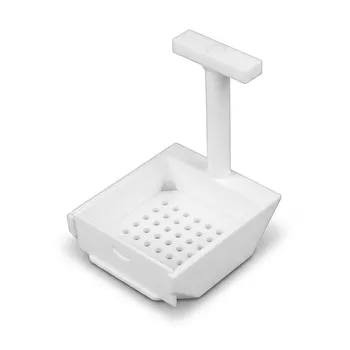
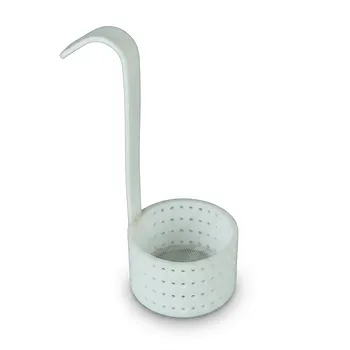
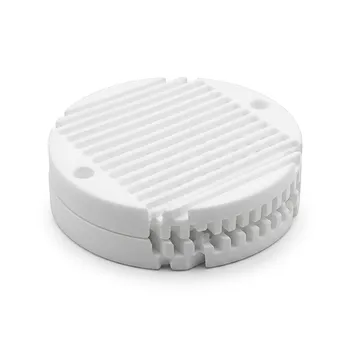
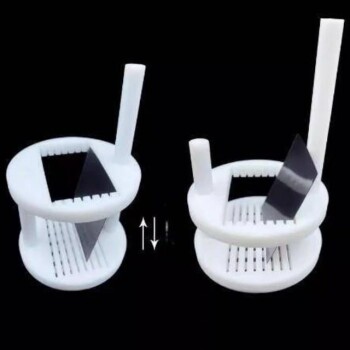
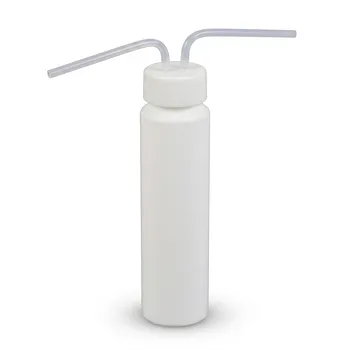
PTFE laboratory cleaning baskets operate reliably within a continuous service temperature range of approximately -200°C to +260°C (-328°F to +500°F). This expansive thermal window allows the material to maintain its structural integrity and chemical inertness in environments ranging from cryogenic storage to high-heat sterilization and boiling acid baths.
Core Takeaway: While Polytetrafluoroethylene (PTFE) possesses a crystalline melting point of approximately 327°C, its practical limit for continuous use is 260°C to prevent material degradation and ensure long-term mechanical stability.
Exceptional Performance at Thermal Extremes
Resilience in Cryogenic Environments
PTFE is unique among plastics for its ability to retain compressive plasticity and resist brittleness at temperatures near absolute zero. While standard laboratory use often stops at -200°C, the material can withstand temperatures as low as -269°C (liquid helium levels) without shattering. This makes PTFE baskets ideal for transferring samples directly from cryogenic storage into cleaning or processing solutions.
Stability in High-Heat Sterilization
The upper limit of 260°C easily accommodates all standard laboratory sterilization protocols. This includes autoclaving at 121°C and dry heat sterilization, which typically occurs at 160°C. Because the baskets do not significantly degrade or soften at these temperatures, they can be sterilized repeatedly without losing their shape or load-bearing capacity.
Structural Integrity and Chemical Processing
Maintenance of Mechanical Properties
During typical chemical cleaning cycles, which usually range from 20°C to 100°C, PTFE remains far below its stress limits. The material's high thermal stability ensures that the basket's grid or mesh structure does not warp or become "gummy" when submerged in boiling solvents or acids. This stability is critical for the safe retrieval of delicate components from aggressive chemical baths.
The Threshold of Thermal Decomposition
Although PTFE does not "melt" in a traditional sense into a flowable liquid, it begins to undergo gradual microscopic decomposition once it exceeds 260°C. If the material is pushed toward 400°C, pyrolysis accelerates, releasing potentially hazardous fumes. For this reason, laboratory ovens and heating elements must be carefully regulated to ensure the 260°C threshold is never breached during continuous operation.
Understanding the Trade-offs
Thermal Expansion and Fit
PTFE has a relatively high coefficient of thermal expansion compared to the metals or glass it may be holding. In precision applications, users must account for the fact that a basket may expand slightly at 200°C, potentially affecting how it fits into a specific beaker or ultrasonic tank.
Creep and Deformation Under Load
While PTFE is thermally stable, it is susceptible to "creep"—a tendency to slowly deform under a heavy mechanical load over time. This effect is magnified at higher temperatures. If a basket is heavily loaded with dense parts and held near the 260°C limit, the mesh or support handles may gradually stretch.
Applying This Knowledge to Your Laboratory
Effective use of PTFE cleaning baskets requires matching the thermal environment to the specific grade of PTFE and the duration of exposure.
- If your primary focus is cryogenic processing: You can rely on PTFE baskets to remain ductile and impact-resistant down to -200°C without the risk of stress cracking.
- If your primary focus is standard chemical cleaning: Focus on chemical compatibility rather than heat, as most baths (up to 100°C) fall well within the "safe zone" for PTFE structural integrity.
- If your primary focus is high-temperature synthesis or drying: Ensure your equipment is calibrated to stay below 260°C to prevent material degradation and the release of fluorinated vapors.
By respecting the 260°C continuous service limit, you ensure your PTFE equipment remains a safe and durable asset in the lab.
Summary Table:
| Temperature Milestone | Environmental Context | Practical Laboratory Application |
|---|---|---|
| -200°C to +260°C | Continuous Service | Standard safe operating window for most chemical processes |
| -269°C | Cryogenic Extremes | Liquid helium levels; remains ductile without shattering |
| 121°C to 160°C | Sterilization | Safe for autoclaving and standard dry heat protocols |
| 327°C | Crystalline Melting Point | Critical threshold; material loses structural stability |
| > 400°C | Thermal Decomposition | Accelerated pyrolysis; releases hazardous fluorinated fumes |
Elevate Your Lab’s Performance with KINTEK’s Precision Fluoropolymers
When your research demands uncompromising thermal stability and chemical resistance, KINTEK delivers. We specialize in high-performance fluoropolymer solutions, offering everything from everyday basic labware (beakers, cleaning baskets, crucibles, and reagent bottles) to advanced reaction apparatus like custom electrochemical cells and microwave digestion vessels.
Our expertise extends to:
- Fluid Transfer: Tubing, fittings, and high-purity valves.
- Sample Prep: Separatory funnels, filters, and high-precision pipettes.
- Custom Engineering: End-to-end CNC fabrication for non-standard machined parts and bespoke laboratory setups.
Whether you require high-volume consumables or a one-of-a-kind reactor crafted from premium PTFE or PFA, KINTEK ensures your equipment withstands the toughest environments.
Ready to upgrade your laboratory setup? Contact KINTEK today to discuss your specific requirements and experience the precision of expert-crafted fluoropolymer supplies.
Related Products
- Custom PTFE Wafer Cleaning Flower Basket Chemical Resistant Fluoropolymer Carrier for Semiconductor Etching and New Energy Processing
- High Purity PTFE Wet Cleaning Flower Basket Single Wafer Etching Rack Customizable 4 Inch Mask Plate Carrier
- Custom PTFE Wafer Carrier Cleaning Basket Corrosion Resistant Non Leaching High Polymer Experiment Support
- PTFE Polytetrafluoroethylene Flower Basket Small Silicon Wafer Cleaning Rack Carrier for Laboratory Acid Pickling
- Custom PTFE Semiconductor Wafer Cleaning Basket Corrosion Resistant Low Background Lab Rack
People Also Ask
- What are the specific applications of PTFE flower baskets in the semiconductor industry? Expert Wafer Processing Guide
- What advantages do PTFE flower baskets provide for the photovoltaic and solar energy industry? Boost Cell Efficiency
- How do the surface properties of PTFE flower baskets improve process efficiency? Enhance Throughput with High Purity
- What is the primary function and application of a PTFE flower basket? Expert Guide to High-Purity Processing
- What is the working principle of a PTFE flower basket? Optimize Fluid Flow and Purity for Chemical Immersion