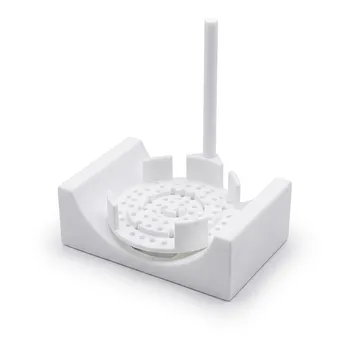
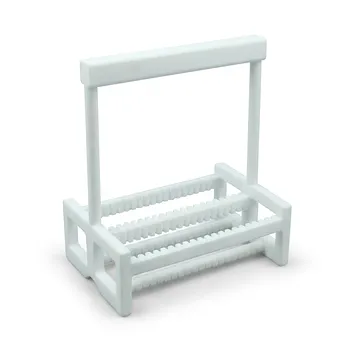
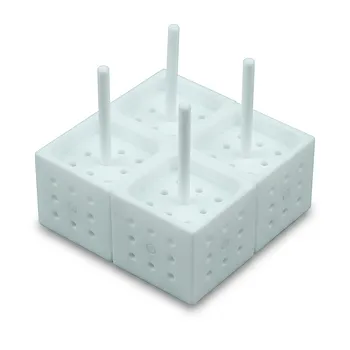
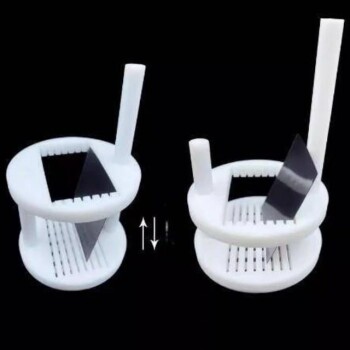
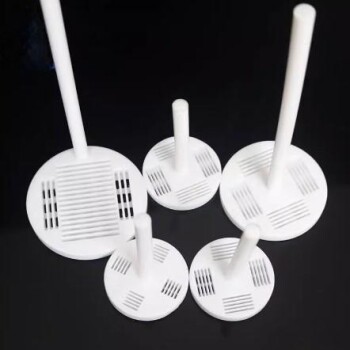
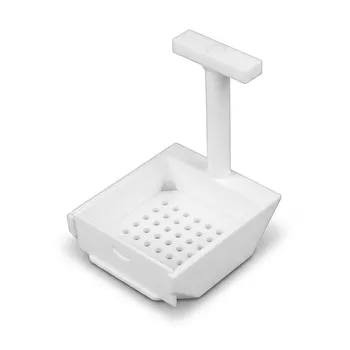
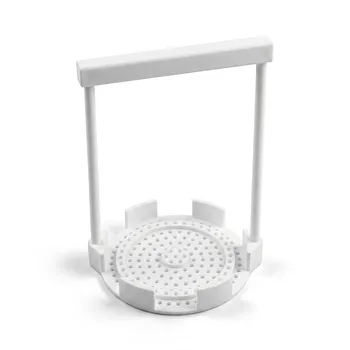
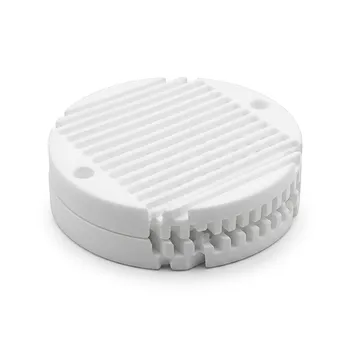
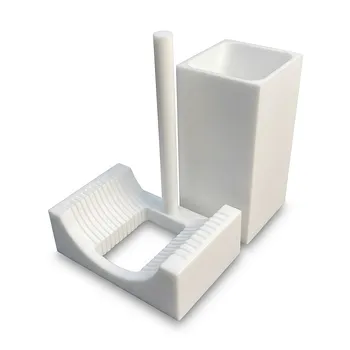
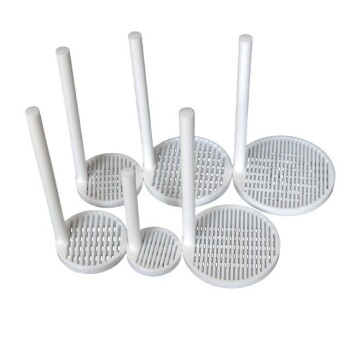
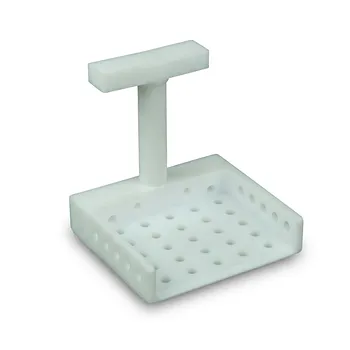
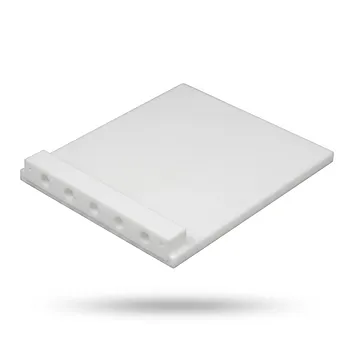
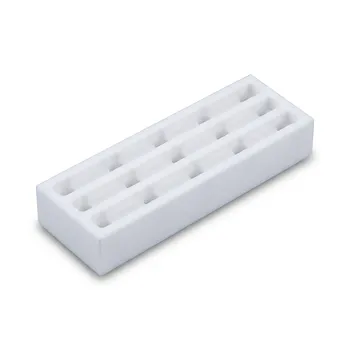
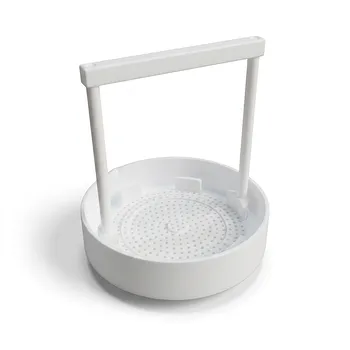
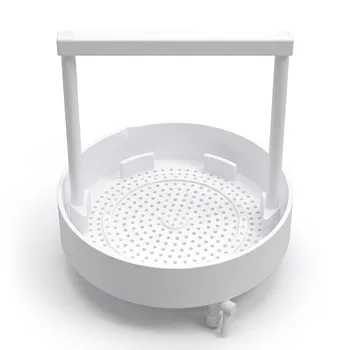
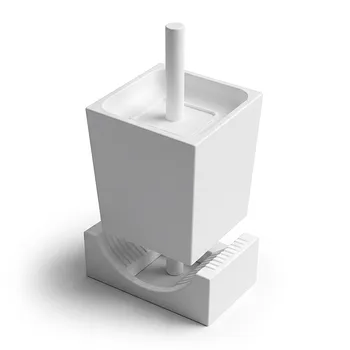
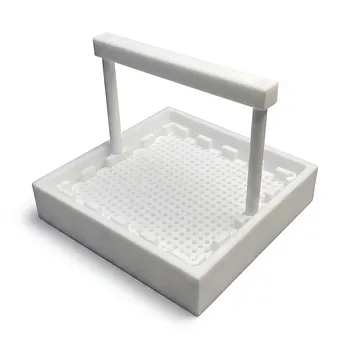
The working principle of a PTFE flower basket centers on the synergy between passive immersion and convective mass transfer. This specialized carrier utilizes a high-purity, perforated framework to facilitate bidirectional fluid flow across delicate substrates. As the basket enters a chemical bath, liquid penetrates the base and sides, rises through integrated substrate grooves, and exits the top to ensure uniform chemical contact and continuous renewal of fresh reactants.
The PTFE flower basket functions as a chemically inert conduit that transforms a static immersion bath into a dynamic processing environment. By balancing rigid structural support with a high-porosity design, it enables precise etching and cleaning while eliminating the risk of metallic contamination.
The Mechanics of Fluid Exchange
Bidirectional Flow and Mass Transfer
The primary function of the basket is to manage how chemicals interact with the substrate surface. Its structure features an array of vertical through-holes and perforated side plates that create interconnected fluid pathways.
These pathways allow process liquids to enter from all directions, ensuring that the chemistry at the substrate interface is constantly refreshed. This movement, driven by convective mass transfer, prevents the depletion of active chemicals and the buildup of reaction byproducts.
Optimizing Surface Exposure
To ensure uniform processing, the basket utilizes an open-architecture design with high open area ratios, typically ranging from 30% to 50%. This maximizes the volume of fluid in contact with the wafers or components.
Parallel grooves within the internal racks maintain positional stability while minimizing contact points. This design ensures that the chemistry reaches the entire surface area of the substrate without leaving "shadows" or untreated spots.
The Role of Material Science in Process Purity
Chemical Inertness via Carbon-Fluorine Bonds
The efficacy of the flower basket is inseparable from its construction material, Polytetrafluoroethylene (PTFE). The strength of the carbon-fluorine bonds makes the basket virtually unaffected by aggressive agents like hydrofluoric acid (HF) and sulfuric acid (H2SO4).
This inertness ensures that the basket does not react with the bath or degrade over time. It provides a reliable carrier in harsh environments where traditional metal or glass tools would suffer from corrosion or catalytic interference.
Eliminating Ionic Contamination
In semiconductor and laboratory environments, maintaining high purity is critical for production yields. PTFE is a high-purity polymer with no extractables or outgassing characteristics.
By using PTFE, operators prevent ion leaching and particle generation that could contaminate the bath. This allows metallic contamination levels to remain below 10 parts per trillion (ppt), which is essential for advanced electronic component manufacturing.
Understanding the Trade-offs
Thermal and Mechanical Limits
While PTFE is exceptionally resistant to chemicals, it has a lower thermal stability and mechanical rigidity compared to quartz or stainless steel. At extremely high temperatures, PTFE may experience "creep" or subtle deformation under heavy loads.
Hydrophobicity and Wetting
The naturally hydrophobic nature of PTFE can sometimes impact the initial wetting of the basket in certain aqueous solutions. In very specific low-surface-tension applications, this may require careful immersion techniques to avoid trapping air bubbles within the narrow substrate grooves.
Optimizing Your Immersion Process
To achieve the best results when using a PTFE flower basket, consider your specific processing goals and environmental factors.
- If your primary focus is semiconductor-grade purity: Utilize high-purity PTFE baskets to ensure metallic contamination stays below the 10 ppt threshold during RCA cleaning.
- If your primary focus is uniform etching speed: Select a basket with a high open area ratio (near 50%) to maximize the convective mass transfer of fresh etchants.
- If your primary focus is mechanical longevity: Regularly inspect the internal grooves for signs of wear or deformation, especially if your process involves frequent high-temperature cycling.
By aligning the basket's fluid-dynamic design with the specific requirements of your chemistry, you ensure a stable, repeatable, and ultra-clean manufacturing environment.
Summary Table:
| Key Feature | Functional Mechanism | Process Benefit |
|---|---|---|
| Bidirectional Flow | Perforated framework allowing liquid entry from all sides | Ensures continuous renewal of fresh reactants |
| Convective Transfer | Vertical through-holes drive fluid exchange | Prevents depletion of chemicals and byproduct buildup |
| High Open Area | 30% to 50% open-architecture design | Maximizes surface exposure for uniform etching |
| PTFE Material | Strong carbon-fluorine bonds | Zero corrosion or metallic contamination (<10 ppt) |
Elevate Your Lab Purity with KINTEK’s Fluoropolymer Expertise
Precision in chemical immersion starts with the right carrier. At KINTEK, we specialize exclusively in high-performance fluoropolymers, providing everything from everyday basic labware—like beakers, crucibles, and reagent bottles—to specialized PTFE flower baskets and fluid transfer components.
Whether you require high-purity trace analysis tools, sample prep filters, or advanced custom-machined reaction apparatus, our end-to-end custom CNC fabrication capabilities ensure we deliver exactly what your process demands. From high-volume standard orders to bespoke, non-standard laboratory setups, KINTEK guarantees absolute chemical inertness and zero-contamination performance.
Ready to optimize your high-purity workflows? Contact our engineering team today to discuss your custom PTFE/PFA requirements!
Related Products
- High Purity PTFE Wet Cleaning Flower Basket Single Wafer Etching Rack Customizable 4 Inch Mask Plate Carrier
- PTFE Polytetrafluoroethylene Flower Basket Small Silicon Wafer Cleaning Rack Carrier for Laboratory Acid Pickling
- Custom PTFE Wafer Cleaning Flower Basket Chemical Resistant Fluoropolymer Carrier for Semiconductor Etching and New Energy Processing
- Custom PTFE Teflon Parts Manufacturer Adjustable Height Flower Basket
- Custom Machined Molded PTFE Teflon Parts Manufacturer for Laboratory ITO FTO Conductive Glass Cleaning Flower Basket
People Also Ask
- How does the mechanical design of PTFE flower baskets accommodate different substrate sizes? Versatile Wafer Handling
- What is the continuous service temperature range for PTFE laboratory cleaning baskets? Durable Lab Solutions Explained
- How does the structural design of a PTFE flower basket ensure uniform fluid access to substrates? Optimize Lab Yields
- What are the primary functions and design features of a PTFE flower basket? Optimize High-Purity Chemical Processing
- How do PTFE flower baskets contribute to purity in semiconductor manufacturing? Achieve Sub-10 ppt Purity & Zero Leaching