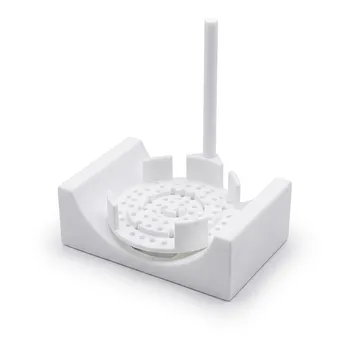
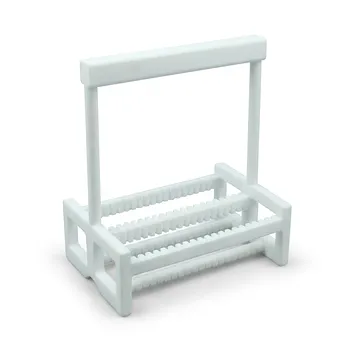
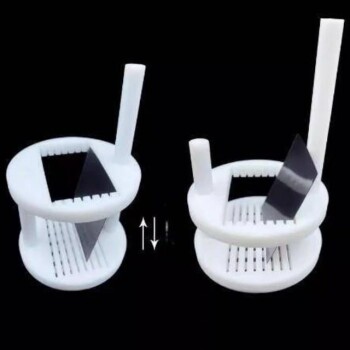
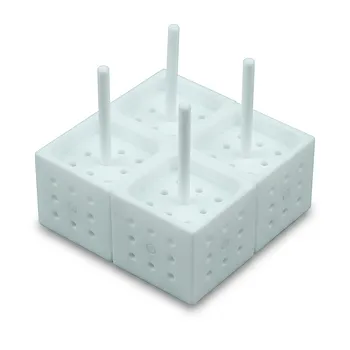
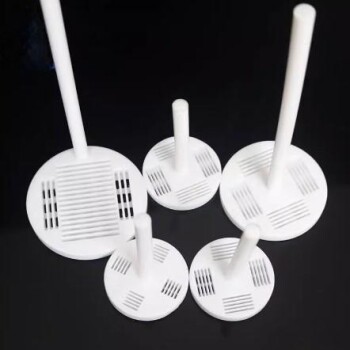
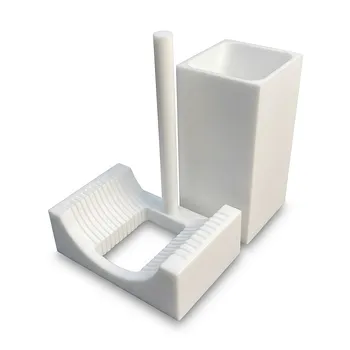
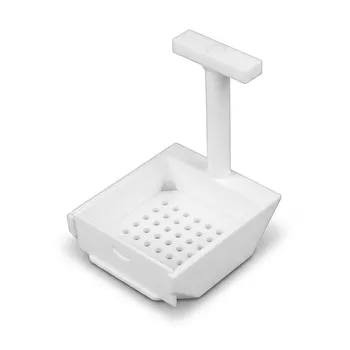
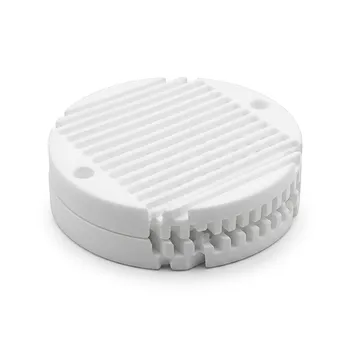
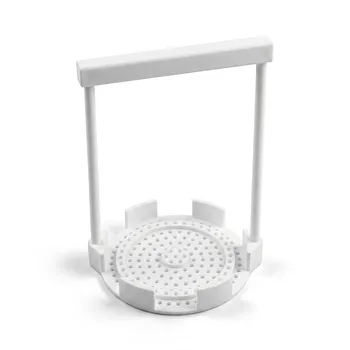
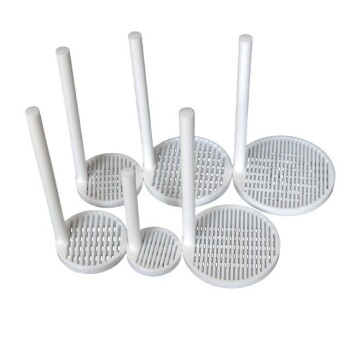
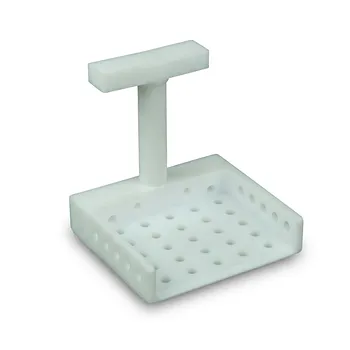
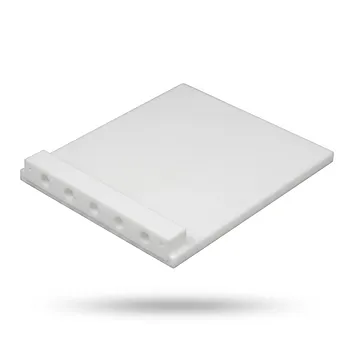
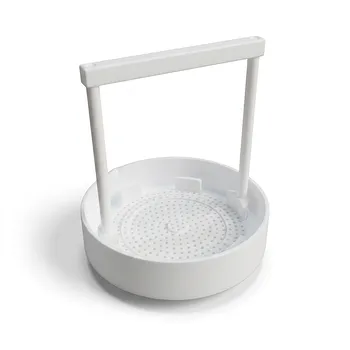
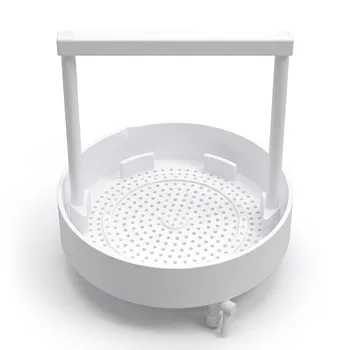
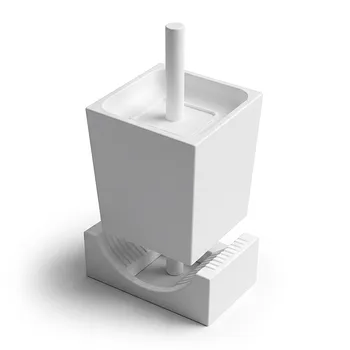
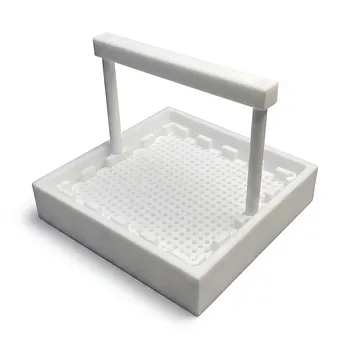
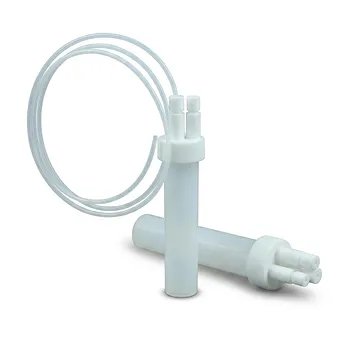
The mechanical design of PTFE flower baskets utilizes a combination of precision-machined grooves, adjustable dividers, and specialized stop levers to secure substrates of varying dimensions. These systems are engineered to scale from large 300 mm production wafers down to 2 cm x 2 cm R&D chips by modifying the internal rack configuration.
Core Takeaway: PTFE flower baskets achieve size versatility through modular internal components like adjustable-height dividers and toothed stop levers. This mechanical flexibility ensures that delicate substrates are held securely while maintaining maximum surface exposure for chemical processing.
Mechanical Mechanisms for Size Adaptation
Precision Machined Grooves
The interior walls of the basket feature parallel machined grooves that provide the primary vertical support for substrates. These slots are cut to specific widths to ensure a snug fit, preventing lateral movement or vibration-induced damage during immersion.
Adjustable-Height Dividers
To accommodate smaller or non-standard chips, the design incorporates adjustable-height dividers. These movable components allow users to shorten the effective height or width of the carrier, ensuring that even a small 2 cm fragment remains centered and accessible to process fluids.
Toothed Stop Levers
Safety and stability are managed via toothed stop levers that lock substrates into place. These levers act as a mechanical gate, preventing substrates from floating out of their slots during high-turbulence rinsing or chemical etching cycles.
Integrating Fluid Dynamics with Structural Design
High Open Area Ratios
The framework of a PTFE basket is intentionally minimalist, often featuring perforated side plates and vertical through-holes in the base. This design typically achieves an open area ratio of 30% to 50%, ensuring that chemicals can circulate freely around substrates of any size.
Interconnected Fluid Pathways
Because the baskets use an open framework, they create interconnected pathways for process liquids. This ensures that fresh chemistry is continuously renewed at the substrate surface, which is critical for maintaining process uniformity across different batch sizes.
Hydrophobic Surface Properties
The inherent properties of PTFE, including its low coefficient of friction (0.05–0.10), complement its mechanical design. The material’s non-wetting characteristics ensure that liquid films do not bridge the narrow gaps between small, closely packed substrates.
Understanding the Trade-offs
Mechanical Creep Under Load
While PTFE is exceptionally resistant to chemicals, it is susceptible to creep (permanent deformation) under sustained mechanical stress. Baskets intended for heavy loads must be designed with increased wall thickness or reinforced features to prevent the racks from warping over time.
Material Softness and Scratching
PTFE is a relatively soft polymer, which is advantageous for preventing substrate breakage. However, this also means the basket itself can be scratched by sharp substrate edges, potentially creating areas where contaminants can lodge.
Environmental Degradation
Designers must account for the fact that PTFE can be degraded by high-energy laser or UV exposure. This limits the use of standard flower baskets in specific laser-based patterning steps or sterilization processes that involve intense radiation.
How to Apply This to Your Project
The choice of a PTFE flower basket configuration should be driven by your specific substrate geometry and chemical environment.
- If your primary focus is R&D with varying chip sizes: Select a basket with modular, adjustable-height dividers to ensure small fragments (like GaAs or GaN) are held securely without needing multiple carriers.
- If your primary focus is high-throughput production wafers: Prioritize baskets with reinforced wall thicknesses and wide-bore perforations to minimize the effects of material creep and maximize fluid drainage.
- If your primary focus is minimizing chemical carry-over: Utilize baskets with the highest possible open area ratio and a "toothed" lever design to facilitate rapid drainage and reduce liquid retention between baths.
By matching the mechanical flexibility of the carrier to your substrate's physical profile, you ensure both process safety and chemical efficiency.
Summary Table:
| Mechanism | Primary Function | Key Benefit |
|---|---|---|
| Precision Grooves | Vertical substrate support | Prevents lateral movement and vibration |
| Adjustable Dividers | Modular height/width tuning | Accommodates small R&D chips (2cm x 2cm) |
| Toothed Stop Levers | Mechanical locking gate | Prevents substrates from floating during rinsing |
| Open Framework | 30% - 50% open area ratio | Ensures maximum chemical circulation and drainage |
Elevate Your Lab Precision with KINTEK
Maximize your chemical processing efficiency with KINTEK’s high-performance fluoropolymer solutions. Whether you need standard labware—like PTFE beakers, PFA reagent bottles, and digestion tubes—or complex, custom-machined flower baskets for specific substrate geometries, we deliver excellence.
From everyday consumables and fluid transfer components to advanced electrochemical cells and hydrothermal synthesis liners, KINTEK provides end-to-end custom CNC fabrication tailored to your unique research or production requirements.
Ready to optimize your workflow? Contact KINTEK today to discuss your bespoke laboratory setup!
Related Products
- High Purity PTFE Wet Cleaning Flower Basket Single Wafer Etching Rack Customizable 4 Inch Mask Plate Carrier
- PTFE Polytetrafluoroethylene Flower Basket Small Silicon Wafer Cleaning Rack Carrier for Laboratory Acid Pickling
- Custom PTFE Teflon Parts Manufacturer Adjustable Height Flower Basket
- Custom PTFE Wafer Cleaning Flower Basket Chemical Resistant Fluoropolymer Carrier for Semiconductor Etching and New Energy Processing
- Custom Machined Molded PTFE Teflon Parts Manufacturer for Laboratory ITO FTO Conductive Glass Cleaning Flower Basket
People Also Ask
- What is the continuous service temperature range for PTFE laboratory cleaning baskets? Durable Lab Solutions Explained
- What is the working principle of a PTFE flower basket? Optimize Fluid Flow and Purity for Chemical Immersion
- How does the structural design of a PTFE flower basket ensure uniform fluid access to substrates? Optimize Lab Yields
- What are the primary functions and design features of a PTFE flower basket? Optimize High-Purity Chemical Processing
- How do PTFE flower baskets contribute to purity in semiconductor manufacturing? Achieve Sub-10 ppt Purity & Zero Leaching