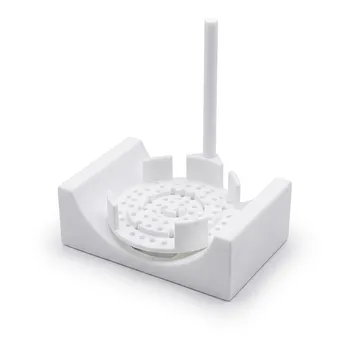
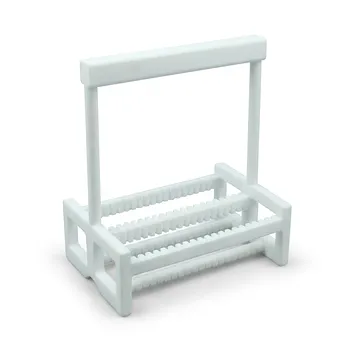
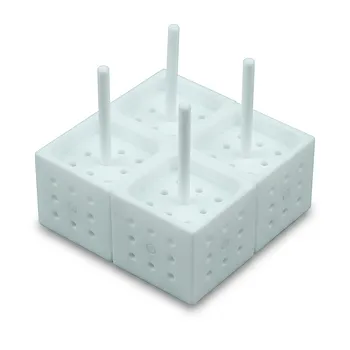
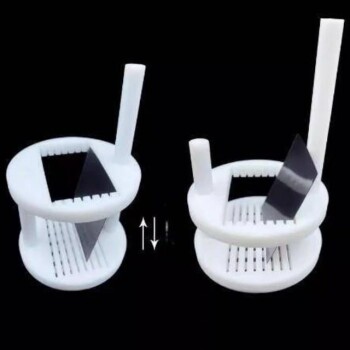
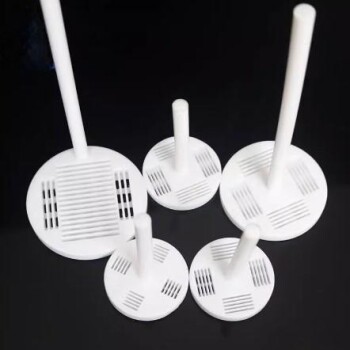
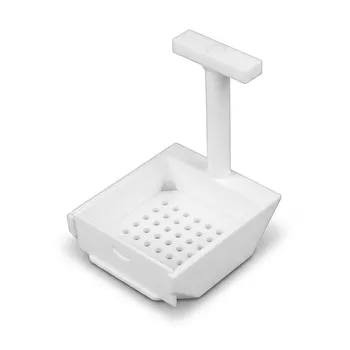
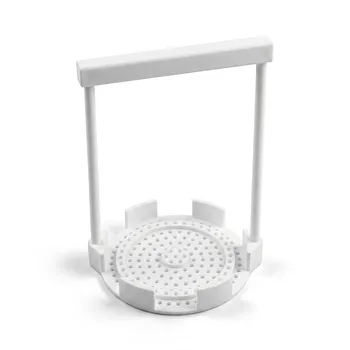
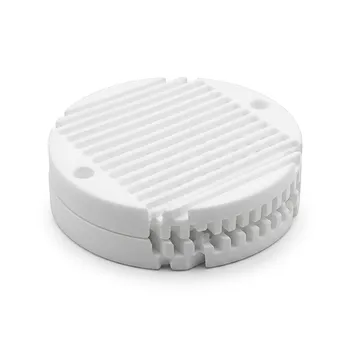
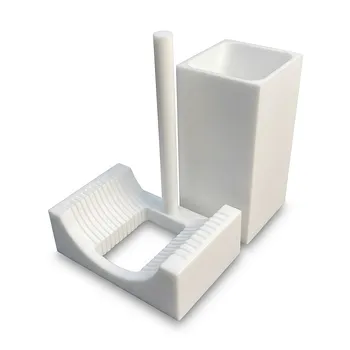
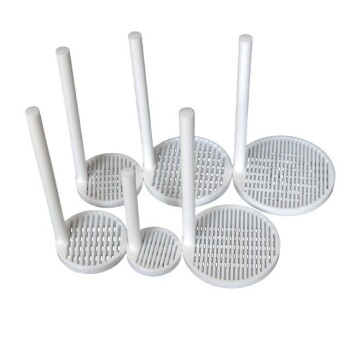
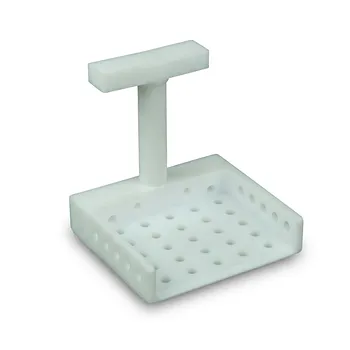
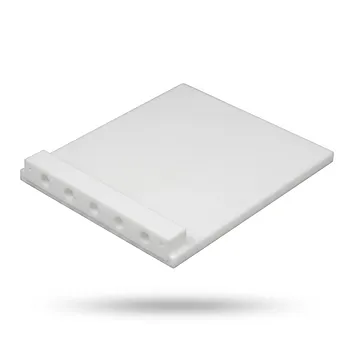
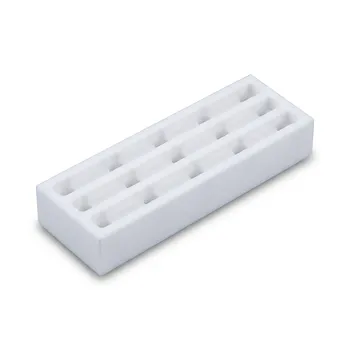
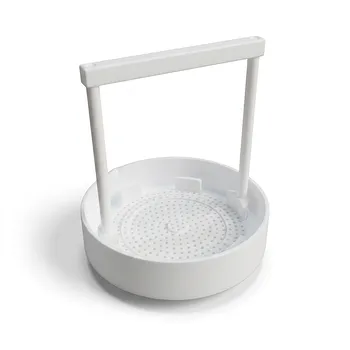
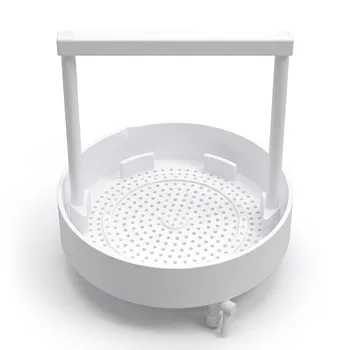
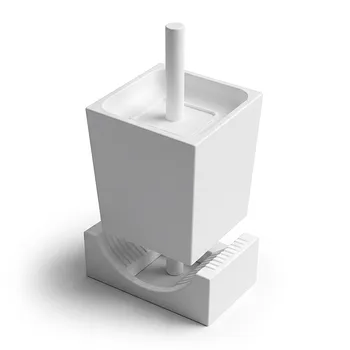
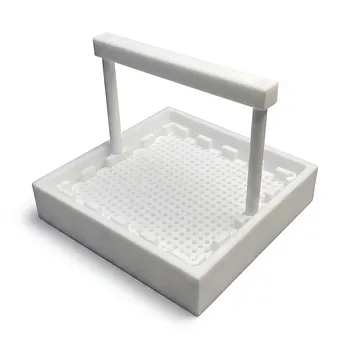
PTFE flower baskets are critical purity safeguards in semiconductor wet benches because they provide a chemically inert, non-leaching environment for wafers during sensitive processing steps. By preventing metallic ion leaching and particle shedding, these carriers ensure that contamination levels remain below 10 parts-per-trillion (ppt) on 300 mm wafers, which is essential for maintaining high production yields.
The central role of PTFE flower baskets is to maintain an ultra-pure environment by acting as a chemically invisible substrate carrier. Their combination of total chemical inertness and unique surface properties prevents the introduction of contaminants that would otherwise cause catastrophic defects in microcircuitry.
Preventing Chemical and Ionic Contamination
Eliminating Ion Leaching and Outgassing
PTFE (Polytetrafluoroethylene) is a high-purity material that inherently lacks extractables or outgassing characteristics. In processes like RCA cleaning, where wafers are exposed to intense chemical environments, PTFE ensures that no metallic ions or organic compounds migrate from the basket into the process bath.
Resistance to Aggressive Etchants
Semiconductor manufacturing relies on highly corrosive substances, such as hydrofluoric acid (HF) and Piranha solution. PTFE's total chemical inertness prevents the basket from degrading or reacting with these etchants, ensuring the carrier does not become a source of secondary contamination.
Maintaining Sub-10 ppt Purity
For 300 mm wafer production, maintaining metallic contamination below 10 ppt is a non-negotiable requirement. PTFE flower baskets facilitate this by providing a stable, non-reactive surface that does not shed particles, even when subjected to the mechanical stresses of ultrasonic or megasonic cleaning.
Enhancing Process Efficiency via Surface Properties
Hydrophobicity and Reduced Carry-over
PTFE is naturally hydrophobic, meaning it repels water and process chemicals. This property, combined with an extremely low coefficient of friction (0.05–0.10), minimizes the "drag" of chemicals from one bath to another, significantly reducing cross-contamination between different processing stages.
Improving Drying Efficiency
The non-stick nature of PTFE prevents droplet retention on the basket surface after a rinse cycle. This leads to faster and more complete drying of the wafers, which is vital for preventing water spots or residual chemical streaks that could impact subsequent photolithography or deposition steps.
Crevice-Free Design for Sterility
High-quality PTFE components are often machined to be dead-volume-free and crevice-free. This design philosophy prevents the entrapment of chemicals or the growth of bacteria, ensuring that the basket remains a "clean" component throughout repeated thermal and chemical cycles.
Understanding the Trade-offs
Mechanical Stability and "Creep"
While PTFE is chemically superior, it is softer than many metals or advanced polymers like PEEK. Under high loads or extreme temperatures, PTFE can experience "cold flow" or creep, meaning the basket may slightly deform over long periods of time if not properly reinforced or designed with adequate wall thickness.
Thermal Expansion Considerations
PTFE has a relatively high coefficient of thermal expansion. In processes involving rapid thermal cycling, engineers must account for the material's expansion and contraction to ensure that the wafers remain securely seated and that the basket does not interfere with automated handling equipment.
Structural Rigidity
Because PTFE is less rigid than stainless steel or quartz, flower baskets must be carefully engineered to support the weight of a full load of silicon wafers. This often results in thicker structural members, which can slightly increase the overall footprint of the carrier within the wet bench.
How to Apply This to Your Process
When integrating PTFE flower baskets into your manufacturing workflow, your choice should be dictated by the specific chemical and mechanical demands of your process.
- If your primary focus is Maximum Ionic Purity: Prioritize virgin PTFE baskets with documented "low extractable" certifications to ensure metallic contamination stays within the ppt range.
- If your primary focus is Chemical Throughput: Select baskets with optimized drainage geometries and high hydrophobicity to reduce rinse times and minimize chemical carry-over between baths.
- If your primary focus is Automated Handling Precision: Ensure the basket design includes reinforced structural ribs to counteract PTFE’s natural tendency toward "creep," maintaining the tight tolerances required by robotic grippers.
By leveraging the unique inertness and surface dynamics of PTFE, manufacturers can achieve the extreme purity levels required for the next generation of semiconductor devices.
Summary Table:
| Key Feature | Functional Benefit | Semiconductor Process Impact |
|---|---|---|
| Chemical Inertness | Zero metallic ion leaching or outgassing | Maintains sub-10 ppt purity in RCA cleaning |
| High Hydrophobicity | Minimizes chemical "drag" between baths | Reduces cross-contamination and rinse times |
| Low Friction Coeff. | 0.05–0.10; non-stick surface | Prevents particle shedding and droplet retention |
| Thermal Stability | Resists HF and Piranha solutions | Long-lasting durability in aggressive etchants |
| Crevice-Free Build | Dead-volume-free machined design | Prevents bacterial growth and chemical entrapment |
Elevate Your Process Purity with KINTEK’s Fluoropolymer Expertise
Maintaining sub-10 ppt purity in semiconductor manufacturing requires the absolute performance of high-purity materials. KINTEK specializes in high-performance PTFE and PFA solutions designed to safeguard your most sensitive workflows.
From everyday basic labware (beakers, measuring cylinders, crucibles, and reagent bottles) to complex fluid transfer components (tubing, fittings, valves) and advanced reaction apparatus (microwave digestion vessels, electrochemical cells), we provide the tools you need for zero-contamination results.
Why choose KINTEK?
- Precision Engineering: End-to-end custom CNC fabrication for non-standard machined parts and bespoke laboratory setups.
- Comprehensive Range: We supply everything from sample prep tools (filters, pipettes, tweezers) to high-volume consumables (O-rings, gaskets, seal tapes).
- Material Focus: An exclusive and absolute focus on high-performance fluoropolymers to ensure maximum chemical resistance.
Ready to eliminate contamination risks? Contact us today to discuss your custom requirements and experience the KINTEK difference in high-purity manufacturing.
Related Products
- High Purity PTFE Wet Cleaning Flower Basket Single Wafer Etching Rack Customizable 4 Inch Mask Plate Carrier
- PTFE Polytetrafluoroethylene Flower Basket Small Silicon Wafer Cleaning Rack Carrier for Laboratory Acid Pickling
- Custom PTFE Wafer Cleaning Flower Basket Chemical Resistant Fluoropolymer Carrier for Semiconductor Etching and New Energy Processing
- Custom PTFE Teflon Parts Manufacturer Adjustable Height Flower Basket
- Custom Machined Molded PTFE Teflon Parts Manufacturer for Laboratory ITO FTO Conductive Glass Cleaning Flower Basket
People Also Ask
- How does the mechanical design of PTFE flower baskets accommodate different substrate sizes? Versatile Wafer Handling
- What is the continuous service temperature range for PTFE laboratory cleaning baskets? Durable Lab Solutions Explained
- What is the working principle of a PTFE flower basket? Optimize Fluid Flow and Purity for Chemical Immersion
- How does the structural design of a PTFE flower basket ensure uniform fluid access to substrates? Optimize Lab Yields
- What are the primary functions and design features of a PTFE flower basket? Optimize High-Purity Chemical Processing