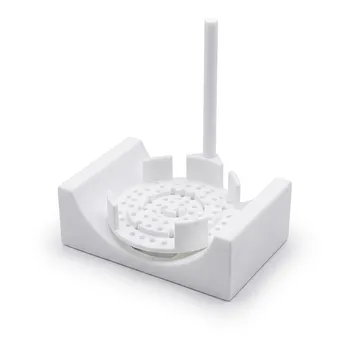
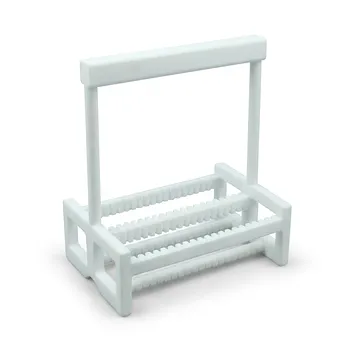
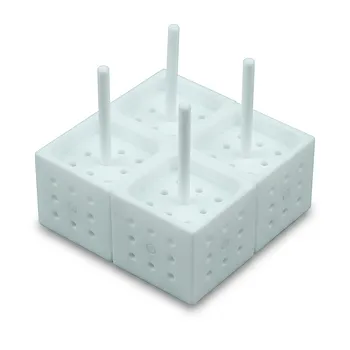
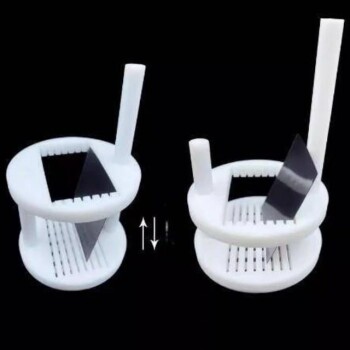
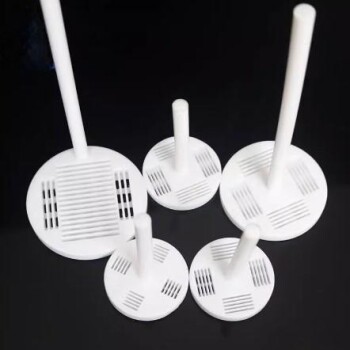
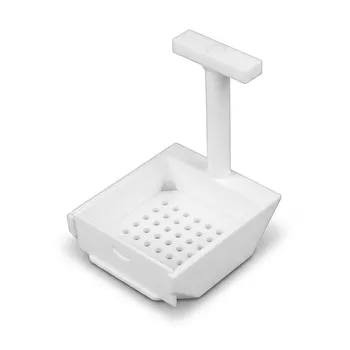
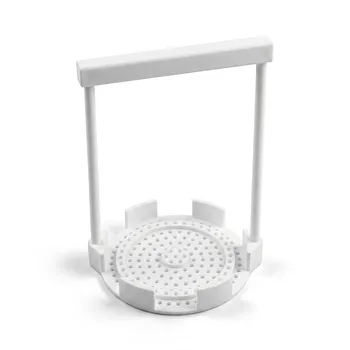
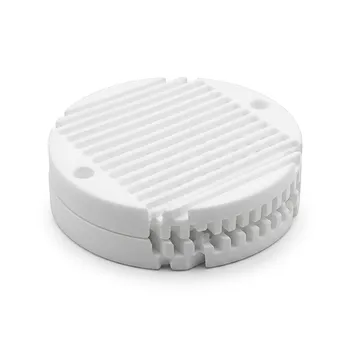
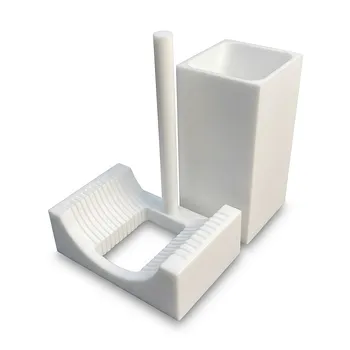
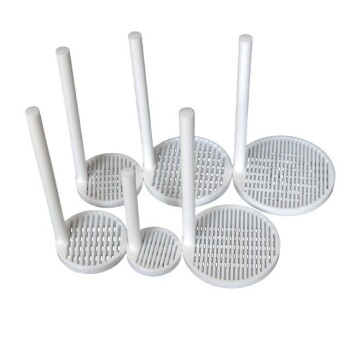
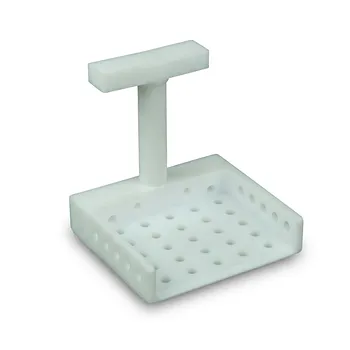
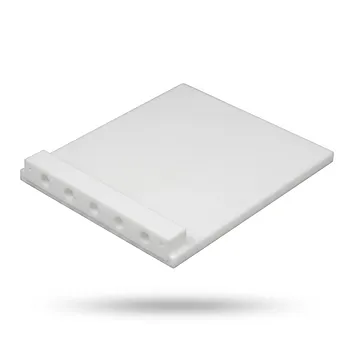
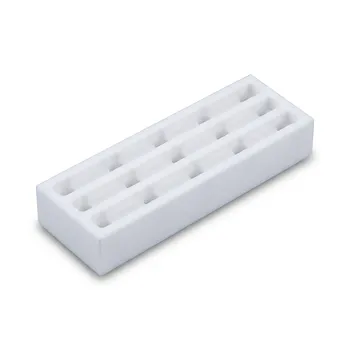
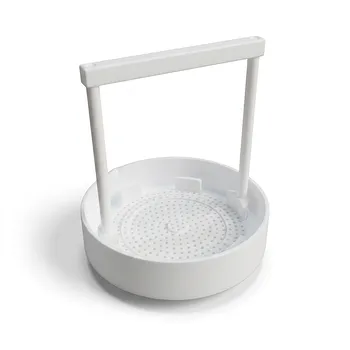
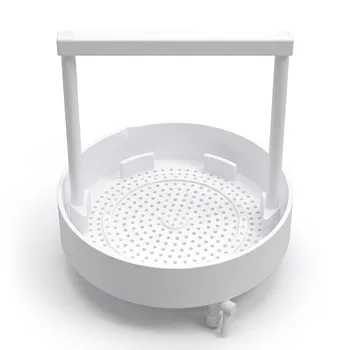
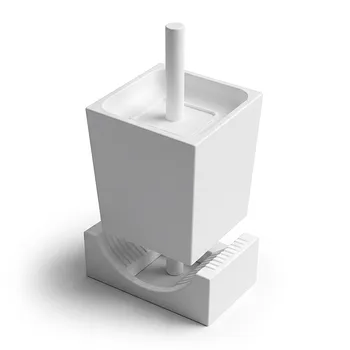
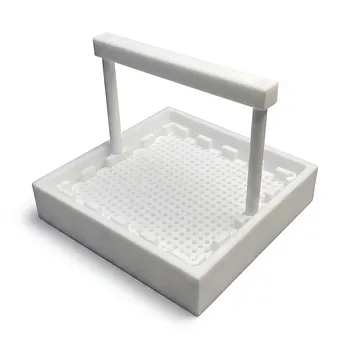
The structural design of a PTFE flower basket achieves uniform fluid access through a high-porosity open framework that facilitates omnidirectional liquid flow. By utilizing a combination of parallel machined grooves, perforated side plates, and a base containing an array of vertical through-holes, the design creates interconnected pathways for process chemistry. This architecture typically yields an open area ratio of 30% to 50%, ensuring that fresh liquids constantly reach every part of the substrate surface while stagnant zones are eliminated.
Core Takeaway: The PTFE flower basket ensures process uniformity by maximizing "open area" and leveraging passive convective mass transfer. This allows for the simultaneous renewal of chemicals across all substrate surfaces and rapid drainage during rinsing and drying phases.
Engineering Fluid Dynamics through Geometry
Optimized Open Area Ratios
The primary mechanism for uniform access is the high open area ratio, which generally ranges from 30% to 50%. These openings are strategically placed across the side plates and the base to ensure that liquid does not meet significant resistance when entering or exiting the carrier.
Multidirectional Flow Pathways
The structural design facilitates bidirectional and omnidirectional fluid flow. When immersed, liquid enters through the base through-holes and side perforations, rising through the internal grooves to reach the substrate faces.
Convective Mass Transfer
The basket operates on the principle of passive immersion and convective mass transfer. As the basket moves or the bath circulates, the open framework allows for a continuous exchange of "spent" chemistry with fresh reactants at the substrate interface.
Maintaining Substrate Stability and Exposure
Precision Machined Grooves
Substrates are held securely in machined parallel grooves that maintain fixed distances between each piece. This prevents contact between delicate wafers and ensures that the entire surface area of each substrate is equally exposed to the chemical environment.
Secure Positioning with Stop Levers
To prevent vibration-induced damage in agitated baths, the design often includes toothed stop levers. These components lock the substrates in place without obstructing the flow of liquids, maintaining stability during high-flow rinsing or etching.
Adaptability for Diverse Substrates
The internal racks can be customized with adjustable-height dividers to accommodate various sizes. This ranges from standard 200 mm or 300 mm wafers down to specialized 2 cm x 2 cm GaAs or GaN chips, ensuring uniform access regardless of the substrate dimensions.
Material Interactions and Processing Efficiency
Hydrophobic Surface Properties
PTFE (Polytetrafluoroethylene) is inherently hydrophobic and possesses a high contact angle for aqueous solutions. This "non-wetting" characteristic prevents the formation of residual liquid films on the basket itself, which speeds up the transition between different chemical stages.
Low Friction and Drag Reduction
With an extremely low coefficient of friction (0.05–0.10), the basket experiences minimal drag during immersion. This smoothness reduces turbulence at the substrate edge, further contributing to a uniform chemical boundary layer across the wafer.
Rapid Displacement and Drainage
The open structure is critical during the rinsing and drying phases. It allows for the rapid displacement of hazardous chemicals and facilitates quick drainage, which minimizes chemical carry-over between processing baths and improves overall yield.
Understanding the Trade-offs
Mechanical Rigidity vs. Porosity
There is an inherent trade-off between the structural integrity of the basket and its fluid access. While increasing the open area ratio improves chemical renewal, it can reduce the overall rigidity of the PTFE frame, which may lead to warping if exposed to extreme temperatures or heavy mechanical loads.
Surface Tension in Micro-Environments
Despite the hydrophobic nature of PTFE, very narrow groove spacing can sometimes trap air bubbles or create surface tension "bridges." If the design is too cramped, it may impede the very fluid uniformity it was intended to create, particularly in high-viscosity chemical baths.
Making the Right Choice for Your Goal
When selecting or configuring a PTFE flower basket, consider your primary process objective:
- If your primary focus is high-throughput etching: Prioritize a basket with the highest possible open area ratio (near 50%) to ensure rapid chemical renewal.
- If your primary focus is delicate compound semiconductor processing (GaAs/GaN): Choose a design with adjustable dividers and precision-machined grooves to prevent vibration and edge chipping.
- If your primary focus is minimizing chemical cross-contamination: Opt for a high-purity PTFE finish with a low coefficient of friction to ensure maximum drainage and minimal carry-over.
By balancing structural porosity with material hydrophobicity, the PTFE flower basket remains the definitive tool for achieving consistent, high-yield substrate processing in harsh chemical environments.
Summary Table:
| Design Feature | Functional Mechanism | Process Benefit |
|---|---|---|
| 30%-50% Open Area | High-porosity framework | Ensures omnidirectional liquid flow and chemical renewal |
| Machined Grooves | Fixed substrate spacing | Prevents wafer contact and ensures total surface exposure |
| Hydrophobic PTFE | Non-wetting surface | Enables rapid drainage and minimizes chemical carry-over |
| Arrayed Through-holes | Perforated base & sides | Eliminates stagnant zones via convective mass transfer |
| Toothed Stop Levers | Secure positioning | Prevents vibration damage in high-flow or agitated baths |
Elevate Your Processing Precision with KINTEK
Maximize your laboratory efficiency with KINTEK’s high-performance fluoropolymer solutions. From everyday basic labware like beakers, crucibles, and centrifuge tubes to specialized tools like high-purity filters and pipettes, we provide the durability your research demands.
Looking for something more specific? We specialize in custom CNC fabrication, delivering everything from bespoke PTFE flower baskets and non-standard machined parts to advanced reaction apparatus such as electrochemical cells and microwave digestion vessels. Whether you are performing trace analysis or high-volume semiconductor processing, our absolute focus on high-performance PTFE and PFA ensures chemical resistance and contamination-free results.
Ready to optimize your workflow? Contact us today to discuss your custom laboratory requirements!
Related Products
- High Purity PTFE Wet Cleaning Flower Basket Single Wafer Etching Rack Customizable 4 Inch Mask Plate Carrier
- PTFE Polytetrafluoroethylene Flower Basket Small Silicon Wafer Cleaning Rack Carrier for Laboratory Acid Pickling
- Custom PTFE Wafer Cleaning Flower Basket Chemical Resistant Fluoropolymer Carrier for Semiconductor Etching and New Energy Processing
- Custom PTFE Teflon Parts Manufacturer Adjustable Height Flower Basket
- Custom Machined Molded PTFE Teflon Parts Manufacturer for Laboratory ITO FTO Conductive Glass Cleaning Flower Basket
People Also Ask
- How does the mechanical design of PTFE flower baskets accommodate different substrate sizes? Versatile Wafer Handling
- What is the continuous service temperature range for PTFE laboratory cleaning baskets? Durable Lab Solutions Explained
- What is the working principle of a PTFE flower basket? Optimize Fluid Flow and Purity for Chemical Immersion
- What are the primary functions and design features of a PTFE flower basket? Optimize High-Purity Chemical Processing
- How do PTFE flower baskets contribute to purity in semiconductor manufacturing? Achieve Sub-10 ppt Purity & Zero Leaching