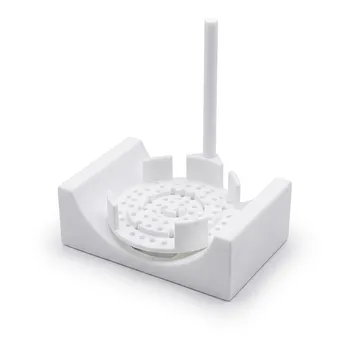
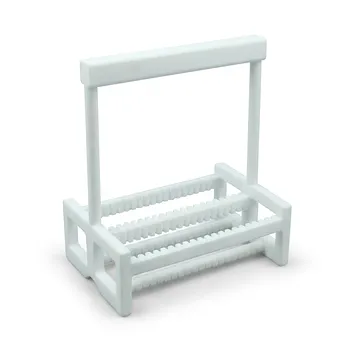
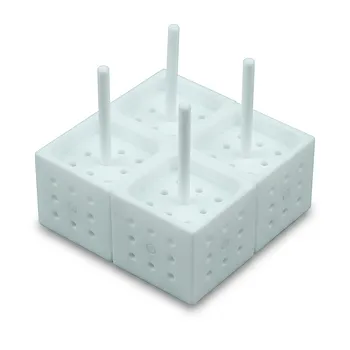
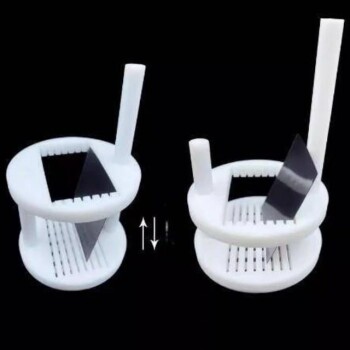
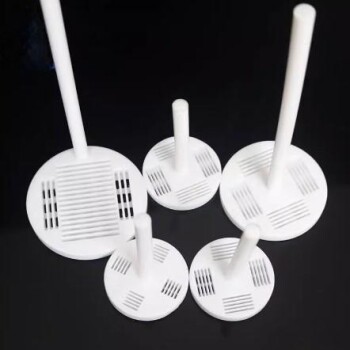
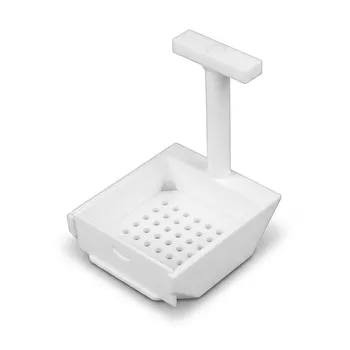
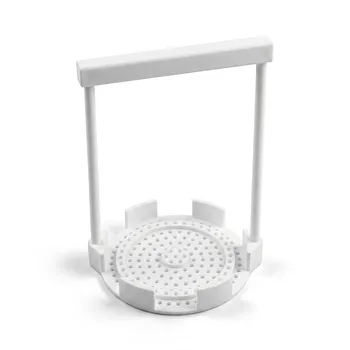
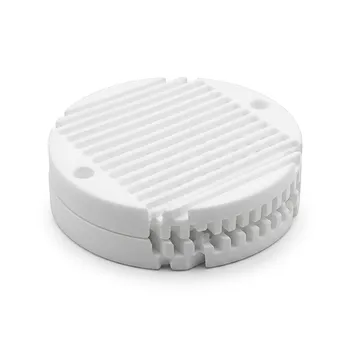
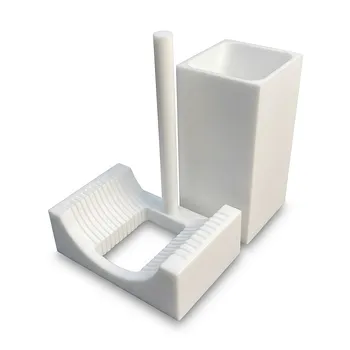
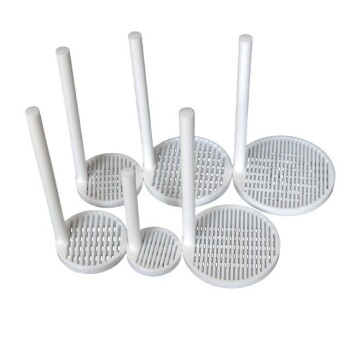
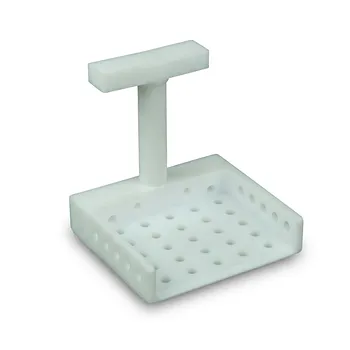
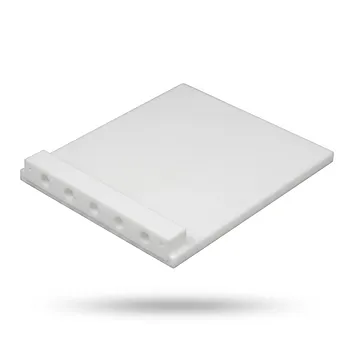
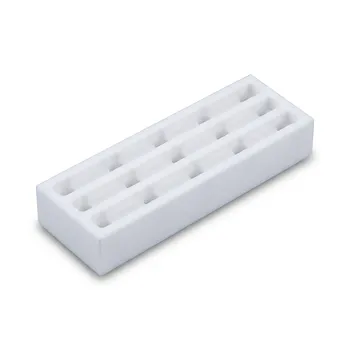
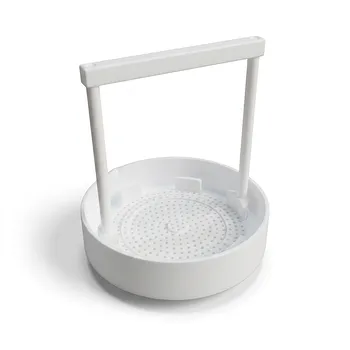
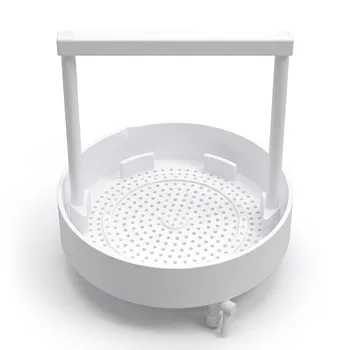
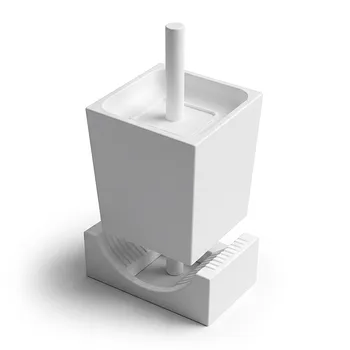
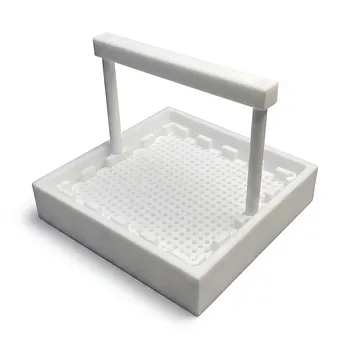
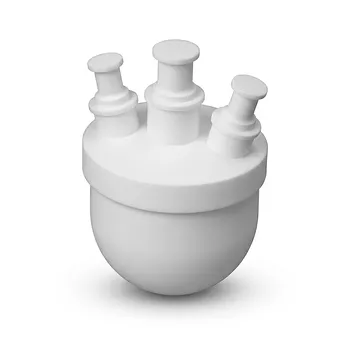
The surface properties of PTFE flower baskets improve process efficiency by minimizing fluid retention and preventing chemical cross-contamination. Because PTFE (Polytetrafluoroethylene) possesses an ultra-low coefficient of friction and a hydrophobic, non-stick surface, it allows for faster chemical drainage and more effective drying cycles. This results in higher throughput and significantly better wafer yields by reducing defects during sensitive manufacturing stages.
PTFE’s unique combination of low surface energy and extreme chemical inertness transforms flower baskets from simple carriers into active process enablers. By ensuring rapid fluid displacement and zero material leaching, these baskets minimize downtime and maximize production purity.
The Impact of Hydrophobicity on Drying and Carry-over
Minimizing Residual Liquid Films
PTFE is naturally hydrophobic, meaning it has a high contact angle for aqueous solutions that prevents wetting. This characteristic ensures that liquid does not form a continuous film on the basket, which significantly enhances the efficiency of overflow rinsing and spin-drying cycles.
Reducing Chemical Carry-over
Because the surface prevents droplet retention after rinsing, there is a marked reduction in chemical carry-over between different processing baths. By keeping chemicals contained within their respective stages, the basket maintains the integrity of each bath and prevents premature "poisoning" of expensive reagents.
Improving Drying Speed
The non-stick surface allows for the rapid displacement of chemicals during the transition between wet and dry phases. This speeds up the overall processing time, allowing for faster cycle times without sacrificing the cleanliness of the delicate substrates.
Friction Reduction and Substrate Integrity
Lowering Drag Forces
PTFE possesses an extremely low coefficient of friction, typically measured between 0.05 and 0.10. This minimizes drag forces during immersion, ensuring that the movement of the basket through fluids is smooth and does not create unnecessary turbulence that could dislodge or damage wafers.
Facilitating Residue-Free Handling
The non-adhesive surface prevents the buildup of viscous or polymeric residues that often foul other materials like stainless steel or glass. This ensures that delicate electrode samples, wires, or foils can be inserted and removed rapidly and without resistance.
Protecting Fragile Substrates
The low surface energy reduces the risk of active material powders or particulates adhering to the carrier. By keeping the interface between the basket and the wafer clean, the risk of mechanical stress or surface scratching during loading and unloading is virtually eliminated.
Chemical Inertness and Purity Maintenance
Eliminating Ion Leaching
In high-stakes environments like semiconductor manufacturing, PTFE provides total chemical inertness. This prevents ion leaching and particle generation during aggressive processes like RCA cleaning or HF-based etching, where metallic contamination must stay below 10 ppt.
Maintaining a High-Purity Profile
PTFE is a high-purity material with no extractables or outgassing issues. This ensures that the environment remains pristine for 300 mm wafers, preventing defects that would otherwise impact production yields and result in costly waste.
Resistance to Aggressive Reagents
The material's ability to withstand a wide range of corrosive chemicals allows a single basket design to be used across multiple process steps. This versatility simplifies inventory and ensures that the carrier itself never becomes a source of contamination.
Understanding the Trade-offs
Mechanical Strength vs. Purity
While pure PTFE is ideal for purity, it is a relatively soft material subject to "cold flow" under heavy loads. To improve structural integrity, fillers such as carbon, graphite, or glass are sometimes added, though these can occasionally introduce impurities or change the friction profile.
Thermal Expansion Considerations
PTFE has a high coefficient of thermal expansion compared to the silicon wafers it carries. Engineers must account for this during high-temperature cycles to ensure that the open structure of the basket maintains a secure grip without applying excessive pressure to the substrates.
Cleaning Protocol Requirements
Although the surface is non-stick, specialized cleaning protocols are still required to maintain the 10 ppt contamination standard. Users must ensure that cleaning agents do not contain surfactants that could temporarily alter the hydrophobic nature of the PTFE surface.
Applying This to Your Process
Choosing the Right Configuration for Your Goal
To maximize the efficiency of your wet chemical processing, you should select your PTFE carrier based on your most critical performance metric.
- If your primary focus is Maximum Throughput: Prioritize baskets with a highly open structure to leverage PTFE's non-wetting properties for the fastest possible drainage and drying.
- If your primary focus is Ultra-High Purity (e.g., <10 ppt): Opt for virgin PTFE without fillers to ensure there is zero risk of ion leaching or outgassing during aggressive etching.
- If your primary focus is Durability in High-Heat: Select reinforced PTFE blends containing carbon or glass to prevent deformation, while acknowledging a slight trade-off in absolute chemical purity.
By matching the specific surface advantages of PTFE to your workflow requirements, you can ensure a stable, high-yield production environment.
Summary Table:
| PTFE Property | Process Advantage | Efficiency Impact |
|---|---|---|
| Hydrophobicity | Prevents wetting & liquid films | Faster drying cycles & rapid drainage |
| Low Friction | Minimal drag (0.05–0.10 CoF) | Smooth immersion & damage-free handling |
| Chemical Inertness | Zero ion leaching or outgassing | Maintains bath purity & prevents defects |
| Non-stick Surface | Resists residue buildup | Reduced carry-over & easier cleaning |
Elevate Your Lab Precision with KINTEK Fluoropolymer Solutions
Maximize your process efficiency and maintain ultra-high purity with KINTEK’s expert-engineered PTFE and PFA solutions. From essential labware like beakers, crucibles, and reagent bottles to specialized components such as high-purity fluid transfer tubing, valves, and filtration tools, we provide the high-performance materials your sensitive applications demand.
At KINTEK, we go beyond standard supplies. Our end-to-end custom CNC fabrication allows us to deliver everything from complex non-standard machined parts to advanced reaction apparatus, including custom electrochemical cells, battery testing fixtures, and microwave digestion vessels. Whether you need high-volume consumables or bespoke laboratory setups, our exclusive focus on high-performance fluoropolymers ensures zero contamination and absolute durability.
Ready to optimize your workflow with custom PTFE flower baskets or high-purity instruments?
Contact KINTEK Today to Get a Quote
Related Products
- High Purity PTFE Wet Cleaning Flower Basket Single Wafer Etching Rack Customizable 4 Inch Mask Plate Carrier
- PTFE Polytetrafluoroethylene Flower Basket Small Silicon Wafer Cleaning Rack Carrier for Laboratory Acid Pickling
- Custom PTFE Wafer Cleaning Flower Basket Chemical Resistant Fluoropolymer Carrier for Semiconductor Etching and New Energy Processing
- Custom PTFE Teflon Parts Manufacturer Adjustable Height Flower Basket
- Custom Machined Molded PTFE Teflon Parts Manufacturer for Laboratory ITO FTO Conductive Glass Cleaning Flower Basket
People Also Ask
- How does the mechanical design of PTFE flower baskets accommodate different substrate sizes? Versatile Wafer Handling
- What is the continuous service temperature range for PTFE laboratory cleaning baskets? Durable Lab Solutions Explained
- What is the working principle of a PTFE flower basket? Optimize Fluid Flow and Purity for Chemical Immersion
- How does the structural design of a PTFE flower basket ensure uniform fluid access to substrates? Optimize Lab Yields
- What are the primary functions and design features of a PTFE flower basket? Optimize High-Purity Chemical Processing