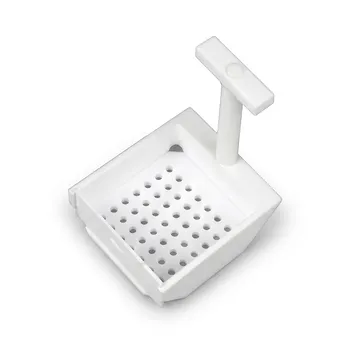
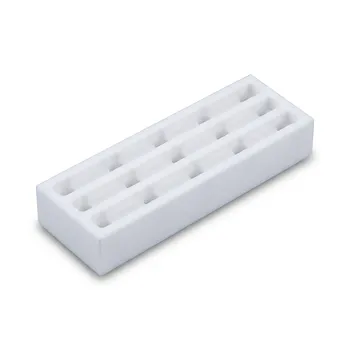
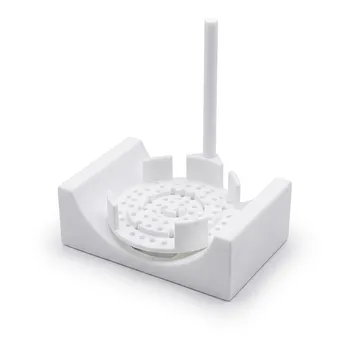
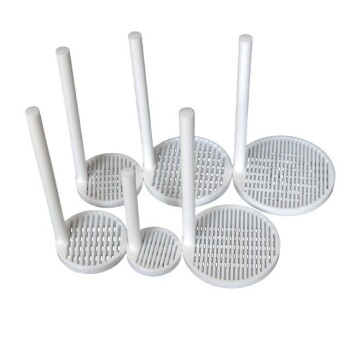
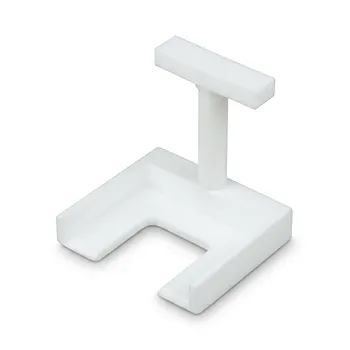
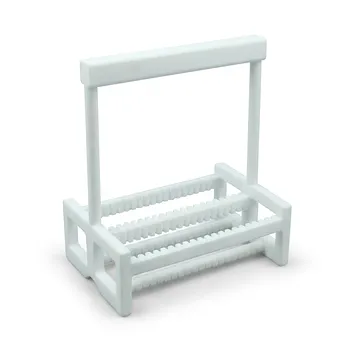
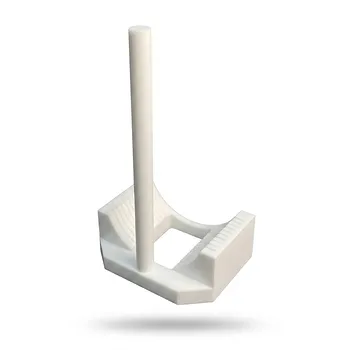
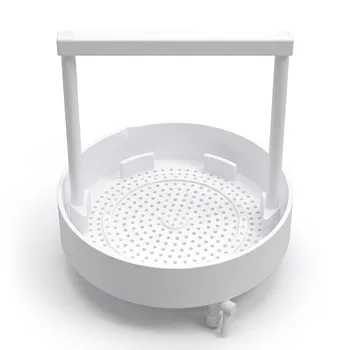
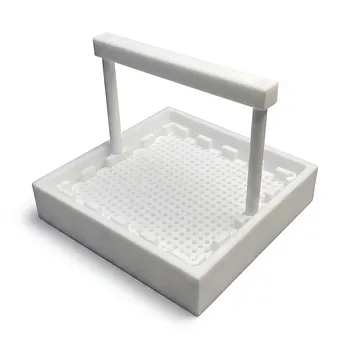
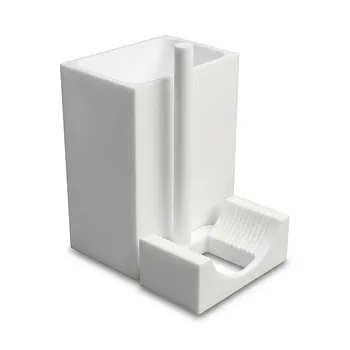
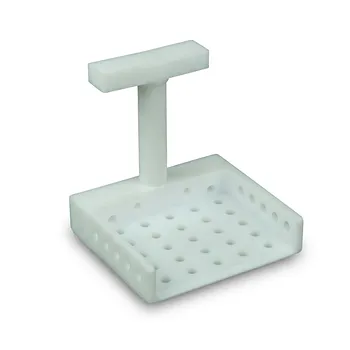
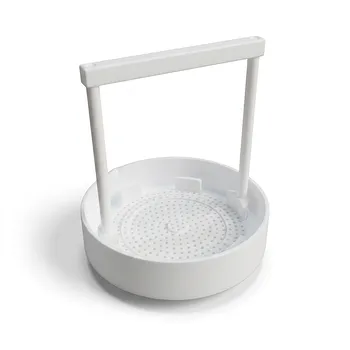
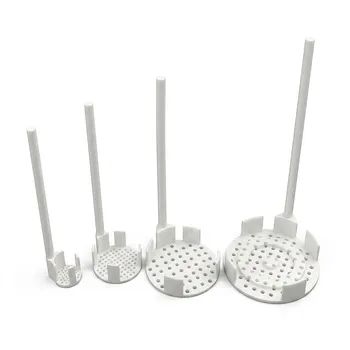
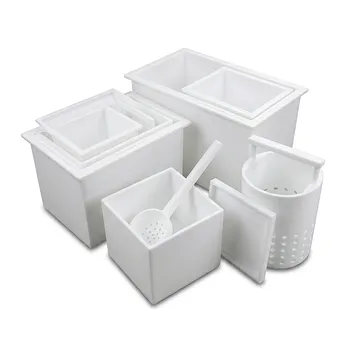
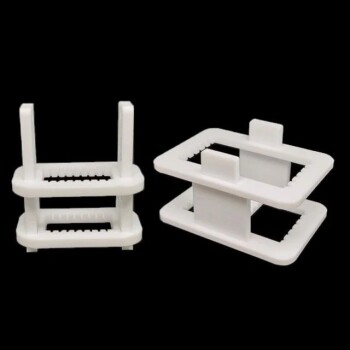
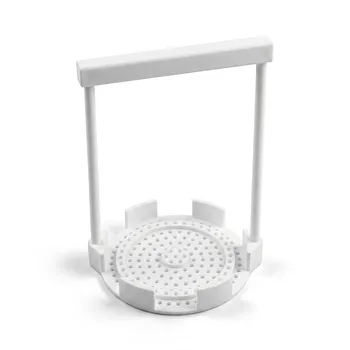
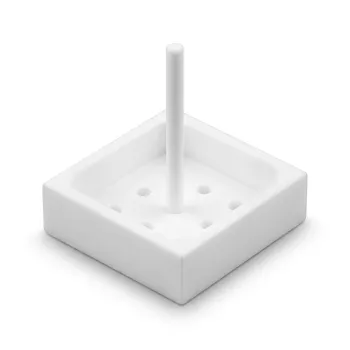
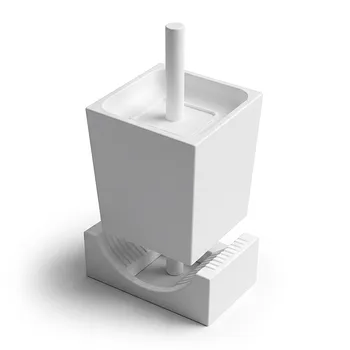
In high-precision semiconductor manufacturing, a high-purity PTFE wafer cleaning rack is a specialized assembly engineered to balance structural stability with maximum chemical exposure. It typically comprises a grooved basket body, perforated side walls, toothed stop rods, a detachable modular handle, and transverse bottom rods.
The central takeaway is that these racks are designed to minimize contact points while maximizing fluid flow. By using high-purity PTFE, manufacturers ensure chemical inertness while the specific structural geometry prevents "shadowing" effects during the cleaning cycle.
The Architecture of Fluid Dynamics and Support
The Grooved Basket Body
The foundation of the rack is the basket body, which features precision-machined parallel grooves. These grooves are critical for maintaining consistent substrate positioning, ensuring that wafers do not touch or overlap during processing.
Perforated Side Walls
The side walls are not solid but are heavily perforated to facilitate rapid fluid exchange. This design allows cleaning chemicals and deionized water to flow freely across the wafer surfaces, preventing the stagnation of contaminants.
Precision Positioning and Security
Toothed Stop Rods
To prevent lateral movement or "chattering" within the rack, toothed stop rods are utilized. These components maintain precise spacing between wafers, which is essential for uniform etching and cleaning results across the entire batch.
Modular Handle and Card Slots
For secure transport between process tanks, the rack features a detachable handle integrated via modular card slots. This design allows the handle to be removed during the actual cleaning process, reducing the structural profile and potential interference with fluid agitation.
Optimizing Drainage and Flow
Transverse Bottom Rods
The inclusion of transverse bottom rods is a critical design choice for fluid management. These rods elevate the substrates, creating a gap that promotes underflow and ensures complete drainage when the rack is lifted from a chemical bath.
Enhancing Chemical Access
By elevating the wafers, the bottom rods eliminate the risk of "pooling" at the contact points. This ensures that the bottom edge of every wafer receives the same chemical treatment as the center, maintaining process uniformity.
Engineering Trade-offs and Considerations
Material Flexibility vs. Rigidity
While PTFE is chosen for its extreme chemical purity and resistance, it is naturally softer than materials like PEEK or stainless steel. This requires the rack's structural components to be thicker to prevent thermal deformation in high-temperature baths.
Complexity and Contamination Risk
Modular designs, such as those with detachable handles and stop rods, offer great flexibility but introduce micro-crevices. If not cleaned properly, these interfaces can trap particles, potentially leading to cross-contamination between different chemical stages.
Implementing These Components in Your Workflow
Choosing the right rack configuration depends entirely on your specific process chemistry and substrate sensitivity.
- If your primary focus is maximum chemical uniformity: Prioritize racks with high-density wall perforations and transverse bottom rods to ensure no fluid stagnation occurs.
- If your primary focus is automated handling safety: Ensure the modular card slots and detachable handle mechanism are compatible with your robotic end-effectors to prevent vibration.
- If your primary focus is high-temperature processing: Opt for a rack with reinforced toothed stop rods to counteract the natural expansion of PTFE at elevated temperatures.
Understanding these structural elements allows you to optimize your cleaning process for higher yields and lower contamination rates.
Summary Table:
| Component | Key Function | Process Benefit |
|---|---|---|
| Grooved Basket Body | Maintains substrate positioning | Prevents wafer contact and overlap |
| Perforated Side Walls | Facilitates fluid exchange | Ensures rapid flow and prevents stagnation |
| Toothed Stop Rods | Secures lateral spacing | Enables uniform etching and cleaning results |
| Transverse Bottom Rods | Elevates substrates | Promotes underflow and complete drainage |
| Modular Handle | Secure transport via card slots | Minimizes tank profile and fluid interference |
Precision-Engineered PTFE Solutions for Your Lab
Maximize your process yield with high-performance fluoropolymer equipment from KINTEK. We specialize in manufacturing a comprehensive range of laboratory supplies crafted exclusively from PTFE and PFA, ensuring absolute chemical inertness and purity for your most sensitive applications.
Whether you need:
- Everyday Labware: Beakers, crucibles, reagent bottles, and centrifuge tubes.
- Fluid Handling: High-purity tubing, fittings, valves, and filtration tools.
- Advanced Apparatus: Custom electrochemical cells, battery testing fixtures, and microwave digestion vessels.
- Bespoke Engineering: End-to-end custom CNC fabrication for complex non-standard machined parts and specialized wafer handling setups.
From high-volume orders to unique, one-off designs, KINTEK is your partner in high-performance material science. Contact our technical team today to discuss your requirements!
Related Products
- High Purity PTFE Wafer Cleaning Basket Acid Resistant Silicon Wafer Carrier Fluoropolymer Etching Rack
- Custom PTFE Laboratory Cleaning Basket Carrier High Purity Acid Base Resistant Wafer Holder Low Background Contamination Free Chemical Bath Rack
- High Purity PTFE Wet Cleaning Flower Basket Single Wafer Etching Rack Customizable 4 Inch Mask Plate Carrier
- Custom PTFE Wafer Handling Rack Corrosion Resistant High Temperature Semiconductor Polysilicon Processing Stand
- Custom PTFE Teflon Parts Manufacturer PTFE Cleaning Rack
People Also Ask
- What is the purpose of PTFE etching? Unlock Bondable Surfaces for Your Components
- Why is PTFE sometimes etched and how is this process performed? Unlock Strong Bonding for Your PTFE Components
- What are the specific applications of PTFE flower baskets in the semiconductor industry? Expert Wafer Processing Guide
- How can PTFE adhere to another surface? Unlock Permanent Bonding with Chemical Etching
- Why are PFA and PTFE fluoropolymers specifically chosen for chemical storage tanks, wafer carriers, and high-purity fluid transfer components? Discover their inertness and purity benefits.