All Questions
Why Is Symmetry And Balance Important When Installing Ptfe Gasket Seals? Ensure A Perfect, Leak-Proof Seal
Learn why uniform compression is critical for PTFE gasket installation. Prevent leaks and ensure long-term reliability with proper symmetrical techniques.
What Precautions Should Be Taken During The Installation Of Ptfe Gasket Seals? Ensure A Perfect, Leak-Free Seal
Learn key PTFE gasket installation precautions for handling, surface prep, and torque control to prevent leaks and ensure long-term reliability.
What Does The Leakage Rate Indicate About Ptfe Gaskets? Understanding The Sealing Performance Trade-Off
Learn how leakage rate measures PTFE gasket sealing ability and the trade-off between chemical resistance and conformability for your application.
How Does The Shrinkage Performance Of Ptfe Gaskets Affect Their Functionality? Ensure A Perfect, Leak-Free Seal
Learn how PTFE gasket 'shrinkage' (plastic deformation) creates reliable seals by conforming to flange imperfections, preventing leaks.
What Is The Significance Of The Creep Relaxation Rate In Ptfe Gaskets? Ensure Long-Term Sealing Reliability
Learn why the creep relaxation rate is the key indicator for PTFE gasket performance, determining long-term sealing integrity and leak prevention.
Why Is Resistance To Chemical And Physical Corrosion Important For Ptfe Gasket Raw Materials? Ensure Long-Term Sealing Reliability
Discover why PTFE's superior chemical inertness and physical resistance are critical for preventing gasket failure, leaks, and ensuring system integrity in harsh environments.
What Factors Should Be Considered When Selecting Ptfe Gaskets Based On Their Raw Materials? Choose The Right Form For Your Application
Learn how to select PTFE gaskets by evaluating chemical compatibility, pressure-temperature ratings, and material forms like skived, expanded, or filled PTFE.
Why Are Ptfe Washers Considered Cost-Effective Despite Their Higher Initial Cost? Maximize Roi With Long-Term Savings
Discover how PTFE washers' durability, low maintenance, and corrosion resistance reduce long-term costs, offering superior ROI over cheaper alternatives.
What Industries Commonly Use Ptfe Washers Due To Their Versatility? Solve Critical Sealing Challenges
Discover why aerospace, chemical, medical, and electronics industries rely on PTFE washers for chemical resistance, low friction, and thermal stability.
Why Are Ptfe Washers Resistant To Water And Moisture? Unlocking The Power Of Hydrophobic Sealing
Discover how PTFE's non-polar molecular structure provides superior water and chemical resistance, making it ideal for harsh environments.
How Do Ptfe Washers Provide Electrical Insulation? Ensure Reliable Circuit Protection
Discover how PTFE washers prevent shorts & leakage with high dielectric strength, ideal for harsh environments in medical, semiconductor, and lab equipment.
What Are The Durability Benefits Of Ptfe Washers? Achieve Unmatched Chemical & Thermal Resistance
Explore the key durability benefits of PTFE washers, including extreme chemical inertness, wide temperature tolerance, and superior wear resistance.
What Flange Types Are Ptfe Envelope Gaskets Compatible With? Versatile Sealing For Every Industry
Learn about PTFE envelope gasket compatibility with glass-lined, cast iron, metal, concrete, and other flanges for superior chemical resistance and sealing performance.
What Are The Advantages Of Ptfe Envelope Gaskets? Achieve Superior Chemical Sealing & Purity
Discover how PTFE envelope gaskets combine chemical inertness with mechanical strength for reliable sealing in corrosive, high-purity, and demanding applications.
What Are The Main Benefits Of Ptfe Envelope Gaskets? Achieve Superior Chemical Resistance And Sealing Integrity
Discover the key benefits of PTFE envelope gaskets, including unmatched chemical resistance, durability, and purity for sensitive applications.
What Material Are Ptfe Envelope Gaskets Made From? A Guide To Their Composite Construction
PTFE envelope gaskets are composite seals combining a PTFE outer layer for chemical resistance with a resilient inner core for mechanical strength.
What Are Ptfe Envelope Gaskets Used For? Protect Delicate Flanges & Seal Aggressive Chemicals
Learn how PTFE envelope gaskets combine chemical inertness with mechanical compliance to seal glass-lined, plastic, and FRP flanges in harsh environments.
What Are The Advantages Of Expanded Ptfe Sheet? Achieve Superior Sealing Reliability And Chemical Resistance
Discover the key benefits of expanded PTFE (ePTFE) sheet, including superior cold flow resistance, chemical inertness, and high-temperature stability for demanding applications.
What Are The Different Styles Of Ptfe Gasket Materials Available? Choose The Right Type For Your Application
Compare Virgin PTFE, Filled PTFE, and Expanded PTFE (ePTFE) gasket materials. Select the right style for your pressure, temperature, and flange conditions.
What Types Of Applications Are Ptfe Gaskets Suitable For? The Ultimate Guide For Extreme Environments
Explore PTFE gasket applications in chemical, pharmaceutical, and food industries. Learn about chemical resistance, temperature stability, and purity requirements.
What Are The Key Characteristics Of Ptfe Gasket Materials? Engineered For Extreme Chemical & Thermal Resistance
Explore the core properties of PTFE gaskets: exceptional chemical inertness, wide temperature range, and low friction. Learn how to select the right type for your application.
Related Products
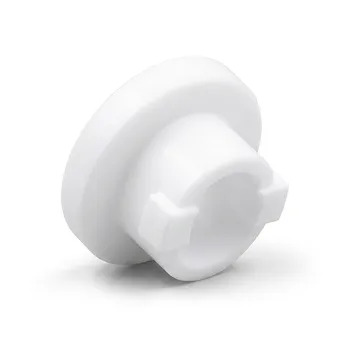
Custom PTFE Insulating Gaskets Corrosion Resistant Teflon Seals Tailored Engineering Plastic Components
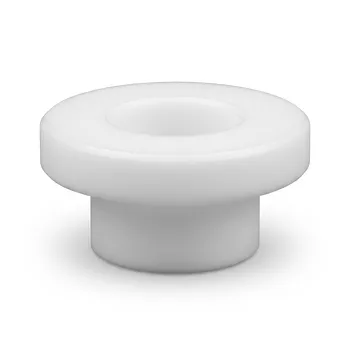
Custom PTFE Insulating Gaskets and Corrosion Resistant Fluoropolymer Seals for Industrial Electrical Applications
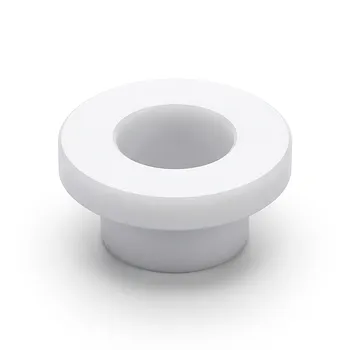
Customizable High Temperature Resistant Anti Static PTFE Insulating Gaskets Flame Retardant Corrosion Proof Industrial Seals

PTFE Deep Evaporating Dishes Customizable Laboratory and Industrial Solutions
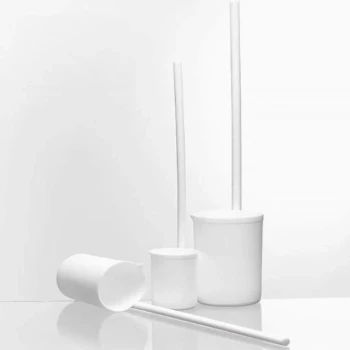
PTFE Chemical Solvent Sampling Spoon