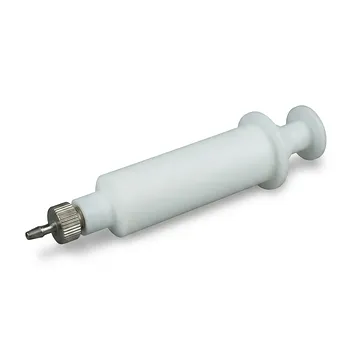
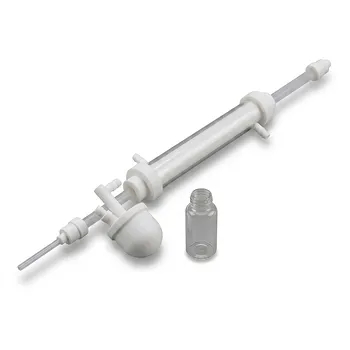
Filled PTFE compounds are used when PTFE’s chemical resistance and low friction must be combined with greater mechanical durability. Unfilled PTFE can creep under continuous load and wear during repeated sliding or pressure cycling. Adding fillers such as glass fiber, carbon, graphite, or metal powders improves wear resistance, compressive strength, creep resistance, and dimensional stability in seals, bearings, valve seats, wear rings, and other laboratory components.
Core takeaway: Filled PTFE preserves much of PTFE’s chemical inertness and low-friction behavior while addressing its main mechanical weaknesses. The best filler depends on whether the component needs maximum wear resistance, reduced creep, thermal or electrical conductivity, high-temperature performance, or compatibility with the mating surface.
Why Laboratory Components Use Filled PTFE
Unfilled PTFE can deform under sustained load
PTFE has exceptional chemical resistance and a very low coefficient of friction, but it is relatively soft and prone to creep, or cold flow. Under constant compression, bolt loading, pressure, or elevated temperature, it can gradually deform.
This can reduce the sealing force of gaskets, alter valve-seat dimensions, or affect the alignment of bearings and other precision parts.
Fillers improve wear resistance
Repeated sliding, vibration, or contact pressure can cause unfilled PTFE to wear more quickly than a filled grade. Reinforcing particles and fibers help support the PTFE matrix and reduce material loss during service.
This is especially important for dynamic seals, pump components, wear rings, mechanical bearings, and stirrer components that experience continuous motion.
Filled PTFE maintains dimensional stability
Fillers generally increase stiffness and reduce deformation under load. Many also reduce PTFE’s relatively high thermal expansion, helping components retain their dimensions during thermal cycling.
That stability is valuable in laboratory apparatus where small changes can affect sealing, clearances, flow control, or instrument performance.
The material still retains key PTFE advantages
Filled PTFE is selected because it provides a balance rather than simply replacing PTFE with a harder material. Depending on the filler and formulation, the compound can retain:
- Broad chemical resistance
- Low friction
- Non-stick behavior
- Resistance to many laboratory chemicals
- Serviceability across demanding temperature ranges
The filler does alter the material’s properties, so the final compound must be matched to the specific chemical, thermal, mechanical, and cleanliness requirements.
Available PTFE Filler Options
Glass fiber
Glass fiber is a common choice for improving creep resistance, compressive strength, and general wear performance. It is suitable for loaded seals, bearings, valve seats, and structural or support components.
Glass-filled PTFE is not always ideal for sliding against soft mating surfaces because the fibers can be abrasive. The grade and mating material should therefore be reviewed before use in precision dynamic applications.
Carbon fiber
Carbon fiber increases stiffness, hardness, compressive strength, and resistance to deformation. It is useful where a component must maintain its shape under sustained mechanical loading.
Carbon-filled grades can also provide improved wear performance and, depending on the formulation, increased thermal or electrical conductivity.
Carbon-graphite
Carbon-graphite compounds reduce creep and increase hardness while retaining low-friction behavior. They are particularly useful in non-lubricated or poorly lubricated applications.
The graphite component can also improve heat transfer away from the sliding interface, which may help in high-speed or high-pressure service.
Graphite
Graphite-filled PTFE is used where low friction, wear resistance, and thermal conductivity are important. Graphite is also chemically inert in many environments.
It can be a practical option for high-speed or high-pressure sliding components, although the actual performance depends on the graphite concentration and the counterface material.
Molybdenum disulfide
Molybdenum disulfide, or MoS₂, can increase hardness and reduce friction. It is typically used as part of a formulation designed for improved sliding performance rather than as a universal solution.
Its suitability must be checked against the chemical environment and operating temperature.
Mineral and ceramic fillers
Mineral or ceramic fillers can improve stiffness, dimensional stability, and high-temperature performance. Some mineral-filled grades are also designed for low-abrasion or food-contact applications.
These materials may be useful where mechanical stability is more important than maximum purity or where a non-carbon filler is preferred.
Metal powders
Metal-filled PTFE, including bronze or stainless-steel-filled grades, can offer high extrusion resistance, improved compressive performance, and good resistance to deformation at elevated temperatures.
Metal-filled grades are generally better suited to static or slow-moving applications because some metal fillers can be abrasive. They may also change electrical behavior and chemical compatibility.
Aromatic polyester
Aromatic polyester fillers can provide strong wear resistance, including performance against relatively soft mating surfaces, and can support higher-temperature applications.
They may be considered for specialized dynamic components where conventional glass or metal fillers could cause excessive counterface wear.
Modified virgin PTFE
Modified virgin PTFE is not a heavily filled compound, but it is an intermediate option when higher creep and wear resistance are needed without introducing substantial quantities of reinforcing filler.
It can also offer lower gas permeability while preserving more of virgin PTFE’s purity and chemical characteristics.
How to Select the Filler
For maximum wear resistance
Consider carbon fiber, carbon-graphite, graphite, or specialized aromatic-polyester formulations. The best choice depends on the load, sliding speed, lubrication, and hardness of the mating component.
For creep and compression resistance
Glass fiber, carbon fiber, carbon-graphite, and metal-filled grades can improve resistance to deformation under sustained load. These are often considered for valve seats, pump diaphragms, flange gaskets, and high-pressure seals.
For thermal conductivity
Graphite, carbon-graphite, carbon fiber, and some metal-filled compounds can conduct heat more effectively than unfilled PTFE. This may help manage frictional heating or thermal gradients.
For electrical conductivity
Carbon-based fillers, including carbon black and carbon fiber, can make PTFE more electrically conductive or dissipative. The required conductivity level must be specified because not every carbon-filled grade has the same electrical behavior.
For high-temperature or static service
Metal-filled, mineral-filled, or selected aromatic-polyester compounds may be appropriate when extrusion resistance and dimensional stability are priorities. Static or slow-moving service often makes abrasive fillers more acceptable.
For maximum purity and chemical inertness
Unfilled or modified-virgin PTFE may be preferable where mechanical loading and wear are limited. Fillers introduce additional constituents that can affect purity, extractables, color, electrical properties, and chemical compatibility.
Understanding the Trade-offs
Filled PTFE is not chemically identical to virgin PTFE
Although the PTFE matrix remains highly chemically resistant, a filler may react with a particular chemical or alter the compound’s overall compatibility. The filler and its concentration must be evaluated against the actual fluid, temperature, and exposure time.
Improved wear can increase counterface wear
Some fillers, particularly glass fiber and stainless steel, can be abrasive to softer mating materials. A compound that lasts longer itself may accelerate wear of a shaft, seal face, or opposing surface.
Fillers can reduce purity
Filled compounds generally do not provide the same level of purity as virgin PTFE. This matters in analytical, pharmaceutical, biological, and contamination-sensitive laboratory environments.
Mechanical improvements vary by formulation
The term “filled PTFE” covers many different formulations. Two carbon-filled grades, for example, may differ substantially in hardness, wear rate, conductivity, and chemical behavior.
Material selection should therefore use the manufacturer’s specific grade data rather than relying only on the filler name.
Conductivity may be beneficial or undesirable
Carbon or metal fillers can increase thermal or electrical conductivity. That may be useful for static dissipation or heat management, but it can be undesirable in electrically insulating equipment or applications requiring PTFE’s low thermal conductivity.
Making the Right Choice for Your Goal
Select the compound based on the component’s actual load, motion, temperature, chemical exposure, mating surface, and cleanliness requirements.
- If your primary focus is sliding wear: Consider graphite, carbon-graphite, carbon fiber, or a specialized wear-resistant formulation, while checking counterface compatibility.
- If your primary focus is creep resistance: Consider glass fiber, carbon fiber, carbon-graphite, or an appropriate metal-filled grade for static or slow-moving service.
- If your primary focus is thermal or electrical conductivity: Evaluate graphite, carbon-based, or metal-filled PTFE and specify the required conductivity range.
- If your primary focus is chemical purity: Use unfilled or modified-virgin PTFE unless the mechanical demands clearly require a filler.
- If your primary focus is high-pressure sealing: Prioritize creep resistance, compressive strength, thermal cycling performance, and dimensional stability over filler selection alone.
The right filled PTFE grade is the one that balances PTFE’s chemical advantages with the mechanical demands and contamination limits of the laboratory application.
Summary Table:
| Filler Type | Key Benefits | Typical Applications |
|---|---|---|
| Glass Fiber | Improved creep resistance, compressive strength | Loaded seals, bearings, valve seats |
| Carbon Fiber | High stiffness, creep resistance, thermal/electrical conductivity | Mechanical components, bushings |
| Carbon-Graphite | Low friction, reduced creep, thermal conductivity | Non-lubricated sliding parts |
| Graphite | Low friction, wear resistance, thermal conductivity | High-speed or high-pressure sliding contacts |
| Molybdenum Disulfide | Increased hardness, reduced friction | Sliding components |
| Mineral/Ceramic | Improved stiffness, dimensional stability, high-temperature performance | High-temperature or non-carbon applications |
| Metal Powders | High extrusion resistance, compressive strength | Static or slow-moving heavy-duty parts |
| Aromatic Polyester | Excellent wear resistance, lower counterface wear | Dynamic components with soft mating surfaces |
| Modified Virgin | Better creep and wear resistance with higher purity | When filler contamination is a concern |
Optimize Your Lab Components with Filled PTFE from KINTEK
At KINTEK, we specialize in high-performance fluoropolymers, including PTFE and PFA. Our extensive range of lab supplies—from basic beakers and digestion tubes to advanced custom components—can be engineered with the ideal filler to meet your specific wear, creep, and purity requirements. Whether you need glass fiber for high-pressure seals or carbon-graphite for non-lubricated bearings, our team ensures superior performance and reliability. With our end-to-end CNC machining capabilities, we deliver bespoke parts for any application, backed by rigorous quality control. Contact us today to discuss your requirements and receive a tailored solution.
Related Products
- Custom Graphite Filled PTFE Rods for Advanced Industrial Applications
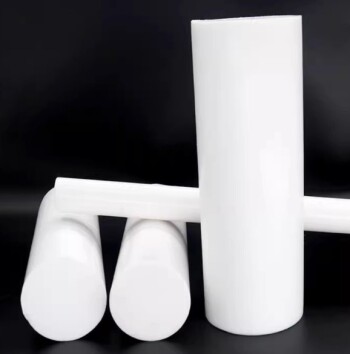
- Customizable PTFE Rods for Advanced Industrial Applications
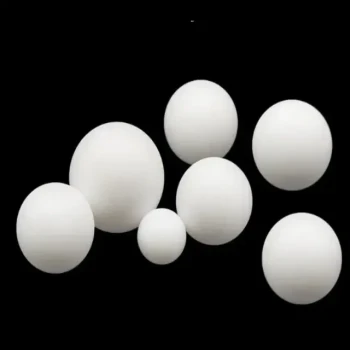
- Custom PTFE Teflon Balls for Advanced Industrial Applications
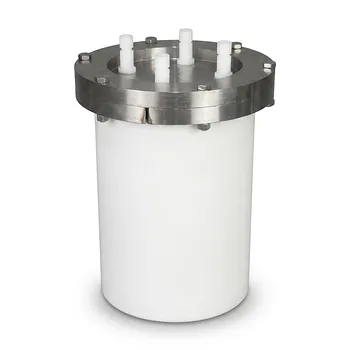
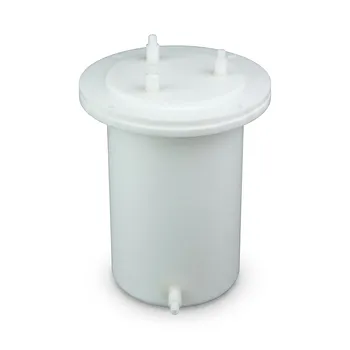
- PTFE Hydrofluoric Acid Dilutor and Corrosion Resistant Reaction Vessel with Flange Sealing White PTFE Raw Material Storage Barrel
- Custom PTFE Parts Manufacturer for Teflon Containers and Components
People Also Ask
- What property does graphite filler provide to PTFE? Achieve Superior Self-Lubrication and Low Friction
- How does graphite-filled PTFE perform? A Guide to Superior Self-Lubricating Components
- What are the advantages of Polytetrafluoroethylene (PTFE) with Graphite Fill? Enhance Wear and Friction Performance
- How do graphite fillers enhance PTFE? Achieve Superior Self-Lubrication and Wear Resistance
- How is graphite filler typically used in PTFE? Enhance Wear Resistance & Self-Lubrication