The main surface treatments are chemical etching, atmospheric plasma, and vacuum plasma treatment. These methods modify only the outer surface of fluoropolymer parts such as PTFE and PFA, increasing surface energy and wettability so structural adhesives can form reliable bonds. Corona discharge, flame treatment, and certain mechanical or chemical modification methods are also available, but their suitability depends on part geometry, cleanliness requirements, and the required bond performance.
Key takeaway: Untreated fluoropolymers are difficult to bond because their surfaces are chemically inert and extremely non-wetting. For custom laboratory assemblies, select a treatment that activates the bond area without compromising the fluoropolymer’s bulk chemical resistance or the assembly’s cleanliness requirements.
Why Fluoropolymers Require Surface Treatment
Low surface energy prevents adhesive wetting
PTFE and PFA naturally repel many liquids, including adhesives. This non-stick behavior prevents an adhesive from spreading across the surface and forming the intimate contact required for a strong bond.
Surface treatment changes the outer layer
The objective is not to alter the entire component. Treatment modifies the near-surface chemistry or texture, increasing wettability and creating conditions in which an adhesive can bond to the fluoropolymer.
The bulk material can retain its characteristic chemical resistance while the treated region provides improved adhesion.
Chemical Etching
Sodium-based chemical etching
Alkali-metal or sodium naphthalenide treatment is an established commercial method for treating PTFE and related fluoropolymers. It chemically modifies the outer polymer layer by removing some surface fluorine and creating a more polar, adhesive-receptive surface.
This treatment can substantially improve wettability and enable structural bonding to metals, plastics, composites, or other assembly materials.
When chemical etching is appropriate
Chemical etching is useful when a high-strength adhesive joint is required and the component can be processed through a controlled chemical-treatment operation.
It is particularly relevant for custom-machined PTFE or PFA parts, manifolds, fittings, and laboratory apparatus requiring structural rather than merely contact adhesion.
Chemical-processing limitations
Chemical etching introduces handling, process-control, and waste-management requirements. The treated surface must also be protected from contamination and bonded within the process window specified by the treatment and adhesive suppliers.
For high-purity laboratory assemblies, the chemical process and post-treatment cleaning must be evaluated as part of the overall materials-compatibility plan.
Plasma Surface Treatment
Atmospheric plasma
Atmospheric plasma treatment uses an energized gas stream, such as air, oxygen, or argon, to activate the fluoropolymer surface. It can increase surface energy and introduce adhesive-compatible functional groups without requiring immersion in a chemical etchant.
Because it operates at atmospheric pressure, it can be convenient for localized treatment of custom components and assemblies with accessible bonding areas.
Vacuum or low-pressure plasma
Vacuum plasma treatment processes parts inside a controlled low-pressure chamber. It can provide uniform treatment and controlled process conditions, which may be valuable for small components, repeatable production, or complex laboratory assemblies that fit within the chamber.
The achievable result depends on gas chemistry, power, exposure time, component geometry, and process control.
Plasma advantages for laboratory apparatus
Plasma is a dry surface-preparation method and avoids the hazardous liquid chemical waste associated with some etching processes. This can make it attractive for high-purity fluidic systems and custom laboratory equipment.
Plasma treatment is generally intended to modify the surface rather than the bulk mechanical or chemical properties of the fluoropolymer.
Electrical Discharge and Other Physical Techniques
Corona discharge treatment
Corona treatment uses a high-voltage electrical discharge to activate the surface. It is commonly applied to films, sheets, tubing, and other relatively accessible or continuous fluoropolymer surfaces before coating, lamination, or bonding.
Its usefulness for thick, three-dimensional machined parts depends on whether the discharge can treat the complete bonding region uniformly.
Flame treatment
Flame treatment can increase surface reactivity through controlled thermal and chemical exposure. However, it requires careful control to avoid overheating, distortion, contamination, or nonuniform treatment.
It is more commonly considered for suitable films, sheets, or accessible surfaces than for precision laboratory parts with tight dimensional requirements.
Mechanical roughening
Abrasive roughening can increase physical keying and remove surface contamination. However, mechanical texture alone does not address the fundamental low surface energy and chemical inertness of fluoropolymers as effectively as chemical or plasma treatment.
It may therefore be used as a supplementary operation, but it should not automatically be treated as a substitute for chemical activation.
Radiation grafting and metal-oxide modification
Radiation grafting and metal-oxide impregnation are additional surface-modification approaches described for fluoropolymers. They are more specialized than standard chemical etching or plasma treatment and require process-specific validation.
For most custom laboratory bonding work, they are considered only when conventional treatment methods do not meet the performance or manufacturing requirements.
Matching Treatment to the Bonding Requirement
Structural adhesive joints
For mechanically loaded, pressure-containing, or chemically exposed assemblies, use a structural adhesive with a validated surface treatment. Sodium-based chemical etching and plasma treatment are the principal options.
The adhesive must be selected together with the treated fluoropolymer surface, because surface activation alone does not guarantee resistance to temperature, chemicals, pressure, or long-term fluid exposure.
Light-duty contact bonding
Pressure-sensitive or contact adhesives can sometimes be applied without surface treatment. They are appropriate for relatively light-duty uses such as linings, tapes, or temporary attachment.
They should not be assumed suitable for structural laboratory joints, leak-critical fluid paths, or components exposed to significant mechanical or thermal loads.
Fluoropolymer-to-fluoropolymer joining
If adhesive-free joining is preferred, thermal impulse, ultrasonic, or dielectric welding may be considered for compatible fluoropolymer components. Welding can eliminate adhesive contamination and degradation concerns, but it is a joining process rather than a surface treatment for adhesive bonding.
Understanding the Trade-offs
Chemical treatment versus plasma treatment
Chemical etching is a well-established route to strong adhesion, but it involves liquid chemistry, operator controls, and waste management. Plasma methods are dry and often better aligned with clean laboratory manufacturing, but they require suitable equipment and process development.
Atmospheric plasma versus vacuum plasma
Atmospheric plasma can be convenient for localized treatment and larger or assembled parts. Vacuum plasma can offer controlled and uniform chamber processing, but part size, geometry, and chamber compatibility can limit its practicality.
Treatment does not eliminate design constraints
A treated surface will not compensate for poor joint design, inadequate adhesive selection, trapped contamination, excessive peel loading, or unsuitable operating conditions. Bond area, joint geometry, cure conditions, and chemical exposure remain critical.
Surface activation can be temporary
Plasma- and chemically treated surfaces can lose performance if they are exposed to contamination or stored for too long before bonding. The treatment, handling, storage, and bonding sequence should therefore be qualified as one process.
Welding may be better than adhesive bonding
For demanding fluid-handling components requiring high temperature resistance, aggressive chemical compatibility, or zero-emission performance, adhesive-free welding may be preferable. It can produce a joint approaching the strength of the parent material while avoiding adhesive leak paths and degradation.
How to Apply This to Your Project
The best choice depends on whether the assembly prioritizes bond strength, cleanliness, part geometry, process simplicity, or resistance to the service environment.
- If your primary focus is maximum structural bond strength: Use a validated sodium-based chemical etch or plasma treatment with a compatible structural adhesive.
- If your primary focus is high-purity laboratory processing: Favor atmospheric or vacuum plasma because these are dry treatments that avoid hazardous liquid etching waste.
- If your primary focus is treating films, sheets, or tubing: Consider corona discharge, provided the entire bonding region can be activated uniformly.
- If your primary focus is low-load attachment: A pressure-sensitive or contact adhesive may be sufficient, although it should not be used for critical structural or leak-tight joints without validation.
- If your primary focus is eliminating adhesives entirely: Evaluate thermal, ultrasonic, or dielectric welding for compatible fluoropolymer-to-fluoropolymer assemblies.
A reliable fluoropolymer bond results from treating the surface, adhesive, joint design, and laboratory service conditions as one engineered system.
Summary Table:
| Method | How It Works | Best For | Considerations |
|---|---|---|---|
| Chemical Etching | Sodium naphthalenide removes surface fluorine | High-strength structural joints on machined parts | Liquid waste, process control, temporary activation |
| Atmospheric Plasma | Energized gas stream increases surface energy | Localized treatment of assembled/large parts | Requires equipment, may need process development |
| Vacuum Plasma | Uniform treatment in low-pressure chamber | Small/complex parts needing controlled activation | Limited by chamber size |
| Corona Discharge | High-voltage discharge for continuous surfaces | Films, sheets, tubing | May not be uniform on 3D parts |
| Flame Treatment | Controlled heat/chemical exposure | Suitable films/sheets, accessible surfaces | Risk of overheating, nonuniform |
| Mechanical Roughening | Abrasion to increase keying | Supplementary to chemical/plasma | Alone doesn't address low surface energy |
Need reliable adhesive bonding for your fluoropolymer lab components? At KINTEK, we specialize in custom PTFE/PFA fabrication and surface treatment solutions tailored to your high-purity requirements. Our expert team can help you select and apply the optimal treatment method for your parts, ensuring strong, durable bonds without compromising chemical resistance. Contact us today at our contact form to discuss your custom assembly needs.
Related Products
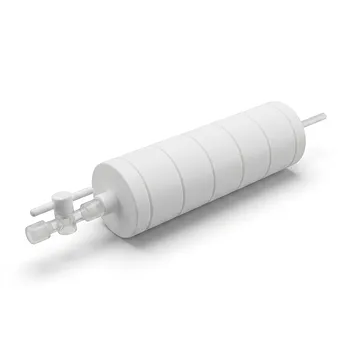
- PTFE Corrosion Resistant Filter with PFA Valve Connections and Integrated Sieve Plate
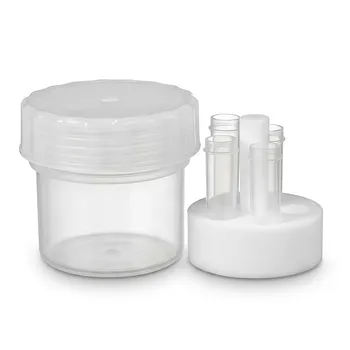
- Corrosion Resistant PTFE Support with PFA Transparent Reaction Tank and High Purity PFA Sampling Tube for Trace Analysis
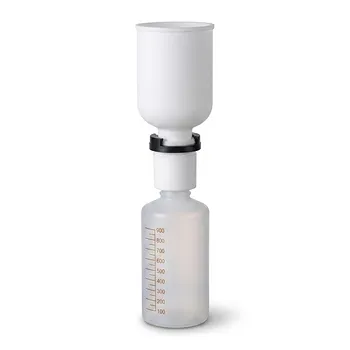
- PTFE PFA Vacuum Filtration System Corrosion Resistant Customizable Shatterproof Laboratory Device
- Custom PTFE Constant Pressure Separatory Funnel Corrosion Resistant Low Background Labware for PFA Flasks
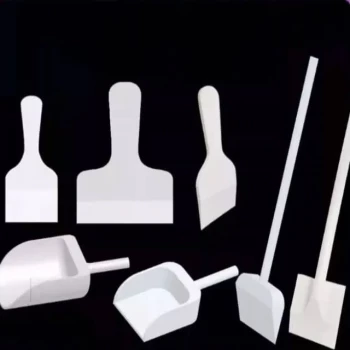
- Customizable PTFE Scrapers and Shovels for Demanding Applications
People Also Ask
- What steps are involved in selecting the proper PTFE filter? A 4-Step Guide to Optimal Filtration
- What sizes and pore options are available for PTFE filters? Choose the Right Filter for Your Application
- Which chemicals are fully compatible with PTFE filters? Discover Unmatched Chemical Resistance
- How does the hydrophobicity of PTFE filters benefit their use? Ensure Uninterrupted Gas Flow and Solvent Filtration
- What temperature resistance do PTFE filters offer? Unmatched Thermal Stability from -200°C to +260°C