Knowledge PTFE(Teflon) Parts By what chemical mechanism can inert PTFE fluoropolymer components be surface-modified or etched for adhesive bonding? Sodium etching and more
Author avatar

Tech Team · Kintek

Updated 1 month ago

By what chemical mechanism can inert PTFE fluoropolymer components be surface-modified or etched for adhesive bonding? Sodium etching and more


PTFE can be chemically etched by reductive defluorination. A sodium-based reagent, commonly a sodium–naphthalene complex, transfers electrons to the PTFE surface and cleaves carbon–fluorine bonds. Fluorine is removed from the outer polymer layers, leaving a carbon-rich, chemically activated surface that wets readily and can form strong bonds with structural adhesives.

The mechanism is surface-selective defluorination: sodium-based chemistry removes fluorine from PTFE’s C–F backbone, while subsequent reaction with air or moisture introduces polar oxygen-containing groups. The result is a higher-energy adhesive interface without substantially changing the PTFE beneath the treated layer.

Why Untreated PTFE Resists Adhesives

The fluorinated surface is chemically shielded

PTFE has a dense fluorine shell around its carbon backbone. This structure gives it exceptional chemical resistance, but also leaves few reactive sites for an adhesive to interact with.

Low surface energy prevents wetting

PTFE’s surface energy is approximately 18 dynes/cm, so many adhesives bead up instead of spreading across the surface. Without adequate wetting, even an adhesive with good inherent strength cannot form an effective joint.

How Sodium Etching Activates PTFE

The reagent transfers electrons to the polymer surface

In commercial treatments, sodium is commonly supplied as a sodium–naphthalene complex. The active chemistry is strongly reducing: electron transfer weakens and cleaves surface C–F bonds rather than relying on ordinary adhesive chemistry.

Surface fluorine is removed

Defluorination lowers the surface fluorine-to-carbon ratio and converts the outermost PTFE layer into a more carbon-rich structure. The modification is concentrated at the surface, so the bulk PTFE generally retains its established mechanical and chemical resistance.

Oxidation creates polar functional groups

After fluorine removal, the activated carbonaceous layer can react with oxygen, moisture, or air. This produces polar groups, including hydroxyl- and carbonyl-type functionality, which increase surface energy and provide sites for interaction with adhesives.

The surface becomes visibly altered

A properly etched surface commonly changes from PTFE’s original white appearance to brown or black. This color change reflects the formation of the modified carbon-rich surface layer, although appearance alone is not a complete measure of treatment quality.

Why the Modified Surface Bonds Better

Adhesives can spread across the surface

The increase in surface energy improves adhesive wetting. Better spreading allows the adhesive to make more intimate contact with the treated polymer instead of remaining as isolated droplets or poorly connected regions.

Polar interactions become possible

The oxygen-containing groups provide stronger intermolecular interactions with adhesive systems such as epoxies. These interactions supplement mechanical interlocking and help create a more durable interface.

The treatment preserves the useful PTFE core

The objective is to modify only the outer molecular layers. The underlying PTFE can therefore continue to provide its characteristic chemical resistance, low friction, and temperature performance while the surface becomes bondable.

Other Surface-Modification Mechanisms

Plasma treatment

Atmospheric or vacuum plasma uses energetic species to break surface bonds, remove contaminants, and introduce polar functional groups. It can increase wettability without using liquid sodium chemistry, although the activated state may change with time.

Corona treatment

Corona discharge uses a high-voltage electrical discharge to activate the surface. It is used particularly for fluoropolymer films, sheets, and tubing before coating, laminating, or bonding.

Mechanical roughening

Abrasive preparation can increase effective surface area and create mechanical keying. It does not, by itself, provide the same chemical activation as defluorination or plasma treatment and may be insufficient for demanding structural joints.

Understanding the Trade-offs

Over-etching can weaken the interface

Excessive treatment can remove too much fluorine and produce a weak carbonaceous layer. The adhesive may then remain attached to the modified film while that film shears away from the underlying PTFE.

Activation can be time-sensitive

Freshly treated surfaces may lose some of their high wettability through contamination or surface reorientation. Bonding should therefore follow the treatment process within the process window specified for the particular etchant or plasma system.

Chemical handling requires control

Sodium-based etchants are highly reactive and require controlled industrial or laboratory procedures. Concentration, exposure time, temperature, rinsing, drying, and storage all affect the resulting surface.

Pressure-sensitive adhesives are a different case

Some pressure-sensitive adhesives can adhere to untreated fluoropolymers because they use tack and conformability rather than forming a high-strength structural joint. Their performance is generally suited to light-duty applications, not demanding structural bonding.

Making the Right Choice for Your Goal

Select the treatment according to the required bond strength, component geometry, production process, and safety controls.

  • If your primary focus is maximum structural bond strength: Use a controlled sodium-based chemical etch, commonly a sodium–naphthalene treatment, followed by prompt bonding with a compatible structural adhesive.
  • If your primary focus is cleaner dry processing: Evaluate atmospheric or vacuum plasma treatment, while validating activation stability and coverage on the actual component geometry.
  • If your primary focus is light-duty attachment: An untreated surface with a pressure-sensitive adhesive may be adequate, provided structural loads and environmental exposure remain limited.
  • If your primary focus is process reliability: Control treatment severity and bonding time carefully so the adhesive bonds to the activated PTFE surface rather than to an over-etched, mechanically weak layer.

The essential principle is to replace PTFE’s inert, fluorine-rich interface with a thin, polar, higher-energy surface while preserving the performance of the bulk polymer.

Summary Table:

Method Mechanism Key Feature Best For
Sodium Etching Reductive defluorination using Na-naphthalene Creates carbon-rich, polar surface; strong bonds Maximum structural bond strength
Plasma Treatment Energetic species break bonds, introduce polar groups Dry process; activation may be time-sensitive Clean processing, moderate bonding
Corona Treatment High-voltage discharge activates surface Suitable for films/sheets; limited penetration Coating/laminating applications
Mechanical Roughening Abrasion increases surface area No chemical change; may not be sufficient alone Light-duty, non-structural joints

For expert guidance on PTFE surface modification and bonding solutions, trust KINTEK's high-performance PTFE/PFA labware and custom machining. Our products are designed for demanding applications, ensuring reliable performance. Contact us today to discuss your specific requirements and discover how our tailored solutions can enhance your processes. Get in touch with our specialists.

Related Products

People Also Ask

Related Products

High Purity PTFE Wafer Cassette Etching Carrier for Semiconductor Silicon Wafer Cleaning and Acid Resistance

High Purity PTFE Wafer Cassette Etching Carrier for Semiconductor Silicon Wafer Cleaning and Acid Resistance

Premium PTFE wafer cassettes engineered for semiconductor etching and cleaning. Superior HF resistance and high-purity construction ensure safe silicon wafer handling in critical wet processes. Ideal for 2-inch to 12-inch substrates in cleanroom environments.

High Purity PTFE Wafer Cleaning Basket Acid Resistant Silicon Wafer Carrier Fluoropolymer Etching Rack

High Purity PTFE Wafer Cleaning Basket Acid Resistant Silicon Wafer Carrier Fluoropolymer Etching Rack

Ensure contamination-free semiconductor processing with our high-purity PTFE wafer cleaning baskets. Designed for aggressive etching and cleaning, these customizable carriers provide exceptional chemical resistance and thermal stability for silicon wafer handling during critical wet chemical manufacturing processes.

PTFE Silicon Wafer Holder for Acid Etching and Cleaning Process 2 4 6 8 Inch Customizable High Temperature Resistant

PTFE Silicon Wafer Holder for Acid Etching and Cleaning Process 2 4 6 8 Inch Customizable High Temperature Resistant

High-purity PTFE silicon wafer holders engineered for extreme acid etching and cleaning processes. Optimized for 2 to 8 inch wafers, these robust customizable carriers ensure contamination-free handling and thermal stability in the most demanding semiconductor fabrication environments for B2B procurement.

High Purity PTFE Wet Cleaning Flower Basket Single Wafer Etching Rack Customizable 4 Inch Mask Plate Carrier

High Purity PTFE Wet Cleaning Flower Basket Single Wafer Etching Rack Customizable 4 Inch Mask Plate Carrier

High-purity PTFE wet cleaning flower baskets offer exceptional chemical resistance for semiconductor wafer processing. These customizable etching racks ensure contamination-free immersion cleaning and handling for delicate substrates in demanding laboratory and industrial environments. Contact us for bespoke fluoropolymer solutions.

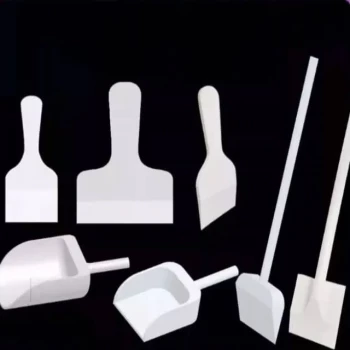
Customizable PTFE Scrapers and Shovels for Demanding Applications
Customizable PTFE Scrapers and Shovels for Demanding Applications
High-purity PTFE scrapers & shovels for labs, semiconductor & chemical industries. Chemical-resistant, non-stick, durable tools for precise material handling. Custom solutions available.

Custom Virgin Polytetrafluoroethylene Sieve Mesh Solid Waste Analysis Round Square Customizable PTFE Screens

Custom Virgin Polytetrafluoroethylene Sieve Mesh Solid Waste Analysis Round Square Customizable PTFE Screens

Optimize your laboratory filtration with custom virgin PTFE sieve mesh designed for solid waste analysis. Available in 100 mesh or bespoke specifications, these chemically resistant round and square screens deliver unmatched durability and precision for critical industrial testing applications today.

High Purity PTFE Square Membrane Cutter Equipartition Device for Trace Analysis and Disease Control Centers Clean Non Stick No Leaching

High Purity PTFE Square Membrane Cutter Equipartition Device for Trace Analysis and Disease Control Centers Clean Non Stick No Leaching

Optimize laboratory precision with this high-purity PTFE square membrane cutter. Engineered for disease control centers, this non-stick, zero-leaching equipartition device ensures sample integrity during critical trace analysis and filtration tasks across diverse demanding chemical environments.

PTFE Flat Plate Working Electrode Electrochemical Cell for Sheet Samples Corrosion Testing and SEM Sample Preparation

PTFE Flat Plate Working Electrode Electrochemical Cell for Sheet Samples Corrosion Testing and SEM Sample Preparation

This high purity PTFE electrochemical cell enables precise corrosion testing and SEM preparation for flat sheet samples featuring a customizable one square centimeter exposure area and a robust chemical resistant dual layer clamping design for reliable laboratory research analyses

Customizable PTFE Rods for Advanced Industrial Applications

Customizable PTFE Rods for Advanced Industrial Applications

High-performance PTFE solid rods for chemical-resistant, low-friction components. Ideal for lab, medical & industrial applications. Custom machining available.

Custom PTFE Constant Pressure Separatory Funnel Corrosion Resistant Low Background Labware for PFA Flasks

Custom PTFE Constant Pressure Separatory Funnel Corrosion Resistant Low Background Labware for PFA Flasks

Engineered for high-purity trace analysis, this custom PTFE constant pressure separatory funnel offers unmatched chemical resistance and low-background performance. The unit ensures precise fluid transfer and fits PFA flasks, delivering zero-contamination results for demanding industrial, chemical, and laboratory applications.

Custom PTFE Square Trays for Industrial and Laboratory Use

Custom PTFE Square Trays for Industrial and Laboratory Use

Premium PTFE square trays for labs & industry. Chemical-resistant, non-stick, high-purity PTFE trays for semiconductors & medical use. Custom sizes available.

Custom PTFE Petri Dish 30mm Corrosion Resistant Low Background Non Leaching Laboratory Ware

Custom PTFE Petri Dish 30mm Corrosion Resistant Low Background Non Leaching Laboratory Ware

High-purity custom PTFE petri dish with 30mm diameter features exceptional corrosion resistance and low background levels. Ideal for trace analysis and membrane casting, this non-leaching labware ensures contamination-free results across global laboratory facilities.

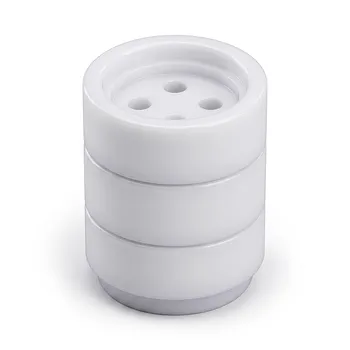
Custom PTFE Multilayer Reaction Apparatus High Temperature Corrosion Resistant Threaded Modular Sieve System

Custom PTFE Multilayer Reaction Apparatus High Temperature Corrosion Resistant Threaded Modular Sieve System

Enhance chemical processing with this custom PTFE multilayer reaction apparatus featuring corrosion-resistant threaded connections and integrated sieve plates. Designed for high-temperature stability and precision filtration in demanding laboratory environments across pharmaceutical and semiconductor research and advanced industrial applications.

Custom PTFE Multi Layer Filtration Plates Corrosion Resistant Low Background Lab Grade Filter Assemblies

Custom PTFE Multi Layer Filtration Plates Corrosion Resistant Low Background Lab Grade Filter Assemblies

Enhance trace analysis with these custom PTFE multi-layer filtration plates. Featuring exceptional chemical resistance and low background interference, this set of six provides reliable performance for high-purity laboratory applications and demanding industrial filtration processes.

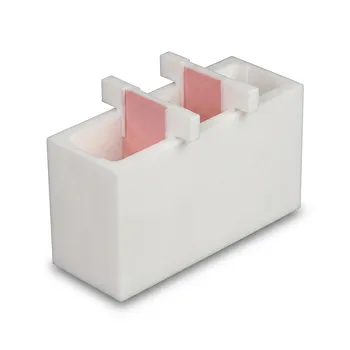
Square PTFE Electrochemical Cell for Silicon Wafer Processing and Hydrofluoric Acid Resistance in Semiconductor and New Energy Research

Square PTFE Electrochemical Cell for Silicon Wafer Processing and Hydrofluoric Acid Resistance in Semiconductor and New Energy Research

This high-purity PTFE square electrochemical cell offers exceptional hydrofluoric acid resistance for silicon wafer processing in semiconductor and new energy sectors, featuring fully customizable dimensions and rigorous bespoke engineering to meet specific demanding laboratory research and industrial production requirements.

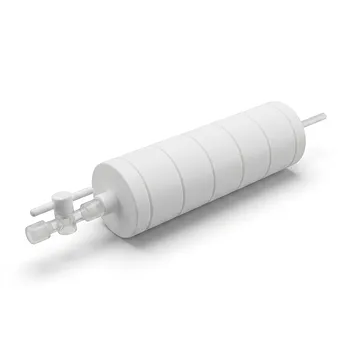
PTFE Corrosion Resistant Filter with PFA Valve Connections and Integrated Sieve Plate

PTFE Corrosion Resistant Filter with PFA Valve Connections and Integrated Sieve Plate

High-performance PTFE filtration system featuring PFA valve connections and customizable sieve plates for extreme chemical resistance. Ideal for pharmaceutical and semiconductor processes requiring absolute purity, durability, and bespoke engineering solutions for aggressive fluid handling.

Custom PTFE Filtration System Acid Resistant High Purity Semiconductor Grade Chemical Processing Filter

Custom PTFE Filtration System Acid Resistant High Purity Semiconductor Grade Chemical Processing Filter

Optimized for semiconductor and chemical processing, this customizable PTFE filtration system offers unparalleled acid resistance and high-purity performance. Engineered for demanding industrial environments, our bespoke solutions ensure zero contamination and exceptional long-term durability in highly corrosive media.

PTFE PFA Vacuum Filtration System Corrosion Resistant Customizable Shatterproof Laboratory Device

PTFE PFA Vacuum Filtration System Corrosion Resistant Customizable Shatterproof Laboratory Device

High-performance PTFE and PFA vacuum filtration systems designed for extreme chemical resistance. This customizable, shatterproof unit ensures trace-level purity and exceptional thermal stability for demanding laboratory processes and hazardous fluid transfers in industrial and research applications.

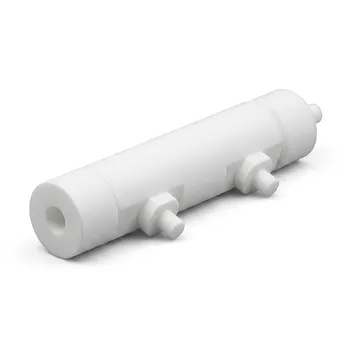
Custom PTFE Electrolytic Cell Corrosion Resistant Low Background Reaction Vessel with Inlet Outlet Ports

Custom PTFE Electrolytic Cell Corrosion Resistant Low Background Reaction Vessel with Inlet Outlet Ports

Discover professional high-purity custom PTFE electrolytic cells designed for precision electrochemical analysis. Featuring extreme corrosion resistance and low background interference, these reaction vessels offer customizable inlet/outlet ports for seamless integration into demanding industrial or laboratory fluid systems.

Custom PTFE Corrosion Resistant Insulating Electrophoresis Reaction Cell with Septum and Valves for Low Background Trace Analysis

Custom PTFE Corrosion Resistant Insulating Electrophoresis Reaction Cell with Septum and Valves for Low Background Trace Analysis

Optimize trace analysis with our custom PTFE corrosion-resistant reaction cells. Featuring insulating electrophoresis designs with integrated septums and valves, these high-purity systems ensure low background and zero metal precipitation for demanding industrial laboratory and chemical research applications today.


Leave Your Message