Alkaline compatibility must be evaluated because high-temperature capability does not guarantee chemical stability. Polyamide-imide (PAI) and polyimide (PI) provide high tensile strength and broad resistance to many chemicals, but both have poor resistance to strong bases. Alkaline exposure can degrade their structure, causing premature failure, fluid contamination, or loss of component integrity.
PAI and PI may solve a temperature or mechanical-strength problem while creating an alkaline-compatibility problem. If a component will contact strong bases, compatibility testing or a more alkali-resistant material—such as PTFE, PFA, PEEK, PES, or PPS—should be considered.
Why High-Temperature Performance Is Not Enough
Different properties solve different problems
PAI and PI are attractive in demanding applications because they combine high-temperature capability with high tensile strength and resistance to acids, alcohols, aromatic hydrocarbons, and greases.
However, chemical compatibility is a separate design requirement. A polymer can retain its mechanical properties at elevated temperature yet still be vulnerable to a particular chemical family.
Strong bases are a specific weakness
Both PAI and PI exhibit poor resistance to alkalis, especially strong bases. This weakness must be assessed whenever the component will handle, contain, or repeatedly contact alkaline fluids.
The relevant question is not simply whether the material is rated for high temperature. It is whether the material remains structurally stable in the actual alkaline environment.
What Alkaline Exposure Can Cause
Structural degradation
Contact with alkaline fluids can induce degradation within PAI or PI. As the polymer structure breaks down, the component may no longer provide the intended mechanical or sealing performance.
Premature material failure
Degradation can lead to material failure before the expected service life is reached. In fluid components, this may compromise tubing, vessels, transfer lines, seals, or other wetted parts.
Contamination and process risk
A degrading component can introduce material into the fluid stream. For laboratory apparatus and chemical-processing equipment, that creates a contamination risk in addition to the direct cost of replacement and downtime.
Why Alternatives May Be More Appropriate
Fluoropolymers provide strong alkali resistance
Fully fluorinated polymers such as PTFE and PFA offer excellent resistance to alkalis. This makes them a strong choice for components exposed to aggressive alkaline reagents.
For laboratory apparatus, chemical-transfer lines, and vessels, fluoropolymers remain the superior option when preventing chemical breakdown and contamination is the primary requirement.
Some non-fluoropolymers also resist alkalis
Fluoropolymers are not the only possible alternatives. PEEK, PES, and PPS also offer excellent alkali resistance and may be considered where their overall performance profile fits the application.
The final selection still requires evaluating the complete operating environment, including temperature, mechanical demands, and the specific chemical exposure.
Understanding the Trade-offs
PAI and PI are not universally unsuitable
PAI and PI can be highly effective where their strengths align with the application and alkaline exposure is absent or adequately controlled. Their broad resistance to several chemical groups should not be mistaken for universal chemical compatibility.
The concern is specifically that strong bases represent a known weakness for both materials.
Fluoropolymers may not solve every design requirement
Although PTFE and PFA provide excellent alkali resistance, material selection should still account for the component’s temperature, strength, dimensional, and processing requirements. A chemically resistant material is appropriate only when it also satisfies the rest of the design specification.
Compatibility should be evaluated under actual conditions
Concentration, temperature, exposure duration, and contact conditions can affect the outcome. Where the application is critical, the selected material should be verified against the actual alkaline fluid and operating conditions rather than relying only on general material reputation.
Making the Right Choice for Your Goal
The material decision should begin with the fluid environment, not temperature rating alone.
- If your primary focus is alkaline chemical resistance: Prefer PTFE, PFA, PEEK, PES, or PPS over PAI or PI, provided the selected material meets the other design requirements.
- If your primary focus is high temperature and mechanical strength without strong-base exposure: PAI or PI may be appropriate because their strength and broad chemical resistance can align well with the application.
- If your primary focus is laboratory purity or contamination control: Favor materials that maintain structural stability in the alkaline fluid, with fluoropolymers often providing the most conservative choice.
- If your primary focus is long service life: Evaluate the specific chemical, concentration, temperature, and exposure duration before approving PAI or PI for wetted service.
A sound selection balances temperature, mechanical performance, and verified chemical compatibility rather than treating any single property as sufficient.
Summary Table:
| Property | PAI/PI | PTFE/PFA | PEEK/PES/PPS |
|---|---|---|---|
| High temperature capability | Excellent | Good (PFA up to 260°C) | Good (PEEK up to 250°C) |
| Alkali resistance | Poor | Excellent | Excellent |
| Tensile strength | High | Low | High |
| Chemical resistance (broad) | Good (except alkali) | Excellent | Good |
| Typical applications | High-temp mechanical parts | Labware, fluid handling | High-temp/chemical components |
Ensure your fluid components withstand harsh chemicals. KINTEK offers PTFE, PFA, and custom machined parts with superior alkali resistance. Contact us today to find the right material for your application.
Related Products
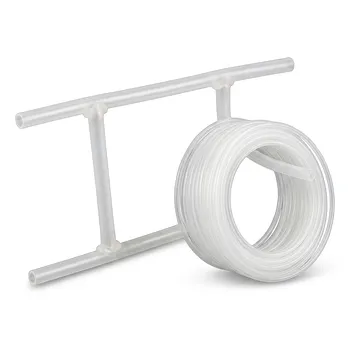
- Corrosion Resistant PFA Tubing 1/4 Inch Custom Molded Welded Fluid Transfer Components
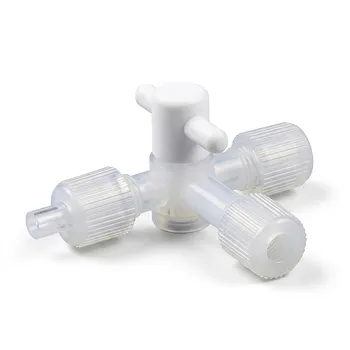
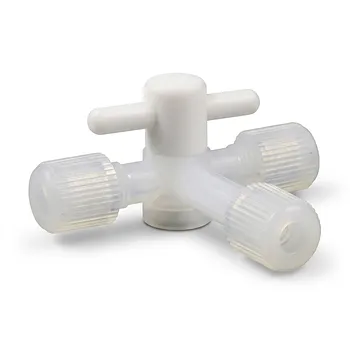
- Corrosion Resistant High Purity PFA Valve and Weldable Transparent Tubing for Semiconductor Fluid Transfer
- High Purity PFA Valves and Weldable Corrosion Resistant Transparent Tubing for Semiconductor Sensor Manufacturing Fluid Transfer
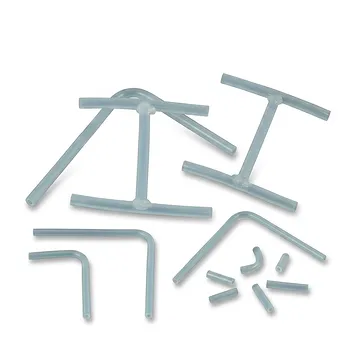
- High Performance PFA Coiled Spring Tubing and Custom PTFE Fabrication Services with Welded Fittings and Precision Bent Components
- Custom PTFE and Nitrile Diaphragm Pump Components for Demanding Applications
People Also Ask
- How do PFA fluid transfer components contribute to chemical research precision? Achieve high-purity results today.
- How do high-precision PFA fluid transfer components, such as tubing and fittings, affect the results of continuous-flow synthesis?
- Why is PFA frequently specified over standard PTFE for custom-machined fluid transfer valves, fittings, and complex laboratory reaction vessels? Discover the key advantages.
- What role do PFA tubing and valves play in high-precision laboratory fluid transfer systems? Ensure Ultra-Pure Results
- Why are PTFE or PFA fluid transfer components used for DSSC electrolytes? Ensure High Purity & Corrosion Resistance.