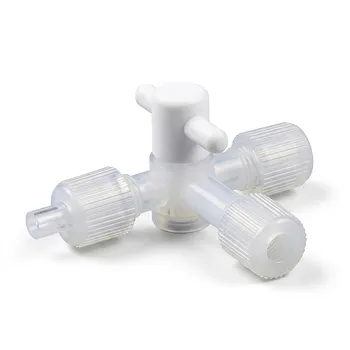
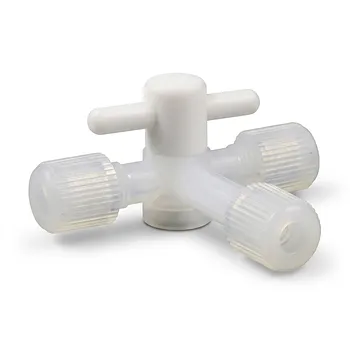
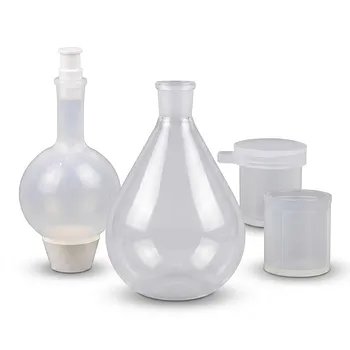
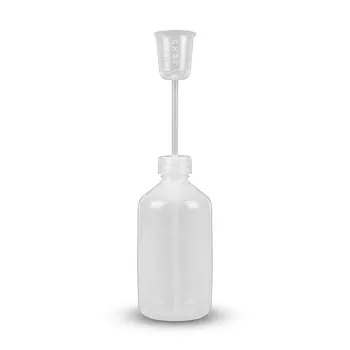
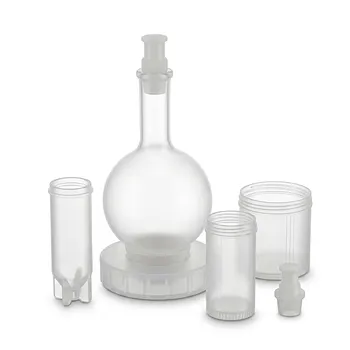
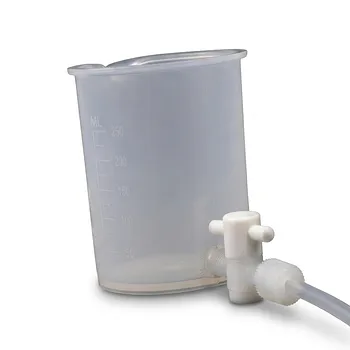
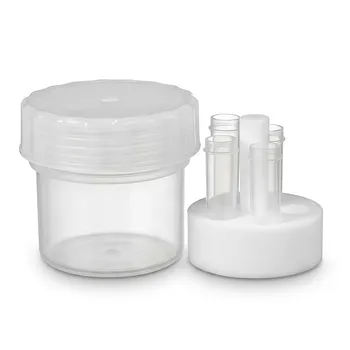
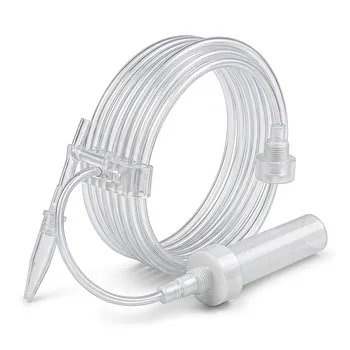
PFA is preferred over FEP when fluid-transfer components must withstand both elevated temperature and contamination-sensitive service. PFA supports continuous operation at approximately 260 °C (500 °F), compared with about 200 °C (400 °F) for FEP, while also providing stronger resistance to creep and stress cracking at high temperature. It retains broad fluoropolymer chemical resistance and can be melt-processed into smooth, precise valves, fittings, and tubing with very low extractables.
PFA combines PTFE-level thermal and chemical performance with melt-processability. That combination makes it better suited than FEP for high-purity systems exposed to sustained heat, mechanical stress, aggressive chemicals, and strict contamination limits.
Why High-Temperature Performance Matters
PFA Has the Higher Continuous-Use Temperature
FEP is generally rated for continuous service near 200 °C (400 °F), while PFA is commonly rated near 260 °C (500 °F). The difference gives PFA more operating margin in heated chemical lines, digestion systems, reaction equipment, and sterilization processes.
PFA also has a higher melting range, approximately 575–590 °F, compared with roughly 500–535 °F for FEP. Melting point is not the same as continuous-use temperature, but it reflects PFA's greater thermal capability.
PFA Maintains Mechanical Integrity Under Heat
High temperature can soften polymers and increase deformation under pressure. PFA generally provides better mechanical strength, creep resistance, and stress-crack resistance than FEP in demanding heated applications.
That matters in valve bodies, threaded fittings, seals, and tubing connections, where dimensional changes can cause leakage or loss of sealing force.
Its Molecular Structure Reduces Thermal Stress
FEP contains bulky trifluoromethyl side groups, which increase steric effects along the polymer chain and limit its high-temperature performance. PFA uses perfluoroalkoxy comonomers with flexible ether linkages that relieve some of this strain.
The result is a fluoropolymer that retains exceptional thermal stability while remaining processable through conventional melt-manufacturing methods.
Why Purity and Chemical Resistance Matter
Both Materials Resist Aggressive Chemicals
PFA and FEP both provide excellent resistance to strong acids, bases, solvents, and other corrosive laboratory fluids. Neither is automatically superior for every chemical, so compatibility must still be checked against the specific fluid, concentration, temperature, and exposure time.
PFA's advantage is that it combines this broad chemical resistance with stronger high-temperature and mechanical performance.
PFA Supports Low-Contamination Fluid Handling
PFA can be molded without the plasticizers or stabilizers commonly associated with some other polymers. Properly manufactured high-purity PFA therefore offers very low extractables, reducing the risk that the component will contaminate samples or process fluids.
This is important in trace analysis, semiconductor chemical distribution, chromatography, and automated sample preparation, where contamination at very low concentrations can compromise results.
Smooth Surfaces Reduce Retention and Adsorption
Melt-processed PFA can provide smooth, non-porous internal surfaces with few micro-voids. These surfaces reduce fluid retention, solute adsorption, buildup, and cross-contamination inside tubing, valves, and fittings.
PFA's low surface energy also helps prevent aggressive or viscous fluids from adhering to internal walls, supporting more consistent flushing and fluid recovery.
Transparency Can Improve Process Monitoring
Many PFA tubing grades provide high transparency, allowing operators to observe fluid movement, bubbles, particulates, color changes, or phase separation without opening the system.
That visibility is useful in analytical instruments and automated fluid-handling systems, where detecting a problem early can prevent a failed run or contaminated sample.
Why Melt-Processability Matters for Components
PFA Can Be Injection-Molded and Extruded
PFA is a true melt-processable fluoropolymer. It can be extruded into tubing and molded into complex parts such as valve bodies, threaded fittings, connectors, and reaction vessels.
This allows manufacturers to produce precise geometries and tight tolerances while retaining PFA's thermal, chemical, and purity characteristics.
Complex Shapes Can Be Made More Consistently
High-purity fluid systems often require intricate channels, sealing surfaces, threads, and connection features. Melt-processing supports repeatable production of these shapes and can reduce the need for extensive machining.
The resulting components can provide reliable sealing and fewer opportunities for surface defects or internal contamination.
PTFE Provides a Useful Comparison
Standard PTFE offers comparable chemical resistance and a similar upper continuous service temperature, but it has extremely high melt viscosity. It generally cannot be processed through conventional injection molding and is instead made through sintering, compression molding, or machining.
PFA was developed to preserve much of PTFE's performance while making complex, precision-manufactured components more practical.
How PFA Performs in Valves, Fittings, and Tubing
Valves Benefit From Creep Resistance
Valve seats and bodies can experience continuous thermal and mechanical stress. PFA's resistance to deformation helps maintain sealing surfaces and operating dimensions over extended service.
This is particularly valuable when valves repeatedly cycle between ambient and elevated temperatures.
Fittings Need Dimensional Stability
Threaded fittings and connectors must maintain accurate dimensions to seal properly. PFA's combination of low permeability, strength, and high-temperature stability helps reduce leakage and connection failure.
Its melt-processability also supports precise, complex fitting designs.
Tubing Needs Purity and Flow Consistency
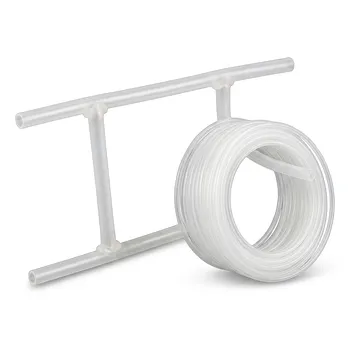
PFA tubing provides chemically resistant, smooth internal walls that minimize adsorption and fluid drag. Its broad temperature range makes it suitable for heated transfer lines, aggressive chemical delivery, and analytical instrument connections.
The material's transparency can also make inspection easier than with opaque tubing materials.
Understanding the Trade-offs
PFA Usually Costs More Than FEP
PFA is typically the more expensive material. The additional cost is justified when temperature margin, low extractables, mechanical stability, or long service life is more important than minimum component price.
For moderate-temperature applications without severe purity or stress requirements, FEP may provide adequate performance at lower cost.
Chemical Compatibility Is Not Automatic
“Fluoropolymer” does not mean that every application condition is interchangeable. Permeation, stress cracking, fluid concentration, pressure, and temperature can all affect performance.
Material selection should use the component manufacturer's compatibility data and the actual operating envelope.
High Purity Depends on Manufacturing Quality
PFA's base polymer supports very low contamination, but purity also depends on resin grade, additives, processing equipment, cleaning, packaging, and handling. A standard industrial PFA component should not automatically be treated as semiconductor-grade or trace-analysis-grade.
Specify the required extractables, cleanliness, and certification level rather than selecting by polymer name alone.
Temperature Ratings Have Conditions
A continuous-use rating does not define every permissible combination of temperature, pressure, cycling, and mechanical load. A component operating near its upper temperature limit may require reduced pressure or additional design margin.
The complete assembly, including seals and connections, must be rated for the intended conditions.
Making the Right Choice for Your Goal
Choose based on the actual thermal, chemical, mechanical, and purity demands of the system.
- If your primary focus is maximum operating temperature: Choose PFA for its approximately 260 °C continuous-use rating and stronger high-temperature mechanical stability.
- If your primary focus is ultra-high purity: Choose high-purity PFA components specified for low extractables and controlled manufacturing.
- If your primary focus is complex valve or fitting geometry: Choose PFA because it can be extruded and injection-molded into precise melt-processed components.
- If your primary focus is lower component cost at moderate temperature: Consider FEP when its approximately 200 °C continuous-use rating and chemical resistance satisfy the application.
- If your primary focus is reliable heated fluid transfer: Use PFA tubing, valves, and fittings when creep resistance, low adsorption, transparency, and leak-tight performance are important.
PFA is preferred over FEP when a fluid-transfer system must sustain high temperature, mechanical stress, complex geometry, and stringent purity requirements at the same time.
Summary Table:
| Feature | PFA | FEP |
|---|---|---|
| Continuous Use Temp | ~260°C (500°F) | ~200°C (400°F) |
| Melt Processability | Excellent (injection molding, extrusion) | Good |
| Creep & Stress-Crack Resistance | Superior | Inferior |
| Chemical Resistance | Excellent | Excellent |
| Extractables | Very low (when high-purity grade) | Low |
| Transparency | Good | Good |
| Cost | Higher | Lower |
For reliable high-purity fluid handling at elevated temperatures, choose KINTEK's precision PFA components. Our expertise in PTFE/PFA manufacturing ensures superior thermal stability, mechanical integrity, and ultralow contamination for your critical lab processes. Contact us today to discuss your custom requirements and experience the KINTEK advantage! Get in touch.
Related Products
- Corrosion Resistant High Purity PFA Valve and Weldable Transparent Tubing for Semiconductor Fluid Transfer
- High Purity PFA Valves and Weldable Corrosion Resistant Transparent Tubing for Semiconductor Sensor Manufacturing Fluid Transfer
- Corrosion Resistant PFA Tubing 1/4 Inch Custom Molded Welded Fluid Transfer Components
- Translucent PFA Bottle Top Dispenser for Corrosion Resistant Chemical Squeeze Extraction
- PTFE PFA Vacuum Filtration System Corrosion Resistant Customizable Shatterproof Laboratory Device
People Also Ask
- Why are high-purity PFA fluid transfer components preferred for battery electrolytes? Ensure Purity & Data Accuracy
- How do high-precision PFA fluid transfer components, such as tubing and fittings, affect the results of continuous-flow synthesis?
- How do PFA fluid transfer components contribute to chemical research precision? Achieve high-purity results today.
- What role do PFA tubing and valves play in high-precision laboratory fluid transfer systems? Ensure Ultra-Pure Results
- What advantages do PTFE and PFA tubing offer for organic solvents? Superior chemical resistance, purity, and high-temperature stability.