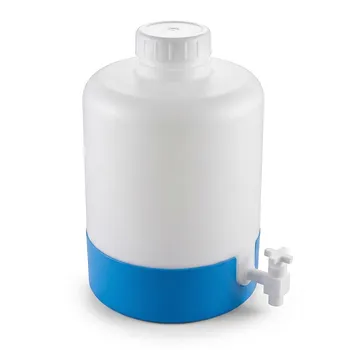
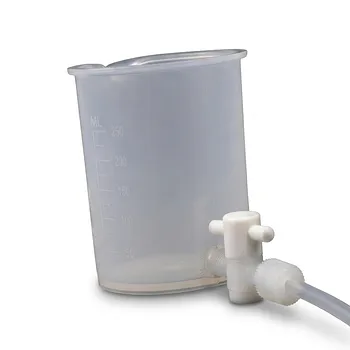
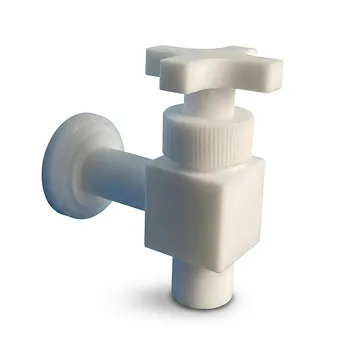
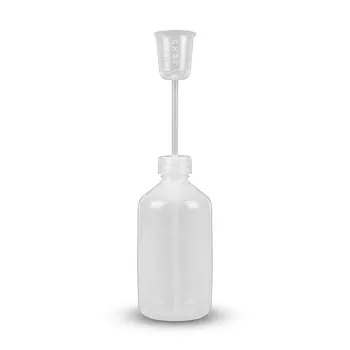
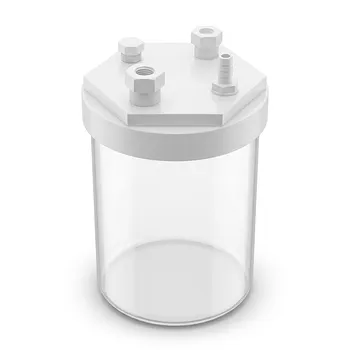
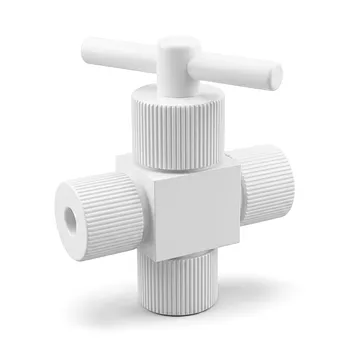
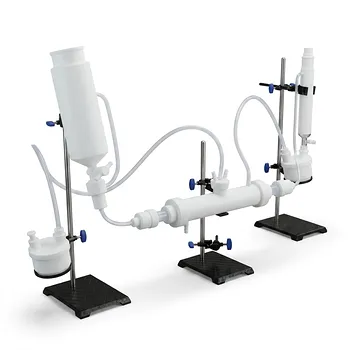
PFA is frequently specified because it combines PTFE-level chemical and temperature resistance with far better manufacturability for complex geometries. Both materials can provide continuous service to approximately 260 °C and resist highly aggressive chemicals. However, standard PTFE has extremely high melt viscosity and cannot be conventionally injection-molded, while PFA can be melt-extruded, molded, welded, and machined into intricate, low-contamination fluid-handling components.
The central advantage of PFA is not superior chemical resistance or maximum temperature capability—they are broadly comparable to PTFE. It is PFA’s melt-processability, dimensional stability, and ability to form smooth, seamless, complex parts that make it the preferred choice for many custom valves, fittings, and laboratory vessels.
Why Standard PTFE Is Difficult to Manufacture Into Complex Parts
PTFE does not flow like a conventional thermoplastic
Standard PTFE becomes a stiff, highly viscous material when heated above its melting range. Its melt viscosity is too high for ordinary injection molding or extrusion.
Manufacturers therefore typically produce PTFE parts through compression molding, sintering, skiving, or CNC machining. These methods work well for relatively simple shapes but become more difficult and costly as internal passages, threads, sealing surfaces, and thin features multiply.
Complex geometries increase manufacturing effort
A custom PTFE valve or reaction vessel may require multiple machining operations, bonded sections, inserts, or separately manufactured components.
Each additional operation can increase lead time, assembly complexity, potential leakage paths, and the risk of dimensional variation—particularly when the design includes internal channels that are difficult to access with cutting tools.
Why PFA Is Better Suited to Complex Fluid Components
Melt-processability enables intricate shapes
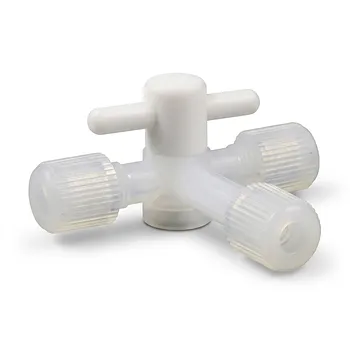
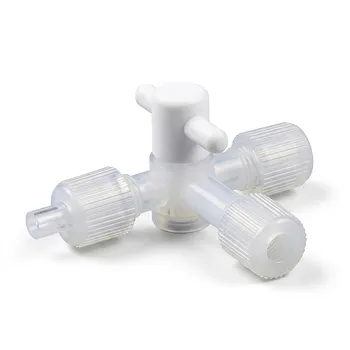
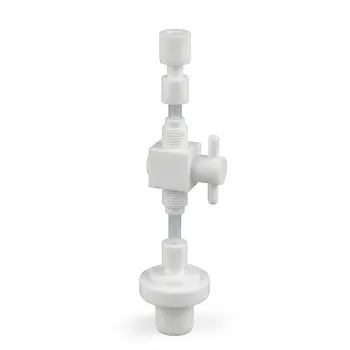
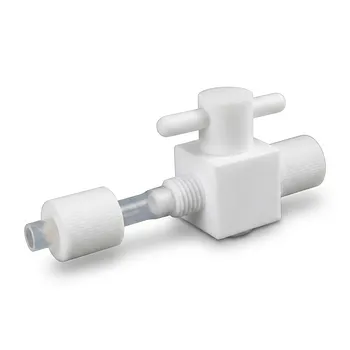
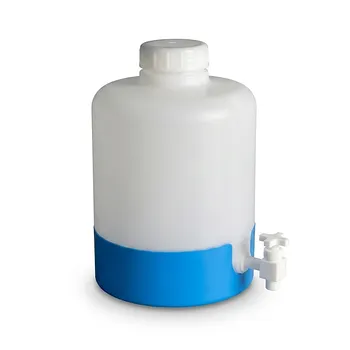
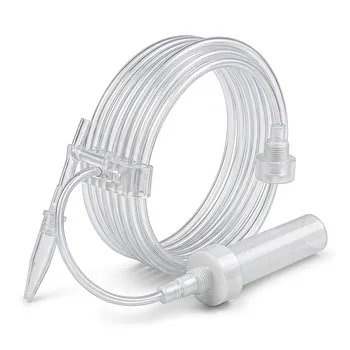
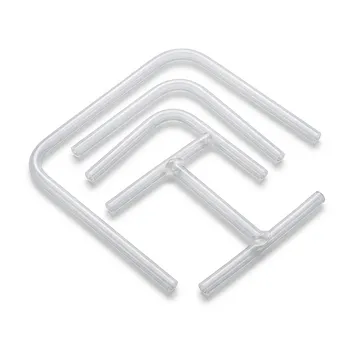
PFA can be processed using extrusion, injection molding, and other conventional thermoplastic techniques. This allows manufacturers to form complex valve bodies, threaded fittings, tubing connectors, vessels, and internal fluid paths more efficiently.
For custom work, PFA may still be machined from stock shapes. The important distinction is that manufacturers also have the option to mold or form the geometry when machining alone would be inefficient or impractical.
Molding can reduce joints and assembly steps
A molded PFA component can often incorporate features that would otherwise require several separately machined pieces.
Fewer joints mean fewer potential leak paths, reduced assembly labor, and less opportunity for trapped contamination. This is especially valuable in high-purity chemical handling and analytical laboratory systems.
Smooth, non-porous surfaces support purity
PFA can produce smooth, continuous surfaces with low surface energy and low extractables. These characteristics help reduce particle retention, adsorption, and contamination during trace analysis or aggressive chemical processing.
A seamless molded or formed surface can also be easier to clean than a multi-part assembly with crevices, interfaces, or mechanically joined sections.
What PFA Retains From PTFE
Broad chemical resistance
PFA retains the exceptional chemical inertness associated with PTFE. It is commonly selected for aggressive acids, solvents, oxidizing chemicals, and other demanding laboratory media.
The exact compatibility still depends on concentration, temperature, exposure time, mechanical stress, and the specific PFA grade. “Fluoropolymer” should not be treated as a substitute for application-specific compatibility testing.
High continuous operating temperature
PFA and standard PTFE are generally associated with a continuous upper service temperature near 260 °C, although allowable temperature depends on pressure, mechanical loading, design, and the manufacturer’s data.
PFA therefore provides a major processing advantage without requiring the user to give up the high-temperature capability that motivates PTFE selection in the first place.
Low surface energy
Both materials have very low surface energy, which helps resist wetting, adhesion, and chemical buildup.
This property is useful in valves, fittings, reaction vessels, and transfer paths where minimizing product hold-up and cross-contamination matters.
Why Dimensional Stability Matters in Valves and Fittings
PFA can offer better resistance to cold flow
Standard PTFE is susceptible to cold flow, also called creep: gradual deformation under sustained load. This behavior can affect valve seats, threaded connections, gaskets, and pressurized fittings.
PFA’s copolymer structure includes perfluoroalkoxy side groups that hinder polymer-chain movement. As a result, suitable PFA grades can provide improved dimensional stability and sealing performance compared with standard PTFE.
Stable dimensions support reliable sealing
Valve seats and fitting interfaces depend on maintaining geometry under pressure and temperature cycling.
Reduced creep can help PFA components preserve contact pressure, thread form, and sealing dimensions over time. The improvement is grade- and design-dependent, so PFA does not eliminate the need for proper stress analysis, wall-thickness design, and temperature derating.
Lower permeability can benefit containment
PFA is also valued for relatively low permeability in many chemical-handling applications. This can support containment and reduce the risk of aggressive or high-purity fluids interacting with the surrounding environment.
Permeation performance varies with the chemical, temperature, wall thickness, and exposure duration, so it should be evaluated rather than assumed.
Understanding the Trade-offs
PFA is not automatically better in every application
If the part has a simple geometry, standard PTFE may be entirely adequate and more economical. PTFE remains an excellent choice for chemically inert liners, simple seals, machined blocks, and components where its processing limitations do not materially affect cost or performance.
The correct choice depends on geometry, pressure, temperature, tolerance, production volume, and required purity.
PFA can cost more
PFA resin and finished components are often more expensive than standard PTFE products. Tooling, specialized processing, and resin grade can further affect the cost.
That premium may be justified when it reduces assembly, improves sealing, or makes a complex geometry feasible. It may not be justified for a simple machined part.
Temperature capability does not guarantee mechanical capability
The approximately 260 °C continuous service rating does not mean that a PFA valve or fitting can withstand maximum pressure at that temperature.
Mechanical strength, creep, pressure rating, wall thickness, thermal cycling, and chemical exposure must all be considered together. Fluoropolymers generally require conservative mechanical design at elevated temperatures.
Machining still requires process control
Although PFA can be molded, it can also be custom-machined. Machining does not automatically produce perfect dimensional stability because thermal expansion, tool geometry, residual stress, and post-machining relaxation can influence the final part.
Critical components should be specified with realistic tolerances and inspected under controlled conditions.
How to Apply This to Your Project
PFA is most compelling when the design must combine chemical resistance, high temperature, purity, and manufacturing complexity.
- If your primary focus is complex geometry: Specify PFA when molding, forming, or machining intricate passages, threads, valve features, or reaction-vessel shapes is central to the design.
- If your primary focus is ultra-high purity: Favor PFA where smooth, low-extractable, non-porous surfaces and minimal joints help control contamination.
- If your primary focus is long-term sealing: Evaluate PFA when reduced creep and improved dimensional stability are important, while still checking the selected grade’s pressure and temperature limits.
- If your primary focus is lowest component cost: Consider standard PTFE for simpler geometries where compression molding, sintering, or conventional machining is practical.
- If your primary focus is maximum chemical and thermal resistance alone: Compare both materials against the actual chemical, temperature, pressure, and mechanical requirements, because PFA does not generally provide a fundamental advantage over PTFE in those two properties.
Choose PFA when its processing and dimensional-stability advantages solve a real design problem; choose standard PTFE when its simpler, lower-cost manufacturing route already meets the application.
Summary Table:
| Property | PFA | Standard PTFE |
|---|---|---|
| Chemical Resistance | Excellent | Excellent |
| Continuous Temperature | ~260°C | ~260°C |
| Melt Processability | Yes (extrusion, molding) | No (high melt viscosity) |
| Manufacturing of Complex Parts | Easier (molding, welding) | Difficult (requires machining) |
| Dimensional Stability / Creep | Better | Prone to cold flow |
| Surface Smoothness | Smooth, non-porous | Can be rougher, porous |
| Leak Paths | Fewer joints (molded) | More joints (assembly required) |
| Cost | Generally higher | Lower for simple shapes |
Upgrade your custom fluid handling with high-purity PFA components. At KINTEK, we specialize in machining and molding complex PFA and PTFE parts—from valves and fittings to reaction vessels. Our expertise ensures reliable sealing, reduced contamination, and adherence to your specific tolerances. Whether you need a prototype or high-volume production, we deliver precision and purity. Contact us today to discuss your project and get a quote!
Related Products
- High Purity PFA Valves and Weldable Corrosion Resistant Transparent Tubing for Semiconductor Sensor Manufacturing Fluid Transfer
- Corrosion Resistant PFA Tubing 1/4 Inch Custom Molded Welded Fluid Transfer Components
- Corrosion Resistant High Purity PFA Valve and Weldable Transparent Tubing for Semiconductor Fluid Transfer
- High Purity PFA PTFE Flare Stop Valves Customizable 2-Way 3-Way Reducing Fluoropolymer Fluid Control Solutions
- High Purity PFA Flared Globe Valve Custom Two Way Three Way Reducing PTFE Valve Heavy Metal Free
People Also Ask
- Why are high-purity PFA fluid transfer components preferred for battery electrolytes? Ensure Purity & Data Accuracy
- What role do PFA tubing and valves play in high-precision laboratory fluid transfer systems? Ensure Ultra-Pure Results
- How do PFA fluid transfer components contribute to chemical research precision? Achieve high-purity results today.
- How do high-precision PFA fluid transfer components, such as tubing and fittings, affect the results of continuous-flow synthesis?
- Why is PFA often selected over traditional PTFE for manufacturing complex fluoropolymer fluid components, custom fittings, and sealed laboratory digestion vessels? Discover the key advantages for your lab.