Cold flow in standard PTFE is caused by molecular slippage under sustained load. PTFE has a rigid, helical molecular structure composed of smooth, rod-like carbon-fluorine chains. Because these chains have limited intermolecular restraint and are not cross-linked, they can gradually slide past one another when the material is compressed, producing time-dependent deformation even at relatively low temperatures.
PFA reduces PTFE’s cold flow by adding PPVE comonomers that disrupt crystalline packing and physically hinder chain slippage, while preserving a continuous-use temperature of approximately 260°C and PTFE-like chemical resistance.
Why Standard PTFE Creeps Under Load
Smooth Chains Can Slip
PTFE’s molecular structure contains highly regular carbon-fluorine chains arranged in crystalline regions. These chains are chemically stable and have smooth, low-friction surfaces, which is central to PTFE’s excellent nonstick and chemical-resistant behavior.
Under sustained mechanical stress, however, the same smooth chain structure allows adjacent molecular regions to move relative to one another. The result is cold flow, also called creep.
Sustained Stress Produces Permanent Change
Creep is not an instantaneous failure. It is a gradual, nonrecoverable change in shape caused by continuous loading.
In fluid components, this may cause a gasket to thin, a valve seat to relax, or a threaded fitting to lose dimensional accuracy. As sealing pressure decreases, the joint can eventually leak.
Temperature Accelerates Deformation
PTFE can creep at ambient temperature, but the rate increases as temperature rises. Higher thermal energy makes molecular movement easier, while sustained compression continues to drive the material away from the loaded region.
This is why components exposed to pressure and heat often require thicker walls, mechanical containment, controlled torque, or spring-loaded sealing systems.
How PFA Changes the Molecular Structure
PPVE Comonomers Interrupt Regular Packing
PFA is produced by copolymerizing tetrafluoroethylene with a small amount of perfluoropropylvinyl ether, or PPVE. A typical composition is approximately 100 parts TFE to 1 part PPVE.
The PPVE units introduce relatively long side chains into the otherwise regular PTFE structure. These side chains disrupt the tight packing of PTFE crystallites.
Side Chains Resist Chain Slippage
The PPVE side chains act as physical obstacles between neighboring polymer chains. They make it more difficult for the chains and crystallite regions to slide past one another under sustained stress.
This reduces the rate of dimensional change and improves resistance to cold flow compared with standard, unmodified PTFE.
Reduced Creep Improves Component Stability
For fluid transfer components, the practical benefit is improved retention of shape under pressure. PFA fittings, valve components, gaskets, and reaction vessels are less likely to experience the gradual relaxation that can reduce sealing force or alter flow dimensions.
PFA does not eliminate the need for sound mechanical design, but it gives the component a more stable material foundation.
Why PFA Retains High Thermal Performance
The Polymer Backbone Remains Fluorinated
Adding PPVE changes the organization of the polymer without replacing the highly fluorinated backbone responsible for PTFE’s thermal and chemical performance.
PFA therefore retains a maximum continuous operating temperature of about 260°C, comparable to the commonly cited continuous-use limit for PTFE.
Chemical Resistance Is Largely Preserved
The fluorinated structure also preserves chemical resistance comparable to PTFE for many demanding fluid-handling applications. This combination allows PFA to improve dimensional stability without resorting to material systems that would compromise fluoropolymer resistance.
Thermal Stability and Creep Resistance Are Separate Properties
High thermal resistance does not automatically mean high creep resistance. A material can tolerate elevated temperatures chemically while still deforming mechanically under sustained load.
PFA addresses both requirements more effectively by retaining the fluorinated chemistry while modifying the chain-packing structure that contributes to PTFE’s cold flow.
Where the Difference Matters
Seals and Gaskets
PFA’s lower creep tendency helps seals retain thickness and contact pressure over time. This reduces the risk of joint relaxation and leakage in continuously loaded flange connections.
Spring-loaded mechanisms, captured grooves, and controlled compression may still be appropriate because even improved fluoropolymers remain viscoelastic materials.
Valves and Fittings
Valve seats, stems, and threaded fittings can gradually change shape when exposed to pressure, tightening force, and heat. PFA is useful where maintaining alignment and sealing geometry is more important than relying solely on PTFE’s ease of machining or low friction.
High-Purity Fluid Systems
PFA is well suited to chemically aggressive or high-purity fluid paths that require both fluoropolymer resistance and improved dimensional stability. Typical examples include fluid transfer fittings, laboratory apparatus, and reaction vessels.
Understanding the Trade-offs
PFA Reduces Creep but Does Not Make It Rigid
PFA should be understood as more creep-resistant than standard PTFE, not as a cross-linked or creep-free polymer. Long-term stress, temperature, geometry, and assembly conditions still affect performance.
Designers should continue to consider wall thickness, unsupported spans, pressure, and the duration of applied load.
Mechanical Design Still Matters
Material selection alone cannot compensate for poor joint design. Captured gasket grooves, appropriate compression limits, spring energization, and external reinforcement can be necessary when a component must maintain sealing force for long periods.
Filled PTFE Is Another Strategy
Inorganic fillers such as glass fiber, graphite, or bronze can further reduce creep and increase compressive strength or wear resistance. However, fillers may affect chemical compatibility, purity, friction, electrical properties, and surface finish.
PFA is often the more appropriate choice when maintaining a clean, unfilled fluoropolymer fluid path is important.
Making the Right Choice for Your Goal
Choose the material and design together, based on the dominant failure risk in the application.
- If your primary focus is chemical resistance and low friction: Standard PTFE remains suitable when loads are modest or when the component can accommodate creep through its geometry.
- If your primary focus is dimensional stability under sustained load: PFA is preferable because PPVE comonomers hinder molecular slippage while retaining approximately 260°C continuous-use capability.
- If your primary focus is high compressive strength or wear resistance: Consider a properly selected filled PTFE compound, after verifying chemical compatibility and purity requirements.
- If your primary focus is long-term leak prevention: Combine a creep-resistant material such as PFA with mechanical containment, controlled compression, or spring-loaded sealing.
Understanding how polymer structure governs chain movement allows engineers to select PFA when PTFE’s chemical performance is needed but its cold flow is not acceptable.
Summary Table:
| Property | PTFE | PFA |
|---|---|---|
| Cold flow (creep) | High | Low |
| Continuous use temp | ~260°C | ~260°C |
| Chemical resistance | Excellent | Excellent |
| Molecular structure | Smooth chains | PPVE side chains |
| Best for | Chemical resistance & low friction | Dimensional stability under load |
Upgrade to PFA components for superior creep resistance without sacrificing thermal or chemical performance. At KINTEK, we specialize in high-performance fluoropolymers, offering PTFE and PFA labware, fluid handling systems, and custom CNC-machined parts. Contact us today to discuss your application and get a tailored solution. Get in touch!
Related Products
- Custom PTFE Insulating Gaskets Corrosion Resistant Teflon Seals Tailored Engineering Plastic Components
- High Performance PFA Coiled Spring Tubing and Custom PTFE Fabrication Services with Welded Fittings and Precision Bent Components
- Custom PTFE Parts Manufacturer for Teflon Containers and Components
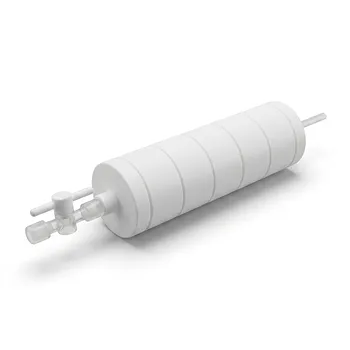
- High Purity PTFE Filter with PFA Valve Connections and Integrated Sieve Plate for Corrosive Fluid Processing
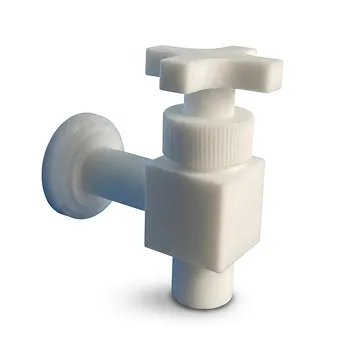
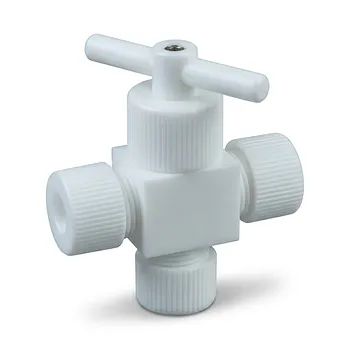
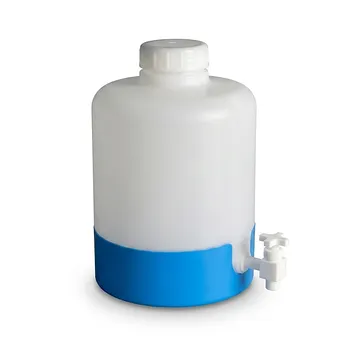
- Corrosion Resistant PTFE Polytetrafluoroethylene Valve and Customizable Laboratory Fluid Dispensing Faucet for Aggressive Chemical Handling in Industrial Storage Tanks and Plastic Drums
People Also Ask
- How are custom PTFE parts used in the automotive sector? Enhance Vehicle Performance & Durability
- Why is PTFE an ideal material choice for sealing gaskets, valves, and fluid transfer tubing exposed to extremely aggressive chemicals? Discover Its Superior Chemical Resistance and Reliability
- How do PTFE gaskets prevent the transfer of grit into gearboxes? Create an Impermeable Barrier Against Contaminants
- How do fillers improve the mechanical performance of PTFE gaskets compared to virgin PTFE? Boost Strength & Reliability
- What is the temperature range that PTFE gaskets can withstand? A Guide from -200°C to +260°C