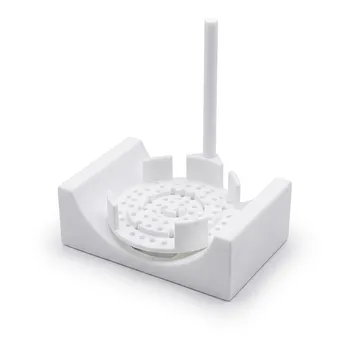
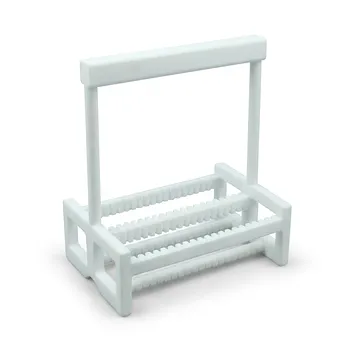
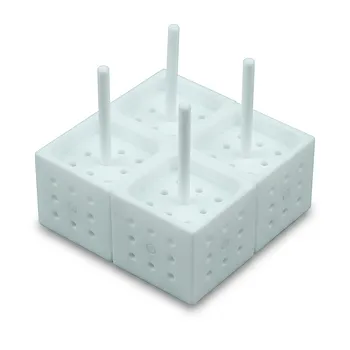
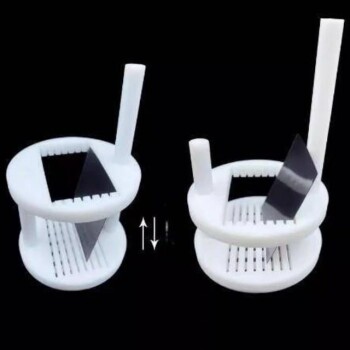
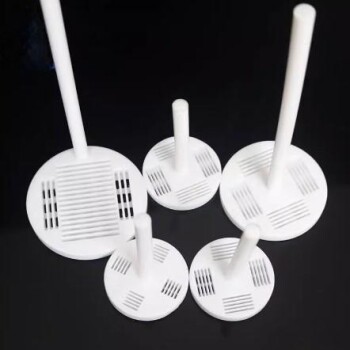
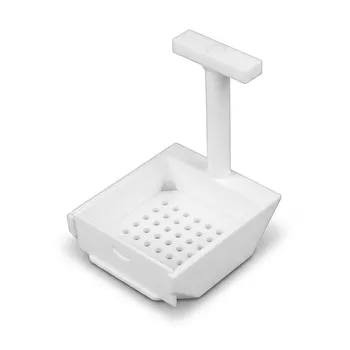
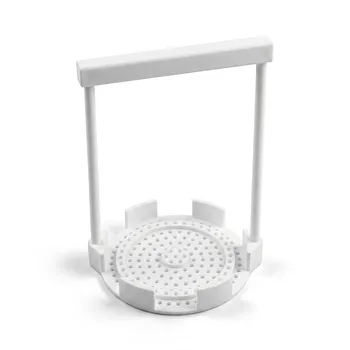
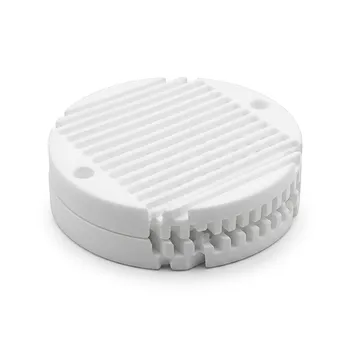
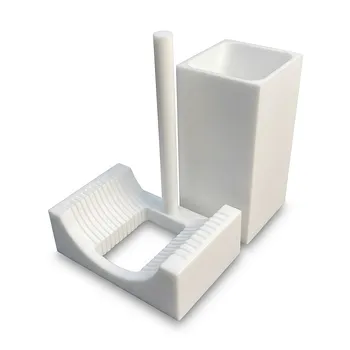
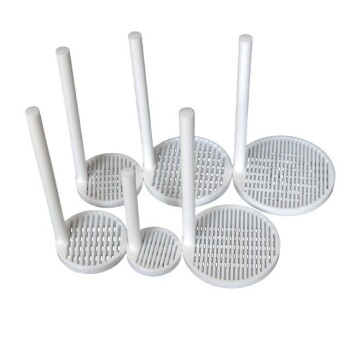
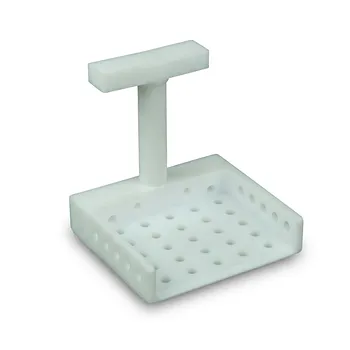
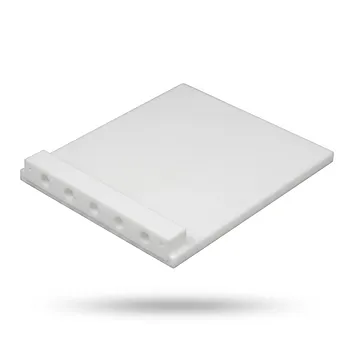
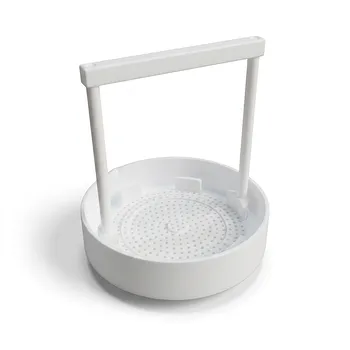
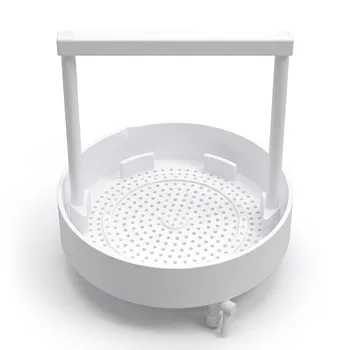
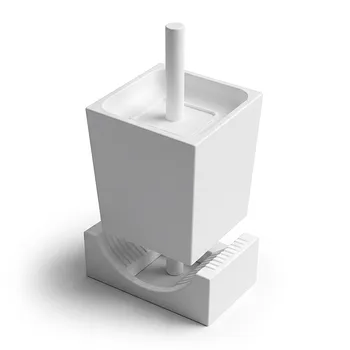
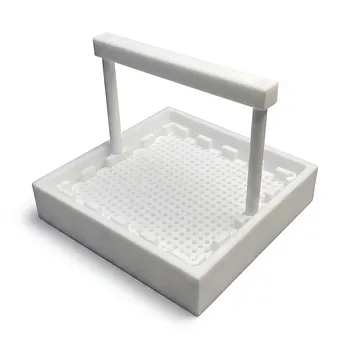
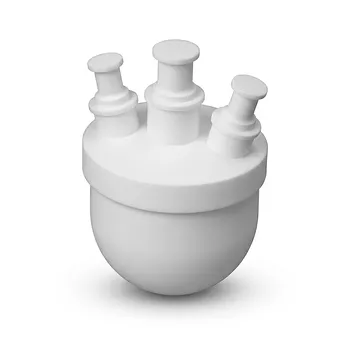
PTFE flower baskets are primarily limited by material creep (cold flow), low structural rigidity, and sensitivity to high-energy radiation. While these baskets offer exceptional chemical resistance, they lack the mechanical strength of materials like nylon or peak, making them prone to permanent deformation under sustained loads and surface scratching from sharp substrates.
Core Takeaway: To use PTFE flower baskets successfully, you must prioritize structural reinforcement and gentle handling to compensate for the material's inherent softness and tendency to "creep" over time.
Understanding Structural Deformation and Creep
The Phenomenon of Cold Flow
PTFE is a relatively soft polymer that exhibits creep, also known as cold flow, when subjected to constant mechanical stress. This means that over time, the weight of the substrates or the basket itself can cause the material to permanently deform or lose its original shape.
Managing Load Capacity through Design
Because of this low mechanical strength, baskets must be engineered with increased wall thickness or specific reinforcing features. Without these design compensations, the basket may fail to maintain the precise alignment required for sensitive wafer processing.
Dimensional Stability and Thermal Expansion
PTFE has a high coefficient of thermal expansion, meaning its dimensions change significantly with temperature shifts. This can impact the fit of adjustable-height dividers or toothed stop levers used to secure different substrate sizes, such as 200 mm wafers or small GaAs chips.
Material Softness and Surface Integrity
Vulnerability to Abrasive Damage
The softness of PTFE makes it highly susceptible to surface scratching and wear. Sharp edges on silicon wafers or gallium nitride (GaN) substrates can easily gouge the machined grooves of the basket, potentially leading to particle shedding or insecure seating.
Limitations in Dynamic Applications
Compared to more durable plastics, PTFE has low wear resistance in high-friction environments. In applications where baskets are frequently moved or vibrated, the "toothed" components intended to hold substrates securely can wear down prematurely.
Environmental Sensitivities and Degradation
Radiation and High-Energy Exposure
PTFE molecules break down when exposed to high-energy radiation, such as UV light or high-energy lasers. This degradation limits the use of PTFE baskets in specific laser-based patterning steps or environments with intense sterilization requirements.
Thermal Limits and Toxic Fumes
While PTFE is prized for its thermal range, exceeding 260ºC (500ºF) causes the material to release toxic fumes. This ceiling is lower than some advanced ceramics or metals, restricting its use in high-temperature bake-out or annealing processes.
Understanding the Trade-offs
The central trade-off of PTFE is chemical purity versus structural rigidity. While it is virtually inert to most acids and solvents, it reacts with alkali metals and certain reactive fluorinating agents like chlorine trifluoride.
Furthermore, the material is more costly to CNC machine than standard plastics. You are paying a premium for chemical resilience while simultaneously accepting a material that is mechanically "weaker" and more prone to deformation than cheaper alternatives like nylon.
Making the Right Choice for Your Goal
- If your primary focus is chemical purity in caustic baths: PTFE is the gold standard, provided you use reinforced designs to prevent the basket from sagging over time.
- If your primary focus is high-precision alignment: Consider hybrid designs or alternative materials, as PTFE’s tendency to creep can throw off the tight tolerances required for automated substrate handling.
- If your primary focus is longevity in high-energy environments: Avoid PTFE and opt for materials with better UV or laser resistance to prevent molecular breakdown and contamination.
Selecting the right PTFE basket requires balancing its unparalleled chemical inertness against the necessity for robust structural engineering.
Summary Table:
| Mechanical Limitation | Impact on Lab Processes | Recommended Mitigation |
|---|---|---|
| Material Creep (Cold Flow) | Permanent deformation under sustained load or weight. | Use reinforced designs with increased wall thickness. |
| Surface Softness | Susceptibility to scratching and particle shedding. | Gentle handling; avoid sharp-edged substrates like GaN. |
| Thermal Expansion | Dimensional shifts affecting wafer alignment and fit. | Account for high expansion coefficients in design. |
| Radiation Sensitivity | Molecular breakdown from UV or high-energy lasers. | Avoid use in intense sterilization or laser patterning. |
| Thermal Ceiling | Release of toxic fumes above 260ºC (500ºF). | Monitor process temperatures; avoid high-temp bake-outs. |
Ensure Precision with KINTEK’s High-Performance Fluoropolymer Solutions
Don't let material limitations like creep or thermal expansion compromise your critical research. KINTEK provides an exhaustive range of high-performance laboratory supplies crafted exclusively from PTFE and PFA. From everyday basic labware (beakers, measuring cylinders, crucibles, reagent bottles) to complex fluid transfer components (tubing, fittings, valves) and sample prep tools (filters, pipettes, tweezers), we deliver the chemical inertness you need with the structural integrity you require.
Our expertise extends to advanced derivative apparatus, including custom electrochemical cells, battery testing fixtures, and microwave digestion vessels. Backed by end-to-end custom CNC fabrication, KINTEK can deliver everything from high-volume orders to bespoke, non-standard machined parts tailored to your specific substrate dimensions.
Ready to upgrade your lab setup? Contact us today to consult with our experts on high-performance fluoropolymer solutions!
Related Products
- High Purity PTFE Wet Cleaning Flower Basket Single Wafer Etching Rack Customizable 4 Inch Mask Plate Carrier
- PTFE Polytetrafluoroethylene Flower Basket Small Silicon Wafer Cleaning Rack Carrier for Laboratory Acid Pickling
- Custom PTFE Wafer Cleaning Flower Basket Chemical Resistant Fluoropolymer Carrier for Semiconductor Etching and New Energy Processing
- Custom PTFE Teflon Parts Manufacturer Adjustable Height Flower Basket
- Custom Machined Molded PTFE Teflon Parts Manufacturer for Laboratory ITO FTO Conductive Glass Cleaning Flower Basket
People Also Ask
- How does the mechanical design of PTFE flower baskets accommodate different substrate sizes? Versatile Wafer Handling
- What is the continuous service temperature range for PTFE laboratory cleaning baskets? Durable Lab Solutions Explained
- What is the working principle of a PTFE flower basket? Optimize Fluid Flow and Purity for Chemical Immersion
- How does the structural design of a PTFE flower basket ensure uniform fluid access to substrates? Optimize Lab Yields
- What are the primary functions and design features of a PTFE flower basket? Optimize High-Purity Chemical Processing