Fluoroelastomer performance depends on how mechanical compliance, thermal stability, and environmental resistance interact. Key factors include Young’s modulus, viscoelastic creep, stress relaxation, melting behavior, crystallinity, service-temperature range, and thermal degradation in the operating atmosphere. These properties determine whether a component maintains its shape, seals reliably, transfers force efficiently, or survives repeated exposure to heat, fluids, and mechanical cycling.
The best fluoroelastomer is not simply the one with the highest temperature rating or chemical resistance. It must provide the right balance of stiffness, recovery, dimensional stability, thermal margin, and resistance to the specific operating environment.
Mechanical Characteristics That Control Performance
Young’s Modulus and Compliance
Young’s modulus indicates how strongly a material resists deformation. Fluoroelastomers generally have a higher modulus than silicone or acrylate elastomers, which can improve load-bearing capacity and dimensional control.
The trade-off is reduced compliance. A stiffer component may require greater force to deform, conform less readily to irregular surfaces, and transmit higher stresses to adjacent parts.
Creep Under Sustained Load
Viscoelastic creep is the gradual deformation that occurs when a component remains under constant stress. In seals, membranes, mounts, and precision fixtures, creep can progressively change the component’s geometry and contact pressure.
This makes creep resistance essential where dimensional stability must be maintained over long periods. A component that performs well initially may lose sealing force or positional accuracy if its deformation continues during service.
Stress Relaxation and Force Retention
Stress relaxation is the reduction in internal force while a material remains held at a fixed deformation. It is particularly important for gaskets, seals, and clamped components because sealing force can decline even when the component’s apparent shape changes very little.
Fluoroelastomer selection should therefore consider long-term force retention, not only initial modulus or tensile strength.
Flex Fatigue and Vibration Damping
Some fluoroelastomer families, including poly(fluoroalkoxyphosphazene) elastomers, provide high flex-fatigue resistance and strong vibration damping. These characteristics support components exposed to repeated bending, vibration, or cyclic deformation.
The practical benefit is longer life under dynamic loading, provided the component is not simultaneously operating beyond its thermal or chemical limits.
Electrical and Electromechanical Response
For materials used in electromechanical devices, relative permittivity can enhance electrical response. However, a higher modulus, together with creep and stress relaxation, can limit the conversion of electrical input into mechanical motion.
For the THV terpolymers described in the reference, these mechanical losses can constrain electromechanical actuation efficiency to approximately 15%. This illustrates why electrical properties alone are insufficient when evaluating actuator performance.
Thermal Characteristics That Define the Operating Window
Melting Temperature and Crystallinity
THV terpolymers have a broad melting-temperature range of approximately 90–120°C and relatively low crystallinity of about 25%. The melting range reflects the temperature region in which crystalline domains lose structural integrity rather than a single, sharply defined transition.
Lower crystallinity can support flexibility and processability, but it may also reduce resistance to deformation at elevated temperatures. The component’s actual temperature capability must therefore be evaluated under load, not inferred from melting temperature alone.
Continuous Service Temperature
The relevant design value is the continuous service-temperature range, which may differ substantially from the melting or decomposition temperature. Poly(fluoroalkoxyphosphazene) elastomers, for example, are reported to operate continuously from approximately −65°C to 175°C.
This wide range supports specialized low-temperature flexibility and extreme fluid-sealing applications. It also demonstrates that different fluoroelastomer chemistries can have substantially different thermal operating windows.
Low-Temperature Flexibility
At low temperatures, elastomers can stiffen and lose their ability to follow movement or maintain contact pressure. A material with a broad low-temperature service range is better suited to seals and flexible components exposed to cold starts, outdoor environments, or cryogenic-adjacent conditions.
Low-temperature flexibility is especially valuable when the component must tolerate both thermal contraction and mechanical cycling.
High-Temperature Stability
Elevated temperature accelerates molecular motion, creep, stress relaxation, and chemical aging. Even when the polymer has not melted or visibly degraded, these effects can reduce sealing force, alter dimensions, and lower mechanical efficiency.
High-temperature selection should therefore include the expected mechanical load and exposure duration, not just the peak temperature.
Atmosphere-Dependent Thermal Degradation
Thermal stability is strongly influenced by the surrounding atmosphere. PTFE, for example, shows much greater resistance to mass loss in vacuum or inert nitrogen than in air at comparable high temperatures.
The reference reports approximately 3% weight loss after two hours at 460°C in vacuum or nitrogen, compared with approximately 25% weight loss after two hours at 482°C in air. Oxygen promotes faster thermal oxidation, so high-temperature fluoropolymer systems may require inert-gas operation or effective control of oxygen exposure.
How These Properties Affect Efficiency
Efficiency in Electromechanical Actuation
Actuation efficiency depends on how much input energy becomes useful motion rather than being absorbed by deformation, hysteresis, creep, or internal damping. A high modulus can reduce displacement, while viscoelastic losses can reduce response speed and repeatability.
For THV-based actuators, the combination of relatively high stiffness and viscoelastic behavior limits reported actuation efficiency to roughly 15%. The appropriate material may still be valuable when chemical resistance or electrical response is more important than maximum displacement efficiency.
Efficiency in Sealing
For sealing components, efficiency means maintaining sufficient contact pressure with minimal friction, wear, leakage, and compression loss. Modulus must be high enough to resist extrusion and dimensional change, but low enough to allow conformity to mating surfaces.
Creep and stress relaxation are often more important than initial elasticity in long-duration sealing. A material that seals well during installation may become inefficient if it gradually loses contact force.
Efficiency in Fluid Transfer
In fluid-transfer systems, the material must maintain dimensional stability while resisting the transported fluid and the operating temperature. Excessive creep can change flow geometry, while thermal expansion or softening can affect pressure control and alignment.
Fluoroelastomer chemistry is advantageous where fluid resistance is critical, but the mechanical response must still be checked at the actual temperature and pressure.
Understanding the Trade-offs
Stiffness Versus Flexibility
A higher modulus improves resistance to deformation and can support precision positioning or anti-extrusion performance. However, it can reduce conformability, increase actuation force, and lower mechanical efficiency.
A softer elastomer may provide better sealing conformity and larger deformation, but it can suffer greater creep and poorer dimensional stability.
Thermal Range Versus Mechanical Retention
A broad service-temperature range does not guarantee constant modulus, sealing force, or recovery across that range. Mechanical properties generally change with temperature, even when the material remains chemically intact.
Designers should evaluate modulus, creep, and stress relaxation at the component’s actual operating temperatures.
Chemical Resistance Versus Processing and Performance
Fluoroelastomers are often selected for chemical and fluid resistance, but polymer family differences remain significant. THV terpolymers and fluoroalkoxyphosphazene elastomers should not be treated as interchangeable simply because both are fluorinated materials.
The correct choice depends on the required combination of thermal range, flexibility, electrical behavior, fatigue resistance, and fluid compatibility.
Peak Temperature Versus Exposure Duration
A short temperature excursion and continuous exposure at the same temperature do not produce the same risk. Long dwell times increase creep, stress relaxation, oxidation, and material loss.
Thermal qualification should reproduce the intended time-at-temperature profile and atmospheric conditions.
Fluoroelastomers Versus PTFE Fluoropolymers
PTFE is a fluoropolymer, but it is not generally used as a conventional elastomer. Its high-temperature degradation behavior is still relevant when fluoropolymer components are used near heat sources, but PTFE data should not be directly applied to the mechanical behavior of THV or FZ elastomers.
Material identity, formulation, reinforcement, and processing history must be confirmed before transferring performance data between polymer families.
Selecting Properties for the Application
For Precision Laboratory Components
Prioritize low creep, low stress relaxation, stable modulus, and predictable thermal expansion. These characteristics help preserve alignment, dimensions, and repeatable positioning over time.
If the component is electrically actuated, also assess dielectric response together with mechanical losses rather than optimizing permittivity alone.
For Sealing Applications
Prioritize long-term force retention, compression-set resistance, low-temperature flexibility, and chemical compatibility. The material must maintain contact pressure over the full temperature and exposure duration.
For severe thermal or fluid conditions, fluoroalkoxyphosphazene elastomers may be suitable where their broad service range and fluid resistance match the application.
For Dynamic or Vibrating Components
Prioritize flex-fatigue resistance, damping, tear resistance, and stable performance under cyclic loading. High damping can reduce transmitted vibration, while fatigue resistance helps prevent failure during repeated motion.
The mechanical benefits must still be verified at the intended temperature, since thermal softening or stiffening can alter dynamic behavior.
For High-Temperature Fluoropolymer Systems
Assess atmosphere, dwell time, and degradation products, not just nominal temperature capability. Inert or vacuum environments can substantially reduce oxidative degradation compared with air.
Where oxygen exposure is unavoidable, use a validated temperature limit with appropriate safety margin and inspect for mass loss, embrittlement, or chemical attack.
Making the Right Choice for Your Goal
Select the material by matching its mechanical and thermal profile to the real load, temperature history, atmosphere, and fluid exposure.
- If your primary focus is dimensional stability: Favor a fluoroelastomer with an appropriate modulus and low creep and stress relaxation under the actual service load.
- If your primary focus is electromechanical actuation: Balance relative permittivity against modulus and viscoelastic losses, since stiffness and energy dissipation can limit actuation efficiency.
- If your primary focus is long-term sealing: Evaluate force retention, compression behavior, low-temperature flexibility, and chemical compatibility over the full service duration.
- If your primary focus is extreme temperature and fluid exposure: Consider a chemistry with a validated continuous service range, such as FZ elastomers where applicable, and account for the surrounding atmosphere.
- If your primary focus is high-temperature fluoropolymer operation: Control oxygen exposure where possible and qualify the component for time-at-temperature rather than relying only on a nominal thermal rating.
Reliable fluoroelastomer performance comes from balancing stiffness, recovery, thermal stability, and environmental resistance under the conditions the component will actually experience.
Summary Table:
| Characteristic | Key Points | Impact on Performance |
|---|---|---|
| Young's Modulus | Higher modulus improves resistance to deformation but reduces compliance. | Affects load-bearing capacity and conformability. |
| Creep | Gradual deformation under constant stress. | Can compromise dimensional stability over time. |
| Stress Relaxation | Force reduction under constant deformation. | Critical for sealing force retention. |
| Flex Fatigue | Resistance to repeated bending/vibration. | Extends component life in dynamic applications. |
| Melting Temperature & Crystallinity | THV melting range 90-120°C, crystallinity ~25%. | Determines upper temperature limit under load. |
| Continuous Service Temperature | FZ elastomers operate from -65°C to 175°C. | Defines the usable temperature window. |
| Low-Temperature Flexibility | Maintains elasticity at cold temperatures. | Essential for cold starts and outdoor use. |
| High-Temperature Stability | Affects degradation and mechanical losses. | Influences long-term reliability. |
| Atmosphere-Dependent Degradation | PTFE loses 3% in vacuum vs 25% in air at high temps. | Oxidation accelerates degradation; control oxygen. |
| Electromechanical Efficiency | THV actuators achieve ~15% efficiency due to mechanical losses. | Balances electrical response with stiffness. |
Ready to select the right fluoroelastomer for your demanding application? At KINTEK, we specialize in high-performance fluoropolymers, offering precision-crafted components from PTFE and PFA. Our expertise in custom machining ensures you get the exact mechanical and thermal properties you need. Contact us today to discuss your requirements and let our team provide tailored solutions that enhance durability, efficiency, and reliability in your operations. Get in touch with our experts and discover how KINTEK can optimize your performance.
Related Products
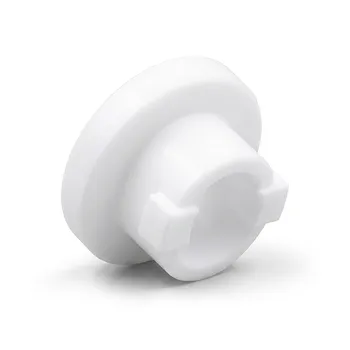
- Custom PTFE Insulating Gaskets Corrosion Resistant Teflon Seals Tailored Engineering Plastic Components
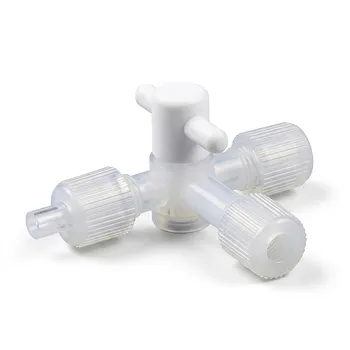
- Corrosion Resistant High Purity PFA Valve and Weldable Transparent Tubing for Semiconductor Fluid Transfer
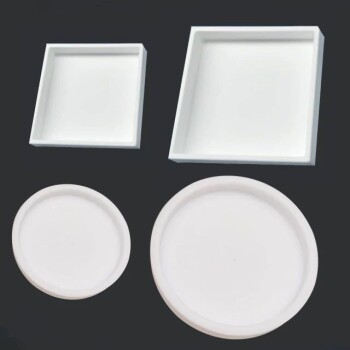
- Custom PTFE Parts Manufacturer for Teflon Containers and Components
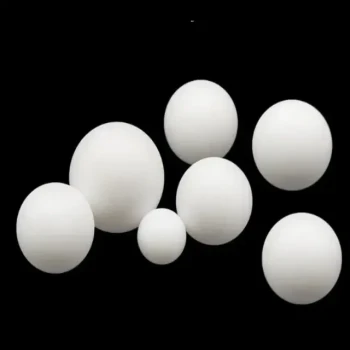
- Custom PTFE Teflon Balls for Advanced Industrial Applications
- Customizable PTFE Rods for Advanced Industrial Applications
People Also Ask
- How are custom PTFE parts used in the automotive sector? Enhance Vehicle Performance & Durability
- Why is PTFE an ideal material choice for sealing gaskets, valves, and fluid transfer tubing exposed to extremely aggressive chemicals? Discover Its Superior Chemical Resistance and Reliability
- What thickness options are available for PTFE gaskets? Select the Right Seal for Your Application
- What is the temperature range that PTFE gaskets can withstand? A Guide from -200°C to +260°C
- How do fillers improve the mechanical performance of PTFE gaskets compared to virgin PTFE? Boost Strength & Reliability