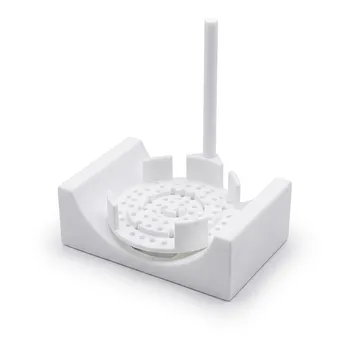
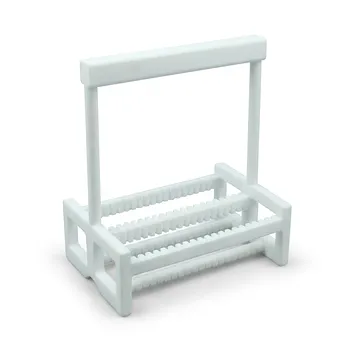
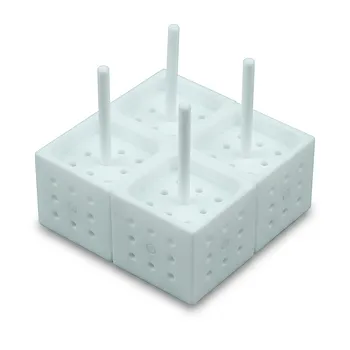
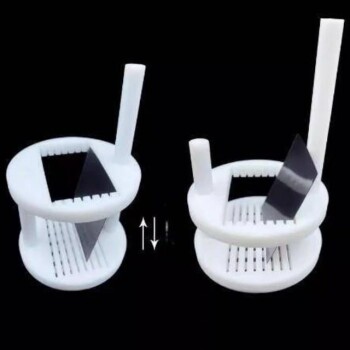
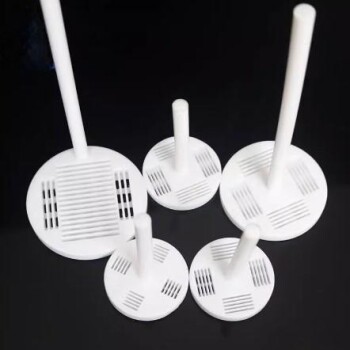
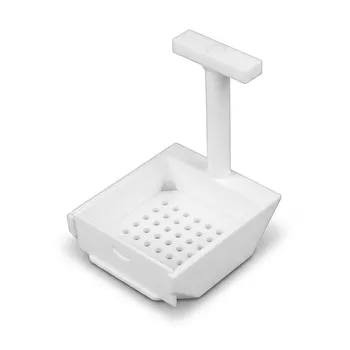
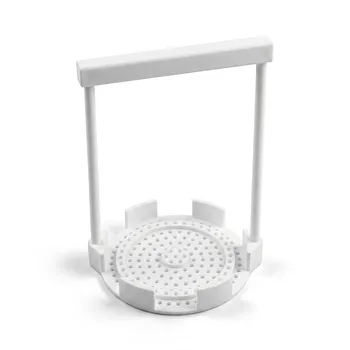
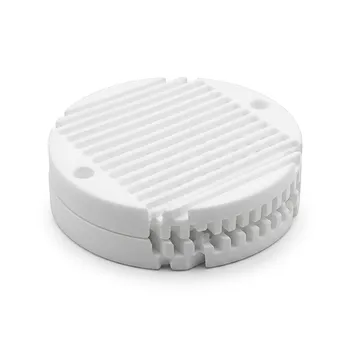
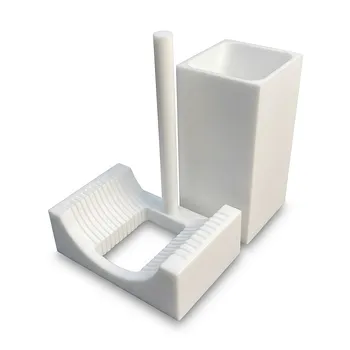
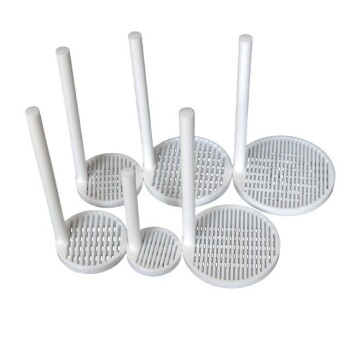
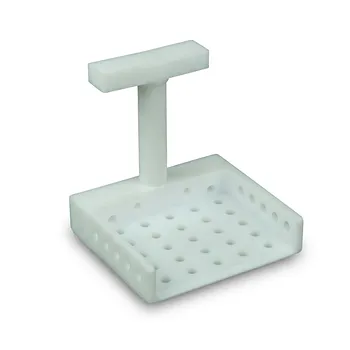
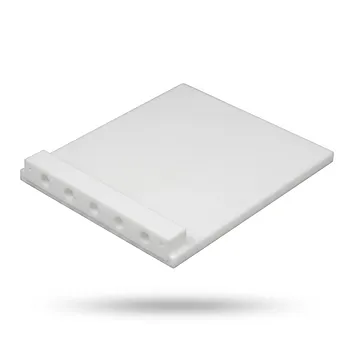
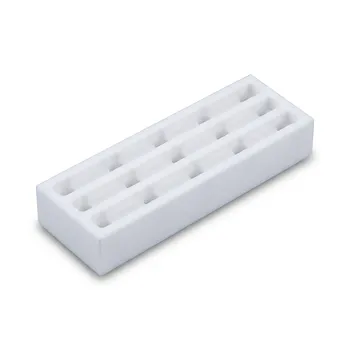
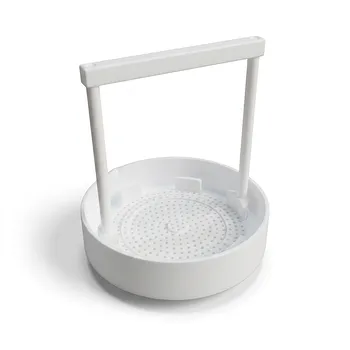
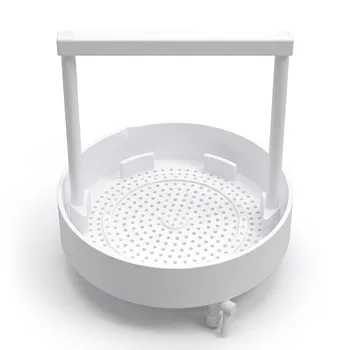
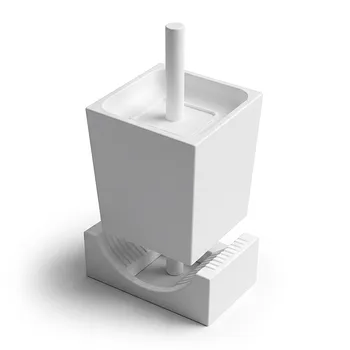
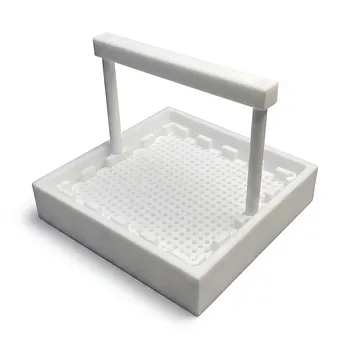
The standard operating temperature range for PTFE flower baskets is -200°C to +260°C (-328°F to +500°F). This exceptional thermal window allows the baskets to transition from cryogenic rinse stages to boiling chemical baths without material degradation. While the material remains stable for continuous use at 260°C, it can withstand short-term temperature spikes up to its melting point of 327°C if the design is properly supported to prevent deformation.
PTFE flower baskets provide a unique combination of cryogenic resilience and high-heat stability, making them the industry standard for processes requiring extreme thermal cycling and chemical resistance.
Performance at Thermal Extremes
Cryogenic Stability and Low-Temperature Use
Unlike many plastics that become brittle and crack in extreme cold, PTFE maintains its mechanical properties at temperatures as low as -200°C. This makes flower baskets ideal for specialized cooling applications or liquid nitrogen exposure.
The material retains enough flexibility to resist impact damage even at these sub-zero levels. This reliability ensures that delicate components being processed remain secure during the coldest stages of a workflow.
High-Temperature Continuous Service
For long-term or "continuous" service, PTFE is rated safely up to 260°C. At this temperature, the material maintains its structural integrity and chemical inertness, which is critical for wafer processing and aggressive chemical etching.
Exceeding this 260°C threshold for extended periods can lead to a gradual reduction in mechanical strength. However, even at this high limit, the material does not release contaminants into the process bath.
Understanding the Trade-offs and Limitations
The Impact of Creep and Deformation
The primary risk at elevated temperatures is creep, which is the tendency of a solid material to move slowly or deform under mechanical stress. As PTFE approaches its melting point of 327°C, it becomes significantly softer.
If a basket is heavily loaded with parts, it may sag or lose its shape near these upper limits. Engineers must ensure the basket is properly supported within the process tank to mitigate this risk during high-heat excursions.
Variations in Temperature Ratings
It is important to note that different manufacturers or specific PTFE blends may list narrower ranges, such as -73°C to 204°C, depending on the fillers used. Additives or "energizers" intended to increase stiffness can sometimes lower the overall thermal ceiling of the basket.
Always verify the specific grade of PTFE used in your basket. Pure, virgin PTFE typically offers the widest thermal range, while reinforced versions might prioritize structural rigidity over extreme temperature tolerance.
How to Apply This to Your Process
Selecting the Right Parameters for Your Goal
To ensure the longevity of your equipment and the safety of your process, consider how your specific environment interacts with these thermal limits.
- If your primary focus is cryogenic processing: You can safely utilize PTFE down to -200°C without fear of the material shattering or becoming brittle.
- If your primary focus is high-heat chemical etching: Limit continuous exposure to 260°C to maintain the structural shape of the basket and prevent long-term deformation.
- If your primary focus is short-term sterilization or heat spikes: Ensure the basket is mechanically supported if temperatures will approach the 327°C melt point to avoid "creep" or sagging.
By respecting these thermal boundaries, you can leverage the full versatility of PTFE flower baskets across the most demanding industrial environments.
Summary Table:
| Thermal Parameter | Temperature Limit | Operational Insight |
|---|---|---|
| Continuous Service Range | -200°C to +260°C | Stable for long-term chemical processing and rinsing. |
| Cryogenic Limit | -200°C (-328°F) | Maintains flexibility and impact resistance in extreme cold. |
| High-Heat Limit | +260°C (+500°F) | Maximum safe temperature for continuous structural integrity. |
| Melting Point | +327°C (+621°F) | Material softens; requires mechanical support to prevent creep. |
Elevate Your Lab Performance with KINTEK
Whether you are managing extreme cryogenic rinses or high-heat chemical etching, KINTEK provides the high-performance fluoropolymer solutions your research demands. We maintain an exclusive focus on PTFE and PFA materials, ensuring every piece of equipment—from everyday basic labware (beakers, crucibles, and reagent bottles) to advanced sample prep and filtration tools—meets the highest standards of chemical and thermal resistance.
Our Value to Your Laboratory:
- Precision Engineering: Benefit from end-to-end custom CNC fabrication for complex, non-standard machined parts and bespoke laboratory setups.
- Comprehensive Inventory: Access everything from fluid transfer components (tubing, valves) and general consumables (O-rings, gaskets) to advanced reaction apparatus like electrochemical cells and microwave digestion vessels.
- Industrial Durability: Our high-purity trace analysis instruments and cleaning tanks are built to withstand the most aggressive industrial environments.
Don’t let material limitations hinder your results. Contact KINTEK today to source high-performance fluoropolymer supplies or to discuss your custom fabrication needs!
Related Products
- High Purity PTFE Wet Cleaning Flower Basket Single Wafer Etching Rack Customizable 4 Inch Mask Plate Carrier
- PTFE Polytetrafluoroethylene Flower Basket Small Silicon Wafer Cleaning Rack Carrier for Laboratory Acid Pickling
- Custom PTFE Wafer Cleaning Flower Basket Chemical Resistant Fluoropolymer Carrier for Semiconductor Etching and New Energy Processing
- Custom PTFE Teflon Parts Manufacturer Adjustable Height Flower Basket
- Custom Machined Molded PTFE Teflon Parts Manufacturer for Laboratory ITO FTO Conductive Glass Cleaning Flower Basket
People Also Ask
- How does the mechanical design of PTFE flower baskets accommodate different substrate sizes? Versatile Wafer Handling
- What is the continuous service temperature range for PTFE laboratory cleaning baskets? Durable Lab Solutions Explained
- What is the working principle of a PTFE flower basket? Optimize Fluid Flow and Purity for Chemical Immersion
- How does the structural design of a PTFE flower basket ensure uniform fluid access to substrates? Optimize Lab Yields
- What are the primary functions and design features of a PTFE flower basket? Optimize High-Purity Chemical Processing