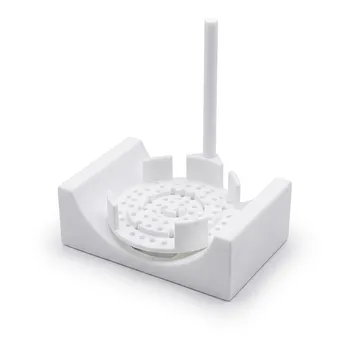
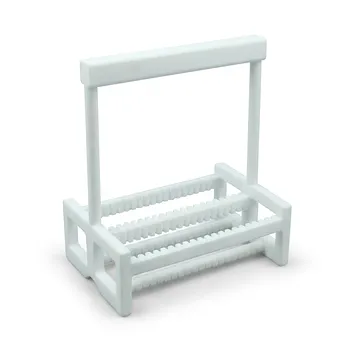
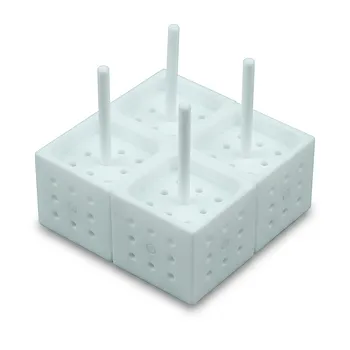
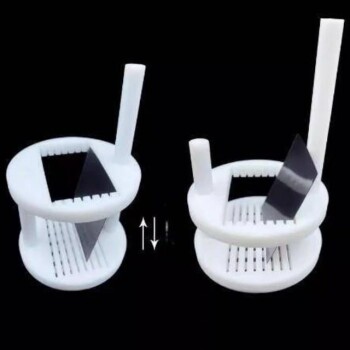
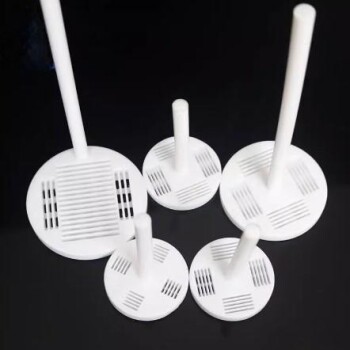
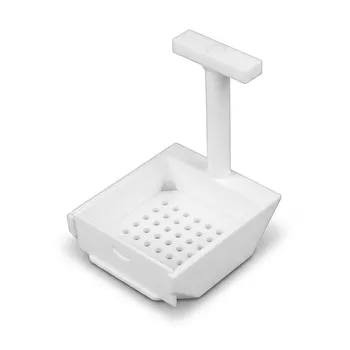
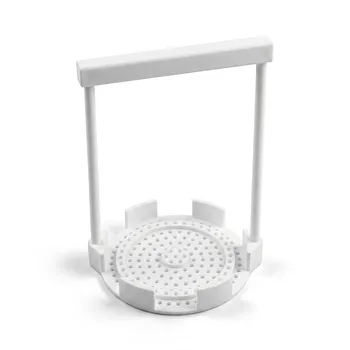
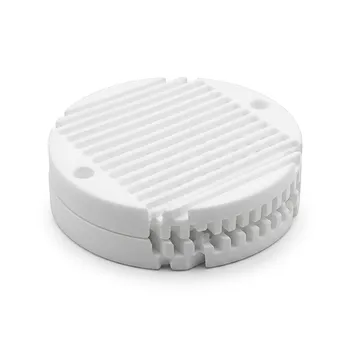
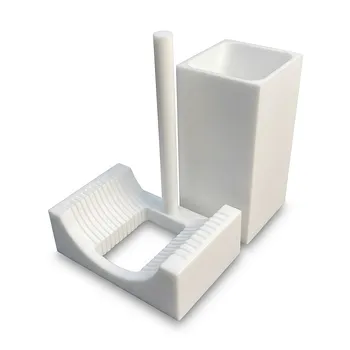
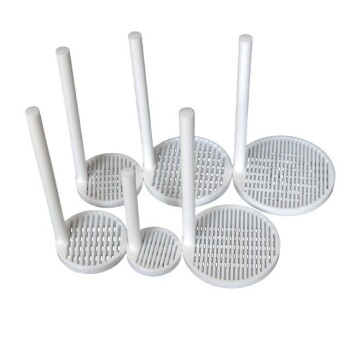
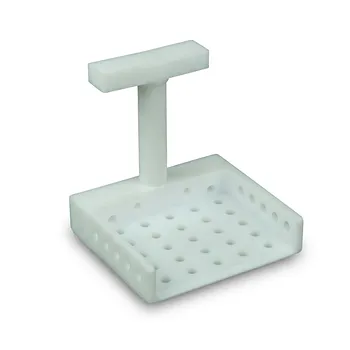
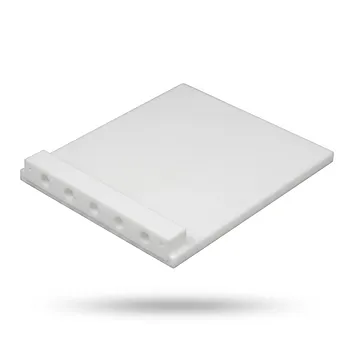
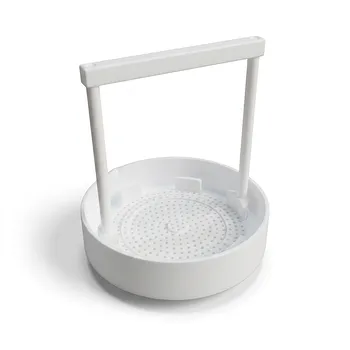
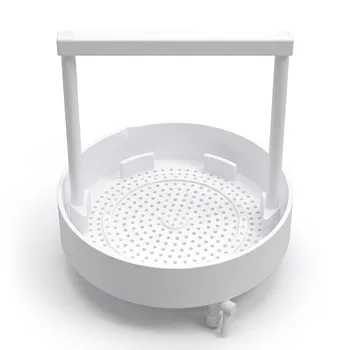
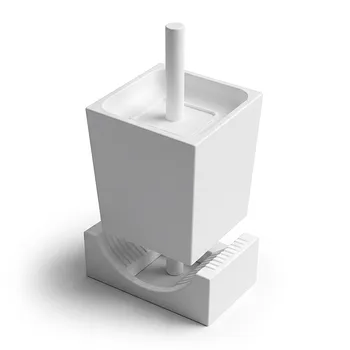
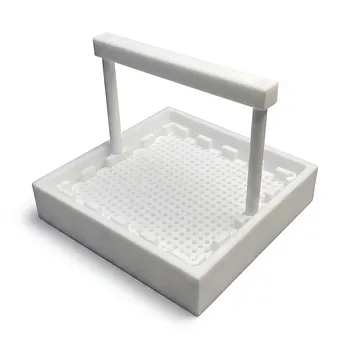
The long-term mechanical integrity of PTFE flower baskets is achieved through a combination of inherent material properties and specific engineering choices designed to resist the stresses of repeated heating and cooling. By utilizing low thermal expansion materials and robust manufacturing techniques like solid-stock machining, these components maintain their shape and functional tolerances over thousands of processing cycles.
Mechanical stability in thermal cycling depends on minimizing internal stress and preventing material deformation. The core strategy involves using thick-walled designs and precision machining to ensure that critical dimensions, such as wafer grooves, remain within specification over time.
The Role of Material Properties in Thermal Resilience
Low Thermal Expansion and Dimensional Stability
PTFE exhibits a low thermal expansion coefficient relative to other high-performance polymers used in aggressive chemical environments. This property is vital because it reduces the magnitude of dimensional changes that occur as temperatures fluctuate.
By minimizing expansion and contraction, the material reduces the internal mechanical stress placed on the basket's structure. This stability is the first line of defense against long-term warping or structural fatigue.
Resistance to Material Creep
Mechanical integrity is further supported by the material's ability to resist creep under load. Creep is the tendency of a solid material to move slowly or deform permanently under the influence of persistent mechanical stresses.
In a flower basket, the weight of the wafers and the fluid dynamics of the process create constant pressure. PTFE's resistance to this phenomenon ensures the basket does not "sag" or lose its shape over months of continuous use.
Engineering for Structural Longevity
Solid-Stock Machining vs. Welded Joints
The method of construction is a primary factor in preventing mechanical failure. Machining a basket from solid-stock PTFE eliminates the weak points and internal stresses often associated with molded or multi-part assemblies.
When multi-part construction is necessary, the use of high-quality welded joints ensures a monolithic structure. These joints are designed to react to thermal changes as a single unit, preventing the warping and separation that can occur in inferior bonding methods.
The Impact of Thick Wall Sections
The use of thick wall sections, typically measuring several millimeters, provides the necessary rigidity for demanding industrial processes. These reinforced sections act as a structural backbone for the entire assembly.
Thick walls are specifically engineered to maintain precise groove tolerances. If the walls were too thin, the heat would cause the grooves to pinch or widen, potentially damaging the delicate wafers they are designed to hold.
Understanding the Trade-offs
Thermal Lag and Heat Transfer
While thick wall sections are excellent for mechanical rigidity, they introduce a higher degree of thermal lag. A thicker mass takes longer to reach process temperature and longer to cool down.
Engineers must balance the need for structural "heaviness" with the requirement for thermal responsiveness in the process. Over-engineering for strength can lead to longer cycle times and reduced throughput.
Weight and Chemical Displacement
Increasing the thickness and density of PTFE components increases the overall weight and displacement of the basket. This can affect the ergonomics of manual handling and the fluid dynamics within the processing tank.
Heavier baskets may require more robust automation handling systems. Additionally, the increased displacement can alter the chemical concentrations or flow patterns required for uniform wafer processing.
How to Apply This to Your Project
When selecting or designing a PTFE flower basket, your choice should be dictated by the specific thermal profile and precision requirements of your application.
- If your primary focus is Maximum Precision: Prioritize baskets manufactured through solid-stock machining to ensure the tightest possible groove tolerances.
- If your primary focus is High Throughput: Opt for designs that balance wall thickness with thermal conductivity to reduce cycle times without sacrificing rigidity.
- If your primary focus is Extended Service Life: Ensure the design specifies thick-walled sections of several millimeters to combat long-term creep and warping.
Selecting a basket that harmonizes material stability with robust construction is the only way to guarantee reliable performance across thousands of thermal cycles.
Summary Table:
| Key Factor | Benefit | Impact on Mechanical Integrity |
|---|---|---|
| Low Thermal Expansion | Reduced internal stress | Minimizes warping and dimensional deformation |
| Creep Resistance | Structural stability | Prevents sagging or permanent deformation under load |
| Solid-Stock Machining | Monolithic structure | Eliminates weak points associated with joints or welds |
| Thick Wall Sections | Enhanced rigidity | Maintains precise groove tolerances for wafer safety |
Ensure the longevity of your laboratory processes with KINTEK’s high-performance fluoropolymer expertise. From everyday basics like beakers, crucibles, and reagent bottles to specialized PTFE flower baskets and high-purity trace analysis instruments, we provide unmatched material integrity. Whether you require fluid transfer components, sample prep tools, or advanced reaction apparatus like custom electrochemical cells and microwave digestion vessels, KINTEK manufactures virtually all imaginable supplies from PTFE and PFA. Leverage our end-to-end custom CNC fabrication for your bespoke laboratory setups or high-volume orders. Contact us today to secure high-performance solutions for your lab!
Related Products
- High Purity PTFE Wet Cleaning Flower Basket Single Wafer Etching Rack Customizable 4 Inch Mask Plate Carrier
- PTFE Polytetrafluoroethylene Flower Basket Small Silicon Wafer Cleaning Rack Carrier for Laboratory Acid Pickling
- Custom PTFE Wafer Cleaning Flower Basket Chemical Resistant Fluoropolymer Carrier for Semiconductor Etching and New Energy Processing
- Custom PTFE Teflon Parts Manufacturer Adjustable Height Flower Basket
- Custom Machined Molded PTFE Teflon Parts Manufacturer for Laboratory ITO FTO Conductive Glass Cleaning Flower Basket
People Also Ask
- How does the mechanical design of PTFE flower baskets accommodate different substrate sizes? Versatile Wafer Handling
- What is the continuous service temperature range for PTFE laboratory cleaning baskets? Durable Lab Solutions Explained
- What is the working principle of a PTFE flower basket? Optimize Fluid Flow and Purity for Chemical Immersion
- How does the structural design of a PTFE flower basket ensure uniform fluid access to substrates? Optimize Lab Yields
- What are the primary functions and design features of a PTFE flower basket? Optimize High-Purity Chemical Processing