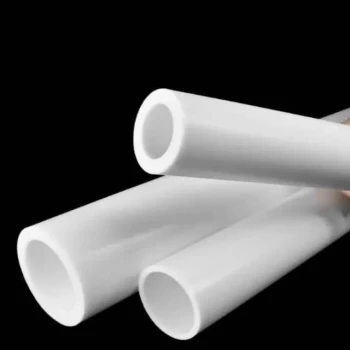
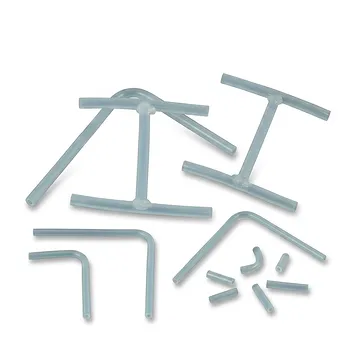
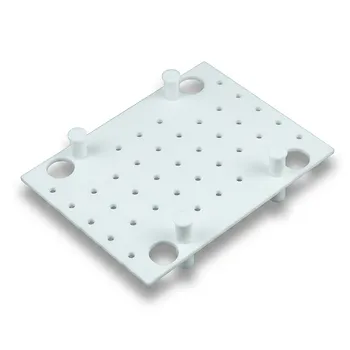
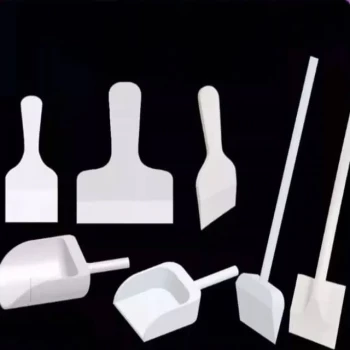
Filled PTFE resins offer custom-machined laboratory parts significantly better wear resistance, creep resistance, load-bearing capability, and dimensional stability than unfilled PTFE. Functional fillers such as glass fiber, graphite, carbon black, carbon fiber, or powdered metals reinforce the PTFE matrix while preserving much of its chemical resistance, low-friction behavior, and broad temperature capability.
Filled PTFE is most valuable when a laboratory component must withstand continuous friction, compression, or mechanical loading. The correct filler allows the material to be tailored for wear life, structural stability, thermal performance, or electrical behavior.
Why Unfilled PTFE Can Be Insufficient
Continuous Load Causes Cold Flow
Unfilled PTFE has excellent chemical inertness and a very low coefficient of friction, but it can deform gradually under sustained mechanical stress. This behavior, commonly called cold flow or creep, can change the dimensions of seals, supports, bushings, and other precision parts.
For custom-machined structural components, that deformation can reduce fit accuracy, sealing performance, or alignment over time.
Friction Alone Can Produce Wear
Virgin PTFE is well suited to sliding applications because its surface is naturally non-stick and low-friction. However, continuous sliding contact can still cause material wear, particularly in dynamically loaded laboratory equipment.
This limits the service life of unfilled PTFE wear rings, bearings, pump components, valve seats, and similar parts.
How Fillers Improve Performance
Higher Wear Resistance
Reinforcing fillers improve the resistance of PTFE components to material loss during repeated sliding or rubbing. This makes filled grades suitable for mechanical seals, wear rings, bushings, bearings, and pump components exposed to ongoing motion.
Improved wear resistance can extend component life and reduce maintenance or replacement frequency.
Greater Creep Resistance
Fillers restrict the movement of the PTFE matrix under sustained load. The result is greater resistance to deformation and improved retention of the component's intended shape.
This is particularly important for high-pressure seals, valve seats, structural supports, and parts that must maintain a precise fit.
Improved Load-Bearing Capability
Filled PTFE compounds generally provide greater mechanical strength and compressive capability than virgin PTFE. They are therefore better suited to components that support loads or transfer force.
For laboratory equipment, this can include pump impellers, mechanical stirrer bearings, high-pressure sealing elements, and custom support components.
Better Dimensional Stability
Many filled compounds reduce the dimensional changes associated with creep and thermal expansion. This helps machined parts maintain clearances, tolerances, and alignment during extended operation.
Dimensional stability is a practical advantage when a component must operate reliably inside a pump, valve, seal assembly, or precision instrument.
Performance Can Be Tailored by Filler
Glass-Filled PTFE
Glass fiber is used to improve mechanical strength, creep resistance, and dimensional stability. It is often considered when a component must withstand sustained loading and maintain its geometry.
The appropriate grade still depends on the application's chemical, friction, temperature, and contact requirements.
Graphite-Filled PTFE
Graphite can improve wear behavior in sliding applications while supporting PTFE's low-friction characteristics. Graphite-filled grades are therefore useful for bearings, wear rings, and other components exposed to repeated contact.
Graphite also changes the compound's thermal and electrical behavior compared with virgin PTFE.
Carbon-Filled PTFE
Carbon-based fillers can increase wear resistance, compressive strength, and creep resistance. Carbon black and carbon fiber are options when a more mechanically durable compound is required.
They can also provide a degree of electrical conductivity, which may be useful where static charge or electrical behavior must be controlled.
Metal-Filled PTFE
Powdered metals can be used to modify mechanical, thermal, or electrical properties. These grades may be appropriate when a component requires greater load capability or customized heat-transfer characteristics.
Metal-filled materials must be evaluated carefully for chemical compatibility, corrosion conditions, and electrical requirements.
Why Filled PTFE Suits Laboratory Components
Chemical Resistance Remains a Core Benefit
PTFE is valued in laboratories because it resists moisture and a broad range of aggressive chemicals. Filled compounds retain much of this fluoropolymer-based resistance, although the specific filler and operating environment must be reviewed for compatibility.
This combination of chemical resistance and improved mechanical durability is useful in fluid-handling and analytical equipment.
Low Friction Supports Efficient Motion
Filled PTFE retains the low-friction surface behavior that makes PTFE useful for sliding interfaces. That supports applications such as slide bearings, gears, seals, and wear rings.
The filler improves durability where virgin PTFE would wear too quickly under continuous movement.
Machinability Enables Custom Geometry
PTFE compounds can be custom machined into application-specific shapes, including seals, valve seats, bushings, pump parts, and structural supports. This is valuable when laboratory equipment requires a low-volume, nonstandard, or replacement component.
Machining also allows the part to be produced directly to the dimensions required by the surrounding assembly.
Electrical and Thermal Properties Can Be Selected
Unfilled PTFE has excellent dielectric properties but low thermal and electrical conductivity. Functional fillers can alter these characteristics, allowing the compound to be selected for insulation, static control, or improved thermal transfer.
This makes filled PTFE more adaptable than virgin resin for specialized laboratory designs.
Understanding the Trade-offs
Filled Grades Are Not Universally Better
Virgin PTFE remains the preferred option when maximum chemical purity, the strongest non-stick behavior, or the highest electrical insulation is the primary requirement. Adding a filler necessarily changes the compound's properties.
The correct choice depends on whether the part is primarily exposed to chemical contact, mechanical load, sliding wear, electrical requirements, or a combination of these conditions.
Filler Selection Affects Chemical Compatibility
The PTFE matrix provides strong chemical resistance, but the filler may have different behavior in a particular chemical environment. A filled grade should therefore be reviewed as a complete compound rather than assumed to have exactly the same performance as unfilled PTFE.
This is especially important for aggressive fluids, elevated temperatures, and long-term exposure.
Friction and Surface Behavior Can Change
Fillers can improve wear resistance without producing identical friction or surface characteristics to virgin PTFE. A grade that performs well under load may not deliver the same sliding behavior or finish as an unfilled material.
Contact pressure, speed, mating-material selection, and lubrication conditions should be considered together.
Machining Requires Grade-Specific Control
Filled PTFE compounds can machine differently from standard PTFE because the fillers alter hardness and cutting behavior. The compound, geometry, tolerances, and required surface finish should be communicated to the machining supplier before production.
That helps ensure the selected resin is practical for the intended custom part.
Making the Right Choice for Your Goal
Filled PTFE is most effective when the resin is selected around the component's actual operating conditions.
- If your primary focus is wear life: Choose a filled PTFE grade designed for repeated sliding contact, such as a compound incorporating graphite or another wear-enhancing filler.
- If your primary focus is dimensional stability: Select a mechanically reinforced grade, such as glass-filled PTFE, for components exposed to sustained loads or pressure.
- If your primary focus is load-bearing strength: Evaluate carbon-, glass-, or metal-filled compounds for structural supports, bearings, seals, and other stressed parts.
- If your primary focus is thermal or electrical performance: Use a filler system specifically selected to modify conductivity while confirming that the resulting compound meets the application's chemical and dielectric requirements.
- If your primary focus is chemical purity and non-stick behavior: Consider virgin PTFE unless the component's wear or creep requirements demand reinforcement.
The right filled PTFE compound turns PTFE's chemical resistance and low friction into a more durable, dimensionally stable material for demanding laboratory parts.
Summary Table:
| Property | Unfilled PTFE | Filled PTFE |
|---|---|---|
| Wear Resistance | Low | High (depending on filler) |
| Creep Resistance | Low | Improved |
| Load-Bearing Capability | Limited | Enhanced |
| Dimensional Stability | Moderate | Better |
| Chemical Resistance | Excellent | Good (verify compatibility) |
| Friction Coefficient | Very Low | Low (may vary) |
| Machinability | Good | Requires expertise |
| Typical Applications | Seals, gaskets, electrical insulation | Wear rings, bearings, valve seats, structural supports |
Elevate your lab's performance with custom-machined PTFE components tailored to your exact specifications. At KINTEK, we specialize in high-performance fluoropolymers, offering a full range of filled PTFE and PFA products—from standard labware to advanced electrochemical cells and custom CNC-machined parts. Our team ensures superior chemical resistance, durability, and precision. Contact us today to discuss your application and discover how KINTEK can enhance your lab's efficiency and reliability. Get in touch with our experts and let's solve your toughest challenges together!
Related Products
- Custom Machined Molded PTFE Teflon Parts Manufacturer for Laboratory ITO FTO Conductive Glass Cleaning Flower Basket
- Custom Graphite Filled PTFE Rods for Advanced Industrial Applications
- Custom PTFE Parts Manufacturer for Teflon Containers and Components
- Custom PTFE Laboratory Apparatus Corrosion Resistant Low Background Reaction Cells Precision CNC Fabrication
- Custom Machined PTFE Conical Sample Cell Corrosion Resistant Triangular Fluoropolymer Container for Trace Analysis
People Also Ask
- What advantages do PTFE flower baskets provide for the photovoltaic and solar energy industry? Boost Cell Efficiency
- What is the primary function and application of a PTFE flower basket? Expert Guide to High-Purity Processing
- How does a PTFE flower basket contribute to efficient rinsing and drying of substrates? Boost Lab Process Efficiency
- What is the working principle of a PTFE flower basket? Optimize Fluid Flow and Purity for Chemical Immersion
- What mechanical limitations should be considered when using PTFE flower baskets? Optimize Your Substrate Handling