Surface tension strongly influences whether a liquid spreads across or beads up on PTFE and PFA. Because these fluoropolymers have exceptionally low surface energy, a liquid must generally have a sufficiently low surface tension, or the interface must be modified, to achieve reliable wetting. High-surface-tension liquids tend to form droplets with high contact angles, while lower-surface-tension formulations spread more readily and provide better surface coverage.
The key principle is a balance between liquid surface tension and the fluoropolymer’s very low surface energy. Reducing the liquid’s surface tension can improve spreading, but successful wetting also depends on interfacial chemistry, cleanliness, surface roughness, and the formulation’s contact angle on the specific PTFE or PFA surface.
Why PTFE and PFA Resist Wetting
Low surface energy creates a non-stick interface
PTFE and PFA expose fluorinated molecular groups at their surfaces. These groups produce very low surface energy, which is why the materials resist water, oils, chemicals, and many coatings.
A liquid contacting such a surface gains relatively little energetic benefit from spreading. It therefore tends to minimize its contact area and remain as a bead.
Surface energy is not the same as liquid surface tension
Surface energy describes the energetic character of a solid surface, while surface tension describes the cohesive forces at a liquid’s surface. They are related through the liquid-solid interface, but they are not interchangeable properties.
The practical comparison is whether the liquid can form a sufficiently favorable solid-liquid interface. The liquid’s surface tension is an important contributor, but it is not the only variable determining wetting.
How Surface Tension Changes Wetting Behavior
High surface tension promotes beading
A high-surface-tension liquid has strong internal cohesion. On PTFE or PFA, those cohesive forces can outweigh the attraction between the liquid and the polymer surface.
The result is a high contact angle and limited spreading. In a coating or lining process, this can produce incomplete coverage, pinholes, bubbles, edge pullback, and nonuniform film thickness.
Water illustrates this behavior: its surface tension is approximately 72 mN/m, much higher than the typical critical surface tension reported for PTFE, which is roughly 15-19 mN/m. Untreated water therefore wets PTFE poorly.
Lower surface tension improves spreading
Reducing the liquid’s surface tension generally makes it easier for the liquid to extend across the fluoropolymer. Low-surface-tension solvents such as isopropyl alcohol can wet PTFE more effectively than water because the liquid-air surface penalty is lower.
In porous PTFE membranes, improved wetting can also allow a liquid to enter pores more readily. Whether spontaneous penetration occurs depends on the resulting contact angle and the geometry of the pore structure.
Contact angle provides the practical measurement
Contact angle is the most direct way to evaluate wetting. A large contact angle indicates poor wetting and droplet formation; a small contact angle indicates greater spreading.
For a coating process, the relevant test is not simply the liquid’s surface tension in isolation. Measure the formulation’s contact angle on the actual PTFE or PFA surface under representative conditions.
How Formulations Improve Fluoropolymer Wetting
Surfactants reduce interfacial tension
Nonionic surfactants are often added to fluoropolymer dispersions or coating formulations to reduce surface and interfacial tension. This helps the liquid make more uniform contact with the substrate before drying and heat treatment.
The additive must be compatible with the process. In applications requiring high purity, residual surfactant or decomposition products can be unacceptable unless the subsequent thermal cycle removes them completely.
Solvent selection changes the wetting balance
A lower-surface-tension solvent can improve initial spreading, but it may also change evaporation rate, viscosity, dispersion stability, and coating uniformity. The best formulation balances wetting with the requirements of film formation.
A solvent that wets well but evaporates too quickly can cause dry edges or defects. One that evaporates too slowly can cause runs, pooling, or extended drying times.
Surface preparation still matters
Contamination, residues, oils, and handling marks can change the local surface chemistry and produce inconsistent wetting. Cleaning and controlled handling are therefore important even when the formulation has been optimized.
Surface treatment, such as plasma or chemical modification, can increase the effective surface energy of a fluoropolymer. These treatments may be temporary or may alter properties that are important to the final application.
Why Poor Wetting Matters in Practice
Coatings require continuous coverage
A coating must spread enough to create a continuous, defect-free layer. If the liquid beads up, the substrate may remain exposed between droplets or develop weakly covered regions.
For PTFE and PFA components, these defects can compromise chemical protection, barrier performance, cleanliness, and mechanical integrity.
Laboratory handling benefits from poor wetting
The same non-wetting behavior that makes fluoropolymers difficult to coat is valuable in laboratory vessels and fluid-handling components. Liquids are less likely to adhere to container walls, which supports high sample recovery and reduces residual droplets.
This is especially useful in trace analysis and sample preparation, where retained material can cause sample loss or cross-contamination. The material’s low surface energy also makes cleaning easier.
Filtration may require deliberate pre-wetting
Aqueous solutions can have difficulty entering hydrophobic PTFE membrane pores without assistance. Pre-wetting with a compatible low-surface-tension solvent, or applying sufficient pressure, can help initiate liquid transport.
The appropriate method depends on chemical compatibility and whether introducing a pre-wetting solvent is acceptable for the analytical process.
Understanding the Trade-offs
Lower surface tension does not guarantee adhesion
Improved spreading increases contact area, but it does not automatically create strong adhesion. PTFE and PFA remain chemically inert and difficult to bond to, even when a liquid wets them well.
Adhesion may require mechanical anchoring, a surface treatment, a compatible primer, or a specialized fluoropolymer coating process.
Surfactants can introduce contamination
Surfactants may improve wetting but can leave residues, affect chemical purity, or change the electrical and mechanical properties of the finished film. Their use must be evaluated against the application’s cleanliness requirements.
Thermal volatilization can remove suitable additives during drying, baking, and sintering, but this outcome must be verified rather than assumed.
The “lower is always better” rule is incomplete
Extremely low surface tension can create its own problems, including excessive flow, sagging, edge accumulation, poor leveling control, or penetration into unwanted regions. Viscosity, evaporation, substrate temperature, and application method also influence the final result.
The target should be controlled wetting, not the lowest possible surface tension.
Surface condition can invalidate comparisons
Published contact-angle or surface-energy values are approximate because results vary with roughness, cleanliness, processing history, temperature, and measurement method. PTFE and PFA should be tested in the condition in which they will actually be used.
Making the Right Choice for Your Goal
The correct surface-tension target depends on whether the priority is spreading, penetration, coating quality, or liquid recovery.
- If your primary focus is uniform coating coverage: Use a formulation with sufficiently low surface tension to produce a low, stable contact angle on the actual PTFE or PFA surface, then verify that drying and curing do not create defects.
- If your primary focus is maximum sample recovery: Preserve the fluoropolymer’s low-energy, non-wetting surface rather than adding agents that encourage adhesion.
- If your primary focus is PTFE membrane filtration: Pre-wet with a chemically compatible low-surface-tension liquid or apply the pressure required to overcome the membrane’s non-wetting behavior.
- If your primary focus is high-purity processing: Treat surfactants and surface treatments as potential contamination sources and validate residue removal through the complete process.
- If your primary focus is reliable production: Measure contact angle and coating behavior under real substrate, formulation, temperature, and cleanliness conditions instead of relying on surface-tension values alone.
Understanding the balance between liquid surface tension, fluoropolymer surface energy, and interfacial chemistry allows you to choose between reliable spreading and deliberate non-wetting behavior.
Summary Table:
| Factor | Effect on Wetting | Practical Implication |
|---|---|---|
| High liquid surface tension | Poor spreading; high contact angle | Beading, incomplete coverage in coatings; prevented penetration in membranes |
| Low liquid surface tension | Improved spreading; low contact angle | Better coverage in coatings; easier membrane pre-wetting |
| Surfactants | Reduce interfacial tension | Enhanced spreading; potential contamination if residues remain |
| Solvent selection | Alters surface tension and evaporation | Trade-offs between wetting and film uniformity |
| Surface preparation | Changes effective surface energy | Cleaning and treatment influence consistency |
| Adhesion | Not guaranteed by good wetting | Requires additional surface modification or primers |
Achieve reliable wetting and superior performance in your fluoropolymer applications. Whether you need high-purity labware, custom PTFE/PFA parts, or expert guidance on surface treatment, KINTEK's precision-crafted fluoropolymer products and custom machining ensure optimal results. Contact us today to discuss your project and experience the KINTEK advantage.
Related Products
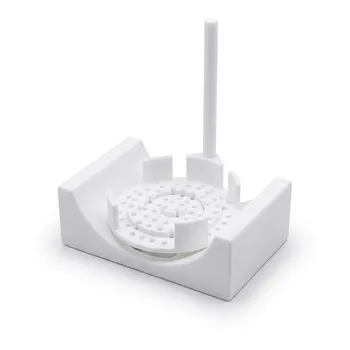
- High Purity PTFE Wet Cleaning Flower Basket Single Wafer Etching Rack Customizable 4 Inch Mask Plate Carrier
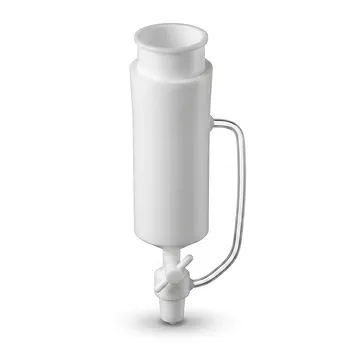
- Custom PTFE Constant Pressure Separatory Funnel Corrosion Resistant Low Background Labware for PFA Flasks
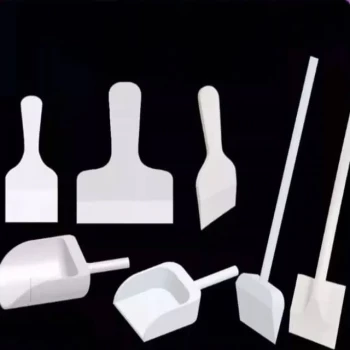
- Customizable PTFE Scrapers and Shovels for Demanding Applications
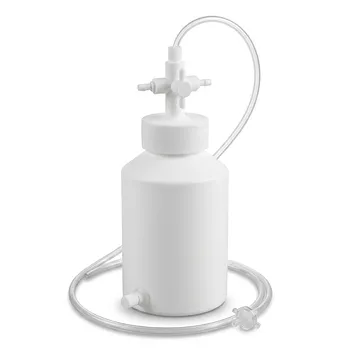
- High Purity PTFE Gravity Leaching System for Trace Analysis and Pure Water Filtration
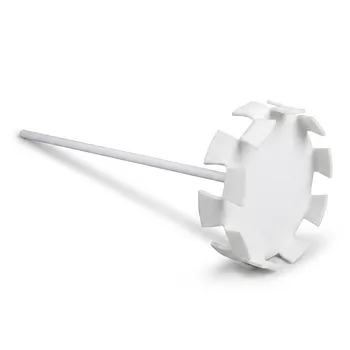
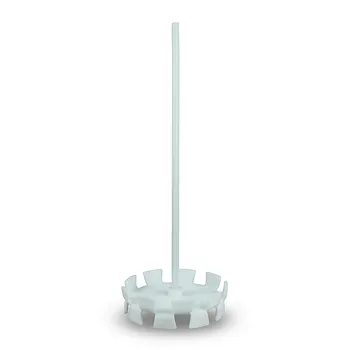
- PTFE Dispersion Disk Food Cosmetic Grade Non Stick Corrosion Resistant Large Stirring Paddle Customizable Impeller
People Also Ask
- How does the mechanical design of PTFE flower baskets accommodate different substrate sizes? Versatile Wafer Handling
- What is the continuous service temperature range for PTFE laboratory cleaning baskets? Durable Lab Solutions Explained
- What is the working principle of a PTFE flower basket? Optimize Fluid Flow and Purity for Chemical Immersion
- How does the structural design of a PTFE flower basket ensure uniform fluid access to substrates? Optimize Lab Yields
- What are the primary functions and design features of a PTFE flower basket? Optimize High-Purity Chemical Processing