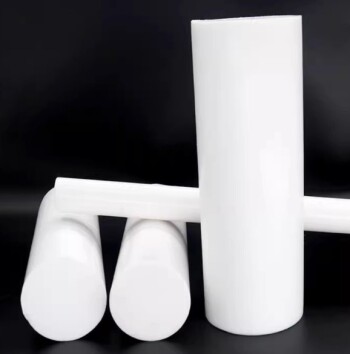
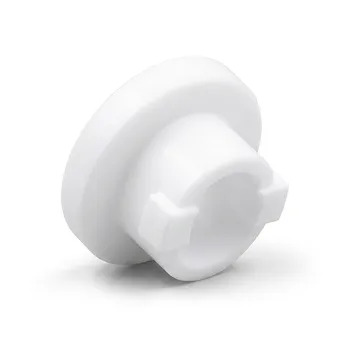
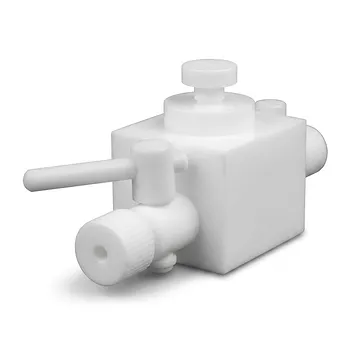
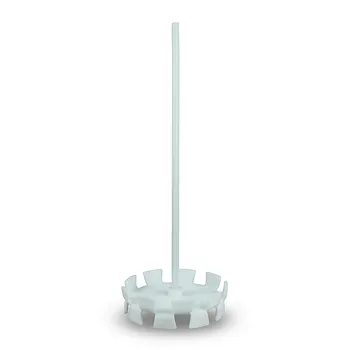
Particle size has a dual effect: finer granular PTFE resin generally produces denser, more uniform stock that can be machined to a smoother surface, while larger particles improve powder flow during handling, compression molding, and mold filling. For custom laboratory components, fine-cut resin is usually preferred when minimizing sample retention, micro-voids, and fluid permeability matters; free-flow grades are more advantageous when efficient, uniform processing is the priority.
The central trade-off is straightforward: smaller PTFE particles support tighter packing, better void elimination, and smoother finished surfaces, while larger particles provide superior flowability and easier automated processing. The correct choice depends on whether the component’s dominant requirement is surface purity and integrity or manufacturing efficiency.
Why Particle Size Matters in PTFE Components
Particle Size Influences Powder Packing
Granular PTFE is produced through suspension polymerization and then comminuted into controlled particle sizes. Fine-cut grades may have average particle sizes near 20–35 micrometers, whereas free-flow grades can contain larger agglomerated particles measuring approximately 220–650 micrometers.
Smaller particles pack more closely during cold pressing, reducing the spaces that must be eliminated during sintering. This supports a denser billet with fewer micro-voids and greater structural uniformity.
Particle Size Affects the Final Machined Surface
A CNC-machined PTFE component does not retain the original powder geometry in a simple one-to-one way. Sintering transforms the packed resin into a solid billet, so the final surface depends on resin packing, billet quality, machining parameters, tool condition, and PTFE grade.
Even so, fine-particle resin generally provides a more homogeneous and less porous stock material. That gives machining operations a more consistent substrate and can help produce smoother surfaces with fewer defects or localized areas of material pullout.
Smoothness Matters in Laboratory Applications
Surface smoothness is especially important for trace-analysis vessels, digestion tubes, fluid fittings, reaction cells, and precision seals. Roughness, voids, or irregularities can create locations where samples, reagents, or contaminants become retained.
A smoother, denser surface reduces the likelihood of sample entrapment and helps simplify cleaning. It can also reduce pathways for fluid permeation when the component is exposed to aggressive chemicals or repeated pressure cycles.
How Fine PTFE Resin Supports Surface Quality
Finer Particles Improve Void Elimination
During sintering, fine PTFE particles can form a tightly packed preform before the material is converted into a solid structure. More complete void elimination contributes to higher density and lower internal permeability.
This is valuable for components that must remain leak-tight or maintain chemical isolation, such as valve bodies, gaskets, fluid fittings, and custom reaction vessels.
Fine Grades Can Improve Mechanical Integrity
Fine-cut, low-flow grades are associated with higher tensile strength and elongation than many free-flow grades. The reference data describes fine grades reaching tensile strengths of approximately 30–44 MPa, while some high-performance fine-particle grades reach 40–44 MPa.
The specific result depends on the resin formulation and processing history, but the underlying principle is consistent: tighter packing and better consolidation can produce stronger, more uniform stock for machining.
Lower Permeability Supports Purity
Reduced micro-void content is important when a component must resist chemical permeation or prevent cross-contamination. A dense PTFE billet is less likely to contain interconnected pathways through which fluids or vapors can migrate.
This makes fine-particle stock a strong candidate for high-purity laboratory apparatus and precision fluid-handling components exposed to harsh chemical environments.
How Larger Particles Improve Flow Properties
Larger Particles Feed More Reliably
Large, agglomerated particles create a more free-flowing resin with higher apparent density. Typical free-flow grades may have bulk densities of approximately 500–910 g/L, compared with lower-density fine-cut materials.
This improves transfer through hoppers, feeders, and charging systems. The resin is less likely to bridge, compact unpredictably, or require extensive agitation during raw-material handling.
Free-Flow Grades Fill Molds More Easily
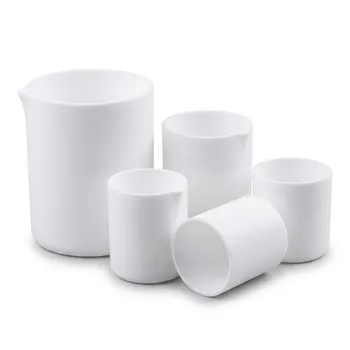
During compression molding, larger particles can provide better mold filling and more predictable charging behavior. This is useful for large preforms and standardized, high-volume products such as simple containers, bottles, beakers, and fittings.
The processing advantage is particularly important when production speed, repeatability, and automated material handling outweigh the need for the highest possible stock density.
Flowability Is Not the Same as Melt Flow
PTFE does not behave like a conventional thermoplastic melt during processing. In this context, flow properties primarily refer to powder flow, feeding, filling, and compression behavior, rather than ordinary melt-flow performance.
This distinction matters when selecting resin. A grade that flows easily as a powder may not deliver the same density, strength, or machining behavior as a fine low-flow grade.
Selecting Resin for Custom-Machined Laboratory Parts
Use Fine-Cut Resin for Surface-Critical Components
Fine-particle, low-flow resin is generally the better choice for:
- High-purity reactor liners
- Trace-analysis vessels
- Precision CNC-machined seals
- Leak-tight valve bodies
- Chemical fluid fittings
- Specialized electrochemical or reaction-cell components
These applications benefit from dense stock, low micro-void content, strong mechanical properties, and a consistent machining surface.
Use Free-Flow Resin for Processing Efficiency
Larger-particle, free-flow resin is generally appropriate when the component is produced through automated compression molding or when efficient mold filling is a dominant concern.
It is well suited to larger preforms, high-volume standardized labware, and parts where handling reliability is more important than achieving the maximum density or the most demanding surface finish.
Consider the Entire Material Specification
Particle size should not be evaluated alone. Important companion properties include D50, apparent density, tensile strength, elongation, molding shrinkage, compression ratio, and the resin’s intended fabrication method.
For precision machined components, a fine grade with lower shrinkage can also improve dimensional stability. The supplementary data identifies fine-cut and modified grades with typical shrinkage near 2.6–4.6%, compared with higher shrinkage ranges for some ram-extrusion materials.
Understanding the Trade-offs
Finer Particles Are Usually Harder to Handle
Fine-cut resin has lower apparent density and flour-like behavior. It may feed less readily, create more dust, and require more careful control during charging and compression molding.
These handling disadvantages are the practical cost of achieving tighter packing and higher-quality consolidated stock.
Larger Particles May Limit Ultimate Density
Free-flow grades simplify processing but can leave a less tightly packed preform than fine grades. If consolidation is incomplete, the resulting stock may contain more micro-voids or show lower mechanical performance.
That can matter in pressure-containing, sealing, or high-purity components where permeability and structural integrity are critical.
Surface Roughness Is Not Determined by Particle Size Alone
Particle size creates favorable or unfavorable conditions for surface quality, but it does not guarantee a specific roughness value. Tool geometry, cutting speed, feed rate, workholding, material orientation, thermal control, and post-machining treatment can all affect the result.
A fine-particle billet can still produce a poor surface if it is machined with unsuitable parameters. Conversely, a well-consolidated coarser grade may provide an acceptable finish for less demanding components.
Processing History Can Override the Resin Advantage
PTFE is sensitive to thermal and forming history. Comminution conditions, preforming pressure, sintering, cooling, and shrinkage control all influence the final billet.
In particular, milling temperature must be controlled because PTFE becomes significantly softer and more pliable above approximately 19°C. Poor particle-shape control or inconsistent processing can reduce the benefit expected from selecting a fine grade.
How to Apply This to Your Project
Particle size should be chosen by ranking the component’s functional requirements before optimizing material handling.
- If your primary focus is maximum surface smoothness and sample cleanliness: Specify a fine-cut, low-flow granular PTFE grade and verify billet density, porosity, and machining capability with the fabricator.
- If your primary focus is powder handling and automated production: Select a larger-particle, free-flow grade with suitable apparent density and mold-filling behavior.
- If your primary focus is leak-tight sealing or low permeability: Favor fine, well-consolidated stock with strong mechanical properties and low shrinkage.
- If your primary focus is dimensional precision after CNC machining: Evaluate particle size together with shrinkage, billet uniformity, material orientation, and the supplier’s machining process.
- If your primary focus is balanced production performance: Use the finest grade that can be processed reliably without creating unacceptable feeding, dust, or preform-quality problems.
The best PTFE resin is the one that matches the component’s required surface, density, dimensional stability, and manufacturing process as a complete system.
Summary Table:
| Particle Size | Surface Smoothness | Flow Properties | Best For |
|---|---|---|---|
| Fine (20-35 µm) | High | Low | High-purity, surface-critical components |
| Large (220-650 µm) | Lower | High | Automated processing, high-volume parts |
Optimize your custom PTFE lab components with the right resin choice. Contact KINTEK today to discuss your project and leverage our expertise in high-performance fluoropolymers.
Related Products
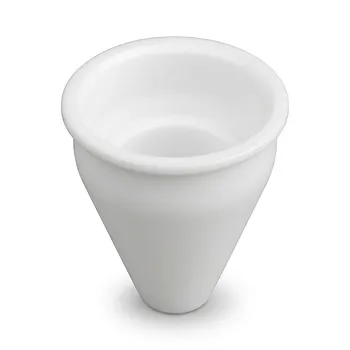
- Custom Machined PTFE Conical Sample Cell Corrosion Resistant Triangular Fluoropolymer Container for Trace Analysis
- Custom Graphite Filled PTFE Rods for Advanced Industrial Applications
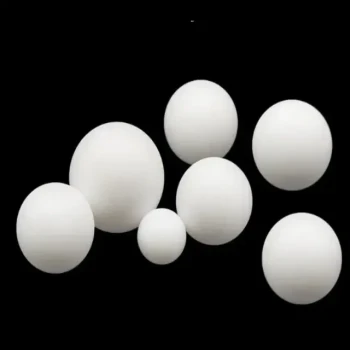
- Custom PTFE Teflon Balls for Advanced Industrial Applications
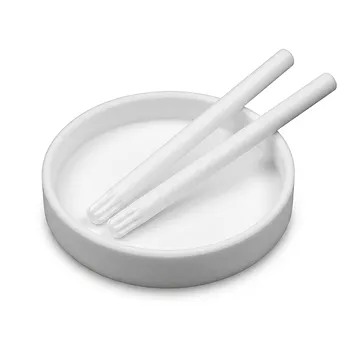
- Custom PTFE Petri Dishes Corrosion Resistant High Purity Low Background Labware
- Customizable PTFE Rods for Advanced Industrial Applications
People Also Ask
- What customization options are available for PTFE materials? Tailor Performance for Your Application
- How do Polytetrafluoroethylene (PTFE) containers perform regarding gas permeation? Expert Insights on Solvent Absorption
- What are some common applications of machined PTFE? Leverage its Unique Properties for Demanding Applications
- How are PTFE laboratory containers and apparatus typically manufactured? Inside the Precision Machining Process
- What inherent material characteristics of non-melt-processable PTFE make it suitable for manufacturing high-purity laboratory containers and custom-machined apparatus?