The helical structure of PTFE gives trace-analysis labware its chemical inertness, low surface energy, and resistance to contamination. In PTFE, fluorine atoms form a dense protective sheath around the carbon backbone, while the polymer chains adopt a rigid helical conformation with close intermolecular spacing. This arrangement limits chemical access to the carbon chain and produces a non-polar, non-wetting surface that minimizes analyte adsorption, leaching, and carryover during digestion, storage, and transfer.
PTFE’s helical, fluorine-shielded molecular structure helps preserve sample integrity by resisting chemical attack and reducing interactions between the labware surface and trace analytes. Its performance is especially valuable when concentrated acids, aggressive solvents, high temperatures, and very low detection limits make contamination or material degradation unacceptable.
Why Molecular Structure Matters in Trace Analysis
The Fluorine Sheath Protects the Polymer
The PTFE backbone consists of carbon atoms surrounded by tightly bound fluorine atoms. This continuous fluorine layer shields the carbon-carbon framework from direct exposure to acids, bases, oxidizing reagents, and organic solvents.
The strong carbon-fluorine bonds further restrict chemical rearrangement and bond cleavage. As a result, PTFE remains stable in environments that would attack many metals, glass components, and conventional organic polymers.
The Helix Creates a Rigid Molecular Arrangement
PTFE chains adopt a helical conformation, commonly described as a 13/6 helix in crystalline regions. The fluorine atoms are closely packed around the carbon spine, producing a relatively rigid structure rather than the more flexible, exposed hydrocarbon surfaces found in many other polymers.
This molecular geometry contributes to PTFE’s dimensional stability and helps the material retain its protective fluorine-rich surface during demanding laboratory procedures.
Close Packing Reduces Chemical Accessibility
The close spacing between polymer chains, approximately 5.5–5.8 Å as described in the reference material, contributes to a dense molecular structure. Reagents and solvent molecules have limited opportunity to penetrate or react with the polymer matrix under normal laboratory conditions.
This does not mean PTFE is universally impervious under every combination of temperature, pressure, and reagent. It means that, across a broad range of trace-analysis applications, the material presents an exceptionally difficult surface for chemical attack.
How the Structure Protects Sample Integrity
Low Surface Energy Limits Analyte Retention
The fluorine-rich surface is non-polar and has extremely low surface energy. It does not readily wet with water or bind many chemical species, so droplets and residues are less likely to remain attached to vessel walls.
This helps reduce analyte loss during digestion, dilution, storage, and transfer. PTFE can therefore support more complete recovery than materials with stronger surface interactions, although adsorption remains dependent on the analyte, matrix, concentration, and surface condition.
Chemical Inertness Prevents Leaching
Trace analysis can be compromised when the container itself releases ions, additives, corrosion products, or degradation products into the sample. PTFE’s chemically protected structure resists this type of material breakdown during contact with concentrated acids and many aggressive organic solvents.
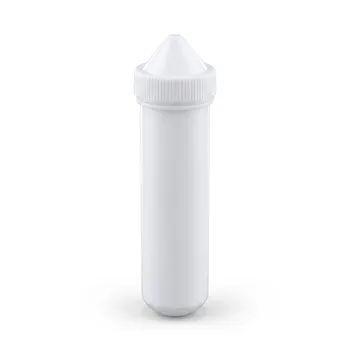
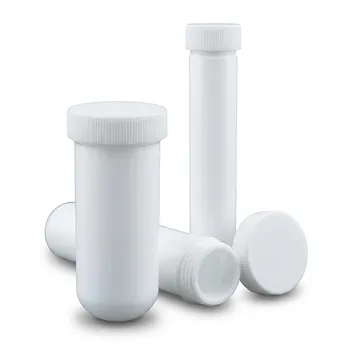
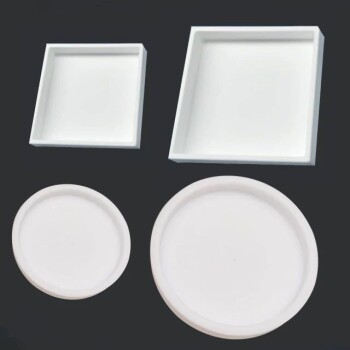
That resistance is important for PTFE digestion tubes, reagent bottles, beakers, and cleaning tanks, where the labware may remain in contact with reactive chemicals for extended periods.
Non-Wetting Behavior Reduces Carryover
PTFE’s low-energy surface discourages liquid spreading and droplet retention. In fluid-handling components, this can reduce residual films that might otherwise remain after flushing or transfer.
The practical benefit is lower potential carryover between samples. Proper cleaning and validation are still required, because low wetting does not guarantee the removal of every analyte or matrix residue.
The Material Remains Stable During Harsh Preparation
Trace samples are often exposed to elevated temperatures, acid digestion, microwave processing, or repeated solvent cleaning. The strong carbon-fluorine framework and rigid molecular arrangement provide high thermal and chemical stability during these operations.
This allows PTFE labware to support demanding preparation workflows without rapidly corroding, swelling, or chemically reacting with the sample environment.
Where This Performance Is Most Valuable
Acid Digestion and Sample Decomposition
Digestion vessels must contain concentrated reagents without contributing contaminants or losing structural integrity. PTFE’s fluorine shielding and chemical resistance make it suitable for many aggressive digestion conditions.
Its low-adsorption surface also helps reduce the risk that trace elements remain attached to the vessel instead of entering the final analytical solution.
High-Purity Reagent Storage
Reagent bottles and containers can introduce background contamination through leaching or surface interaction. PTFE minimizes these risks when high-purity acids, solvents, and standards require chemically resistant storage.
The material is especially useful when the reagent concentration is low enough that even minor container-derived contamination could affect the result.
Fluid Transfer and Analytical Instrumentation
PTFE tubing can convey reagents, mobile phases, and prepared samples with minimal chemical interaction. Its smooth, low-friction bore supports consistent flow and can reduce residual liquid retention.
For some applications, PFA may be preferred when transparency, heat welding, or complex molded fluidic assemblies are required. PTFE remains valuable where chemical resistance, temperature tolerance, and machinability are the primary requirements.
Understanding the Trade-offs
Low Adsorption Is Not Zero Adsorption
PTFE generally minimizes surface interactions, but no laboratory material eliminates adsorption for every compound. Highly hydrophobic, surface-active, particulate, or matrix-bound analytes may still behave differently depending on concentration and preparation conditions.
Method validation should therefore include recovery studies, blanks, rinsing procedures, and, where appropriate, comparison against alternative materials.
PTFE Is Difficult to Process
PTFE is non-melt-processible. Components are commonly produced through compression molding, sintering, or precision machining, which can limit geometry, increase manufacturing complexity, and make some custom assemblies more difficult to produce.
PFA is melt-processible and can be injection molded or heat-welded into complex, transparent fluidic components. The choice depends on whether the application prioritizes PTFE’s heavy-duty stability and machining flexibility or PFA’s weldability and optical clarity.
Mechanical and Thermal Limits Still Apply
Chemical inertness does not make PTFE immune to all physical failure modes. Excessive temperature, mechanical loading, pressure, deformation, or unsuitable processing conditions can still affect dimensional stability and service life.
Labware should be selected according to the complete operating envelope, including temperature, pressure, reagent combination, cleaning cycle, and mechanical demands.
Surface Condition Influences Results
Scratches, embedded particles, residues, and manufacturing contaminants can create practical sources of carryover even when the underlying polymer is highly inert. High-purity PTFE labware therefore requires appropriate cleaning, handling, and storage.
The purity of the material and the cleanliness of its manufacturing process are as important as the polymer’s molecular structure.
How to Apply This to Your Project
The molecular structure explains why PTFE is effective, but reliable trace analysis depends on matching the material to the complete method.
- If your primary focus is minimizing contamination: Choose appropriately manufactured, high-purity PTFE and control cleaning, blank levels, and handling procedures.
- If your primary focus is analyte recovery: Use PTFE to reduce surface adsorption, then verify recovery for the specific analyte and sample matrix.
- If your primary focus is aggressive chemical digestion: Select PTFE for its fluorine-shielded, chemically stable structure and confirm that the temperature and pressure remain within the vessel’s rated limits.
- If your primary focus is complex fluidic fabrication: Consider PFA where heat welding, injection molding, or optical inspection provides a meaningful operational advantage.
- If your primary focus is long-term reagent storage: Use PTFE containers when minimizing leaching, chemical attack, and surface interaction is more important than transparency or low manufacturing cost.
Understanding PTFE’s helical, fluorine-shielded structure allows you to select labware that protects both the sample and the credibility of the measurement.
Summary Table:
| Key Contribution | Mechanism | Benefit for Trace Analysis |
|---|---|---|
| Chemical Inertness | Fluorine sheath protects carbon backbone | Resists acid/base attack, prevents leaching |
| Low Surface Energy | Non-polar, non-wetting surface | Reduces analyte adsorption and carryover |
| Rigid Helical Structure | Close packing limits chemical access | Enhances dimensional stability, reduces reagent penetration |
| Thermal Stability | Strong C-F bonds | Withstands high temperatures in digestion |
Elevate your trace analysis accuracy with KINTEK's high-purity PTFE and PFA labware. From digestion vessels to fluid handling, our products are engineered to minimize contamination and maximize sample integrity. Ready to experience the difference? Contact us today for a consultation tailored to your specific application needs.
Related Products
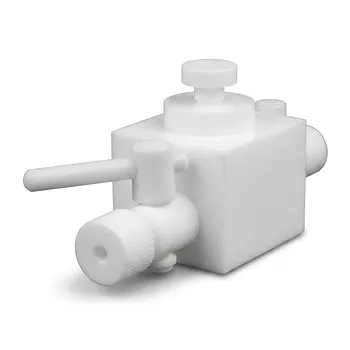
- Custom PTFE Filtration System Acid Resistant High Purity Semiconductor Grade Chemical Processing Filter
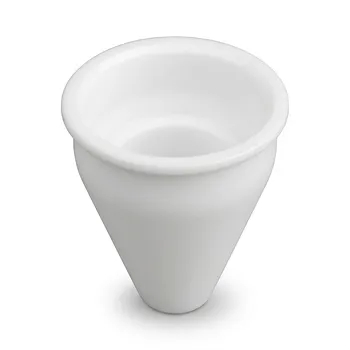
- Custom Machined PTFE Conical Sample Cell Corrosion Resistant Triangular Fluoropolymer Container for Trace Analysis
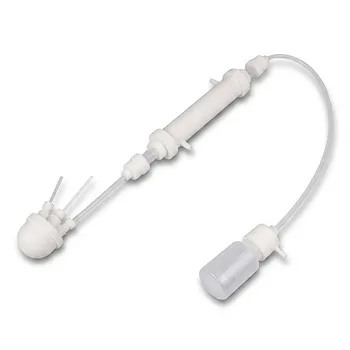
- Custom PTFE Condensation Reflux Apparatus with Serpentine Coil and Flask Collection System for Corrosive Chemical Processing
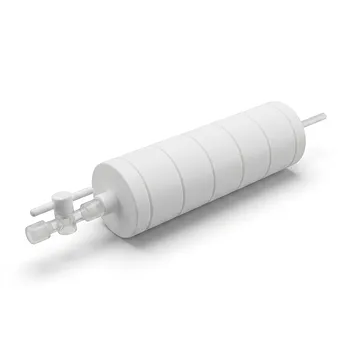
- PTFE Corrosion Resistant Filter with PFA Valve Connections and Integrated Sieve Plate
- Custom PTFE Corrosion Resistant Insulating Electrophoresis Reaction Cell with Septum and Valves for Low Background Trace Analysis
People Also Ask
- What makes PTFE filtration systems advantageous for industrial and scientific use? Unmatched Chemical & Thermal Stability
- What sizes and pore options are available for PTFE filters? Choose the Right Filter for Your Application
- What steps are involved in selecting the proper PTFE filter? A 4-Step Guide to Optimal Filtration
- How does the hydrophobicity of PTFE filters benefit their use? Ensure Uninterrupted Gas Flow and Solvent Filtration
- What temperature resistance do PTFE filters offer? Unmatched Thermal Stability from -200°C to +260°C