Adding small amounts of PAVE—typically less than 1% by weight—generally preserves PTFE’s exceptional thermal stability and chemical resistance while improving processability and structural performance. Unlike HFP-modified PTFE, PAVE-modified grades such as PPVE-modified PTFE do not materially reduce the polymer’s high-temperature capability. For laboratory equipment, the result is more consistently dense, lower-permeability components that remain suitable for aggressive chemicals and elevated-temperature service.
Core takeaway: PAVE comonomers disrupt PTFE crystallization just enough to improve processing, toughness, creep resistance, and void closure without sacrificing the chemical inertness or thermal stability expected from PTFE. This makes PAVE-modified PTFE particularly valuable for high-purity vessels, valves, tubing, and fluid-transfer components.
How PAVE Changes the PTFE Structure
It disrupts excessive crystallization
Pure PTFE is highly crystalline and has extremely high melt viscosity. A small PAVE comonomer, such as perfluoropropyl vinyl ether (PPVE), introduces a pendant perfluoroalkyl ether group that interrupts overly regular chain packing.
This reduces excessive recrystallization while retaining the fluorinated molecular structure responsible for PTFE’s chemical and thermal performance.
The comonomer level remains deliberately low
PAVE is used as a minor comonomer, commonly below 1% by weight and, in some formulations, below 0.5%. At this concentration, the modification changes processing and mechanical behavior without turning the material into a fundamentally different, less chemically resistant polymer.
The exact effect depends on the PAVE type, concentration, molecular weight, crystallinity, and processing history.
Impact on Thermal Stability
Thermal stability is substantially retained
PAVE-modified PTFE maintains thermal stability comparable to conventional PTFE, including a continuous-use capability commonly specified around 260°C, depending on the grade and application conditions.
The perfluoroalkyl ether structure is sufficiently stable that the small amount of comonomer does not create the same thermal penalty associated with some HFP-modified formulations.
It compares favorably with HFP modification
The key distinction is between PAVE and HFP as modifiers. HFP can reduce thermal stability when copolymerized with TFE, whereas PAVE is selected specifically because it improves processability while better preserving PTFE-like thermal behavior.
This does not mean every PAVE formulation has identical temperature ratings. Equipment designers must still use the manufacturer’s continuous-use, short-term, pressure, and chemical-temperature limits.
Thermal stability does not eliminate high-temperature degradation
All fluoropolymers can decompose when exposed to sufficiently high temperatures, especially during overheating, combustion-like conditions, or poorly controlled processing. At temperatures substantially above normal continuous service, degradation products and fluoride-containing emissions remain a concern.
Therefore, a PAVE-modified grade should not be treated as automatically safe at extreme temperatures such as 350°C merely because it retains PTFE-like stability. The complete material specification and thermal exposure profile must be evaluated.
Impact on Chemical Resistance
Core chemical inertness is preserved
Because PAVE is itself highly fluorinated and present only in a minor proportion, PAVE modification generally preserves PTFE’s outstanding resistance to acids, bases, solvents, oxidizers, and other aggressive laboratory chemicals.
For digestion vessels, reaction components, tubing, and fittings, this means the material remains highly resistant to chemical attack and is unlikely to contribute significant extractables under appropriate service conditions.
Improved sintering can reduce permeation pathways
The lower melt viscosity and altered crystallization behavior can support more complete void closure during sintering. This helps produce denser, less porous components with reduced pathways for chemical permeation.
The practical benefit is particularly important in high-purity trace analysis, where absorbed chemicals, cross-contamination, or slow permeation through a component can compromise results.
Chemical resistance still depends on the full system
PAVE modification does not make a component immune to every chemical or operating condition. Chemical exposure at high temperature, pressure, or stress can change permeation and mechanical performance even when the polymer itself is chemically inert.
Seals, fittings, fillers, machining residues, and adjacent materials may become the limiting source of contamination or chemical failure.
Why This Matters in Laboratory Equipment
More reliable high-purity vessels
Improved sintering and lower microvoid content can support dense, low-permeability components for digestion vessels, reaction vessels, and sample-handling equipment.
This helps minimize trace chemical absorption and reduces the likelihood that the component itself will contaminate a sample.
Better performance in fluid-transfer components
PAVE-modified PTFE can offer improved flexibility, toughness, and flex-fatigue performance compared with highly crystalline homopolymer grades.
Those properties are useful in tubing, valve diaphragms, flexible transfer lines, and repeatedly cycled fittings, where cracking, deformation, or fatigue can cause leaks.
Better dimensional stability under load
The disrupted crystal structure and improved morphology can reduce cold flow and improve creep resistance in some modified grades. This is valuable for parts held under compression or pressure, such as valve seats, gaskets, and leak-tight fittings.
The improvement is formulation-dependent and should be confirmed using the supplier’s creep and compression data rather than assumed from the presence of PAVE alone.
Understanding the Trade-offs
“Modified PTFE” does not mean every grade is melt-processable
Minor PAVE modification improves processability, but the result may still be a PTFE grade that is processed primarily by paste extrusion, molding, and sintering rather than conventional thermoplastic melt processing.
Higher comonomer levels or different formulations can produce PFA-like melt-processable materials, but these should not be automatically equated with low-level PAVE-modified PTFE.
Reduced crystallinity can affect mechanical properties
Disrupting crystallization generally improves toughness, flexibility, and processing behavior. However, it can also alter stiffness, dimensional response, tensile strength, and other properties relative to a specific PTFE homopolymer.
The correct choice depends on whether the component prioritizes rigidity, flex life, pressure retention, creep resistance, or processing complexity.
PAVE is not a substitute for validated thermal data
A material’s maximum service temperature depends on load, pressure, exposure duration, geometry, cycling, and the surrounding chemicals. A generic statement that PAVE “maintains thermal stability” should therefore be interpreted as a comparative materials statement, not as an application-specific temperature guarantee.
Processing quality remains critical
PAVE can help reduce voids and improve sintering, but inadequate molding, contamination, poor thermal control, or machining damage can still create defects. For high-purity laboratory equipment, resin grade, fabrication method, cleaning procedure, and quality control are as important as the comonomer chemistry.
How to Apply This to Your Project
Select the material based on the complete operating envelope rather than comonomer identity alone.
- If your primary focus is maximum chemical resistance: Choose a qualified PAVE-modified PTFE grade when you need PTFE-like inertness with improved fabrication or density, and verify compatibility at the actual temperature and chemical concentration.
- If your primary focus is high-temperature service: Use PAVE modification to preserve PTFE-like thermal stability, but confirm continuous-use and pressure-temperature limits for the specific grade instead of extrapolating from generic PTFE data.
- If your primary focus is low permeation and sample purity: Prioritize a well-sintered, low-void construction and validate extractables, permeation, and cleaning performance for the intended chemicals.
- If your primary focus is flexing or mechanical cycling: Consider PPVE- or PEVE-modified grades, whose larger pendant groups can provide improved toughness and flex-fatigue performance, subject to supplier data.
- If your primary focus is conventional melt fabrication: Evaluate a clearly specified PFA or other melt-processable fluoropolymer rather than assuming that every low-level PAVE-modified PTFE grade can be processed conventionally.
PAVE modification is best understood as a targeted structural adjustment: it improves manufacturability and service robustness while retaining the defining thermal and chemical advantages of PTFE.
Summary Table:
| Aspect | Impact of PAVE Modification |
|---|---|
| Thermal Stability | Retained, with continuous-use capability up to ~260°C; no significant decrease unlike HFP-modified PTFE. |
| Chemical Resistance | Largely preserved due to high fluorination and low comonomer content; improved sintering reduces permeation. |
| Processability | Disruption of crystallization lowers melt viscosity, allowing denser, more void-free components. |
| Mechanical Properties | Enhanced toughness, flexibility, and creep resistance; may alter stiffness and tensile strength. |
| Applications | Ideal for high-purity vessels, fluid transfer components, and parts under flexing or load. |
Elevate your lab's performance with KINTEK's PAVE-modified PTFE components. Our expertise in high-performance fluoropolymers ensures superior purity, durability, and precision. Contact us today to discuss your custom requirements and experience the KINTEK advantage!
Related Products
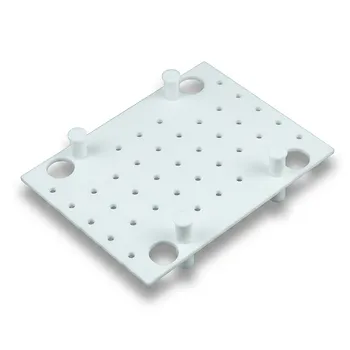
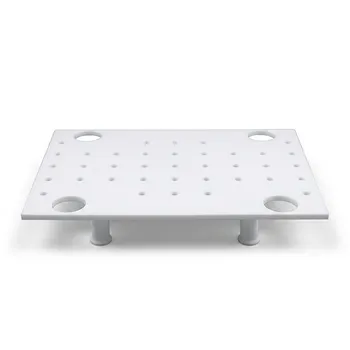
- Customizable PTFE Heat Insulation Plate High Temperature Corrosion Resistant Laboratory Support Layered Multi Tier Stand
- PTFE Anti Scald Heat Insulation Sleeve Hot Plate Support Feet Laboratory Benchtop Protection Customizable Thermal Barrier
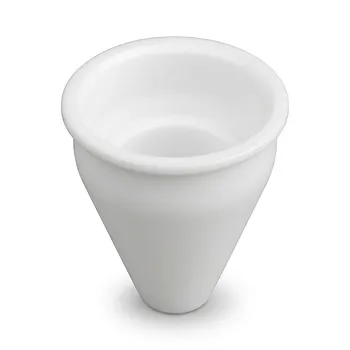
- Custom Machined PTFE Conical Sample Cell Corrosion Resistant Triangular Fluoropolymer Container for Trace Analysis
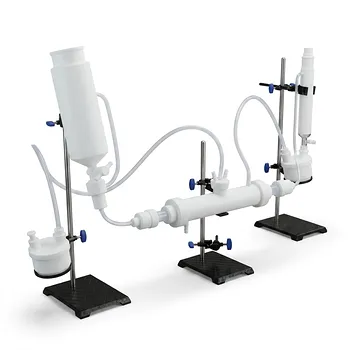
- Custom Polytetrafluoroethylene PTFE Constant Pressure Dropping Funnel Corrosion Resistant Fluid Control Assembly with Conversion Stopper Compatibility
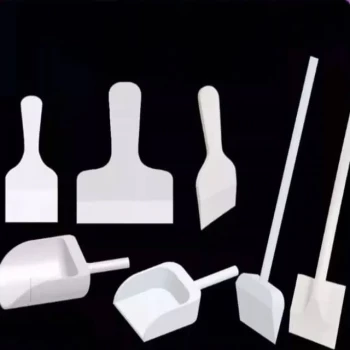
- Customizable PTFE Scrapers and Shovels for Demanding Applications
People Also Ask
- What customization options are available for PTFE materials? Tailor Performance for Your Application
- What are the limitations of pure PTFE in high temperature applications? Understanding the 200°C Ceiling
- What are the key physical properties of PTFE? Unlock Its Extreme Performance for Demanding Applications
- How is PTFE used in the automotive industry? Enhancing Vehicle Reliability and Performance
- What are the limitations of PTFE in its applications? Understanding Its Mechanical Weaknesses