Modified PTFE is a microstructurally improved form of PTFE, not a chemically less resistant one. It contains a small amount of comonomer—often a perfluoroalkyl vinyl ether such as PPVE, or hexafluoropropylene—incorporated into the tetrafluoroethylene chain. This disrupts the highly regular crystalline structure of standard homopolymer PTFE, enabling better particle fusion during processing and producing fewer microvoids. The result is substantially lower chemical permeation, improved stress-crack resistance, and better dimensional stability for demanding laboratory equipment.
The central benefit of modified PTFE is reduced internal porosity without sacrificing PTFE’s exceptional chemical inertness and thermal resistance. That makes it better suited than standard homopolymer PTFE for vessels, seals, tubing, and fluid-handling components where chemical migration, leakage, and long-term mechanical deformation are unacceptable.
What Changes in Modified PTFE?
Standard homopolymer PTFE has a highly regular structure
Standard PTFE consists almost entirely of tetrafluoroethylene units arranged in highly linear, crystalline chains. This structure gives PTFE its outstanding resistance to acids, solvents, and elevated temperatures.
However, it also produces extremely high melt viscosity and makes the material difficult to process conventionally. During sintering, PTFE particles may not fully coalesce, leaving microscopic voids within the finished component.
A comonomer interrupts perfect crystallinity
Modified PTFE incorporates a small fraction of a comonomer into the polymer chain. Common examples include perfluoropropyl vinyl ether and hexafluoropropylene.
These comonomer units disturb the regular crystalline lattice, reduce crystal and lamellar development, and suppress excessive recrystallization. The modification changes processing behavior while preserving the fluorinated structure responsible for PTFE’s chemical resistance.
The modification improves processing and consolidation
Modified PTFE generally has lower melt creep viscosity than standard homopolymer PTFE. During sintering and other processing operations, this allows the polymer particles to flow and fuse more effectively.
Better coalescence means fewer interconnected voids and lower surface porosity. This processing improvement is the main reason modified PTFE can provide a substantially better chemical barrier than standard PTFE.
Why Lower Porosity Matters in Laboratory Equipment
Chemical permeation does not require visible leakage
Aggressive liquids, vapors, and gases can migrate through microscopic pathways in a polymer even when the component appears intact. In laboratory systems, that migration can lead to reagent loss, vapor emissions, contamination, or inaccurate trace analysis.
Modified PTFE reduces these pathways by producing a more consolidated material. Its lower permeability is therefore valuable where the equipment must isolate ultrapure chemicals or prevent aggressive reagents from reaching the surrounding environment.
It protects trace analysis and high-purity processes
Trace-analysis containers and fluid-transfer components may handle chemicals at concentrations where minor contamination is significant. A lower-permeability material helps reduce absorption, leaching, and cross-contamination.
This is particularly important for digestion vessels, sample containers, tubing connectors, pump components, and fittings used with aggressive acids or organic solvents.
It improves barrier performance against liquids and vapors
The reduced void content of modified PTFE improves resistance to transport through the material. This applies not only to liquid chemicals but also to solvent vapors and gases.
The practical effect is a more reliable barrier against chemical migration and external contamination, especially when the equipment has thin walls, extended exposure times, or repeated thermal cycling.
Mechanical Benefits Beyond Permeation
Modified PTFE resists creep more effectively
PTFE is chemically exceptional but can undergo cold flow, or gradual deformation under sustained load. This can reduce sealing force, change dimensions, and eventually cause leakage.
Modified PTFE offers improved resistance to creep and deformation under load. That makes it better suited for gaskets, seal rings, diaphragms, vessel liners, and other components that must remain dimensionally stable over time.
It provides better stress-crack resistance
Repeated flexing, pressure changes, thermal cycling, and installation stresses can initiate cracks in standard PTFE components, particularly when microscopic voids or defects are present.
The improved consolidation and modified crystalline structure of modified PTFE increase resistance to stress cracking. Components can therefore tolerate repeated mechanical cycling with a lower risk of premature failure.
It supports longer flex life
Improved elongation and fatigue behavior make modified PTFE useful for dynamically stressed components. Examples include valve diaphragms, flexible tubing connections, convoluted parts, and reusable reaction-vessel liners.
The exact performance depends on the grade and processing method, but the general advantage is greater durability under repeated flexing without giving up chemical inertness.
It can improve fabrication options
Modified PTFE generally responds better to secondary fabrication processes such as welding, flanging, convoluting, and molding. Improved fusion between material surfaces can be important when producing custom manifolds, complex linings, or joined fluoropolymer assemblies.
This is a practical advantage for specialized laboratory equipment that cannot be made as a single simple molded part.
Understanding the Trade-offs
Modified PTFE is not a universal replacement
Standard homopolymer PTFE remains an excellent choice when maximum chemical resistance, low friction, and conventional PTFE performance are sufficient. The benefits of modification matter most when permeability, creep, stress cracking, or fabrication limitations are important design constraints.
Chemical resistance is retained, but grade selection still matters
Modified PTFE retains the broad chemical inertness and thermal stability associated with PTFE. Nevertheless, operating temperature, pressure, exposure duration, chemical concentration, wall thickness, and manufacturing quality all affect real-world performance.
A modified grade should not be selected solely from a generic PTFE compatibility chart. The supplier’s data for the specific chemical and application conditions remains essential.
Processing quality still controls final performance
The comonomer improves the material’s ability to consolidate, but it does not eliminate the need for appropriate sintering, machining, welding, and inspection. Poorly processed modified PTFE can still contain defects or produce unreliable seals.
For critical applications, specify the resin or finished component by its permeation, void-content, creep, and fabrication performance, not merely by the label “modified PTFE.”
Lower crystallinity involves a performance balance
Disrupting crystallinity improves processing and mechanical behavior, but material properties are always a balance. The optimal grade depends on whether the priority is low permeability, flex fatigue, dimensional stability, weldability, or a particular thermal and chemical exposure.
The appropriate comparison is therefore between qualified grades under the actual service conditions, rather than between “modified” and “standard” PTFE in the abstract.
How to Apply This to Laboratory Equipment
Modified PTFE is most valuable when the equipment must combine PTFE’s chemical resistance with improved barrier and mechanical performance.
- If your primary focus is low chemical permeability: Choose a well-consolidated modified PTFE grade and verify permeation data for the specific liquid, vapor, or gas, wall thickness, temperature, and exposure time.
- If your primary focus is dimensional stability: Use modified PTFE for loaded seals, gaskets, liners, and fittings where reduced creep can help maintain compression and prevent leakage.
- If your primary focus is repeated flexing or pressure cycling: Favor modified PTFE grades with documented stress-crack resistance and flex-fatigue performance.
- If your primary focus is custom fabrication: Consider modified PTFE when welding, joining, flanging, or complex forming is required, while confirming the manufacturer’s fabrication guidance.
- If your primary focus is basic chemical containment: Standard homopolymer PTFE may be adequate when permeability, creep, and repeated mechanical stress are not significant concerns.
For high-performance laboratory equipment, modified PTFE provides the strongest advantage when microscopic porosity and long-term deformation could compromise purity, containment, or measurement reliability.
Summary Table:
| Feature | Standard PTFE | Modified PTFE |
|---|---|---|
| Crystalline structure | Highly regular | Disrupted by comonomer |
| Porosity | Higher due to poor coalescence | Lower due to improved fusion |
| Chemical permeability | Higher | Substantially lower |
| Creep resistance | Lower | Improved |
| Stress-crack resistance | Lower | Higher |
| Flex life | Shorter | Longer |
| Fabrication ease | More difficult | Easier (welding, molding, etc.) |
Ready to enhance your lab's performance with modified PTFE components? At KINTEK, we specialize in high-performance fluoropolymer labware and custom parts. From low-permeability vessels to durable seals and complex CNC-machined components, our solutions are designed to meet your most demanding applications. Contact us today to discuss your requirements and get a tailored quote. Contact us now!
Related Products
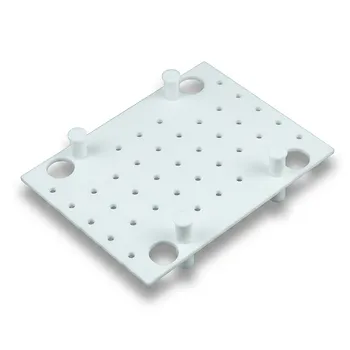
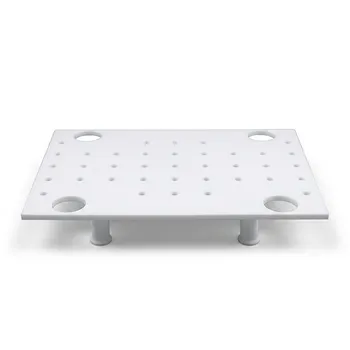
- Customizable PTFE Heat Insulation Plate High Temperature Corrosion Resistant Laboratory Support Layered Multi Tier Stand
- PTFE Anti Scald Heat Insulation Sleeve Hot Plate Support Feet Laboratory Benchtop Protection Customizable Thermal Barrier
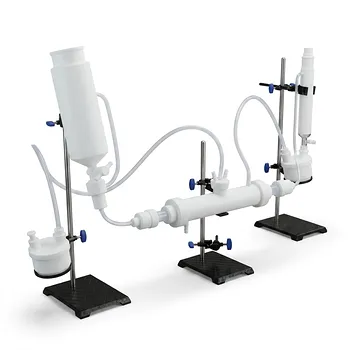
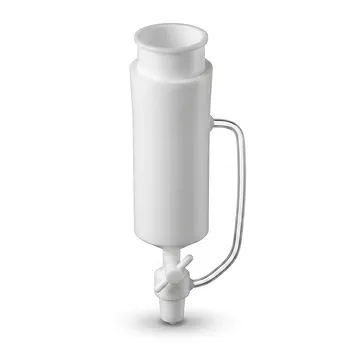
- Custom Polytetrafluoroethylene PTFE Constant Pressure Dropping Funnel Corrosion Resistant Fluid Control Assembly with Conversion Stopper Compatibility
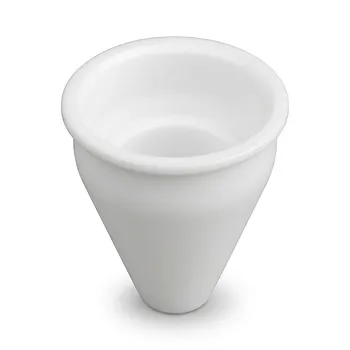
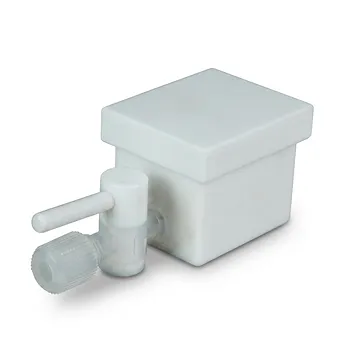
- Custom Machined PTFE Conical Sample Cell Corrosion Resistant Triangular Fluoropolymer Container for Trace Analysis
- Custom PTFE Constant Pressure Separatory Funnel Corrosion Resistant Low Background Labware for PFA Flasks
People Also Ask
- What customization options are available for PTFE materials? Tailor Performance for Your Application
- What are the limitations of pure PTFE in high temperature applications? Understanding the 200°C Ceiling
- What is PTFE and what is its chemical composition? Unlocking the Power of the C-F Bond
- What are the key features of PTFE? Unmatched Performance for Extreme Industrial Environments
- What are the two main methods of producing PTFE? A Guide to Granular and Dispersion PTFE