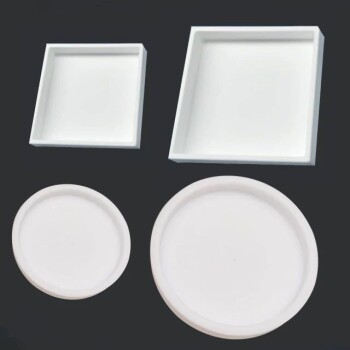
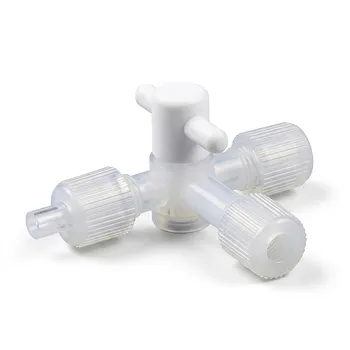
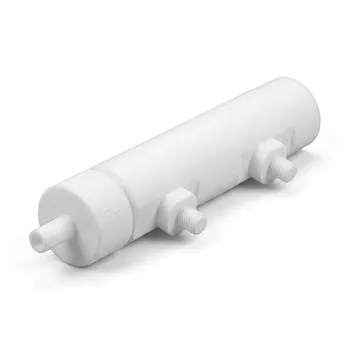
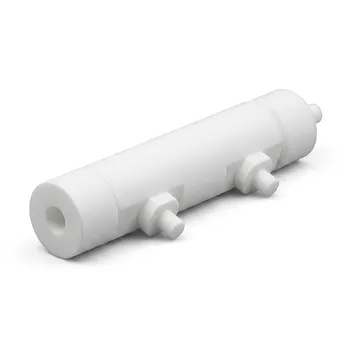
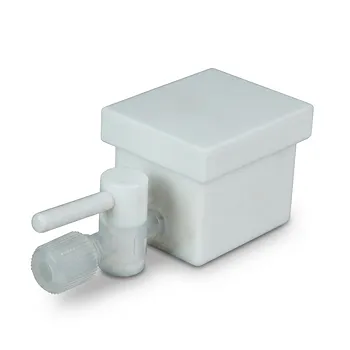
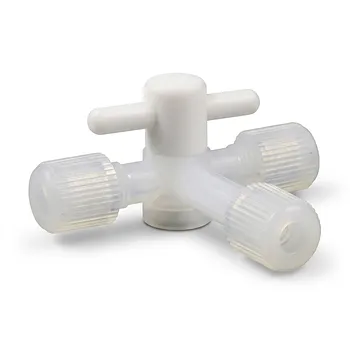
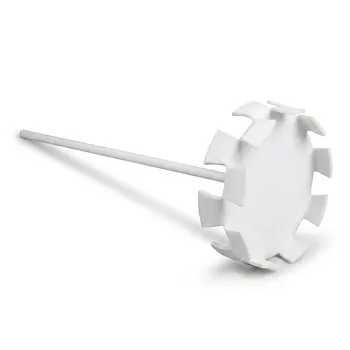
Custom CNC fabrication transforms high-performance fluoropolymers into bespoke laboratory hardware designed to survive the extreme chemical environments of MXene synthesis. By machining PTFE and PFA to exact geometric specifications, researchers can create specialized electrochemical cells, hydrothermal liners, and fluid fittings that standard labware cannot provide. This precision ensures that experimental setups can handle the aggressive etchants and high-purity requirements essential for advanced 2D material research.
Core Takeaway: Custom CNC machining bridges the gap between theoretical MXene design and physical testing by providing chemically inert, high-precision components that prevent contamination and withstand the corrosive reagents required for synthesis.
Overcoming Material Challenges in MXene Synthesis
Resistance to Aggressive Etchants
The production of MXenes typically involves the selective etching of "A" layer elements from MAX phases using highly corrosive reagents like hydrofluoric acid (HF) or strong fluoride salts. PTFE and PFA are among the few materials capable of maintaining structural integrity when exposed to these chemicals over long periods. CNC fabrication allows for the creation of custom reaction vessels that can handle these harsh conditions without degrading.
Maintaining Ultra-High Purity
MXene research in the semiconductor and new energy sectors demands extreme purity to ensure accurate electronic and electrochemical characterization. PFA components provide a high-purity fluid path that is resistant to leaching and surface adsorption. This ensures that trace contaminants do not interfere with the nanoparticle synthesis or the resulting material properties.
Thermal and Pressure Stability
Many MXene synthesis routes require hydrothermal processing, which involves elevated temperatures and pressures. CNC-machined PTFE liners and seals are engineered to fit perfectly within stainless steel autoclaves, providing a leak-proof and chemically inert environment. This precision fit is critical for preventing the "poisoning" of reaction sites or the failure of the pressure vessel.
Enabling Specialized Experimental Architectures
Bespoke Electrochemical Cell Designs
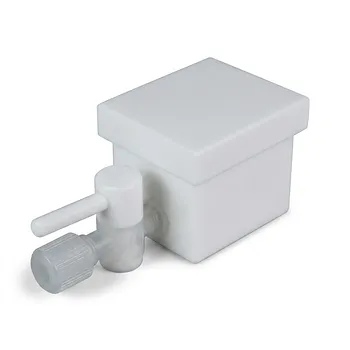
Testing the energy storage capabilities of MXenes requires specialized electrochemical cells that can accommodate unique electrode dimensions. Custom CNC-machined fixtures offer superior electrical insulation and resistance to electrolyte corrosion. These targeted designs effectively eliminate stray interference, which is vital for obtaining high-quality data in sensitive battery or supercapacitor testing.
Precision Fluidics and Microreactors
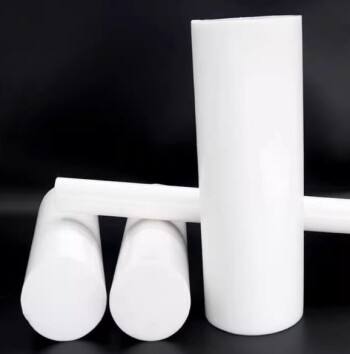
Advanced research often involves the use of microfluidic reactors to control the morphology of MXene flakes. CNC machining enables the fabrication of complex, non-standard manifolds and reaction chambers directly from fluoropolymer blocks. These components allow for the rapid translation of theoretical microfluidic designs into physical hardware that meets exact technical requirements.
Integration with Structured Catalysts
For applications where MXenes serve as catalysts, the reactor must accommodate specific three-dimensional geometries. CNC fabrication allows for the creation of housing components that fit perfectly around structured catalysts, ensuring uniform reactant flow. This maximizes mass transfer efficiency and prevents the accumulation of byproducts that could deactivate the MXene surface.
Understanding the Trade-offs
Material Softness and Creep
While PTFE and PFA offer unmatched chemical resistance, they are relatively soft materials compared to metals or ceramics. Under high pressure or temperature, these materials can experience "creep" or cold flow, where the part slightly deforms over time. Precision CNC designs must account for these mechanical limitations by including appropriate wall thicknesses and support structures.
Cost and Lead Times
Custom CNC fabrication is more expensive than purchasing off-the-shelf laboratory plasticware. The process requires specialized tooling and expert programming to handle the unique machining characteristics of fluoropolymers. Researchers must balance the need for a bespoke setup against the higher initial investment and longer lead times associated with custom manufacturing.
How to Apply This to Your Research
Making the Right Choice for Your Goal
To successfully integrate custom CNC components into your MXene research, consider your primary experimental requirements:
- If your primary focus is synthesis purity: Specify PFA for all fluid-contact components to minimize the risk of trace metal contamination.
- If your primary focus is cost-effective durability: Use PTFE for seals, gaskets, and liners where chemical inertness is required but ultra-high purity is less critical.
- If your primary focus is sensitive data collection: Commission bespoke electrochemical fixtures to ensure a perfect fit for your electrodes and to eliminate electrical noise.
- If your primary focus is complex flow control: Utilize CNC-machined PFA manifolds to create a seamless, leak-proof path for aggressive chemical reagents.
By leveraging custom CNC fabrication, researchers can build the specialized, high-performance environments necessary to push the boundaries of MXene application development.
Summary Table:
| Aspect | PFA Components | PTFE Components | Custom CNC Fabrication |
|---|---|---|---|
| Core Advantage | Ultra-high purity; minimal leaching. | Extreme chemical & thermal stability. | Bespoke geometric precision. |
| Key Use Case | Trace analysis & high-purity synthesis. | Hydrothermal liners & HF-resistant vessels. | Electrochemical cells & microreactors. |
| Research Impact | Prevents nanoparticle contamination. | Survives aggressive etching environments. | Enables specialized test architectures. |
Empower Your MXene Innovations with KINTEK
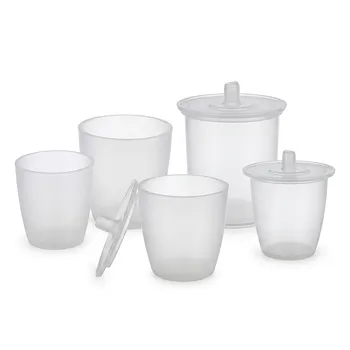
Don’t let standard labware limit your research. KINTEK specializes in high-performance fluoropolymers, offering everything from everyday basics—beakers, measuring cylinders, crucibles, and reagent bottles—to advanced derivative apparatus like bespoke electrochemical cells, battery testing fixtures, and microwave digestion vessels.
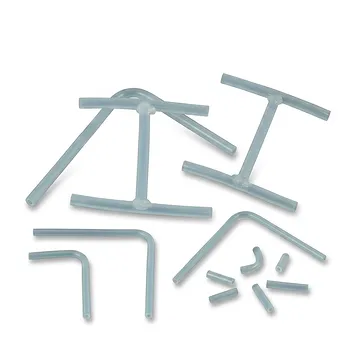
Whether you require high-purity trace analysis instruments, fluid transfer components (tubing, fittings, valves), or complex non-standard machined parts, our end-to-end custom CNC fabrication delivers exactly what you need. We maintain an absolute focus on PTFE and PFA to ensure your laboratory setups survive the most corrosive reagents and aggressive etchants.
Get the high-precision hardware your innovation deserves. Contact us today to discuss your custom project!
References
- Umme Kalsoom, Malik Maaza. MXene-based hybrid composites for lithium-ion batteries: advances in synthesis strategies and electrochemical performance. DOI: 10.1007/s11581-025-06628-z
This article is also based on technical information from Kintek Knowledge Base .
Related Products
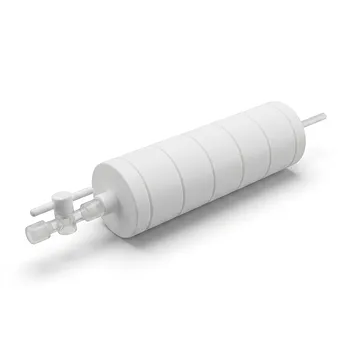
- Custom PTFE Constant Pressure Separatory Funnel Corrosion Resistant Low Background Labware for PFA Flasks
- High Performance PFA Coiled Spring Tubing and Custom PTFE Fabrication Services with Welded Fittings and Precision Bent Components
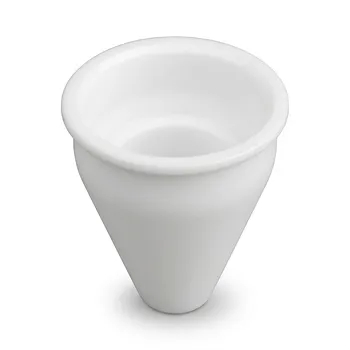
- High Purity PFA Crucible and Corrosion Resistant PTFE Beaker for Trace Analysis and Custom Laboratory Applications
- Custom PTFE Laboratory Apparatus Corrosion Resistant Low Background Reaction Cells Precision CNC Fabrication
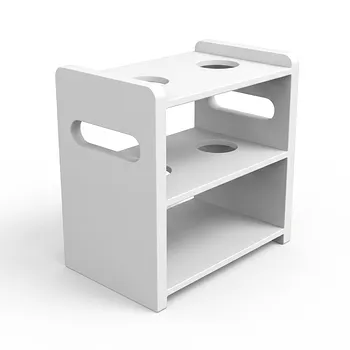
- Custom PTFE Acid Resistant Support Rack Multi Hole PFA Hydrogen Absorption System Bracket
People Also Ask
- What customization options are available for PTFE materials? Tailor Performance for Your Application
- Why is specialized eluent selection critical for SEC of fluoropolymers, and how do PTFE/PFA labware components support this?
- What fundamental molecular characteristics give fluoropolymer labware, such as PTFE and PFA containers, their exceptional chemical inertness and high temperature resistance?
- How do the surface energy and nonpolarity of PTFE and PFA labware benefit high-purity trace analysis and sample preparation? Reduce sample loss and contamination.
- What industries benefit most from custom PTFE parts? Solve Extreme Environment Challenges