Specialized eluent selection is essential because fluoropolymers may not dissolve in conventional SEC solvents such as THF or chloroform. Without complete dissolution, polymer chains can aggregate, distort the measured molecular weight distribution (MWD), or plug the SEC column. Fluorinated eluents, including HFIP-based or HCFC/HFIP mixtures, maintain solubility and enable more reliable molecular weight characterization, while PTFE and PFA labware protects the sample and eluent from contamination.
Accurate SEC characterization depends on two compatible systems: an eluent that keeps the fluoropolymer molecularly dispersed and laboratory components that resist that eluent without introducing extractables or degrading.
Why Conventional SEC Solvents Can Fail
Limited Solubility Distorts the Measurement
Many high-performance fluoropolymers have substantial fluorine content and unusual chain structures. Their intermolecular interactions can make them effectively insoluble in standard organic SEC mobile phases.
When the polymer is not fully dissolved, the instrument may measure aggregates rather than individual polymer chains. The resulting molecular weight and MWD data can therefore misrepresent the material.
Aggregation Can Damage the Separation
Undissolved or partially dissolved polymer can form aggregates that behave differently from individual macromolecules during SEC. These species may elute abnormally and produce broad, shifted, or otherwise misleading chromatograms.
Aggregates can also accumulate within the SEC column, increasing backpressure and reducing column performance.
Molecular Structure Increases the Need for Careful Method Selection
Fluoropolymer behavior depends on molecular weight, chain architecture, monomer sequence, stereochemistry, and end-group structure. These details influence solubility as well as the physical and chemical properties being investigated.
A solvent system must therefore be selected for the specific fluoropolymer, rather than assumed to work because it is common in conventional polymer SEC.
How Specialized Eluents Improve SEC Accuracy
Fluorinated Solvents Maintain Polymer Solubility
Fluorinated solvents and specialized mixed eluents are designed to interact more effectively with fluorinated polymer chains. HFIP is one important example, while HCFC/HFIP combinations may also be used when they provide the required solubility and chromatographic performance.
The objective is complete and stable dissolution from sample preparation through the entire chromatographic run.
Stable Dissolution Preserves Molecular Weight Information
SEC separates dissolved polymer chains primarily according to their hydrodynamic size. If chains remain individually dispersed, the detector can produce data that more closely reflects the actual molecular weight distribution.
This supports more dependable estimates of average molecular weights and comparisons between batches, formulations, or synthetic conditions.
Eluent Compatibility Must Extend Beyond the Column
Choosing an eluent is not only a matter of column chemistry and detector response. The solvent contacts vials, filters, tubing, fittings, valves, and other fluid-path components before and during analysis.
A chemically incompatible component can compromise an otherwise appropriate SEC method.
How Fluoropolymer Labware Supports the Process
PFA Vessels Protect Sample Preparation
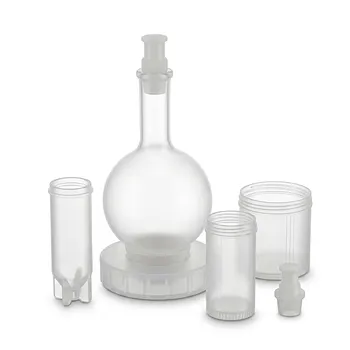
PFA sample vials and preparation vessels provide strong resistance to aggressive fluorinated solvents, including HFIP-based systems. They help prevent solvent-induced swelling, degradation, or leaching that could alter the polymer sample.
Their low-leachability properties also help preserve chromatographic baseline stability and reduce contamination risk.
PTFE Filters Support Clean Sample Introduction
PTFE membrane filters are suitable for removing particulates from aggressive fluorinated solvent mixtures when the filter specification is appropriate for the solvent and pore size required.
This reduces the chance that undissolved particles enter the SEC column and cause blockage or elevated backpressure.
PTFE and PFA Tubing and Fittings Protect the Fluid Path
High-purity PTFE and PFA tubing, fittings, valves, and related transfer components resist chemical attack from fluorinated eluents. They reduce the likelihood that the fluid path will swell, degrade, or release interfering substances.
Maintaining a chemically stable path is particularly important when the analysis involves low concentrations, sensitive detectors, or long solvent-contact times.
Component Purity Matters as Much as Chemical Resistance
Chemical compatibility alone does not guarantee analytical suitability. Labware must also have controlled cleanliness, low extractables, and suitable manufacturing quality.
High-purity fluoropolymer components help maintain sample integrity by minimizing contamination from plasticizers, processing residues, and other leachable materials.
Understanding the Trade-offs
Specialized Eluents Increase Method Complexity
Fluorinated solvents may require dedicated handling procedures, compatible seals and fluid-path materials, and careful waste management. They can also impose additional requirements on solvent delivery and laboratory ventilation.
These operational demands are justified only when they are matched to the polymer’s solubility and analytical needs.
Fluorinated Solvents Can Be Aggressive
HFIP and related mixtures can attack standard plastics, elastomers, and other materials that are acceptable for THF or chloroform. Swelling or leaching may occur even when a component appears visually intact.
Material compatibility should therefore be assessed for the complete solvent, temperature, pressure, and exposure time used in the method.
Fluoropolymer Labware Is Not a Substitute for Method Validation
PTFE and PFA reduce contamination and compatibility risks, but they do not resolve every source of SEC error. Column selection, dissolution time, concentration, filtration, temperature, calibration approach, and detector configuration still require validation.
Claims of complete inertness or zero extractables should be treated as performance objectives rather than assumptions; actual suitability depends on material grade, fabrication, cleanliness, and operating conditions.
Heating Requires Additional Caution
Some fluoropolymers are difficult to dissolve and may require controlled temperature or extended preparation. Excessive heating can damage the sample or create unsafe decomposition products, particularly if fluoropolymers are heated above their melting ranges.
Temperature should be controlled according to the polymer and solvent system, with appropriate equipment and safety procedures.
How to Apply This to Your SEC Method
The most reliable workflow treats solvent selection and labware selection as one compatibility problem.
- If your primary focus is accurate molecular weight and MWD data: Use a validated fluorinated eluent, such as an HFIP-based or HCFC/HFIP system, that keeps the polymer fully dissolved throughout separation.
- If your primary focus is preventing column plugging: Confirm complete dissolution and use suitable PTFE filtration before injection.
- If your primary focus is minimizing contamination: Use high-purity PFA sample vessels and PTFE/PFA tubing, fittings, and valves with documented cleanliness and extractables performance.
- If your primary focus is method robustness: Validate every solvent-contacting component under the actual solvent, temperature, pressure, and exposure conditions.
- If your primary focus is comparing fluoropolymer materials: Keep dissolution conditions, eluent composition, sample concentration, filtration, and SEC calibration consistent across measurements.
Reliable fluoropolymer SEC characterization comes from preserving the polymer’s true dissolved state while keeping every solvent-contacting component chemically clean and compatible.
Summary Table:
| Challenge | Solution | Benefit |
|---|---|---|
| Poor solubility in common solvents | Use fluorinated eluents (HFIP or HCFC/HFIP) | Accurate molecular weight data |
| Aggregation and column plugging | Complete dissolution and PTFE filtration | Reduced backpressure, longer column life |
| Contamination from labware | High-purity PFA/PTFE components | Clean baselines, low extractables |
| Compatibility with aggressive eluents | PTFE/PFA tubing, fittings, valves | Chemical resistance, no degradation |
Achieve reliable SEC results for your fluoropolymers. Explore KINTEK's high-purity PTFE/PFA labware, including sample vials, filters, tubing, and custom components, designed for aggressive solvents like HFIP. Contact us now to enhance your analytical accuracy and workflow efficiency — contact us today!
Related Products
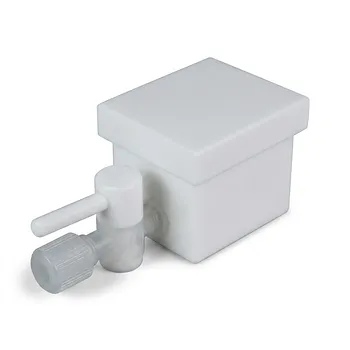
- Custom PTFE Constant Pressure Separatory Funnel Corrosion Resistant Low Background Labware for PFA Flasks
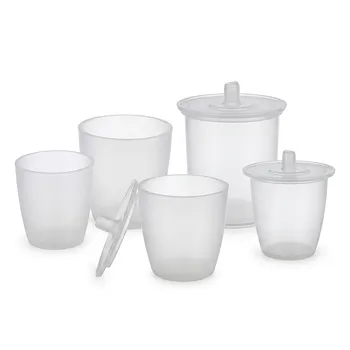
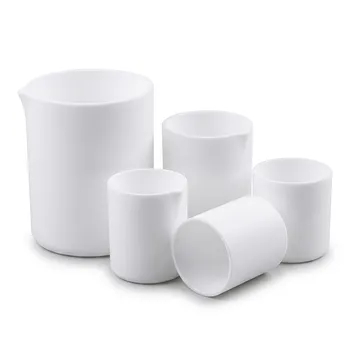
- High Purity PFA Crucible and Corrosion Resistant PTFE Beaker for Trace Analysis and Custom Laboratory Applications
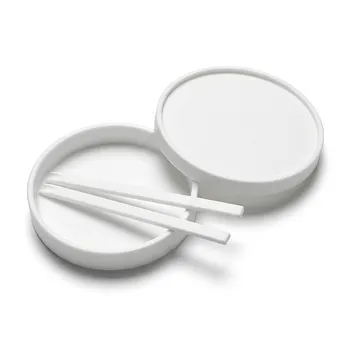
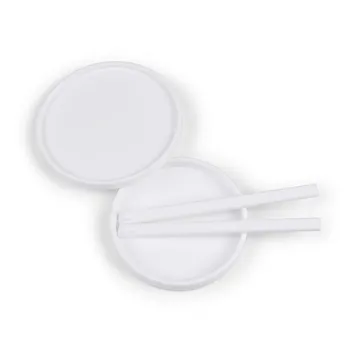
- Custom Polytetrafluoroethylene PTFE Petri Dishes 60mm Corrosion Resistant Low Background Labware
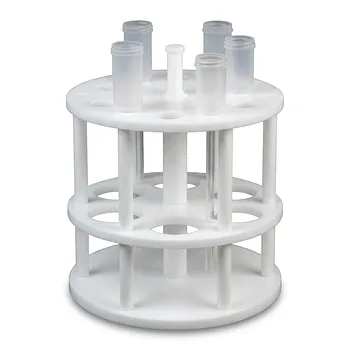
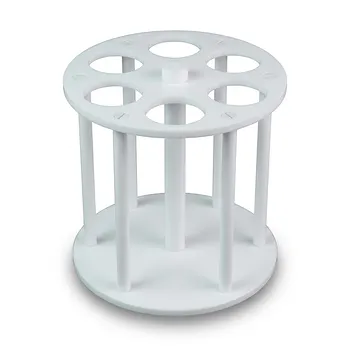
- Custom PFA Microcolumn Racks and PTFE Machined Low Background Corrosion Resistant Laboratory Fixtures
- Custom PTFE Petri Dishes Corrosion Resistant High Purity Low Background Labware
People Also Ask
- What customization options are available for PTFE materials? Tailor Performance for Your Application
- Why are PTFE and PFA preferred for ultra-trace analysis and high-purity fluid handling? Key advantages explained
- What fundamental molecular characteristics give fluoropolymer labware, such as PTFE and PFA containers, their exceptional chemical inertness and high temperature resistance?
- How do the melting points of PTFE and PFA compare to lower-tier fluoropolymers such as FEP and PVDF, and how does this affect material selection for high-temperature laboratory labware and digestion vessels? Choose PTFE or PFA for maximum thermal margin in demanding applications.
- Why are PTFE and PFA preferred over other fluoropolymers? Superior Heat & Chemical Resistance