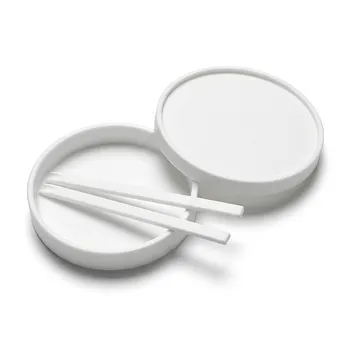
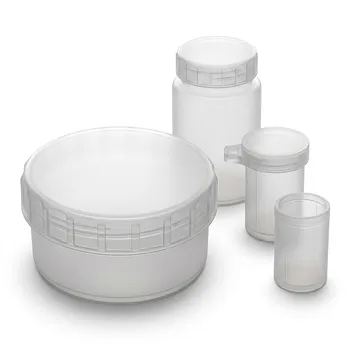
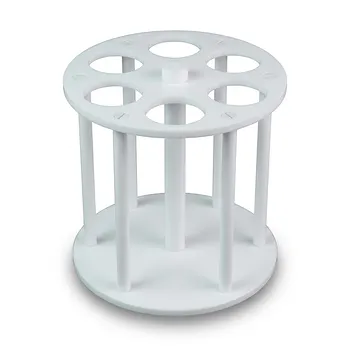
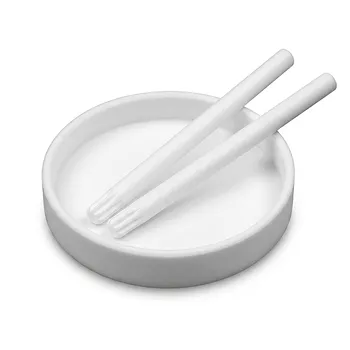
The key molecular feature is a fluorine-protected carbon backbone. In PTFE and PFA, fluorine atoms densely surround the polymer chain and form exceptionally strong, short carbon–fluorine (C–F) covalent bonds. This shields the carbon backbone from chemical attack, while the chemically stable, nonpolar structure gives these materials broad inertness, low surface energy, and resistance to thermal degradation.
Core takeaway: PTFE and PFA are exceptionally inert because their carbon backbones are enveloped by tightly bonded fluorine atoms, leaving few chemically accessible sites for reagents to attack. Their thermal endurance comes from the same stable molecular architecture, although practical temperature limits still depend on time, load, pressure, and the specific grade or design.
Why Fluorine Makes the Polymer Chemically Inert
A dense fluorine sheath protects the backbone
PTFE consists of a carbon chain surrounded by fluorine atoms. This often-described “fluorine sheath” physically and electronically shields the carbon–carbon backbone, making it difficult for acids, bases, solvents, and oxidizing or reducing reagents to reach or react with the chain.
PFA has a closely related perfluorinated structure. Although it includes perfluoroalkoxy units to improve melt processability, its backbone remains extensively fluorinated and retains the essential chemical resistance of PTFE.
Carbon–fluorine bonds are exceptionally stable
The C–F bond is short, strong, and highly resistant to cleavage under ordinary laboratory conditions. Fluorine’s high electronegativity also produces a strongly stabilized bonding environment around the carbon chain.
As a result, the polymer presents very few reactive functional groups that aggressive laboratory chemicals can attack. This is why PTFE and PFA commonly tolerate concentrated acids, many organic solvents, and other demanding reagents without dissolving, corroding, or readily degrading.
The polymers lack easily attacked chemical groups
Many engineering plastics contain ester, amide, hydroxyl, or other polar functional groups that can undergo hydrolysis, oxidation, or solvent attack. Perfluoropolymers largely avoid these vulnerable sites, contributing to their broad chemical compatibility.
This does not mean they are universally inert. Certain extreme conditions—such as highly reactive fluorinating systems, molten alkali metals, or severe radiation exposure—can still damage fluoropolymers.
Why the Same Structure Supports High Temperature Resistance
Stable bonds resist thermal breakdown
Thermal degradation begins when polymer bonds break or when reactive side groups undergo chemical changes. PTFE and PFA contain a backbone dominated by strong carbon–carbon and carbon–fluorine bonds, with fluorine replacing hydrogen along the chain.
That structure provides relatively few weak, reactive sites. The polymers can therefore tolerate substantial thermal exposure without the rapid oxidation, hydrolysis, or volatilization seen in many less stable plastics.
Fluorine limits chemical access during heating
Heat accelerates chemical reactions, but the fluorine-rich surface continues to protect the underlying carbon chain. This reduces the ability of hot acids, solvents, and other reagents to react with the material.
The result is not simply a high melting point. It is a combination of chemical shielding, stable covalent bonding, and resistance to thermally accelerated attack.
Polymer morphology also matters
Molecular structure is only part of the explanation. PTFE’s highly crystalline regions and tightly packed chains contribute to its thermal and chemical stability, while PFA’s modified chain structure improves processing without eliminating its perfluorinated character.
In practical labware, thermal performance also depends on wall thickness, mechanical loading, pressure, thermal cycling, and the duration of exposure.
How Low Surface Energy Supports Sample Integrity
The surface is difficult to wet and adhere to
The fluorine-rich exterior is highly nonpolar and has very low surface energy. Consequently, many aqueous and organic liquids do not spread readily across it, and dissolved substances have less tendency to bond strongly to the surface.
This gives PTFE and PFA their familiar hydrophobic, oleophobic, and nonstick behavior.
Low adhesion reduces carryover
Because residues and sample components adhere weakly, fluoropolymer vessels are less likely to retain material between processing steps. This is valuable in trace analysis, digestion vessels, wash bottles, tubing, and fluid-transfer fittings.
Low surface adhesion helps reduce sample carryover, although it does not replace appropriate cleaning, rinsing, and contamination control.
Low extractables protect sensitive samples
The chemically stable, low-reactivity surface also reduces the likelihood that the container will release contaminants or absorb sample constituents. This supports high-purity work where even small levels of leachables or memory effects can affect results.
What This Means for Laboratory Labware
Resistance to aggressive reagents
PTFE and PFA containers can withstand many strong acids, bases, organic solvents, and reactive laboratory mixtures that would attack conventional plastics or metals.
Their resistance is particularly useful in chemical digestion, trace-element analysis, sample preparation, and corrosive fluid handling.
Stability during thermal processing
Fluoropolymer vessels maintain useful integrity across a broad temperature range and are widely used in heated digestion and other thermally demanding procedures. Continuous service around 260 °C is commonly associated with high-performance perfluoropolymer applications, but the allowable limit must be verified for the specific product and operating conditions.
Reduced contamination risk
The combination of chemical inertness, low surface energy, and low extractables helps prevent the vessel itself from becoming a significant source of contamination. This is a major reason fluoropolymer labware is selected for high-purity and trace-level measurements.
Understanding the Trade-offs
Chemical inertness does not eliminate all temperature limits
Strong molecular bonds do not mean that PTFE or PFA can be used at any temperature. Mechanical strength, creep, dimensional stability, pressure resistance, and thermal expansion can become limiting before chemical degradation occurs.
A container may remain chemically intact while becoming too soft, deforming under load, or losing sealing performance.
PTFE and PFA are not identical materials
PTFE generally offers outstanding chemical resistance and very low friction, but its extremely high melt viscosity makes conventional melt processing difficult. PFA includes structural modifications that allow it to be melt processed more readily while preserving much of the chemical resistance associated with perfluoropolymers.
The choice between them should therefore consider fabrication method, geometry, transparency, flexibility, sealing, and mechanical requirements—not chemical resistance alone.
Manufacturing can introduce practical limitations
Low surface energy makes fluoropolymers difficult to bond, coat, or print. Their high melt-processing temperatures and potential to generate corrosive decomposition products when overheated also require controlled manufacturing conditions.
For precision components, machining or specialized processing may be preferred over ordinary plastic fabrication methods.
Compatibility must be checked for the actual application
Chemical compatibility depends on concentration, temperature, exposure time, pressure, mechanical stress, and the presence of unusual reactive species. Product-specific compatibility data and temperature ratings should be consulted for critical procedures.
How to Apply This to Your Project
The molecular structure explains the baseline performance, but the correct material choice depends on the full operating environment.
- If your primary focus is chemical compatibility: Choose PTFE or PFA when exposure involves aggressive acids, solvents, or reactive reagents, while verifying compatibility for unusually strong oxidizers, fluorinating agents, or molten reactive metals.
- If your primary focus is high-temperature processing: Evaluate the manufacturer’s continuous-use and pressure ratings, because mechanical creep and deformation may limit service before chemical degradation does.
- If your primary focus is trace analysis and sample purity: Use fluoropolymer labware for its low surface energy, low adhesion, and low leachables, while maintaining rigorous cleaning and blank-control procedures.
- If your primary focus is fabrication or complex geometry: Consider PFA for improved melt processability, or PTFE where maximum nonstick behavior and established chemical resistance are more important than manufacturing convenience.
The essential principle is simple: tightly bonded fluorine protects the polymer chemically, while the resulting stable molecular architecture provides the thermal endurance and clean, low-adhesion surface that demanding laboratory work requires.
Summary Table:
| Molecular Feature | Contribution to Chemical Inertness | Contribution to High Temperature Resistance |
|---|---|---|
| Carbon-fluorine (C-F) bonds | Exceptionally strong and stable, resistant to cleavage by most reagents | Strong bonds resist thermal breakdown, preventing degradation at high temperatures |
| Dense fluorine sheath | Physically and electronically shields carbon backbone from chemical attack | Reduces chemical access during heating, preventing thermally accelerated reactions |
| Lack of reactive functional groups | Minimal sites for hydrolysis, oxidation, or solvent attack | Fewer weak points for thermal degradation |
| Low surface energy | Nonpolar, hard to wet, reduces adhesion and carryover | Not directly related to thermal resistance, but reduces contamination during high-temp processes |
| Crystalline/structural morphology | Tightly packed chains enhance stability | Contributes to overall thermal stability and dimensional integrity |
Unlock the Full Potential of Fluoropolymer Labware
At KINTEK, we specialize in high-performance fluoropolymers, offering a comprehensive range of PTFE and PFA labware designed to meet the demands of your most challenging applications. From precise trace analysis to aggressive chemical digestion, our products deliver exceptional purity, durability, and reliability.
Why choose KINTEK?
- Unmatched chemical resistance: Our labware withstands the harshest reagents, ensuring sample integrity.
- High temperature stability: Reliable performance up to 260°C continuous service.
- Custom solutions: End-to-end CNC machining for bespoke parts, from complex geometries to high-volume orders.
- Trusted by laboratories worldwide: Ideal for research, quality control, and production environments.
Ready to elevate your lab's performance?
Contact us today to discuss your specific needs and discover how KINTEK can provide the ideal fluoropolymer solutions for your workflow.
Related Products
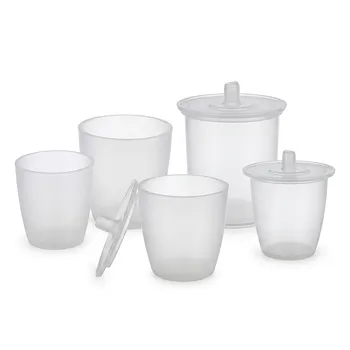
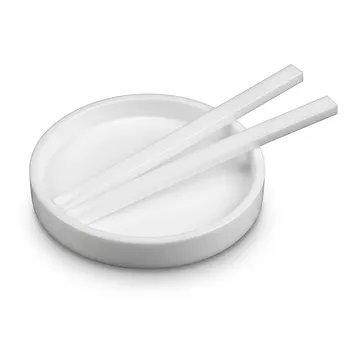
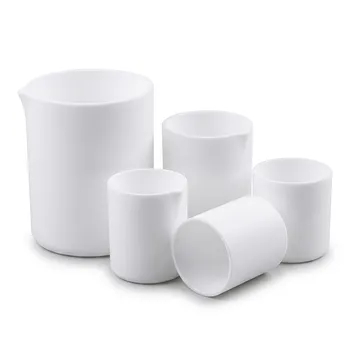
- High Purity PFA Crucible and Corrosion Resistant PTFE Beaker for Trace Analysis and Custom Laboratory Applications
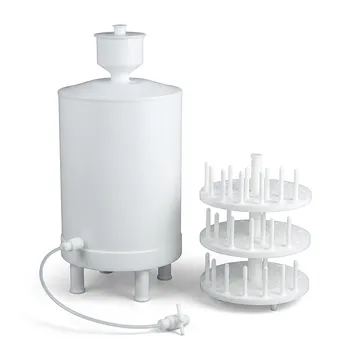
- Custom PTFE Constant Pressure Separatory Funnel Corrosion Resistant Low Background Labware for PFA Flasks
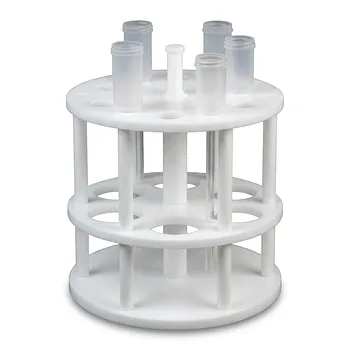
- Custom PFA Microcolumn Racks and PTFE Machined Low Background Corrosion Resistant Laboratory Fixtures
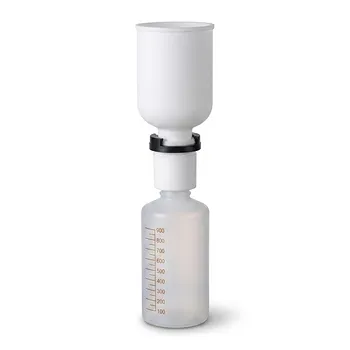
- PTFE PFA Vacuum Filtration System Corrosion Resistant Customizable Shatterproof Laboratory Device
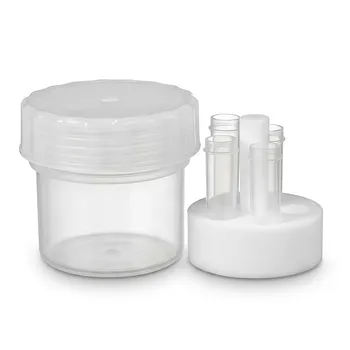
- Corrosion Resistant PTFE Support with PFA Transparent Reaction Tank and High Purity PFA Sampling Tube for Trace Analysis
People Also Ask
- Why are high-purity vessels critical for BiFeO3 synthesis? Ensuring Phase Purity
- Why is the use of high-purity PFA or PTFE labware critical during TiO2 nanoparticle purification? Protect Sample Purity
- Why is high-purity PFA labware necessary for Znx@LS-2 zeolite ICP-OES analysis? Ensure Trace-Level Precision
- Why is high-purity PFA trace analysis labware used for MXene? Ensure Superior Material Integrity in Research
- What key material characteristics make PTFE and PFA suitable for high-purity laboratory labware, trace analysis containers, and medical microporous tubing? Discover the essential properties that ensure purity.